Keep sharing good news without ads.
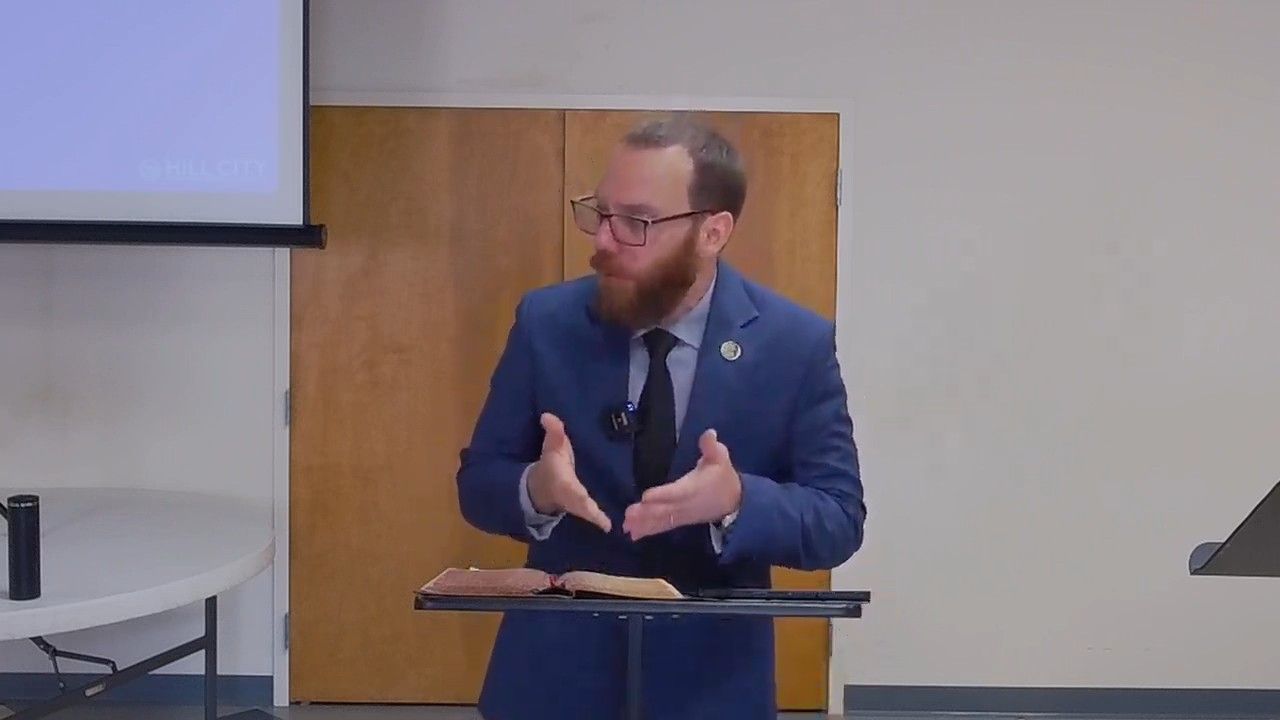
Christ Our Refuge Psalm 46 Sermon by Reed Kerr
Hill City Reformed Baptist Church Lynchburg, Virginia
Well, good morning, beloved, and welcome. This weekend marks 509 years since Martin Luther posted his 95 theses on the door of the Castle Church in Wittenberg, Germany. We recognize this weekend as a milestone, an anniversary in the church for what God did through that act, that small act in the providence of our great God was a historic watershed moment.
It did not start merely with Martin Luther trying to engage in a public debate, for he was merely doing the work of one man, but God was working through him and stirring in his heart to bring about the course of events that he pleases in.
God had been working in his life, preparing him for that role as he had in many others. In fact, it's a needful reminder for us as reformed Protestants that church history did not start in 1517. Luther was standing on the shoulders of many men that were used by God in many diverse ways to bring about his will.
God works through the hearts of men to accomplish his purposes, building his church through every age for in it, the will of God to redeem his people, a people for his own possession is seen through the establishment and the sacrifice, the redeemer.
And as we will see in our texts this morning, Christ is our refuge. Christ is our refuge through every trial and tribulation and storm in life. This morning, we are sustaining our brief pause from the book of Galatians and we will be looking at Martin Luther's favorite Psalm, Psalm 46.
This is the Psalm that formed the basis for the well-known hymn, a mighty fortress is our God, which Martin Luther would go on to write about 10 years after posting those 95 theses. Luther called the 46th his Psalm.
It was personal to him, it was meaningful to him because of the truths that it communicated to him that empowered him to do what he knew he needed to do. That hymn that he wrote, a mighty fortress is our God is sometimes called the battle hymn of the reformation.
And rightfully so, it's fitting because this Psalm and by extension, the hymn also that encapsulates the key truth there was so important to Martin Luther and to the reformation as a whole. It's a truth that we've been seeing in Paul's writings, even as we've been working through the book of Galatians.
We see it throughout the whole Bible. And really this gospel truth that the gospel is a work of God, that he in his great mercy justifies sinners, not based on our own efforts or our own works, but based on the shed blood of Christ that was poured out for us that we might be reconciled to a holy God.
He is drawing his bride to himself into Christ, our refuge, that we might be in him eternally secure because of what he has done for us. Luther first saw this when he was preparing to teach on Romans 1, but he confesses that he hated this concept of God's righteousness and his justice.
He saw this only as God's unflinching, threatening doom, this impending judgment on sinners. But this all changed as he was studying Romans 1, reading the commentary of Augustine and others who had gone before him.
In this passage, it says, "'For I am not ashamed of the gospel of Christ, for it is the power of God to salvation for everyone who believes, for the Jew first and also for the Greek, for in it the righteousness of God is revealed from faith to faith, as it is written, the just shall live by faith.'".
And when Luther finally understood this truth that the righteousness of God being revealed to us is in the person and work of Christ, that sinners might be reconciled to God by his righteousness, Luther describes his coming to understand this as the gates of heaven being opened before him.
This he describes as his conversion moment. And after this moment, Luther would then see this truth of the gracious gospel all through the pages of scripture, even Psalm 46, as we will see this morning.
And so let us now read Psalm 46 that we may see here in the Old Testament before the birth of our Savior, the promise that Christ is our refuge. So let us hear now the word of the Lord. Psalm 46 to the chief musician, a Psalm of the sons of Korah, a song for Alamoth.
God is our refuge and strength, a very present help in trouble. Therefore, we will not fear, even though the earth be removed and though the mountains be carried into the midst of the sea, though its waters roar and be troubled, though the mountains shake with its swelling, Selah.
There is a river whose streams shall make glad the city of God, the holy place of the tabernacle of the most high. God is in the midst of her. She shall not be moved. God shall help her just at the break of dawn.
The nations raged, the kingdoms were moved. And he uttered his voice. The earth melted. The Lord of hosts is with us. The God of Jacob is our refuge, Selah. Come behold the works of the Lord, who has made desolations in the earth.
He makes wars cease to the end of the earth. He breaks the bow and cuts the spear in two. He burns the chariot in the fire. Be still and know that I am God. I will be exalted among the nations. I will be exalted in the earth.
The Lord of hosts is with us. The God of Jacob is our refuge, Selah. Our great God and Father, we praise you this morning that you are indeed our refuge and our strength. We thank you that you have provided for us, Christ our Lord, that we might be reconciled to you, that we might not fear in the day of trouble, in the day of suffering and hardship, that we know you are in control and your sovereign hand holds all things together for our good and your great glory.
This morning, Father, would you help us to see these truths in your word? Would you help us to take comfort in these great truths? Would the gospel of grace be a salve to our souls this morning as we do what you have commanded here, to come and behold, to be still and to know?
Help us now, help us now to worship Christ as we consider the glory of the gospel revealed to us through your holy word, amen. So we have here in Psalm 46, three distinct sections clearly marked off by the word Selah.
And I wanna take a moment here to briefly comment on this word. Our understanding of the precise meaning of the word Selah in Hebrew is limited, but looking through the Psalter and how it's used, certainly in our text this morning, but also elsewhere, that this is intended to indicate a pause.
Whether it's a musical pause or a semantic pause, we don't know for sure, perhaps both, probably both, but some have speculated that it maybe even had a musical function. But regardless, I think Luther's counsel here is wise.
Even if we don't know the precise meaning, when we see this, we are meant to stop and to reflect and to meditate because it's a division, a dividing mark in the Psalm or the song that we are looking at.
And so that provides the framework for us, for how we're to look at and understand these words. God's sovereign control. More specifically, in the first we see that in the midst of cosmic collapse, Christ is our refuge.
And then secondly, in that middle section there, we see that in the midst of the raging nations, Christ is our refuge. And then finally, in that last third section, the focus moves on God's intervention, the divine action.
We see that divine action is to exalt Christ as our refuge, the refuge of the church, the refuge of Christ's people, his bride. So to back up and give us a little bit of the context of this Psalm first, we know that all the Psalms come to us through some immediate historical context.
Now, sometimes it's clear and explicit in the text or in the title, the superscription there that is given to us. Other times it's not, that is the case here. But historically and traditionally, most have associated this text and the writing of it from various clues and the writings of Isaiah that parallel to much of what is going on here.
Most place this with 2 Kings chapter 19, which if you don't recall, 2 Kings chapter 19 is where we see God's mighty deliverance of Jerusalem from King Sennacherib of Assyria. This was during the reign of Hezekiah.
Hezekiah, and if you recall, Sennacherib was issuing these blasphemous threats to the city of Jerusalem. He and the Assyrian army had besieged and surrounded Jerusalem, and the situation was bleak and dire.
And Hezekiah, in faith, cries out to God for deliverance. I'm gonna read a portion here of 2 Kings 19, starting in verse 14. And Hezekiah received the letter from the hand of the messengers and read it.
And Hezekiah went up to the house of the Lord and spread it before the Lord. Then Hezekiah prayed to the Lord and said, "'Oh, Lord God of Israel, "'the one who dwells between the cherubim, "'you are God, you alone, "'of all the kingdoms of the earth.
"'You have made heaven and earth. "'Incline your ear, O Lord, and hear. "'Open your eyes, O Lord, and see, "'and hear the words of Sennacherib, "'which he has sent to reproach the living God. "'Truly, Lord, the kings of Assyria have laid waste "'the nations and their lands, "'and have cast their gods into the fire, "'for they were not gods, "'but the work of men's hands, wood and stone.
"'Therefore they destroyed them. "'Now, therefore, O Lord, our God, I pray, "'save us from his hand, "'that all the kingdoms of the earth may know "'that you are the Lord God, you alone.'". And then the prophet Isaiah prophesies that God will defend the city for His own sake.
And this is what we see then later in the chapter. Thus says the Lord concerning the king of Assyria. This is the oracle, the prophecy that Isaiah is issuing. He says, "'He shall not come into this city, "'nor shoot an arrow here, "'nor come before it with shield, "'nor build a siege mound against it.
"'By the way that he came, by the same shall he return. "'He shall not come into this city,' says the Lord, "'for I will defend this city to save it "'for my own sake and for my servant David's sake.'.
And it came to pass on a certain night that the angel of the Lord went out and killed in the camp of the Assyrians 185 ,000. And when the people arose early in the morning, there were the corpses all dead.
So Sennacherib, king of Assyria departed and went away, returned home and remained at Nineveh. Now it came to pass as he was worshiping in the temple of Nishrak, his God, that his sons Adremalek and Sherzar struck him down with the sword.
That was the end of this great king, Sennacherib, this king who defied the living God. God worked this great deliverance for his city, Jerusalem, at the request of Hezekiah, who called upon the name of the Lord in his time of great trouble.
Now this is, we believe that the historical context, most likely the historical context for Psalm 46. But as one commentator helpfully puts it, like so many Psalms, its verses overflow the banks of a limited historical rescue and point to something grander, a salvation that is cosmic in its scale.
God is in control. If he was in control then, when the city of Jerusalem was surrounded by this mighty Assyrian army and this fearsome, vicious king, then God is in control now as well and to the end of the age.
God is in control and Christ is our refuge. And when he acts, the enemy is defeated and his people are delivered and Christ is exalted for he is our refuge. Just like in the New Testament, when Christ in the gospels would give sight to the blind or cast out a demon or even raise the dead, we see here that the focus in scripture is not on merely the one who is saved, but the focus instead is on Christ being the one who brings the light of the gospel to those who are in darkness, the one who has the power to defeat the forces of hell, the one who has victory over the grave.
This is what we see in Psalm 46 revealed in these massive cosmological eschatological language that Christ is the refuge of all who trust in him. So first, this Psalm opens with this grand statement that God is our refuge and strength, a very present help in times of trouble, refuge and strength.
Refuge, meaning he shields us from danger and strength, meaning he empowers us in our weakness. Therefore, we will not fear. If we are in him, we are both shielded from wrath and strengthened in weakness.
He will not let his people fall even as the entire cosmos crumbles. Even though the earth be removed and though the mountains be carried into the midst of the sea and though its waters roar and be troubled, though the mountains shake with its swelling, come what may, God is on his throne, beloved.
He rules over all things, seen and unseen. Heaven and earth and under the earth are all under his feet. He is enthroned on high. The contrast here is between the eternal, unchangeable, immovable God and all of creation.
Even those mountains that endure from age to age, they seem to us to be eternal. They've been there for hundreds or thousands of years. Just last week, we drove through the Blue Ridge Parkway and we saw those grand peaks that seem to hover over all of the central Virginia.
They've been there and they will stand, but not eternally. They will fall before the wrath of God one day. Those seemingly immovable mountains tremble before the Lord God, for he is truly the eternal one.
Nahum 1 says, the mountains quake before him, the hills melt and the earth heaves at his presence. Yes, the world and all who dwell in it. Psalm 18 says, the earth shook and trembled. The foundations of the hills also quaked and were shaken because he was angry.
The 46th describes the removal of the earth and the mountains being cast into the sea, though its waters roar and be troubled. This imagery should remind us of the great flood, where God in his wrath sent the floods to engulf the earth and the wicked who dwelled in it.
And yet, Noah and his family were spared. They were spared because of God's great mercy, for his love for his people. This picture of this ark that delivered this family is a picture for us of Christ Jesus, for he is our refuge.
We could see more in this imagery, this act of the earth melting. This is describing the unmaking of the earth, a return to the formless, chaotic void, the darkness of the deep waters in Genesis 1 -2.
The spirit of God was hovering over the waters and called the earth into existence. And he is the same unchanging God who can command its unmaking. And yet, we will not fear, for God is our refuge and strength.
He is our deliverer. The second section expands on the sovereign control of our God, contrasting here now, the city of God, which is secure in Christ from the raging of the nations. The raging of the nations, that's something we can relate to today, is it not?
It begins by describing this river. There is a river whose streams shall make glad the city of God. So contrast these troubled and turbulent and roaring waters of the sea that are threatening to engulf the mountains as they're cast into it with the river.
The river, the river has focus and purpose. It flows, it flows at the command of God. And what does it do? Its streams make glad, its streams make glad the city of God. Now, this is fascinating. When the sons of Korah wrote this psalm, undoubtedly, the city of God in view here, especially in the context of Jerusalem being besieged and then delivered, the city of God in view here was certainly earthly Jerusalem, but there's no river that runs through Jerusalem.
There's no river that runs through earthly Jerusalem, that is. Also, verse five says God is in the midst of her, in this city, and she shall not be moved. Yes, Jerusalem stood here in this episode against the forces of the Assyrian army.
That was in the year 701 BC, but 115 years later, in 586 BC, Jerusalem would fall. Earthly Jerusalem would fall to the Babylonians at the hands of Nebuchadnezzar, making an end of the kingdom of Judah.
So, were the sons of Korah wrong? Is verse five here wrong when it says the city will not be moved? No, of course not. You have to remember, the earthly Jerusalem was just a type and shadow of what the New Testament calls Jerusalem above.
Did we not see this in Galatians chapter four? This was six weeks ago today. We looked at Galatians 4, 21 through 31, and Paul, engaging with the Judaizers, made a bold claim that just as Abraham had two sons, one by the slave woman, Hagar, and one by the free woman, Sarah, there are two covenants and two Jerusalems, one according to the flesh and one according to promise.
Galatians chapter three, verse 24, says these are two covenants. The one from Mount Sinai, which gives birth to bondage, which is Hagar, for this Hagar is Mount Sinai in Arabia, and corresponds to Jerusalem, which now is and is in bondage with her children.
But the Jerusalem above is free, which is the mother of us all. Hebrews 12 expands on this. The writer of Hebrews says, for you have not come to the mountain that may be touched and that burned with fire, speaking of Sinai and the giving of the law, this physical place.
You have come to Mount Zion and to the city of the living God, the heavenly Jerusalem, to an innumerable company of angels and to the general assembly and church of the firstborn who are registered in heaven.
Hebrews rightly calls this assembly of those who are washed in the blood of Christ Jesus, the church. We haven't gotten there yet, but we will see in a couple of weeks that in Galatians six, Paul calls them the church, the people of God, he calls them the Israel of God.
And this connects to the book of Hosea, the prophet Hosea in Hosea two says, I will have mercy on her who had not obtained mercy. Then I will say to those who are not my people, you are my people. And they shall say, you are my God.
To be clear, this isn't a change in God's plan. This was what the earthly city of God's people was always pointing forward to. This reference to this great river being in the midst of the city of God hearkens back to Eden, where the river of God watered the garden and made it fruitful.
We also see this imagery in the book of Ezekiel, the prophet Ezekiel in Ezekiel 47 described this vision that God gave to Ezekiel of this perfected temple. He describes it in physical language because Ezekiel knew the temple there in Jerusalem.
But this temple has this water flowing from it, this river that flows from the temple of God that brings life to all who enter into it. Ezekiel is seeing a vision of the heavenly temple, the heavenly Jerusalem.
And John connects this to the Lord Jesus Christ in John chapter seven, when he says, Jesus stood and cried out saying, if anyone thirsts, let him come to me and drink. He who believes in me, as the scripture has said, out of his heart will flow rivers of living water.
There's one more important passage in scripture that we wanna look at relating to this concept of heavenly Jerusalem and the river that is in it. But before we do, I want us to see one more thing from this middle section here of Psalm 46.
The Psalm of course, in this section is describing this unrest and this turmoil of the nations of men. Verse six says, the nations raged. You can picture the kings of men furiously raging at one another.
The wars and the turmoil that is so characteristic of this age as rulers hate and revile one another and there's conflict and there's strife, but all of it's in vain. All of it is in vain. Psalm two, one says, why do the nations rage in the people's plot of vain thing?
All human might and raging is utterly powerless in the end. It's all in vain. Because here in Psalm 46, after it describes the raging of the nations, we finally hear the voice of God. He uttered his voice, the earth melted.
That is meant to contrast for us, the futility and vanity of the raging of the nations against God and against his people and against his purposes with God, but uttering a word and the earth melting. Man is impotent in the face of an almighty God.
And that brings us here then to the end of the second section where we see the Psalms refrain. This verse, verse seven is repeated here and again at the end. The Lord of hosts is with us. The God of Jacob is our refuge.
This is the main message of the Psalm. This is how the Psalm will end. And to understand this, for this to be clear in our minds, we must understand who is in view here. Who is this Lord of hosts that is with us?
If you were with us when we studied through the book of Joshua, before entering into and proceeding with the conquest of the land of Canaan, Joshua is met with a man with a sword drawn. He's confronted and Joshua asks him, are you for us or for our adversaries?
And he answers, no. But as commander of the army or the hosts, we might translate that as commander of the army of the Lord, I have now come. And Joshua recognizes that he is standing in the presence of God.
He's standing in the presence of the pre-incarnate Christ, the Lord of hosts. And he bows down and he worships him. Christ is the commander of the Lord's armies of this heavenly host. He is Lord of hosts.
And so this refrain in Psalm 46, we see as a declaration that Christ is with us. He is the Lord of hosts, God with us. Christ, our Emmanuel is here spoken of in Psalm 46. Cassidorus was a sixth century Roman statesman and a scholar.
And he wrote in the aftermath of the fall of the Roman empire. He wrote some meditations on the Psalms. And this is what he said here of Psalm 46. Christ appears in the midst of his church and has deigned to build it on himself as on the firmest of rocks.
All hope lies in the coming of the Lord Christ through whom the church was founded. For he is our refuge. The connection here should be very clear to every Christian. This is what Matthew in his gospel account goes through great lengths to show us that Christ is our Emmanuel.
Christ is God with us. The Lord of hosts is with us. The God of Jacob is our refuge because of Christ. When Luther finally understood that the righteousness of God is not something for the Christian to fear and tremble for as some doom that is on the precipice of being poured out on him.
But the righteousness of God is revealed in the person of Christ. For the Lord of hosts is with us and the God of Jacob is our refuge. He tabernacles among us as John would record in his gospel. In order that we might see the glory of God in the face of Jesus Christ.
One glorious day our Lord Jesus Christ will return and this brings us then to this last connection that we need to see in this middle section of the psalm. We see these themes come together with the heavenly Jerusalem and the river of living water that flows through it that makes glad the people of God.
With Jesus Christ our Emmanuel dwelling with us coming to dwell with his people forever again at the end of days. The book of Revelation describes this scene, this final consummation. Time fails us. I love reading from the book of Revelation.
These verses are so precious to us. I'm just gonna read a portion here. Revelation 21, and now I saw a new heaven and a new earth for the first heaven and the first earth had passed away. Our psalm has described that has it not?
And there was no more sea. Then I John saw a holy city, new Jerusalem coming down out of heaven from God prepared as a bride adorned for her husband. And I heard a loud voice from heaven saying, behold the tabernacle of God is with men.
And he will dwell with them and they shall be his people. God himself will be with them and be their God. And God will wipe every tear away from their eyes. There shall be no more death, nor sorrow, nor crying.
There shall be no more pain for the former things have passed away. Beloved, this is true because Christ is our refuge. He is with us and will be with us. Revelation 22 continues. And he showed me a pure river of water of life clear as crystal proceeding from the throne of God and of the lamb in the middle of its street.
And on either side, the river was the tree of life which bore 12 fruits, each tree yielding its fruit every month. The leaves of the tree were for the healing of the nations. Beloved, these promises that we have in scripture of God's sovereign control over all things, stopping the raging of the nations and the calamity that befalls us in order to bring us into his glorious presence.
This is what Psalm 46 is describing for us. This is where the hope of God's people lies. The cosmos crumbles, but Christ is our refuge. The nations rage, but Christ is our refuge. And now finally, in this last stanza of the Psalm, we see God in action.
He comes to stop the chaos and raging and exalt Christ over all. And as he does, we're issued two commands. This is so contrary to the false teachings of our age. This is contrary to the false teachings of the Judaizers as we've seen in Galatians.
They emphasize the need to be ceremonially clean, the need to work, to be approved of God, to keep the works of the law, the need to be circumcised. But we don't see any of that commanded here, do we?
In the face of the wrath that is being poured out and the cataclysm that is coming, what does Psalm 46 require of us, beloved? Two things, come behold the works of the Lord. Be still and know that I am God.
Beloved, do you see what this is revealing to us? This is Luther's favorite doctrine stated in the language of the Old Testament. We have all sinned and fallen short of the glory of God, corrupted in the sin of our father Adam and condemned by our own deeds.
The wages of sin is death and we rightly deserve this wrath that is being poured out. We deserve to be cast into the roaring tumult of the deluge. We deserve to melt at the utterance of the voice of the Lord.
We deserve eternal wrath for our sins against a perfectly holy God. But praise be to God that Christ is our refuge. He is our strength for on Him was poured the wrath of God on the cross. He is that refuge, that shield that protects us from wrath and danger.
He is our strength for He gives us His spirit to empower us in our weakness. If you know yourself well, beloved, you know how weak you are, how quick to doubt, to tremble in fear with uncertainty ahead of us, but it's not uncertainty to God.
For the river of God flows and it makes glad the people of God. Come, behold what He has done, that we might be still and know that He is our God. Beloved, this is the outward manifestation of the faith in Christ that God puts in the hearts of His people.
Come, beloved, come to know the cross and behold what Christ has done to be still and know that His blood atones for all your sin. These are the healing waters of the river of God whose streams make glad the city of God.
This cleansing stream is the blood of our dear Savior shed for us, poured out for you. So all who come in faith are washed clean in this stream and robed in the perfect righteousness of Christ. This is why we will not fear, for God is our refuge and strength, a very present help in trouble.
When the hardships of life come upon you, in the face of suffering and loss and grief, turn to Christ. He is our refuge. Please listen. Listen to the words of precious scripture. God has not promised to prevent the trials and the tribulations and the troubles in this life.
As we read in Romans 8 this morning, they will come. We are indeed amid a flood of mortal ills that threaten to undo us. This world is full of devils that rage against us. And still our ancient foe, the accuser of the brethren, Satan himself, is crafty and full of cruel hate.
He, the prince of darkness, desires your destruction, but Christ has acted on your behalf. All hope would be utterly lost, but for the right man on our side, the man of God's own choosing, the Lord of hosts is he.
He is our refuge. He is our strength. Come to him and behold what he has done for you. Be still and know him. For he will not abandon his bride, his church. He died to redeem her and he cannot fail his mission.
For he conquered the grave. He has bound the strong man and is plundering Satan's house, setting free the captives and bringing them into himself, into the mighty fortress that our God is. And why does he do this?
We look back to the words of Isaiah the prophet in 2 Kings 19. I will defend this city to save it for my own sake and for my servant's sake. He will be exalted among the nations. He will be exalted in the earth.
On his return, he will be exalted. He will be exalted in making desolations of those who had rebelled, and he will be exalted in bringing salvation for those who waited in faith, for those who beheld and knew.
Dear one, if you are trusting in your own goodness, for you're standing on the day of the Lord, you must recognize your own failure. You must recognize your sin condemns you. But the grace of God is that all who come to the Lord Jesus Christ in faith are secure in him, are secure in Christ, and will dwell with him forever in the city of God, in the new Jerusalem, where there is no more suffering and loss.
This enables us, this empowers us, this gives us the strength to let the things of this world go as long as we have Christ. My prayer is that you know this peace today. The spirit and the gifts are ours through him who with us sideth.
Let goods and kindred go, this mortal life also. The body they may kill. God's truth abideth still. His kingdom is forever. Amen. Let us pray. God our Father, we thank you that through every trial and trouble, every suffering and loss, every ounce of wrath and judgment that is poured out is no need for us to fear, for you have provided for us Christ to be our refuge and strength, that we might stand and give glory to him, the exalted King of Kings and Lord of Lords, the Redeemer and Savior.
May he be glorified this morning. May he be glorified this week as we deal with whatever troubles you have brought into our life. May we stand fixed on the rock of Christ Jesus, our Lord, that he be exalted and we, your people, be preserved unto that day when we enter into your glorious presence and see and behold the face of Christ.
To him be glory and honor and praise forevermore. Amen.