Post Debate Analysis and First Q&A - From the Conference on the Stewardship of Scripture
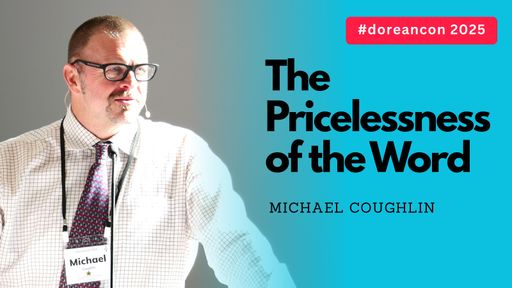
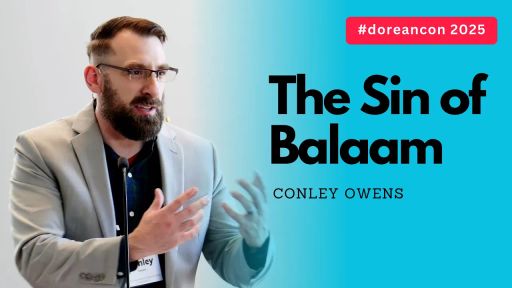
This was the post-debate analysis and first Q&A session at #doreancon 2025 on "The Stewardship of Scripture" at Silicon Valley Reformed Baptist Church in Sunnyvale, CA. Presenters from left to right: Conley Owens, Michael Coughlin, and Andrew Case.
SIGN THE STATEMENT on the stewardship of Scripture at: https://copy.church/statement/
LEARN MORE
https://sellingjesus.org
https://copy.church
https://thedoreanprinciple.org
Q&A SECTIONS
00:00 Post Debate Discussion
7:56 What are some of the earliest examples in history that mentions scripture and licenses?
14:12 When does something (e.g.) not become inspired and salable?
19:09 What are some bible verses related to 2 Corinthians 2:17 regarding peddling the word of God?
23:30 Should we be giving secular knowledge freely?
24:30 What would cross the line while running a business as a Christian with ministerial aspects?
30:04 Does the dorean principle go beyond Christian ministry with regards to copyright and intellectual property?
34:33 - Are things like Holman's connecting scripture be considered copyrightable?
40:18 - How can translation work with the dorean principle in mind?
48:15 How can you persuade people about the dorean principle?
55:56 - Comment on giving generously
Transcript
Well, first, I thought that the debate, in a sense, whet my whistle for more.
We have received, you know, I've been a part of this movement for a while, and we have heard so many arguments against the
Dorian principle and against some applications of it that I just really enjoyed hearing a cogent, coherent argument about it.
And I think we need more of that. You know, I still think there's people that hear Dorian principle explained, and they think we're saying, don't pay pastors.
And I think debates give a forum for that, where you get to answer those questions about different questions.
You know, like the next debate could be, should pastors be paid, or something like that, I think would gain more and more interest.
Yeah, but to do that, we would have to bring in somebody who was saying that they shouldn't get paid. That's not necessarily the side of the debate.
I wasn't necessarily saying that's the exact thing. Yeah, right. The concept of how they get paid, you know.
Yeah, so what you're pointing out, I think, is important, especially for those here who are not discussing this all the time.
The common feedback we get, there are a lot of really standard arguments that are just basically misunderstandings of the position.
It's a lot of, you don't think the worker's worthy of wages. You think that you should muzzle the ox while he treads out the grain.
Things like that. Any other standard arguments you'd want to add to that list? Especially Andrew, I know that you've got a list of them in your head that people usually tell you.
They don't pay for. Yeah, I was gonna add, yeah, Andrew's already, you said it was the first documented evidence of Christians saying that.
I was thinking that's what the Corinthians were thinking as well, right? And so, you know, it's just repeating that old error.
My impression was that the guy was very well -prepared and thought about this a lot.
He was, Jonathan, he was very articulate and obviously a strong thinker.
And so it was just reaffirming to me that somebody that prepared still had such a weak argument, kind of politician's stance towards answering questions was dodging a lot of the direct questions just like Connie brought out, and that never stopped.
And so it just reconfirmed to me this is the best of the best kind of arguments that people have to throw at this if they actually understand what we're saying.
And it's a lot of avoidance tactics. And you'd say that was the main weakness.
There was a lot of avoidance. So yeah, I guess from my perspective, one of the things that we were talking about was whether or not this is really a sin issue or just a wisdom issue.
And I understand when people say that, okay, this is not something where you can know whether or not this is sin, so we're gonna call it a wisdom issue.
But it sounded almost like he was saying that he didn't know whether or not it was sin, so it was a wisdom issue, but he never actually proved that no one could know whether or not it's sin.
And I've encountered that a few times recently too where people expect me not to call something sin just because they're not willing to say that they know, not because they have any reason to think that nobody could know.
And that is a significant difference. Because then the standard becomes subjective or cultural or whatever, what we would call sin or what we wouldn't call sin rather than something more absolute like God's law.
I think that this isn't a debate analysis, it's a little bit of a Andrew selling
Jesus analysis. From the very beginning of when
Andrew started selling Jesus and John, one of the goals was always to treat brothers and sisters that we think are in error with brotherly love and respect and not to maybe accuse people of maybe you're not even a
Christian because you're doing this thing, but to still use a strong word like sin. And I think that last night, you were able to evidence with Jonathan that we can have an intrasquad debate about things and we can lovingly enjoy fellowship and still be polemical and argumentative about something very important.
And I think that a lot of times people think that you're just in the corner screeching, we hate
G3, and it's like, well, you're just jealous because they get a bigger conference. And I think last night was a good beginning to show that no, we're
Christians who love other Christians and also love God and wanna obey him and help each other obey him.
I thought you did a great job in that. Thank you. And you, I think, helped teach me that, frankly, with the way you started the podcast.
You might not realize that, but you did. All right, any other thoughts from you two before we invite up Bob?
Any questions? I would just add that in my conversations with Jonathan afterwards, he did express and explain that his approach to this, so he had an emotional reaction to what he was seeing online about the
Dorian principle, things that Colin was hosting. So he started with an emotional reaction, like, ugh,
I don't like this, or this can't be right. And that kind of was the foundation for his building up this case against it.
And so that's, I think, constructive as well for a lot of us to just take that into account, that when we face most people who don't like what scripture says about this, it usually is this kind of gut emotional reaction that's not founded in reason, it's not founded in scripture, and then people rush to try to adapt scripture or fit it into their mold of their reaction to make it say what they want.
So that's what, in my experience, has been the case over and over, and I think we saw that again.
So my main assessment of the other side was that there was a lot of negative feedback on my position, but no positive case was made for any sort of interpretation of 2
Corinthians 2 .17. I asked for that several times. It didn't really seem forthcoming.
It is, yeah, it's not really good in a debate to just say,
I don't like what you are saying about this passage, but then not have an alternative. There's no alternative.
It's kind of hard to take that seriously. I think that was at the heart of the issue. But yeah, let's go ahead and open this up for questions.
Maybe at first we can try to focus on the debate, but any questions about the messages also, or the whole movement.
One of the things that Jonathan asked was, well, sort of stated, was that he felt what you're presenting calmly is a novel idea, not something you can find in the form we care about now.
Scripture doesn't mention licenses. Why do we care about that? And no other Christian has thought about this.
So what are some of the earliest examples you can think of where it's really hard to even state what he's saying?
Is, for example, the Tyndale Eclipse, he said license. It's dealing with something exactly like what we're talking about.
So, sorry, what's the question? So what are some of the earliest examples you can think of similar to the Tyndale Eclipse, which
I guess would be similar to this quote? Right, yeah, I guess it just depends on whether or not you're willing to see examples of selling spiritual things as similar to this, or if we really have to talk about licenses to find something similar to this.
You really don't have that kind of government in position until the centuries, and especially not until the 18th century with copyright in full.
There is the one example that I wrote about in the book about Finian and Columnhill, who, another pronunciation of his name, a lot of times people will just change it to the more anglicized
Column of. He copied a psalter, and then
Finian essentially sued him, took him to the highest court in the land, and it was decided that this was not, yeah, it was not okay for him to have copied that, and so the copy of the psalter, not by any notion of creativity, just the fact that Finian had owned this physical object that Columnhill had done so wrongly, and so he lost that book.
There's actually a whole battle that comes after that over the book. The book is recaptured by the one side.
A lot of lives are lost. This is what leads, this is actually what leads to the gospel being spread to Scotland, because Columnhill ends up going to Scotland because he feels a lot of pain, even though he feels justified, he feels a lot of pain over the fact that so many lives were lost over the fact that he had copied this book, and so.
Do you remember what date that was, or what century? Oh, gosh, not quite.
It might have been more. Middle ages, right? Yeah, it's very early. In 1
Samuel, which is a lot earlier than that, chapter two, it's written, now the sons of Eli were wicked men.
They had no regard for Yahweh or for the custom of the priests with the people. When any man offered a sacrifice, the servant of the priest would come with a three -pronged meat fork while the meat was boiling and plunge it into the pan or kettle or cauldron or cooking pot, and the priest would claim for himself whatever the meat fork brought up.
This is how they treated all the Israelites who came to Shiloh. Even before the fat was burned, the servant of the priest would come and say to the man who was sacrificing, give the priest some meat to roast because he will not accept boiled meat from you, but only raw.
And if any man said to him, the fat must be burned first, then you may take whatever you want, the servant would reply, no, you must give it to me right now.
If you refuse, I will take it by force. Thus the sin of these young men was severe in the sight of Yahweh, for they were treating
Yahweh's offering with contempt. I would argue that they're violating the Dorian principle way back then, and it was an obvious and known sin to the people of God.
So I think sometimes finding the examples is a matter of whether you're really looking for them or not.
Right. Yeah, if we're gonna nitpick about licenses, et cetera, the analogy I made about last time was, online church, images on the internet, there's all kinds of things having to do with technology that weren't written about in Scripture.
You have to be willing to apply the principles. Yeah, otherwise, everything's fair to me.
I wanna add that Jonathan twice in the debate made a statement where he said something to the effect of, and you could look at the recording and figure it out but something to the effect of, it's illogical for God's word to have spoken about something thousands of years in the future.
And I thought that was, I'm trying to be kind, I thought that was a foolish way to phrase something since God's word obviously is eternal and is able to speak to us about every aspect of our lives way in the future.
And so to even imply that it couldn't have spoken about this principle, I would say it's foolish.
I would have felt like it was very refreshing that he had just at least admitted,
Jonathan, that yes, there are many, many things every day that are principles in Scripture that must apply to our modern lives that aren't explicitly detailed.
Like that is to live the Christian life. If he had just at least conceded that point, that's a very valid point, that's how he lives his life.
And you can't be a Christian if you think that the Bible is just this ancient book that's completely irrelevant in every aspect to you today because it's a different culture and a different time.
So it would have been refreshing if he had at least said that. That's true, but in this instance,
I'm not going to do that, this principle. Any other questions?
Mike, why don't you ask your question? So when the debate was going, there's this thought that Scripture is inspired, but as you get into the versions, it gets,
I guess, less inspired. And so as it continues on to, let's say, different versions and then say devotionals, all the way down to like a bumper sticker, at what point is there a point that we can understand that, okay, this is still inspired by God?
Yeah, so I think there's a difference between the bumper sticker issue and then the corruption issue.
So with the corruption issue, we're asking how many words do you have to change? How many ideas do you have to remove before there's no divine ideas left in it?
And it's no longer the word of God. That's one thing. Asking about the bumper sticker is asking about really what is being sold.
It's not the word of God that's being sold. It's the bumper sticker that's being sold. If you make a decoration and you put
Scripture on it, you're selling the decoration. You're not really selling the Scripture. One of the examples
I always use is if you go to In -N -Out around here, John 3 .16 is on the bottom of the cup. This does not mean they have to give you free soft drinks because of the
Dorian principle. You can try arguing with that one with them, but I don't think it's gonna work for you because what they're selling is the cup.
Even if they put more Scripture on it, even if they put a whole book of the Bible on the whole outside of the cup, that's still not the essence of what they're selling you.
At that point, it's not a question of how corrupt it is or how derivative it is.
It's rather a question of what is being sold. What about a used bookstore?
If you wanted to run a used bookstore and people would bring you books, you'd buy books. What about devotionals, even
Bibles? What would you say? Once again, yeah, those are products of secular labor.
It's the ideas, it's the spiritual things. Using the language from the Middle Ages about simony, it's a sin to sell spiritual things and things annexed to spiritual things.
But the books, and maybe part of the difficulty is because we think of the book as being so permanent.
It used to be that, well, for a short while, books were printed on vellum, which is a written on vellum, which is like a leather, and you could wash them off and actually rewrite on top.
This is called palimpsest. I think that's the name of it. Anyway, so the physical thing that you're buying, you could use for all kinds of purposes, and it's not even just like what purposes you could use it for.
It's the fact that you're not selling a spiritual thing. You're selling the product of natural labor.
Yeah, you're not selling the word of God at that point. I do think, though, and this is,
I have a hard time communicating this to people, especially those who are part of this movement, who understand that there's something wrong with selling spiritual things, with selling the word of God and biblical teaching, is there is some, 2
Corinthians 2, 17, for we are not like so many peddlers of God's word, but as men of sincerity.
Okay, if sincerity is being undermined, there are ways of potentially, not necessarily indicating insincerity by charging a large amount for a physical book that contains the word of God, right?
The book contains the word of God. It is not the word of God that contains the word of God. Remember that distinction I was pointing out earlier.
You can communicate insincerity, but you're not necessarily communicating insincerity.
I think that's a really important distinction. So yeah, if you have someone just really, you know, trying to make a racket off of Christians by, in the way that they're going about the bookstore business, you know, some of that stuff that Andrew was talking about earlier, where you're selling all kinds of nonsense along with the good stuff because you're just selling whatever.
You're communicating insincerity in spiritual things, but it's not as necessarily the case as when you are directly selling the spiritual thing and you are saying,
I will give this to you because you pay, and I will not give this to you because you will not pay. When you're doing it over something physical, it could just be that you're profiting on the physical thing rather than the spiritual thing, but it has the potential to indicate insincerity.
So there's a lot of emphasis on the one verse about covenant, but you also mentioned that this was just one community and that there was a wider context around it, but I don't remember if you actually mentioned those actual verses, and yeah, so maybe you can tell us some of them now and maybe as basic feedback.
Like, yeah, if more verses were presented, it would be a stronger case, I think. Sure, right. Yeah, as far as debates go,
I enjoy watching debates that are really focused and not going all over the place, and especially as a debater, I prefer not to have to prepare on everything here, just on the narrow things, but yeah.
Matthew 10, eight says, freely you received, freely you give. Third John 7, eight says, for these went out for the sake of the name, not accepting anything from Gentiles.
Therefore, we ought to support people like these that we may be fellow workers through the truth. In Matthew 10, eight, you have, when
Jesus says, freely you received, freely you give, right after that, he says, the worker is worthy of his food, when he tells them that they should go and stay with others and receive from them.
So what you have there is he is distinguishing between reciprocity, free to give, you know, don't exchange, but then also, you're worthy of your food, you should receive from others.
That's co -labor, so that's that distinction between reciprocity and co -labor. Third John 7, eight when he says, these went out for the sake of the name, not accepting anything from Gentiles.
They didn't engage in reciprocity. Therefore, you should co -labor with them. But we may be fellow workers, that's co -labor for the truth.
So those are two verses that I find very direct. Paul writes, I don't wanna say ad nauseam because I don't get nauseated when reading
Paul, but Paul writes at length on this topic. First Corinthians nine is all about this, all about why he would never take the
Corinthians name. They're still upset about this in second Corinthians, and so he explains it in pretty much all of second
Corinthians 11, including the small allusion in second Corinthians 2 .17 that I keep bringing up. All of second
Corinthians 11 is on this, and it's really surprising just how many passages address this, it is in many places.
What's that? Oh yeah, and of course, Simon Nagus, who attempts to purchase the
Holy Spirit. Now, a lot of people don't immediately see the connection to what we're saying, because we're mostly focused on selling, and Simon was buying, but what he's doing is he's commodifying the
Spirit, or he's treating the Spirit as something sellable, which is what someone is doing when they are selling instruction, because as first Corinthians 2 says, that we're not teaching with human wisdom, but comparing spiritual things with spiritual words.
If that is a spiritual activity, the spiritual meaning of the Holy Spirit, and you were to sell that, that thing that's freely given in that previous verse, second
Corinthians 2 .12, yeah, it's the same problem as what
Simon was doing. His issue wasn't so much that he was buying as opposed to selling, it's that he's treating the
Spirit as saleable. You similarly have Gehazi in the Old Testament, servant of Elisha, who ends up charging
Nehemiah for the miraculous working spirit as well, so it's really not about just buying, it can be selling as well.
And of course, you did mention Jesus cleansing the temple for the whatever was going on, mixing money with ministry there.
Right, there's a certain holiness about the temple that if you take the
New Testament theology that the church is that place where God dwells, there's a holiness about it that shouldn't be, yeah, this passage is certainly less direct in its application, but yeah, there's a holiness about the people of God in whom
God dwells that requires there wouldn't be any kind of marketing in that arena.
There are plenty of others too. Right, so one reason we shouldn't sell spiritual knowledge because it was given freely, but because of natural revelation, there's a lot of non -spiritual knowledge we're given, like there's an
Old Testament verse where God was crucified on a farm. Is there some way we should be giving secular knowledge freely?
So yeah, when I say spiritual, and as I've increased my reading of spirituals,
I realize this is primarily what they mean by spiritual, they mean of the Holy Spirit a lot of times rather than just immaterial, right?
So they're not just talking about things that you could know about God from nature, et cetera.
They're talking about special works of the Spirit that tend to salvation. And so that's the thing that ought not be sold as spiritual things in that sense.
I don't know if any of you all have anything you wanna add to that. Maybe it's okay to ask not those surveys.
Yeah, go for it. Yeah, I should ask off of what Sarah's saying. My wife wanted me to ask this on her behalf anyways. What does that line between running a business and running a ministry, let's say your business has maybe ministerial aspects to it, for example, my wife giving as a birth giver, trying to serve mostly
Christian women. There's a lot of religious support around prayer and serving them directly for the most part in care.
What does that look like? Go for it. Yeah, it's kind of hard to, I mean, I imagine there's several principles that you've put together to sort of analyze something.
I've liked talking with Michael on these things. Michael, I don't know if you wanna try answering.
I have an idea. And my idea would be that, first of all, there's some gray areas with all of this, and that's something that Conley has said from the beginning is he's really hoping that the church will adopt the principle because it's theologically solid and then work it out together for maybe decades.
But one concept is that if you're doing something like in a
Christian way, that also though could be done by a secular person, you're still running a secular business, you're just a
Christian doing it, like John 3 .16 on your soda cups.
So I would say that there are aspects of your example where this is a good thing for Christians to do, and they can do it prayerfully, and they can even do it with the
Spirit, empowering them to do it well, but it's not in and of itself ministry because it's not something revealed by God that we do basically as an outpouring in the church.
Anyone down the street would do it. So I think that's maybe an easy way to think about it, the most simple way.
And I would argue that some of the examples that people come up with, and toss at Conley on Twitter and the comments on selling
Jesus, a lot of these examples are things that individual Christians should be talking to their pastors about, they should be searching the scriptures, but we need to get them to bind in principle first.
And then a lot of these ideas should be worked out on one -on -one with pastors and things like that in the local church.
I'll just add that the article, it's also in the book on the Christian definition, or biblical definition of what is
Christian ministry. I hope that you find this helpful because that answers those kinds of questions specifically, because we get those all the time.
What about this and what about this? And that article maps it all out and then gives very many examples of litmus tests.
So basically, always going back to the definition. Is it spirit -empowered service directly and specifically for the body of Christ?
And if it doesn't really fill all that criteria, then it's pretty safe to say that it's not ministry.
I think the danger in all of this obviously is extremes and taking this to be a burden of legalism and going so far as to say anything that we do as unto the
Lord is ministry. And that's just simply not true. So I do endeavor to really map that out very clearly in this article so that there's really no room for those kinds of extremes, because that's,
I think, maybe one of the biggest weaknesses. If you don't really know what
Christian ministry is, biblically, then you have a huge hole in your foundation and your argument.
And so that's what we try to do there. And that's what we find from a lot of people who disagree with this too a lot of times is because they either believe everything is ministry or nothing is ministry.
There's a lot of people who would say, okay, well, we're supposed to give ourselves as living sacrifices, therefore everything is worship, everything is holy.
And if that's the case, well, and we're allowed to sell some things, then obviously we're allowed to sell everything because nothing is really distinguished.
It's all kind of holy. That's, yeah, that's a problem. Then on the other end, you would have people that would make only what happens on Sunday morning to be holy in any sense, and everything else can just be a business.
You end up seeing this a lot in some of the more reconstructionist crowd. A lot of times, because they are anticipating a
Christianizing of all society, that means that there would be a just very
Christian kind of work being done, a lot of it being directly ministry work.
As your discipling nations, et cetera. I don't think it's right now to conference more pertaining to the stewardship of scripture, but when you get to the end of the
Dorian principle book, you do go beyond Christian ministry that talk about copyright and all of this.
I'm sure you do. I mean, eventually, doesn't the Dorian principle go beyond Christian ministry?
I put that in the appendix for a reason. I don't consider that to be part of the
Dorian principle. I do have a political theology that keeps me from acknowledging copyright as being part of what the government has really authorized to worry about.
But I believe the government has authority, ultimately from God, through the people, and that it is for matters of attributed justice, and so it is to enforce property rights, so there's a question of whether or not that intellectual property is property.
I don't believe that it is given several things, including the fact that we don't even treat it like real property, it doesn't go to perpetuity.
That's not even how a copyright law is written. It's written to incentivize creative works. Like I said, most jurisdictions are not split up around jurisdictions, which would be necessary in order to really treat it like it is, just locking fruit of the labor, or fruit of your hands, kind of product.
So anyway, that is something I believe that I think is worth disclosing, and I wanted to be open about that in the book, but I don't think someone has to agree with that to affirm these
Dorian principle concerns, to make sure that ministry is given freedom, to make sure scripture is given freedom.
And for those who are unaware, this is why many people who are great thinkers in the secular world have done a lot of writing about the issue of copyright and intellectual property, contradicting this notion that it is even necessary, and especially pointing out how unhelpful it is to human flourishing, and to all kinds of things.
And so we list those books on our website under recommended resources, or reading
Against Intellectual Monopoly is one, The Public Domain is another book, and then another one called
Against Intellectual Property. So all that to say, it's very convicting to me just to see that in the secular world, there are so many people who have been thinking critically and intelligently about these things, but we have a complete vacuum thinking about these things biblically in the church.
And I think that puts us to shame. We should be really evaluating these things through the lens of scripture, and not allowing just these political things to dictate what we accept as normal.
And we do that in some spheres, but we're just not doing it in this sphere. And that's why we're doing this.
One of the things that I found the most surprising about this movement was how many people who have adopted the
Dorian Principle have also come to the same conclusion about copyright as a whole. I was not anticipating that, because I had been having conversations about copyright long before I started having conversations about the
Dorian Principle. And the kind of hostile reactions I would get make me think that people would adopt the
Dorian Principle in larger quantities long before even a few people came to the same conclusions on copyright.
I've been very surprised that's the case. I think it's partly from living in a post -COVID world.
Pre -COVID, a very standard Christian position was you're supposed to obey the government as long as they're not explicitly requiring you to commit some very obvious, explicit sin.
Post -COVID, a lot of people recognize that there's some limit to the government's authority.
Ahab can't just require to be a Bostonian. There's some limit, and they're willing to think about these things a little more than they were maybe five years ago.
So I have two questions. The first one would be like one of my favorite features of reading, for instance, the
NASB translation would be when you're reading the New Testament in particular, Old Testament quotations are in small caps or all caps.
So like in real time, as you're reading, you intuitively know when the Old Testament is being quoted.
Now, Holman recently came out with a Connecting Scripture CSV translation, which takes that same concept.
And instead of doing small caps, they do colors. So they have like one color for Old Testament quotation and another color for like Old Testament allusion and things like that.
So let's say Holman were to come out and say, the CSV is public domain now, but we're still going to have this
Connecting Scripture as a sole resource. Are they still in violation? Like, is that a derivative work?
Like they say, the color's a premium. That's a great question. I haven't heard of this before.
It's like, okay, interesting. So first of all, you could ask, are these interpretive?
Is there any doubt about any of these? Or is it just plain obvious truth? If it's interpretive,
I would call it biblical instruction. And therefore it would be regulated as all biblical instruction is that it should be designed to be spiritual words compared to spiritual things.
It should be trying to factor work with the spirit and the heart of the hearer so that they would understand the truth of the
Bible, in which case it should be so. If it's just truth itself, I don't know how you could say that it's ownable.
Truth itself cannot be owned if it's just the case that this is an
Old Testament allusion and there's no debate in it, then it's just truth. Now, if you wanted to sell the colors, just the colors itself and say this shade of green,
RGB, let's see, 00AA12, right?
That is the perfect shade of green for Old Testament allusions. I suppose if you affirmed the legitimacy of copyright, you could say that is a creative element that's not selling truth itself or interpretations of God's word.
But that's the only way I can imagine that you could sell that. I'll add that.
I would just sort it through the grid of that definition. So is it spirit -empowered service? Well, the interpretation, you're dealing with scripture, you're trying to decide whether it's a quote.
So I would say, yeah, we read scripture by the power of the spirit to understand it.
Is it specifically and directly for the edification of the body of Christ? Yeah.
So I would say that that answers the question pretty clearly. And yes, the second question, there are various services, platforms out there, faith life, planning center, church and family life, sermon audio that aren't like per se doing
Christian ministry themselves that are selling church's platforms on which they do ministry.
How should we think about these platforms in terms of doing that sort of thing?
I love that they give a book for a reason. I think it is a lot of gray area.
You know, an example I gave earlier was it wouldn't be wrong to have a contractor that goes around and builds buildings for churches.
Wouldn't be wrong to have a company that goes around and builds AV systems for churches, making a platform for churches to function.
It's not wrong. So making a platform for knowledge to be shared, et cetera, is not a problem. However, a lot of times what these companies are doing is they are tagging and presenting these works in such a way that they are essentially becoming interpretive of scripture or they are themselves engaging in teaching.
And in as much as they're doing that, I think there's a problem. In as much as they are claiming to be a ministry, claiming to do this in service of God in a special way that only ministry is, then they're miscommunicating at that point.
I think they should just be clear that they're a business. So I generally do not like these things.
I wish that, yeah, people would just fund good open -source alternatives.
And I will just add, if you're going to be in a great area, search your heart, what is your motive?
We talked in the debate about the motive of the heart does matter, especially in the gray areas.
Do you consider yourself to be a ministry? Do they consider themselves to be a ministry? It's a great question.
And if they're calling it that, then do what's right, which you know what's right in scripture. And then are you willing to err on the side of freely giving if you're in a lot of doubt about it?
It's another good question to ask yourself if you're in this situation. I have a friend who was in a cemetery that used to be a pastor and he's not working in the ministry anymore.
And what I told him about the delirium principle and the conflicts we were having was this immediate reaction plus objection about people who are translators, people who are making a living a lot of it, with like say, translating or Christian writing.
And what would be some resources or better answers to them about how they can save funding in an appropriate way?
That's my first question. So your question is what's the alternative for translators? Yeah, maybe
Andrew could answer that. How can they learn about fundraising?
Is that what you're asking? Like are there organizations? I don't even know the answer.
Do you end up complicit in things if you end up working for Wycliffe, et cetera? Do you have to go through special organizations if you really want to pursue the delirium principle?
Do you have any suggestions? In Bible translation specifically? Could be just Christian writing.
So I don't know why we have like a negative reaction. Just a knee -jerk reaction.
He had a knee -jerk reaction to what exactly? That people won't be able to make a living with that.
Oh, okay. Yeah, I mean, this is a typical thing. I would just encourage him to look at it.
We have examples all around us of missionaries, of pastors living off support.
I think there's a pride issue at root there and a trust issue in God problem.
Does it often, the issues when people go out to raise support is they're too proud to ask and receive from or depend on others in that way in a co -labor relationship.
And second, they don't trust that God could actually provide if they did step out in faith. And so to me, this sounds like one of those root issues.
Shore up your foundations in the sovereignty of God and in your faith in God.
And then your humility as well. Those, I think, are the root issues that we're dealing with here.
And I don't know if any resources on fundraising necessarily solve those issues.
You know what I'm saying? But I also really recommend the book Money, Possessions, and Eternity by Randy Elkhorn to give people just a general foundation on money and possessions and giving and just a really healthy worldview along those lines.
And yeah, so I don't know if that really answers the question, but, and when you go to join organizations, just ask hard questions of them.
Make sure that you're not gonna be compromising by joining, which a lot of people don't.
They don't ask the hard questions. My second question. I'm gonna do.
Oh, is that okay? Yeah. You've said a few times a man will sell his soul for a piece of bread, right?
Right. Yeah. I think some of these people, if you ask them, well, how much money are you really making?
It's not very much. You know, like authors don't make a lot of money. Songwriters don't make a lot of money in these industries.
It's CCLI that makes all the money, right? And so for some of these people, what they may need to understand is that they're violating a principle that God's given, sadly, for very little.
It's not even like they're getting rich. And so in some cases, and this is hard for people to hear, some of these things people do as ministry just need to go away.
They need to fail. They need to not have marketing departments artificially getting
Christians to throw money at it so that then people think it's successful.
And I think that for some people, if they found out that they could self -publish a book and they could distribute 50 times more copies of it digitally than they ever would have sold anyway, and they could work on crowdfunding type things that would be able to raise money to actually print copies at a good price,
I think a lot of people might find that they get more support than they would have made getting their $1 .50
per copy, unless you're one of these big guys, which those guys, they're not in this category anyway.
They're completely on a different level of wealth that they're accumulating. Thank you.
Yeah, the verse is promised, 2821. Shared partiality is not good, but for a piece of bread, man, if you're wrong.
Yeah. I have a second question, which is a quote. It was about Simoni, like buying the
Holy Spirit. So I told that we should boycott
Christian books to women only, do you know what I mean? Just because selling would be wrong.
But what is, let's say someone, a believer, and they are buying the
Bible to get saved, so I'm getting that saved, in theory, would that be
Simoni, I'm just looking for? Yeah, definitely, if they were treating the Holy Spirit as something salable, like the gift of God as something salable, then that would be engaging in Simoni.
Yeah, most people are not cognizant of what they're doing when they buy
Jesus. They're not aware, they're not actively kind of thinking this way.
And so that's, we really understand that we're not trying to demonize every single person.
We're just saying that if they have come to this realization in their hearts, they know what they're doing, they know that they are now ascribing a price to things of God, and that they think it's actually a good deal, and that they have no, they have no reticence about it.
They think, oh, I think I'm actually getting a really good deal if I'm paying $30 for the truth.
Then that's gonna be, it crosses over into something that's really serious.
I will add that I don't think a person's in sin because they bought a Bible, because they wanted to read a
Bible. Maybe they heard from a pastor, they should retry reading the
Bible, they don't have one. But some of this also becomes solved by the generosity of God's people. If people knew they could get
Bibles at a local church, if people knew that their coworker, you maybe, are the one that they could always come to, and you would happily give them a
Bible to read, then you're the one buying Bibles, and then you give it to them, and they get to experience freely giving from you.
This is a question from... General thoughts and advice on propagation of the
Dorian Principle and persuading people of it. How important is it relative to other things in any broad societal level strategy considerations?
Yeah, great question. Did we write an article on this at one point about persuading people?
We did a podcast. Okay. Conversation. That's right. That's right, we did. So maybe you wanna check that out on Selma G's YouTube channel.
But, go for it. Yeah. Yeah, how important is it relative to other things?
I am always interested when I see brothers and sisters who I think are actually pretty well grounded, who are advocating for this even stronger than I am.
I think I've intentionally held back in some ways because I recognize that this is something that I care a lot about, and I don't want it to be my hobby horse that I am overbearing about.
However, seeing other people who, once again, I think are well -rounded, advocating for it, makes me realize that this really is something worth caring a lot about.
The whole Reformation started around disabled spiritual things.
This is a pretty significant issue, and I wouldn't break fellowship at this point in time over it.
I do think that as this becomes clearer and more evident, there will be more room for holding people accountable.
That is my hope. Right now, I think it's hard to do that. And that's true of a lot of things. There's a lot of things that our culture is very confused about, even in churches it's confused about, and I wouldn't recommend just breaking fellowship over those things.
But as they become more apparent, there's a lot more room for holding people accountable. From a
Biblical perspective, I would say, and this is, many people have remarked on this before,
Jesus spoke more about money and possessions than he did about love and heaven and hell combined.
So it's a big issue. Now, was he talking about money in ministry the whole time? No, but a relationship to money and how it works in ministry is at least very important just by the amount of coverage that it gets, the amount of emotion that it brings out on the part of Jesus when he goes into the temple.
However you wanna interpret that passage, you have to admit that it's one of the few places where we see
Jesus that angry. And it's because there was some kind of disconnect.
There was something improper being done with money and the sacred, right? And so I think those things should give us loss that, hey, this is a huge thing.
It makes Jesus that angry. Maybe we should give it a second look. The other thing is the fruit, the bitter fruit of the
Jesus trade around the world is incalculable in how much damage it has caused in the last century at least.
We can never know how many people have been blocked by paywalls, literally blocked in their steps toward the kingdom of God and their steps towards Christ.
They go to the door and they knock and they're greeted with a paywall and they can't, they're turned away because of money, because of lack of legal access or because of they don't even have a credit card to pay the money.
And so, I mean, we'll never know until then how many people have been hurt by this, eternally, temporally.
We just don't know. But my guess is that it's gonna be, it's gonna be severe to see the amount of fallout when we get to eternity.
I think sin hurts people. And if you're, if you can recognize a couple truths, one is this, that the most pernicious false teachers preying on your neighbors in this country would all be out of business tomorrow if people adopted the
Dorian principle as hearers. So, if you hate false teaching and you hate what they do to people, then you would want to promote the
Dorian principle. But I see two situations that you might find yourself in with your brother or sister at church.
One is your brother or sister is actually violating it. You can see that they're going down a path, like they're writing a book and they're gonna copyright that book and they're gonna sell copies and go with a big publisher.
And with those people, I have been very, very stern and quick to say, we need to talk about this before it gets problematic.
I don't wanna wait till they make the mistake. And it's because I care about them and I want what's best for them.
And I communicate that to them that even if they disagree with me, I'm coming out of love for them because I think sin will hurt them.
And then there's the other kind of person which is just your friend who shares the pew with you. And they're not in violation of the
Dorian principle, but they are at this moment apathetic about the concept.
And those are the kind of people you wanna win over and recruit to join the cause. And so they'll be able to reach out to their friends and make different decisions with their generosity and things of that sort.
And so I think a lot of these things just take some wisdom and some prayer, but I think we always need to remember that there are real victims.
This isn't a victimless crime. And if you care about people, you're going to say something.
Yeah, that's definitely the case. It's funny because I'll put a lot of work into writing a lot of this theology and it'll get a few people interested.
And then John will make his video on the CCLI. Andrew will make his video about how copyright effects translation across the world and stuff.
And there will be a lot of interest in that because people are seeing how many victims there are. That is really persuasive to people to actually see that spelled out.
And even though I'm aware of a lot of those things, my mind is usually just gravitating towards the ideas behind because that's what
I typically find persuasive, is just the principles. But a lot of people need to see the examples before they'll even understand the principle.
But I'll add to it a little plug for my sermon from Sunday at the Silicon Valley website, is that the sins that we commit like this are roots of other worse societal sins as well that do eventually come out.
Part of how God judges a society is when the Christians in the society don't obey him in their heart and in the first four commandments.
He turns people over to some of the worst sins that we're dealing with now in the
United States. All right, we are gonna have a Q &A tomorrow, so if we could make this last question and then we'll ramble back to that.
Yeah, it's not so much a question, but it might be like a sound on that as a snitch or just a different aspect of it.
So something that you actually mentioned earlier, Michael, just with sharing the Dorian principle, what
I found to be very helpful also is with the positive aspect of it.
Maybe just the outcome, I think, of somebody who is impacted by the principle, and that is that it builds a desire to want to give generously.
And that's one thing that, in some of my conversations, that's one of the most fruitful conversations, is that in understanding this, saying for me myself,
I'm inherently a very stingy person, and I hear that a very stingy helps me. And so one of the elements of the principle of my life is that I desire to give more, not just in time, but especially in resources, and to also want to give to people who are also privileged.
And so I thought that most beneficial conversations in any way have been around that, and just the desire to be more generous.
And I think what you were saying earlier with that, I think that we as believers need to be more generous. And so I think in really grasping the principle, that's something that God fills our hearts more and more, so my desire to give to God is given so much to us.
So I think emphasizing that is also really significant as well in sharing the principle. Yeah, good point, man.
All right, Michael, can I, on the spot, ask you to close us in prayer, and then afterward we'll sing while we're sung and we'll be on our way.
Yes, of course. Father in heaven, we are coming before you to ask you to help us.
We come through your son, Jesus, who shed his blood for us, and he makes intercession for us, and he has an indestructible life, and he forever stands for us.
And we thank you that he is our savior, and we pray that you would help us to obey all of your principles, to obey all your law.
And as we think about some of these details, that you would give us wisdom and insight, and as individuals, you would help us to be able to communicate to our brothers and sisters who we love, help us to love them from the heart and to be able to speak to them the truth and love about these principles.
We thank you for the chance to be together and discuss these things openly. I pray for the rest of the night.
Our worship would be sweet to you, and that we would be able to all get a good night's rest, come back tomorrow and continue to worship you and to converse about these things.