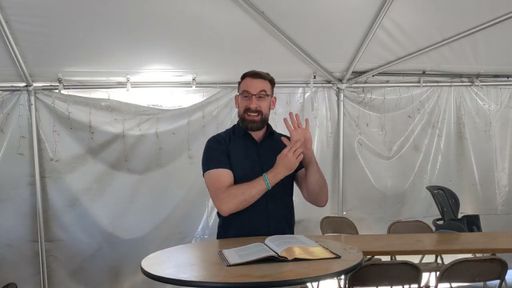
Marriage Myth: "A Break In Between Relationships Is Healthy"
Does the bible commend strong women? Check out our latest installment on "Myths About Marriage" by Pastor Conley Owens.
00:00 Marriage Myth
18:59 How to avoid emotional entanglement?
21:36 Dating and sexual purity
24:30 Marriage without the state's involvement?
25:48 Marriage without the state's involvement? (part 2)
27:00 Marriage as a creation ordinance
31:08 Dealing with discouragement in dating
We host monthly singles gatherings with a message by the pastor once a month. Come sign up here: https://svrbc.org/singles/
🎧 Come hear past myths of marriage here: https://www.youtube.com/playlist?list=PLmJbHAnx-FPMwAKLniBvJSOvP2cqGxtTX
⛪ Interested in learning more about our church? Visit here: https://svrbc.org/
Transcript
Every month we go through a different myth about marriage. This month's myth is a break in between relationships is healthy.
A break in between relationships is healthy. The fact is that the duty to pursue marriage does not take a break.
The duty to pursue marriage does not take a break. You're familiar with this.
People, after one relationship, they don't immediately rush into another, and it's considered in bad taste if someone does.
It's usually called a rebound, right? And so the right thing to do is you kind of go, and you take a break for a little while.
You go find yourself, and then maybe after a few months, then you enter back into the dating marketplace or something like that.
I think there's several reasons why people think this, and I want to address each one. One has to do with purpose.
Another has to do with preparation, and then the last one has to do with protection. So purpose, preparation, and protection.
Just talking about purpose, a lot of people think that if you go from relationship to relationship to relationship, then that would suggest that you think that your main value is found in relationship and that you would have a bad sense of your own purpose in life if really you were spending so much time pursuing marriage.
All right? A lot of people would say, well, that's really shallow if that's how you see life.
Instead, you should go out and do other things, not make it all about relationships. You can have a fulfilling life without marriage, and it's interesting because people like doing that.
They like saying things that are technically true, but not generally true, right? If you ever notice that, a lot of people will point out the minority case as being a possibility and then point to that.
Well, the reality is that it's still a minority case. God's plan for most people is in pursuing marriage, and we right now might live in an era where very few are doing it, but that doesn't change the fact that it is the majority situation, the majority plan that God would have for people.
Yes, there are some that are not gifted for marriage and instead are gifted for singleness, but this is something very rare, so it is good to pursue marriage.
There's a lot of things that people would focus their time on instead. For example, their education or their career.
Maybe everything needs to be set aside for a little while for career. What you find, though, is that if you spend a lot of time on something like career and then go back into pursuing marriage, you'll find that it's a lot harder than when you started.
It's not actually, you haven't made things easier for yourself necessarily unless we're talking about extreme circumstances like going from homeless to having a place to sleep at night.
For the most part, you end up just eating up valuable time. A lot of people go on self -discovery trips, spend a lot of time just kind of trying to take care of themselves, and maybe some people just engage in a lot of self -indulgence.
They don't want to find their value in someone else. They want to just have value in themselves. So, you know, let's just engage in a lot of self -indulgence.
And some people will have more ostensibly holy purposes, right? For the sake of ministry or something like that.
You know, I'm going to go on a missions trip. I'm going to do this. I'm going to just set the pursuit of marriage to the side.
This would all make sense if marriage were a very low thing in the set of things that a
Christian or really any human that God has made should care about. But the reality is it's a very high thing.
It's impossible to read the Bible with an objective viewpoint. It's impossible to live this life with a very objective viewpoint that's not incredibly skewed by a culture that's denigrated marriage and not realize that marriage is one of the most important things that you should care about.
1 Corinthians 7 says, Now, I know that later on in that passage, it talks about that minority condition where someone might be gifted for singleness.
But the passage starts off with the assumption that in general, each man should have his own wife.
Each woman should have her own husband. This is what's normal. And then there's the fact that creation has been ordered this way.
God said, be fruitful and multiply. A lot of people think that when Christ came, the new covenant kind of undoes all this and that doesn't matter anymore.
That's not the case. Bible talks about how marriage, the importance of it is even heightened in Christ because it reveals the relationship between Christ and church.
So it's even more important for Christians to have marriages that reflect that relationship between Christ and the church.
Okay, so the answer for people who would say that, you know, my purpose is not in relationships.
The Bible places that very highly. And so while in some technical sense, some of the platitudes that you hear about not all of your meaning, etc.
being found in relationships is certainly true. What it's essentially doing is trying to take the focus off the general truth that a very significant plan
God has for most people in their life is pursuing marriage and being married. Alright, the second thing is preparation.
Okay, so some people would say, well I realized in the last relationship I had where I was talking to a woman or talking to a man, thinking about marriage, said
I am just not ready. And so I need to go prepare myself for marriage and I'm going to take a year to do that or something like that.
Now there can be legitimate reasons to to realize that you need to prepare for marriage and are in no position to be thinking seriously about it.
There are situations like that. You could have very significant outstanding sin issues. Maybe they have to do with drugs.
Maybe it has to do with purity, sexual purity. Maybe you're a man and you're not capable of providing for anyone but yourself right now.
Maybe you really are just so immature that you need to work on that first.
But you need to keep in mind that no one is ever perfectly ready for marriage.
No one enters marriage with a perfect kind of readiness. And what's going on when people make these kinds of statements is what the
Bible addresses several times under the title of a sluggard. So it says in Proverbs 22, 13, the sluggard says there's a lion outside,
I shall be killed in the streets. The sluggard operates on fear. Any excuse to not do the thing that he should be doing right now because it's actually going to be harmful for him.
It's going to be harmful if he pursues the thing that God has called him to. So instead he's just going to sit and be inactive.
What I have found is a lot of people who said they need to prepare to get married first don't actually have a plan for how they're going to get married.
Really a lot of times it's an excuse to avoid pursuing marriage just because it's a difficult task and a frequently discouraging one.
I know it can be discouraging when you've been pursuing marriage for some time and things haven't seemed to pan out.
Ecclesiastes 11, 4 says, he who observes the wind will not sow and he who regards the clouds will not reap.
If you spend all your time thinking about the bad that could happen, you'll never take action toward the thing that you should do.
And Ephesians 5, 16 says, making the best use of the time because the days are evil. We are supposed to take the time we have and use it well.
If you do need to prepare, prepare diligently and do not waste any time. Practically speaking, once again, immaturity is a given and you should not expect to be perfectly prepared for marriage.
You should have a general understanding of what the role of husband and wife is and that really is primarily what's needed.
You should have things in order. If you're a man, you should be capable of providing for a second person, etc.
But the other thing is, if you are six months or less away from these things being true, you're not going to get married faster than that, realistically speaking.
So, why not pursue both of those at the same time? I meet a lot of people who will not consider the prospects they have for marriage because they're set on preparing for marriage but they're not necessarily preparing for marriage and then when they are, they might have such a short horizon that it doesn't make sense to delay pursuing the options that they have of considering the possibilities, the prospects.
The last one is protection. This is the main one, right? It's because people are emotionally drained after their relationship and they need some time to emotionally recover and it just seems like if someone comes out of a relationship like that and they get into another relationship, they're just going to be using that person to fulfill an emotional need and it's not going to really be a good thing.
The problem with all this is it's assuming a model of relationships that is not biblical.
If the nature of your relationship is satisfying a desire for companionship in that relationship itself rather than pursuing marriage which would actually satisfy the desire for companionship, then you're not going around the pursuit of marriage right.
If you are forming this relationship that's kind of like a mini marriage where you're satisfying each other with your companionship rather than simply doing the task that needs to be done which is exploring the possibility of marriage, you're talking very frankly about whether or not you will be a good fit for marriage and you are developing an attachment that's not supposed to exist outside of marriage, then no wonder you might think about things this way, that it would be unhealthy to go right into the next relationship.
It would be because you have formed attachments that weren't supposed to be formed. You have given of yourself in ways that you shouldn't have given of yourself.
The other person's given to you in ways that they shouldn't and you don't want to do that to someone else too immediately. So that makes sense because what you're talking about at that point is not a healthy approach to dating.
It's something like a mini divorce right. And yeah you wouldn't immediately go from a mini divorce to another mini marriage.
That would be bad. But if you're not doing that, there's no harm in continuing to pursue marriage diligently without any breaks because the duty to pursue marriage does not take breaks.
Proverbs 4 .23 says, Keep your heart with all vigilance, for from it flow the springs of life. As you go about dating, your purpose should be to discern whether or not this person that you're talking to is an appropriate candidate for marriage.
It's not to fulfill desires for companionship that are meant to be fulfilled in marriage. In the
Garden of Eden, Adam looks at all the animals and not a single one was a suitable companion for him.
And so God made him Eve and that's where he had his desires for companionship satisfied.
And of course there are some ways that we have companionship with each other as you know brothers and sisters.
But that quintessential companionship, that apex of companionship that exists in marriage is not something that's supposed to be satisfied outside of marriage.
And if it is, even if you as a Christian know that you're not supposed to be sleeping together, etc.
and so you're not doing that, but you're still forming relationships where you're getting that satisfaction, it is going to keep you from pursuing marriage as you should and then you won't enjoy the actual apex, right?
All you get is a substitute, a poor substitute that doesn't compare.
1 Corinthians 7 .4 says, so I read Proverbs 4 .23,
I don't know if I explained it. You should keep your heart with all vigilance, from it flows the springs of life.
You should be guarding your heart, you should be guarding the person you're talking to, their heart, right? If you all and your time together are mostly spent leisure time kind of quote -unquote getting to know each other that's not really time spent getting to know each other, it's just time enjoying each other, right?
Not that you can't enjoy that time, not that you can't be fun, but if it's really just designed to satisfy those emotional desires, you're not guarding your heart and you're not guarding the other person's heart.
1 Corinthians 7 .4 says, for the wife does not have authority over her own body, but the husband does. Likewise, the husband does not have authority over his own body, but the wife does.
Okay, so in marriage, there's an authority over bodies that happens, right? Now, you probably know that, but think about what that means.
Outside of marriage, there's not an authority over bodies. Okay, but this is usually the idea that's going in people's mind is there's this mini authority that exists in these mini marriages and in those you get mini companionship and you get mini satisfaction, right?
And then that mini divorce happens, you don't want to move on to the next one too quickly, but if you recognize that this is something that's only supposed to exist in marriage like 1
Corinthians 7 .4 says, then you can easily talk to someone, explore that option, keep talking.
There's nothing that requires that kind of behavior of taking breaks for the sake of protection.
Now, what if you've already been going about things that way? Because I meet people who say, okay, well, maybe that's not how
I should do it going forward, but I already have it and I already feel emotionally drained, right? I already feel traumatized and taxed, et cetera, et cetera.
Well, at that point, you should recognize that you went about things wrongly and that that does not excuse failing to pursue the duty, right?
If you went about something wrongly and it made it more difficult for you to do the thing that you're supposed to do, that does not excuse you from doing that thing.
As long as you are able, you should do it. So you should resolve in your mind, okay, that was wrong. I should do this differently.
And even though I feel emotionally drained right now because I went about this wrongly, I should still go into this wholeheartedly knowing that God would have me to pursue marriage.
All right, so practical steps, first of all, in your relationships, do not seek to fill a void that is only meant to be filled in marriage.
I know most people here are good Christians who know that they're not going to have sex outside of marriage, but still, even beyond that, do not fill emotional desires that are meant to only be fulfilled in marriage.
Secondly, have reasonable expectations for how ready you are going to be. Don't use the idea of preparation as an excuse for just being idle.
Okay, if you really do need to prepare, be very diligent about it, but be realistic about how much preparation you need.
You don't need to have everything perfectly in order. In fact, even, you know, I mentioned that some people could have outstanding sin issues that need to be corrected.
One interesting one is sexual purity because people recognize, okay, that has to do with marriage.
Clearly, I shouldn't be taking a lot of sexual sin into my marriage. I need to get that settled first. And that can be very true.
But notice that 1 Corinthians 7 prescribes marriage as one of the remedies for dealing with sexual temptation, right?
And so if your concern about purity is just the temptation that you are feeling, well,
God has prescribed a remedy for that marriage. And so if your way of going about it is to delay marriage, don't be surprised if you end up with more and more temptation.
Okay, that's not going to, delaying marriage is not going to fix things. A lot of times people are going about things very, what they think is intuitive, but is counterproductive.
If you delay marriage without cause, you are just increasing temptations unnecessarily.
All right, and then recognize your duty. Okay, recognize your duty to pursue marriage.
The Bible describes marriage as the normative situation. 1
Corinthians 7, to each man should have his own wife and each woman her own husband. This is the way creation was made.
God blessed it. He reaffirmed that after the flood, be fruitful and multiply. And then
Jesus in establishing that marriage between Christ and the church, showed the true purpose of marriage in a way that heightens it for the
Christian. It does not denigrate it. It does not subvert it so that that's no longer important. It's still there.
And take the opportunities you have. If you have a friend at church who wants to introduce you to someone, you know, go ahead and take that opportunity.
Don't make excuses for why now is not the right time for you.
All right, with all that, I think you can go about this hopefully. And yeah, with the kind of joyful optimism that God would prescribe in his word.
This is his normative plan for people. And even if you've had a lot of difficulty in pursuing marriage, it does not have to be, you know, long extended relationships that are emotionally taxing, et cetera.
It does not have to be a long time. It can be something where if you're pursuing it with the intentions that you're supposed to and without involving the things you're not supposed to, you can pursue marriage effectively and with victory.
All right, let me go ahead and pray for us. Dear Heavenly Father, we thank you for your word that it speaks to these things.
There are so many things that the culture tells us is normal and right, but we pray that you would make us people who are eager to follow your word.
Even in those things, both in those things that it speaks to directly and those things it speaks to indirectly, we ask that we would follow in both.
In Jesus' name, amen. Yeah, well, first of all, there's nothing wrong with having a fondness and a growing fondness as you get to know someone.
That's reasonable. And if you think about this, even if you were emotionally stunted for talking to the person as far as that human connection goes, there's still going to be some measure of disappointment because you get your hopes up about a relationship, et cetera.
And I think that's, in the ideal world, that's primarily where it's centered. And just to, before answering the question more, just to step back and show how disordered it must be, think about what usually happens in church relationships, right?
So if a man and a woman are interested in each other for marriage in a church and they do the whole boyfriend, girlfriend thing, et cetera, and they break up, one of them has to leave that church usually.
That's how it works. And that only works in our culture because we have a smorgasbord of church options to go to.
It clearly wasn't meant to be this way. You should be able to talk to someone in your own church about marriage, get pretty far with that conversation, break it off, and not have to separate from the body.
Right? What's that? Oh, I don't think they really do, but usually it's just so awkward to be around each other because they had such an emotional connection and they can't stand to see each other anymore because it tears their heart up, right?
So, yeah, I recognize that there's going to be some level of hope that's dashed and there's going to be, you know, just like with anything, you won't go about it perfectly, so it is with relationships.
It's very hard to speak with someone of the opposite sex and not have some kind of heart thing stirred.
I think it was C .S. Lewis who said that, you know, even just talking 15 minutes with the opposite sex like necessarily stirs up some level of eros, eros being, you know, like a sensual kind of love.
And it's, yeah, it is inevitable at some level, but you need to, just like lust is inevitable at some level, right, so I wouldn't say that, oh, okay, because lust is inevitable, therefore, just give yourself over to all those desires, right, when
Jesus is addressing it in Matthew 5. So just like this, even if you're not going to navigate that perfectly, even if you're not going to perfectly guard your heart or perfectly guard someone else's heart, you should be doing it as much as possible.
Same thing with any other aspect of the Christian life, even if you're not going to do it perfectly, pursue goodness as much as possible.
I don't think it undermines the project, yeah, right. Yeah, I think it should be something that is obvious up front, right, so either it's obvious because you're in the same kind of church context and you both know what each other expects, or maybe it's obvious because you start off by talking about how do you think relationships should go, right, it doesn't have to be, you know, what are the boundaries for physical contact, it can just be positively what should we be doing in this, and then you can find out from that conversation, and I think that should be one of the first conversations to be had because it really sets the stage for all these things that I'm addressing, which go, like I said, it's a lot more than just sexual purity, it's emotional protection, et cetera, right, yeah, and yeah, if you all can establish up front that, okay, the purpose is for us to get to know each other in a way where we would be able to pursue marriage and not to fulfill, you know, desires for companionship, et cetera.
Now, as a woman, it's going to be a little bit harder because you're not able to lead the conversation that way necessarily, right, but you are, but you can offer things like, you know,
I've been taught these things and I've come to believe these things, what do you think of that, you know, and then see if he's willing to, if he's already got that mindset, great, if he doesn't, you know, is he willing to, you know, shift his mindset.
I'm trying to phrase this in a way that doesn't make you the spiritual leader for him, right, but what
I suggest usually is if you have a good pastor or some good spiritual authority in your life that you could redirect someone to,
I don't think that's the worst situation. You know, I don't think a man necessarily has to have it all together.
If you've ever read, Vodie Bauckham has a book called What He Must Do to Marry My Daughter, I think it's called something like that, and What He Must Be to Marry My Daughter, and at the very end he has a, it's either a chapter or a section called
Making Your Own Man or something like that, where basically let's say you look around and there are no good men and you're trying to find, you're trying to help your daughter get married, what do you do?
Well, the answer is make your own man, like help train a guy to be a good man, and yeah, right now there are not a lot of good men, but if you find someone that has potential and you realize, okay,
I as a woman can't teach him how to be a good man, but you do know a good man who would be willing to help you in that project, that's,
I don't think you should just say, oh, this isn't a possibility, this can't work out, you can, you know, see if you could arrange some kind of mentorship relationship so that you are addressing the problem without being the spiritual leader.
Yeah, marriage is not a church ordinance, it is also not a state ordinance, it is just a creation ordinance, it's existed before the church and the state, you could have a legitimate marriage without either party involved.
However, there is value in the state recognizing the marriage so that it can uphold justice, now
I recognize that our country doesn't necessarily do a good job of upholding, doesn't do a good job of upholding justice all the time, so if the institution were so corrupt that you were concerned, that you reasonably thought more harm would be done than good,
I could see that theoretically being the case where you would just not even bother with the state.
However, they are going to be able to handle things like, oh, what if one party dies or both party dies and there's like, how do you handle the inheritance, et cetera, it's, that's their job assigned to them by God and if you make their job very hard for them because you're not, you know, informing them of your marriage, et cetera, it doesn't seem like you're doing your job as a citizen,
I guess at that point, so that would be the level of concern I would have about it, it's not that it illegitimizes marriage, but you have some duties from God as a citizen to help them perform their task before God and you don't want to be negligent in that.
I don't, I don't know the details, but I don't think it would be recognized, well, it certainly wouldn't be recognized,
I guess the question is could there be penalties, I don't know, but yeah, as far as prenups, so the way
I used to think about prenups is that they were just wrong, that was just a backdoor, right, and that's your way of, you know, not being invested in the success of the marriage.
Now I've started to realize that if the state really does such a bad job of upholding justice in marriage that there can be value in having, like, a standard prenup that everybody signed, you know, where you're not investing a lot of effort into figuring out what it's going to say, but, you know, maybe if the pastor just handed you one and said, this does not denigrate marriage, this actually upholds marriage because it makes sure there is fault, et cetera.
Now I don't know how well you could enforce such a thing, you know, fault and divorce and everything, but really there should be some of those notions so that a woman can't just cheat on a guy and then take all his stuff, you know, it shouldn't work that way, but so I do believe there is a place for a prenup that upholds marriage rather than denigrating it.
Okay, sure, so God established marriage in Genesis 1,
Genesis 2, right? And that comes before the state. I believe he established the state in Genesis 9 where it says, whoever sheds blood by man, his blood shall be shed.
I believe that's God authorizing man to shed blood in order to defend, right? Okay, and then the church, if we're talking about the church proper in the
New Testament, obviously there's a precursor that exists in Israel, et cetera, but all those are way after Genesis 2 and 3, right, so God establishes marriage beforehand.
Marriage is a vow before God. The difference between an oath and a vow, an oath is two between men in God's sight.
A vow is directly to God. Marriage is called a vow because it's not something that you can release someone of.
If you make an oath to me that you're gonna give me something, I can forgive you that oath and release you of it, right?
You can't do that in marriage. You can't just release someone of it by, you know, you'd have to actually break it.
So that's why it's called a vow. So that's what marriage is. Marriage isn't established just by sex either, right?
So for example, Jesus spoke to the woman at the well and he said, you know, you've had many husbands. The one you're with now is not your husband, right?
So that lets us know that sex itself, even though that is described as two becoming one flesh in 1
Corinthians 6, where it's talking about a man with a prostitute, that still, even if it's described as two becoming one flesh, is not establishing a marriage, which only happens by a vow.
So that's kind of like some random data points to give you parameters of what marriage is.
I'll also say that a lot of people try to understand marriage by looking at the passages that talk about divorce and situations for divorce in like a really nitty gritty way.
And certainly those passages are there for your clarity, but I think a lot of people misunderstand how they are to come to scripture because this is what the
Pharisees were doing, right? The Pharisees were saying that divorce was okay because I look at Moses and Moses seems too loud here, not there, et cetera.
And Jesus says in response to that, this was not so from the beginning.
The two shall become one flesh. And so Jesus is basically saying that all you need to know about marriage and divorce is actually baked into that one little truth.
Now it might be hard to piece it out, but if you are coming to it with that understanding that it's all baked into there, then the other passages are not actually the foundation from which you understand what marriage is.
They're just clarifications on marriage. And I think that helps a lot too because people come to weird opinions like, for example,
I don't know if you've heard of permanence view. That's the idea that divorce is never under any circumstances acceptable, even when the other party cheats on you, et cetera.
And then, or if the other party cheats on you and divorces and remarries, you still wouldn't be allowed to remarry, right?
These things come from looking at those passages in 1 Corinthians 7 and elsewhere and kind of nitty gritty going through and then coming to conclusions based on what those say.
Whereas if you understand, oh, this is a covenant and the nature of a covenant is that when it's broken, both parties are free if it's been broken.
And yeah, it can be broken. That is the nature of the covenant. So it answers a lot of those things.
Once you start thinking just what is marriage? Okay, it's a covenant. What is a covenant?
And you're answering the bigger questions rather than just trying to proof text every little sub question you come across.
So just a thought on how to read the Bible in general, but yeah. A covenant, yes, you can think of it like a contract.
It's like a contract. A lot of the covenants that are made are not contractual in that we, they're unilateral, right?
God makes them. We participate in them, but we're not voluntarily signing up for them necessarily.
So there's senses in which it's not like typical human contracts. Yeah, and that's a huge investment if you're spending like a year on the relationship and then a year and a half on recovery and so on.
I don't think it needs to be like that. It can be something much faster. Right, you look at scripture and you see the relationships exist.
You know, I've done messages on this before, but almost all the marriages that you see any detail on, there's parental involvement, and it's fairly, you know,
I don't know if you want to call it cold or whatever, but it's not, you know, it's not like trying out the relationship on for size, you know, and it's not this long extend process.
It's very serious just, you know, what are the things we're going for here, and, you know, they figure it out pretty quickly.
So I don't think that we need to sort out more than, you know, are we both going to be proper mutual helps to each other, me as a man, you as a woman, and that doesn't take long to figure out if that's all you're doing, right?
So that's that part. Yeah, as far as people having options or not having options,
I understand not everybody's going to have, you know, options breaking down their door, but I do know that it's, there have been a number of times where I've tried to introduce someone to someone else, and then the response
I get is, oh, no, I'm taking some time off right now. It's like, man, you don't have many options.
Like, I recognize, you know, some people don't have many options, and I just did the work of finding one for you. Maybe it wasn't like, you know,
I, yeah. So, like, wow, what a wasted opportunity, you know?
So anyway, yeah, don't waste those opportunities. First of all, they don't have to be long, so don't spend a lot of time on any of this, really, as far as dilly -dallying and not, you know, just getting to the core of what you're trying to figure out.
And then, two, don't go through those seasons where you're rejecting potential spouses when, yeah, you might not have a lot of opportunities afterwards.
People do this kind of stuff all the time, where they say, oh, well, I can do that later. I just need to be patient.
Sure, patience is a Christian virtue, but we only have so many years on this earth. 70 if God gives it to us, or 80 for reason of strength, if you know the psalm that says that.
A lot of people do this with kids, too. They say, oh, I can have kids later, and then they don't realize that, oh, they're going to have difficulty with fertility.
And then they spend a lot of time trying to have a kid and just, you know, really upset about it all the time when they spent, you know, 10 years intentionally not having a kid, and then they regret it, right?
So same thing with taking a little time off, et cetera. You don't want to do that and then look back at those years you took time off and say, wow,