Keep sharing good news without ads.
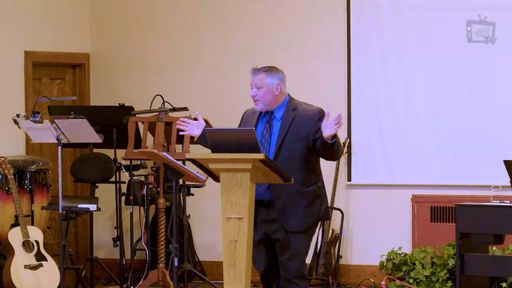
Sermon, September 27, 2026, 1 John 4:19-21, Pastor Phil Sessa #gbcny † gbcny.org
"Genuine Love"
https://www.gbcny.org/give
We live in a world filled with counterfeits. There are counterfeit watches. There's counterfeit money, documents, gold, diamonds, and they could all look remarkably convincing. There are services and transactions that could be falsified.
We've seen no sheer number of fraudulent daycare centers, invoices, donations, where someone says money is going here, but it's actually going to something else. Some counterfeits are very easy to spot, but others look so much like the real thing, it's really hard to distinguish at first glance.
Our counterfeit doesn't have to look entirely different from the genuine article. In fact, the best counterfeits so closely imitate the real thing. That raises an important question from today's passage.
What does genuine love actually look like? Counterfeit love is no different. Mary J. Blige's song, Real Love, captures a longing for someone to fulfill her heart's deepest desires. A love that will finally set her free and satisfy her search.
But her search wasn't truly a search for real love, because God is love, and her longing wasn't directed toward him as the source. She wasn't asking God to be the source of her love. She was merely asking him to send someone who would display love to her on her own terms.
According to her own desires. Even more sobering is when counterfeit love is dressed up in the very language of devotion. In the recent court case, defense attorney Kevin Reddington repeatedly argued that Lindsay Clancy was a wonderful mother who loved her children up to the moment that she murdered them.
But how can murdering one's children be called love when love by definition is kind? It protects, it's not irritable, it's not resentful. It doesn't rejoice at wrongdoing, but with the truth and bears all things.
John points us to true, real, genuine love in a far greater way. God has sent the one who is truly loved, the Lord Jesus Christ, because God himself is love. Jesus was manifest in the flesh to John in 1st John 1 -2 and revealed the love of God so that we, all of God's people, might live through him.
1st John chapter 4 and verse 9. Follow as I read God's inspired, infallible, all-sufficient word from 1st John. We're gonna start in chapter 4 verse 15 to 21 for context. God's word says, The love that God has for us.
God is love and whoever abides in love abides in God and God abides in him. By this is love perfected with us so that we may have confidence for the day of judgment because as he is so also are we in this world.
There is no fear in love, but perfect love casts out fear. For fear has to do with punishment and whoever fears has not been perfected in love. We love because he first loved us. If anyone says I love God and hates his brother, he is a liar.
For he who does not love his brother whom he has whom he has seen cannot love God whom he has not seen and this commandment we have from him. Whoever loves God must also love his brother. Well today's sermon is titled genuine love and John makes three arguments in verses 19 to 21.
Argument number one is the source of love in verse 19. Argument number two, the counterfeit of love in verse 20. And argument number three, the command to love in verse 21. Now John has already shown us what genuine love is.
Now he reveals its source and how it's meant to flow through us. Our calling to love God and to love one another as the beloved family of the God who is love. So the question presses in, is that genuine love evident in your life and in mine?
Argument number one, the source of love. Look again in verse 19. We love because he first loved us. The new King James you might have in front of you says we love him because he first loved us. His first argument is from the very nature of the gospel.
The new King James variant, we love him, verse the ESV, we love doesn't need to cancel each other out. The object can dovetail. In other words, it can be both. That we love and we love him. When we look at the Ten Commandments, the first table, Commandments numbers one through four, commands our love for God.
The second table, Commandments five through ten, commands our love for our neighbor. Which Jesus summarizes, love God with all your heart, soul, mind, and strength and love your neighbor as yourself. However, we are incapable and even undesirous of doing so apart from a changed heart.
Which is why John says he first loved us. John's concern is first things first. Giving us a new heart is like giving a dead car a roaring new engine. He then fuels it with his regenerating love, power that drives our spiritual car to love him and our neighbor.
That same truth is seen in verses seven through eight. Look with me. Beloved, let us love one another for love is from God and whoever loves has been born of God and knows God. Anyone who does not love does not know God because God is love.
In chapter 3 verse 11, for this is the message that you have heard from the beginning, that we should love one another. In verse 10, he continues, in this is love, not that we have loved God, but that he has loved us and sent his son to be the propitiation for our sins.
He initiates that relationship we have with him, not us, and this initiating love is expressed in the past tense. In other words, it's an accomplished and completed act while our response, we love, is in the present indicative.
This is significant. It's not a one-time event, but an ongoing habitual love, a continuous state of being. The present tense captures love as a sustained condition in our Christian lives, one that flows from God's prior completed act of love.
His love generates ours as an ongoing response. The theological sequence then is clear. God's divine love initiates, precedes, enables, and causes our human love. Recall in Luke 16, the rich man who went to hell and Lazarus who went to heaven.
The rich man wanted Lazarus to just cross over hell, to soothe his tongue with just a drop of water. Abraham responded to him saying, a great chasm has been fixed in order that those who would pass from here to you may not be able, and none may cross from there to us.
Could you love God and others apart from Christ himself, reaching across that great chasm, the divide of our sin and guilt and shame, and transforming us to those who can and will love? William Tyndale was the private tutor to six-year-old Harry Walsh and reminded him that these words, we love him, because he first loved us, were the pearly gates through which he would enter the kingdom.
He said this before embarking on his journey to translate the New Testament into English, which would lead to his martyrdom because Christ first loved him. He loved others by translating the Bible into English that you have in front of you this morning.
With the help of my friend Phil Johnson, here are five doctrinal statements we can learn from this short verse, also known as the doctrines of grace. Number one, the perverseness of our fallen state, total depravity.
He first loved us, shows there was a time that we didn't love him, but that we actually hated him. Romans 8, 7, and 8, the mind that is set in the flesh is hostile to God. For it does not submit to God's law.
Indeed, it cannot. Those who are in the flesh cannot please God. This state of depravity was the polar opposite of love. None of our thoughts, words, or deeds were done for his glory, but for self-glory.
This is the state of hopelessness for all men, for all have sinned and fall short of the glory of God, Romans 3, 23. And Romans 5 says that while we were still weak, powerless, sinners, lawbreakers, and enemies of God, Christ died for us to reconcile us to the Father.
What other hope did we have? John was so enamored by Jesus's love that he never even refers to himself by name. But instead, he calls himself not the great apostle, but the disciple whom Jesus loved. John 13, chapter 20 and 21.
This defined who he was. This was his identity. The question this morning is, what's your identity? Is it your ethnic background, your zip code, your financial status, your job title, your class year, even your ministry role?
Or is it Christ? Is your identity in Jesus and Jesus alone? Why was this so prominent in John's mind? That's a great question. Because he knew this love was utterly undeserved, love that transformed him from an impatient, brash, son of thunder wanting to call down fire upon a village for not worshiping Jesus the way he did, into the disciple that Jesus loved.
His heart was so initially devoid of this ever so lovely Christ. How can the human heart be so stone cold toward the only one worthy of such love? Martin Lloyd-Jones wrote, we must once and forever get rid of the idea that God has loved us by way of a response either to something that is in us or something we have done.
When we were enemies, we were reconciled to God by the death of his son, Romans 5 .10. Secondly, the priority of God's electing choice, also known as unconditional election. We love him because he first loved us.
God's love and choice precede any movement on our part. As believers, we did not choose God first. He sovereignly initiates and secures our salvation. God himself has been moved by nothing but his own everlasting love.
That was his motive. His love is self-generated, self-motivated, self-created. And the gospel is replete with this truth. Jesus said to John and the disciples after eating the Passover meal on that night before the crucifixion in John 15, 16 and 17, you did not choose me, but I chose you and appointed you that you should go and bear fruit and that your fruit should abide.
So that whatever you ask the father in my name, he may give it to you. These things I command you so that you will love one another. If you were one of the 11 remaining disciples, you may have disagreed with Jesus' words.
Why? You might have said, that's not true, Lord. And you echoed Peter's words in Mark 10, 28. See, we left everything to follow you. We made a choice. Well, in one sense, they did make a conscious choice to devote their lives to following Jesus, did they not?
John gave up a lucrative family fishing business. John was previously a disciple of John the Baptist. So in a real sense, he chose Jesus. This is the same sentiment held by our Arminian friends who believe that they too chose Jesus and were not sovereignly chosen by Jesus from the foundation of the world.
So what does Jesus mean when he says, you have not chosen me, but I chose you? His choice was the decisive one, the one that really mattered. They would have never chosen him had he not chosen them first.
When did he choose them? Before the foundation of the world, before the creation of Adam and Eve, Ephesians 4, Ephesians 1, verse 4 and 5. Even as he chose us in him before the foundation of the world, that we should be holy and blameless before him.
In love, he predestined us for adoption to himself as sons and daughters through Jesus Christ, according to the purpose of his will. Did they have the power to write themselves into that choice? To write their own name in the Lamb's book of life, which was also penned from the foundation of the world, Revelation 13, 8 and 17, 8.
You didn't write it. You didn't earn it. God wrote it before Adam drew breath and before you were even conceived. Amen. That's when he shows you it's God's work in you, not your own doing. That was a catalyst for your first belief.
This is the difference between why you love him and why another family member still hates him and rejects him. As Paul asks, what do you have that you did not receive? 1 Corinthians 4, 7. If you love him, it is to his credit having first loved you.
We see sovereign election saturating the pages of scripture, do we not? Abraham was chosen out of the pagan era of the Chaldees. Isaac was chosen over Ishmael, Jacob over Esau, Joseph over his brothers, Moses over Pharaoh, David over his brothers, the penitent thief over the unrepentant one.
We love because he first loved us. God took the initiative. He is the author and finisher of our faith, guaranteeing our love for him, the priority of God's electing choice, but also thirdly, the particularity of his saving work.
This is also known as particular or definite atonement. My preference as opposed to limited. Look at how the verse is bracketed by these two matching pronouns. It opens up with we, we love him, and it closes with us.
He first loved us, we and us. This is known as inclusio, which underscores John's conviction that Christ's love was not given salvificly to all people. While God exhibits a general goodwill toward all creation, such as we see in Matthew 5, 45, for he makes his son to rise on the evil and the good and sends rain, just like today, on the just and the unjust.
However, he holds a special, sacrificial, fatherly love for his elect, sending Christ as our mediator, our advocate, our specific propitiation. John knows Jesus loves him particularly, which he witnessed as the only disciple at the foot of the cross as he watched his savior die for his sins.
And the same is true for you and I. You and I are not like dogs licking up the crumbs of God's general love for humanity, but we are targeted recipients. He laser pointed his love upon you, his special love for us.
Matthew 1, 21, she will bear a son and you will call his name Jesus, for he will save his people. Are his people all people? They're not. His people are you that know Christ from their sins, from our sins.
John 6, 44, no one can come to me. In other words, this is an impossibility. No one could come to me unless the father who sent me draws him and I will raise him up on the last day. And it's a picture of when the disciples were fishing and they threw the net overboard and they drew in the fish.
The fish swam in that area of their own free will, but they were drawn in by the net. And he drew you in with the net of his grace, with the net of his love. As a believer, he has specifically adopted you and seated you at his table.
And like John, you too can call yourself a disciple that Jesus loves. His great love stops at nothing to preserve the object of his love. Philippians 1, 6, he who began a good work in you. In other words, he who first loved you will bring it to completion at the day of Jesus Christ.
What can separate us from the love of Christ? Paul says in Romans 8, not tribulation, not famine, not persecution, danger or sword, not death, nor powers, nor rulers, not anything else in all of creation will be able to separate us from the love of God in Christ Jesus, our Lord.
Why? John says because he first loved us. Others are separated from his love, but not us. His penal, substitutionary, atoning sacrifice, it proves this. Amen. How grateful are you that he didn't bypass you, but he chose to shower you with his love.
Does this not humble your hearts? Fourthly, the power of his loving deliverance known as irresistible or effectual grace. The verse says we love him because he first loved us. God's love for us is the effectual cause of our love for him.
Not merely a motive, but a sovereign transforming power. As the moon reflects the sun, because this moon doesn't have its own light, we reflect God's love toward him and to others. Many misunderstand this doctrine of irresistible grace.
God's grace does not coerce us against our will. We don't come kicking and screaming to him. I don't want to go. I don't want to be a Christian. That's not what happens. I don't want to give up my own life.
Rather, he regenerates our dead hearts, making the beauty of Christ irresistibly attractive so that we freely and gladly turn to him. Changes the heart. This love transforms us and secures us from God-hating enemies into adopted sons and daughters so that his love now flows within us, overflowing back to him and onto one another.
No one had to coerce me to marry my wife. No one had to coerce me to love my children. No one has to coerce me to serve the body of Christ here at Grace Baptist. With a changed heart comes changed desires.
God's grace produces a reciprocal love. Just as Pastor Peter preached last week, Christ set his love upon that one sinful woman and not upon that Pharisaical Simon on that day. As Jesus taught, those forgiven much, love much.
The final doctrine of grace that John shows us in this very short phrase is the perfection of his redemptive plan or the perseverance of the saints. He who began a good work in us will complete it. Philippians 1, 6.
John 13, 1. He loved them to the end. Romans 8, 29 to 30. For those whom he foreknew, he also predestined to be conformed to the image of his son in order that he may be the firstborn among many brethrens.
And those whom he predestined, he also called. And those whom he called, he also justified. And those whom he justified, he also glorified. And in Jude 24, now to him who is able to keep you from stumbling and to present you blameless before the presence of his glory with great joy.
The same divine love that transform a believer's heart guarantees that God will persevere them in faith and love all the way to the day of judgment. He first loved us. Amen. There was a lot of lemon we squeezed out of that little phrase.
The source of love is God. Argument number one. But what about those who claim to love God and not their brother? Well, this leads us to argument number two, the counterfeit of love. Look back with me in verse 20.
If anyone says, I love God and hates his brother, he is a liar. For he who does not love his brother whom he has seen cannot love God whom he has not seen. His first love, an argument from the gospel that his second argument is an argument from logic.
If anyone says, I love God, stop right there. It's easy to utter those words. I love God. I love God. Everybody loves God. But do I really? Does the one who says, I love God, do they really love God? Does the coworker that says, I love God, do they really love God?
I've been, I've conversed with so many God hating people who affirm their love for God by their lips. They claimed it with their lives. They spurned God. The God they spoke of truly wasn't the God of scripture, but a God of their own imagination.
One that affirms them in their sin. Many speak such words. But it's a counterfeit confession, a bogus testimony. If someone loves God, they will love the people of God. If not, they're part of a different family.
Those who love the family of God desire to be around the family of God. I imagine if we had the technology to fly Mabel here on a rocket wheelchair, she would come on fumes to every service. Yet many, they say they love God.
They're not providentially hindered and they still don't want to gather with the saints. How popular is it to say, you don't have to go to church to love God. It's really a wrong statement to make. Rather, we're privileged and we're drawn by his irresistible grace to gather in one accord as the family of God.
The Jews in Jesus's day, they thought they were in the family of God by progeny because they were physical descendants of Abraham. We're in the family of God, not because we share Abraham's bloodline, but because we share his faith.
And the word brother here is to be understood in the widest sense. Brothers in Adam, as when Jesus said in Matthew 5, 45, if you love those who love you, what reward have you? Jesus is making an argument.
John is making an argument from the greater to the lesser. If someone says, I love God, the greater, and hates his brother, the lesser, he is a liar. For he who does not love his brother, the lesser whom he has seen, cannot love God, the greater whom he has seen.
A .E. Brook explains that love must find an object. And if it fails to find the near object, our fellows, it will never reach the further God. How can you possibly love the invisible God when you cannot love your visible brother seated right next to you?
Zero in on these words, if anyone says. A phrase John uses repeatedly, one that most often precedes a lie. Turn back to 1 John 1, verse 6. Flip back in your Bible for a minute. 1 John 1, 6. And because John is a short little book, we don't have to go very far.
I want you to see this. What do you see? 1 John 1, 6. Again, right there. If we say we have fellowship with him while we walk in darkness, we lie and do not practice the truth. Anyone who claims to be a Christian while living, while walking in darkness is telling a bald faced lie.
Consider Matthew 7, which Pastor Peter read. Those who called him Lord, Lord heard the response. I never knew you. Jesus must be the one to say you're his child, his adopted son or daughter, his beloved.
Look at 1 John 1, 7. But if we walk in the light, as he is in the light, we have fellowship with one another. And the blood of Jesus, his son cleanses us from all sin. Our lips must match our lives. Some don't have a credible testimony, but rather a testifony.
A testifony made up out of whole cloth. Verse 6 says, if we talk. Verse 7 says, if we walk. Spoken doctrine must bear the fruit of sweet devotion. In verse 8 of chapter 1. If we say, there it is again.
We have no sin. We deceive ourselves and the truth is not in us. I was sharing the gospel years ago on the boardwalk in New Jersey. I believe Jose was there with me. And this man, he claimed he kept all of God's law.
Until I asked someone who knew him best, his wife. I said, has your husband ever broken these commandments? Has he? She threw him under the bus and drove over him repeatedly. Exposing him as the great liar who did indeed break the commandments of God.
After a great hearty laugh on my part. I said, you really need Jesus because you are a filthy lawbreaker. And your wife exposed you. Thank God for wives, right? In verse 9, he switches back to the true believer.
Who confesses their sin. Followed by the counterfeit confession in verse 10. Where he says, I have no sin. And thereby, he makes God a liar. Worse than being a liar himself. He assumes that God is one like himself.
Yet Numbers 23 19 says, God is not a man that he should lie. This man is trying to paint God in his own image. In his own corrupt nature. Bringing God down to his level. It's Edward's sermon reversed.
Not sinners in the hands of an angry God. But God in the hands of an angry sinner. John is speaking more polemically than pastorally here. He's calling this man out. And putting a spotlight on his sin.
He's pulling no punches. He's telling it straight. And going after the wolves who seek to devour the sheep. Look at chapter 2 verse 9. We see it again. Whoever says he is in the light. And hates his brother is still in darkness.
In darkness is being in the evil world system. Recall John said in verse 15. Do not love the world. But this guy, he relishes in the world. With the lust of the flesh. The lust of the eyes. And the pride of life.
He loves those things. But he hates his brother. Because he's in a different family. The family of the devil. John 8 44. And John illustrates this saying. We should not be like Cain. Who was of the evil one.
And murdered his brother. And why did he murder his brother? Because his own deeds were evil. And his brother's righteous. 1 John 3 12. The first person born in the world, Cain. Murdered the second person born in the world, Abel.
And that was his own physical brother. Every time John uses. If we say things are about to head south. Turn again to 1 John chapter 4 verse 20. John is saying. If you claim to love God. While you stab your brother in the back.
If you truly saw him as your brother. You would love him. You wouldn't do such things. This hatred includes animosity. Jealousy. An unforgiving spirit. Being uncaring. Or simply ignoring your brother.
Cain hated his brother. Before butchering him. We know this from his response. When the Lord asked about his brother's whereabouts. He sarcastically. Heartlessly responded. Am I my brother's keeper? He didn't see Abel as his brother.
So he became his brother's killer. The same with Lindsay Clancy. And those that abort their children. Claiming to love God. While harboring a Cain spirit. Makes one a liar. Self-deceived. He thinks he's going to heaven.
But when he dies. He's going to wake up in hell. Apart from Christ. This is confirmed throughout the epistle. Whoever hates his brother. Is in darkness. And walks in darkness. And does not know where he's going.
Because the darkness. Has blinded his eyes. Chapter 2 verse 11. Everyone who hates his brother is a murderer. And you know that no murderer. Has eternal life abiding in him. Chapter 3 verse 15. And in chapter 3 verse 10.
He draws the line plainly. Whoever does not practice righteousness. Is not of God. Nor is the one who does not love his brother. John spoke about the. If we say group. In 1st John 2 19. They went out from us.
Because they were not of us. For if they had been of us. They would have continued with us. But they went out. So that it may be complained. That they are all not of us. They left because they weren't part of the family.
Not part of the family of God. The evidence. Was that they said they love God. While hating their brother in the same breath. Jesus spoke much. About and exposed counterfeit disciples. In John 6. Many walked away when Jesus said.
Unless you eat the flesh of the Son of Man. And drink his blood. You have no life in you. This isn't the Eucharist and wine. Of Roman Catholicism. Or Eastern Orthodox traditions. Jesus had already said.
I am the bread of life. Whoever comes to me shall not hunger. And whoever believes in me. Shall never thirst. Eating his flesh and drinking his blood. Meant coming to him and believing in him. Those who didn't truly come to him.
And believe in him. Well they left. Those who did remain. When Jesus asked if they too would part. Peter replied. Lord to whom shall we go? The true disciples. You have the words of eternal life. And we the true disciples.
Have believed and have come. To know that you are the Holy One of God. The same scene repeats in the Last Supper. When Jesus said. One of you would betray me. The true disciples asked. Lord. Curios. Master.
Is it I? And remained with him. But Judas the false disciple asked. Rabbi. Teacher. Is it me? And he left to carry out his betrayal. Jesus spoke repeatedly about true and false conversions. Throughout scripture.
The sheep and the goats. The wheat and the tares. The good fish and the bad fish. So we should expect that same mix. Among our church gatherings today. John MacArthur said. That false conversion is a major crisis.
In modern Christianity. Where people mistake emotional. Experience. Religious activity. Or moralism for true salvation. A .W. Pink observed. That many modern conversions are false. Driven by superficial emotionalism.
Or a shallow gospel. That omits repentance. Holiness. And Christ Lordship. Bodhi Backham has described false conversion. As a false deceptive assurance. Believing oneself saved. Apart from true repentance.
Faith. Or the evidence of a transformed life. All people. Everywhere. Even here. Can be a false convert. Or a true convert. 1 John 4 .14. Whoever does not love abides in death. 1 John 4 .8. Anyone who does not love does not know God.
This is not hard to understand. But for many. It might be hard to swallow. There are churches with counterfeit Christians in them. Some who won't love a fellow believer. Because they're a different ethnicity.
From a different zip code. Speak a different language. Or don't share the same struggles or interests. God help us. Let us love. Because he first loved us saints. Amen. Now John swings from the counterfeit love.
To our biblical mandate. In his third argument. Argument number three. The commandment to love. Look at with me in verse 21. And this is the commandment we have from him. Whoever loves God must also love his brother.
This third argument is an argument from authority. It's a command. This is the antithesis of verse 20. The other end of the spectrum. The one who walks. The one who has a walk must match their talk. Their lips must match their life.
Jesus raised the bar beyond the commandments of Deuteronomy 6 .5. Love God with all your heart, soul, and strength. And Leviticus 19. Love your neighbor as yourself. Teaching his disciples in John 13 .34.
A new commandment I give to you. That you love one another. Just as I have loved you. You also are to love one another. Then he continues and says by this. All men will know that you are my disciples.
If you have love one to another. This is the flag that we raise. That the world can see. How the saints love one another. How they care for one another. When my house was flooded many years ago. You know who came?
My family didn't come. And I'm not chiding them for not coming. But you came. You came to help me clean up. You helped me throw things out. You helped me dry things out. It was the saints. And I'm grateful.
I mean just the overwhelming pouring love of the saints that came. And that's not to chide anybody who was not able to come. But just collectively it was the saints. Who came and who loved and who served and who helped.
And who carried things out. Jesus calls us to love the Lord. And one another just as Christ loved us. Consistently. Willingly. Sacrificially. One another is specifically your brother and sister in Christ.
Love that comes from heaven. Though must also be nourished from heaven. By spending time with him who is love. In prayer and in the word. Once it is kindled in our hearts. It must bring warmth and shine light toward others.
And it's not to stay like a lamp under a basket. Some are easy to love. They may have more in common with us. Others may be more challenging to love. If we only love those that are like us. How are we any different than the world?
That's how the world loves. One person loves a sport and they love the other person who loves that same sport. One person loves this kind of food. They love the other person who likes the same kind of food.
But we're to love those who are different than us. Because what we have in common is Christ. He's our glue. He's our common denominator. We're in the same family. We must even love true believers that go to other churches.
They might not have the theological depth that we have here. But if they're true siblings in Christ, we must love them. How genuine is your love for the Lord? The acid test John gives is how you love your brothers and sisters in Christ.
And not treating them as if Jesus didn't die for them, just as much as he died for you. He nailed their every sin to the cross, just as he nailed your every sin to the cross. We are to be doers of the word of God and not hearers only.
Jesus said in Matthew 25, that those who minister to the saints, they minister to him. Jesus reverses in us what took place in the garden where our first parents failed to love God and one another. Now, the love of God he shed upon our hearts, we can now love God and one another.
Spurgeon instructs us, if you're harboring any animosities, ill feelings and unkindness, get rid of them. Get rid of them at once. Remember the Apostle Paul's injunction, do not let the sun go down on your anger.
Amen. Well, in conclusion, genuine love can only come from a genuine God who is love. And if you're struggling to love, meditate on God's great love for you, what he's done for you, that he first loved you and he loved me and we were not deserving or worthy of such love.
There was nothing lovely about us. He looked on the earth and he said, there's a rebellious, vile, wicked person. I'm going to love him. I'm going to transform him. And he took this ball of rebellion and he transformed it into a trophy of grace.
And if you're in Christ today, it's only because he first loved you. If you love the saints, it's only because he first loved you. And if you belong to him based on your own merit rather than his, know that that approach is backward.
He is the one who first loved sinners, died for sinners. While we were yet sinners, he died for us. And he called us to bow our knee to him and call him Lord as his beloved children because he first loved us.
He sees loving the body of Christ as loving him who is the head of the body. Let me ask you four questions today. Number one, do you see the source of love in your own life? When you look in the mirror, do you see that apart from Christ, you can't love God and you won't love your brothers and sisters?
Is his love truly flowing in you and through you? Secondly, are there those here today that have a counterfeit love because you're a counterfeit believer? Is it possible that you're a goat and not one of his sheep?
We were all in that place at one time. We were all goats and he transformed us in a sheep. Number three, are your religious affections stirred for Christ to love your brother and sister in Christ willingly, practically, and even sacrificially going out of your way?
Do you see them as your brother and sister? Do you see yourself as your brother's keeper, as your sister's keeper? Number four, will you shine the genuine love of Christ to the lost by preaching that love to them, including to the many who carry a false testimony, believing that they're Christians when they're not?
Spurgeon says, loveless sinner with heart unquickened and chill, the voice of your God calls you to Christ. If you do not love God today, would you repent of your sin? Put your trust in Christ for your salvation alone.
You need to change hard to love him. This is not something you could pump up or pull yourself by your own bootstraps to achieve. It's like someone who says they want to get stronger, but they're going to do something at home before going to the gym.
No, it's going to the gym that's going to help you do that. You must go to Christ. You don't clean yourself up before coming to Christ. It is he who cleans you up. It is he who pumps you with his love.
Go to him now. Today is the day of salvation. If God is changing your heart right now under the preaching of his word, repent and begin to love the God that you used to hate and love the people that you used to hate.
All your days, would you love God and others? Let's meditate upon this for a minute. On God's love for you from his word,.
Before I pray, oh my Lord and my God, stir us up, Lord.
Kindle the fire of love within us that comes from you. Draw us close to you, inflame us and grow sweet to us, oh Lord God, and grant that we may love you with all our heart, soul, mind and strength because you first loved us.
And may we shower, especially the saints, with that same love that you have poured into us unreservedly, abundantly. And may we take that same love and go out to the lost and call them to repent and believe the gospel.
We thank you, we give you praise, glory and honor in Jesus' name, amen.