Keep sharing good news without ads.
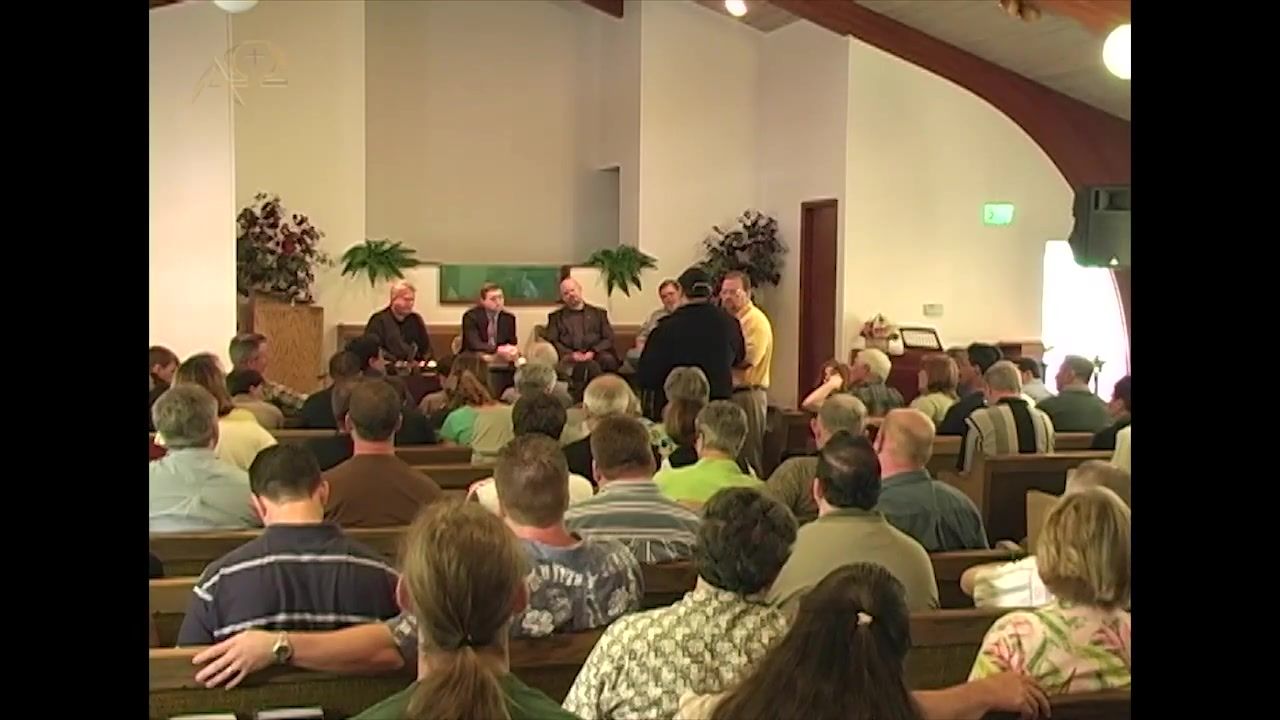
Featuring: Steve Camp Dr. James White Dr. James Renihan Dr. Robert Martin
Comments are turned off for this media
Is one of the greatest threats in evangelicalism in reformed Christianity as a whole towards the authority and inspiration of the scriptures. Why is.
Everybody look at me and I was gonna let everybody else speak and then then then I would make comments. So yeah go ahead. Okay good morning. Is that on. I think so.
Yes there we go. I one of the issues that I've been addressing on the blog on the website lately has been the issue of evangelical cobelligerence. I've named it ECB because it it doesn't have initially the doctrinal considerations that say open theism and new perspectivism and other things have but the inroads that it's made in the church is profound where people are confusing political remedy for moral maladies.
And so therefore today when most people think of evangelicals or they think of Christianity their first knee-jerk response in the medium in the world at large is oh are you part of the religious right that's trying to force a political agenda.
And I'm a conservative I'm a Republican but don't hold that against me but the bottom line is is that first and foremost I'm a Christian and the cross always waves higher than the flag. And the problem today is is that people evangelical leaders have adopted a program of treating the body of Christ as a political action committee rather than heralding the gospel.
What Elton John and Ellen DeGeneres and Rosie O'Donnell need is not a constitutional amendment against them. They need the gospel. They need life transformation and I'm deeply concerned because as a pragmatic this has had tremendous inroads where people now confuse in our nation patriotism with biblical Christianity.
And I'm concerned that the church needs to get back to being the church our duty as individual citizens here we can make our voice known through the voting process we can definitely write our congressmen and senators and so forth but we are not to amass the body of Christ as some religious lobbyist to forward a moral agenda we are to stand for what is right in moral and good.
But the solution whether it be abortion or the gay issues or other things that are facing our nation. If we really believe in the authority of Scripture and we really believe in the gospel of justification by faith of sola fide then we must proclaim that rather than be viewed as political activists.
And the thing that's concerning today is that I think this is really dumbed down sola scriptura. We're now evangelical leaders with the exception of dr. MacArthur that get on national TV and talk shows will be there as political spokespeople and they're alienating the very ones that we want to reach with the gospel and I say that other God's sovereign providential choosing elective work of grace and all eternity past.
So I think in a very underhanded way in a very pragmatic way that doesn't have the theological weight that these other issues have. But certainly it has won the hearts of the people. And today when we have evangelical leaders encouraging other evangelicals 40 million of them to vote into lobbying to petition into boycott unbelievers for simply living like unbelievers.
And we've got a problem.
Certainly for me you know in regards to what was just said so many people view the church today as whatever we decide the church is. They don't believe that God has revealed his word with sufficient clarity or evidently doesn't isn't concerned enough about the nature of the church to have revealed in his word how the church is to be structured and what its purpose is.
So many churches exist. Maybe they have a building that's been bequeathed to them by preceding generations but very few people sitting in the pews have any clear vision as to what their purpose is as the church and how they are to worship God what the nature of worship is.
And this again comes back to a diminishment of their view of the inspiration of scripture. The sufficiency of scripture to define for us what the church is to do how the church is to do it. And when the church is defined in a way that the culture does not find to be amenable many people are choosing to please the culture in the name of success rather than pleasing God in the name of worship.
And that all goes back to whether you really do believe whether God has a purpose in the giving of scripture whether he's sovereign over things and whether we can know what the scriptures actually teach.
I teach for a seminary where you have to sign a statement before each semester that you teach and part of what that involves is in essence confessing to and promising not to teach contrary to a statement which contains the doctrine of biblical inerrancy.
Now I know that a large portion across the United States of people who signed that document do not believe what the doctrine of inerrancy has historically been. They have redefined what the doctrine of inerrancy means for them even to the point of in essence paralleling in many ways the understanding of Vatican II where you allowed people to believe that the Bible inerrantly communicates God's will regarding salvation.
But it can be wrong about basically everything else that it addresses. And the result of that is is is almost is almost worse than rank liberalism is because when you when you pretend to believe something but gutted of all meaning you're teaching your students that words don't really mean anything.
And so we can talk about believing the Trinity all we want. But let's face it how many evangelicals today are functionally Trinitarian. I would submit to you that if a person go through their entire week without once considering or seeing the relevance of the doctrine of the Trinity to their lives and their worship is that being a Trinitarian I can.
If you can go through your whole week and not even realize you're married to your wife. Are you married to your wife really are you being faithful to that commitment. All of this goes back to a tremendous degradation when I read when I read the stuff that Jim Renahan lives in back in the 17th century when I read our Baptist forebears back then and I'm sure that I'd like you to comment on this.
When I read even just a few generations ago I sense a respect and a passion and a love for the Word of God that I just don't see a whole lot of it. In the professing church I see I see people willing to order their entire lives based upon the idea that God has truly revealed himself in the scriptures that Jesus Christ walks their every page that to believe in Christ and to be obedient to his word or one.
The same thing I know a lot of people today who think you can be obedient to Christ and run rush on over the Word of God. Choose pick and choose what you will and will not believe. I don't understand how you can do that and I see that as the as the root of a lot of what we see going on in evangelicalism am I missing something there do you see it just a tremendous respect for the for the Word of God.
In our Baptist forebears and the Puritans. That just simply doesn't seem to.
Communicate as much well as both of you were talking and I'm sort of trying to prepare my remarks while listening to you speak. I was going to go down the same road and say that I think that an evangelicalism today there's a lot of lip service that's given to the scriptures authority inerrancy infallibility and all the rest.
But once that kind of commitment is made I've been preparing for this debate on Tuesday and one of the things that about Marcus Borg is that he grew up in a very conservative Lutheran denomination North Dakota and in his book the God we never knew he expresses in seven points.
A his perception of the Christianity that he was raised in as a as a boy. And if you were to look at those you you would say that it's very familiar to you. But it's also just a little bit it's it's far enough off that it's a counterfeit.
But I think that dr. Borg's experience is not unique. In fact it's probably very common that he grew up in a church that believed in the Bible at least on on one level but the people were not equipped with the doctrines of the Bible and he grew up with a false perception of who God is.
I think about the fact that some of the leading critical scholars of our day are failed evangelicals. Bart Ehrman right who teaches at UNC University of North Carolina has written this massive volume lost Christianity's and he's a graduate Wheaton College.
Randall Balmer who has done a couple of PBS specials is a graduate of Trinity Evangelical Divinity School. In fact he wrote with John Woodbridge a great article and biblical authority back when he was a conservative evangelical so that that we took to a large degree I think that we are failing in our churches to go beyond lip service to the Bible and really teach people the full doctrines of the Bible that's the basis upon which the Christian life is built.
You have to have a firm understanding of who God is and of the full spectrum of what the Bible teaches in order to live. That's what our confessions say that they say for example that the doctrine of the Trinity is the foundation of all of our comfortable communion with God.
We have to have a clear understanding of who God is as one in three in order to be able to commune with him in order to be able to live the Christian life before him. And so I think that we give lip service to the Word of God but but we don't really go beyond that and we become pragmatists in all the rest cultural pragmatists.
But while we give.
Lip service to God's Word. Jim has touched on I think the real heart of the issue if we consider what the greatest threat has ever been to the authority of the scriptures it has never been a threat from outside.
It has always been a threat from within the professing church. And it's even more pointedly it's it's been a threat from within those who profess most to believe in the authority of scripture. I cannot speak from a vast experience of exposure to other communions but within Baptist life as I was coming through seminary and I think probably about the time that James was coming through seminary there was a lot of heat a lot of effort a lot of energy expended to recover in a major Baptist denomination in our country the doctrine of inerrancy.
But the question that was always looming on the horizon was what will happen if we win. What will happen if indeed that becomes recognized the doctrine of inerrancy and infallibility becomes recognized as the doctrine of the church once again.
And the question then became what will people do with their infallible Bibles. Will they study them or will they assume that they already know what the Bible says. And there seems to be lacking brethren in far too many places the emulation of the Berean spirit where are to be found the brethren who are searching the scriptures daily whether the things they are hearing or so Professor Murray used to repeatedly press the point that a reformed church a truly reformed church is a reforming church always bringing what we believe back to the scriptures back to search the scriptures whether the things that we believe the things that our forefathers have taught us are true.
And if we lose that spirit if we lose that Berean spirit if we lose the hunger for the word if we lose a desire to rightly divided if we lose a sense of what good exegesis is and what bad exegesis is.
Then it is pointless to speak of the authority of the scriptures. Because in point of fact we may tip our hat at the doctrine of scripture but where the rubber meets the road we're still living by tradition and not by the Word of God.
Addition as the Word of God some of you have listened or read my interactions with a well-known evangelical by name Dave Hunt and I have. I have spoken at many conferences where Dave Hunt was speaking and up until a few years ago had very cordial conversations with Dave.
He's an amiable elderly man but the problem is he has decided that at the end of his life he's going to take on Calvinism as the terrible horrible nasty thing that it is. And some of you have heard some of the interaction we had when I first having sound issues again the problem that has really come up very clearly with Dave Hunt is here is an illustration of an individual who is enslaved to his tradition.
He cannot see his tradition one that one of the most important things I've ever said to somebody on the air is when Dave was responding to various and sundry passages of scripture I was raising to him.
I finally said to him Dave that's your tradition speaking. And he said to me James I have no traditions. And my response to him was Dave the man who thinks he has no traditions is the man who is the most enslaved to his traditions.
And when mine is working when you're pointing to me going on going like this what am I supposed to do. I have no idea what means when yeah it's still third base. Okay here we go. Yeah when the thing that becomes quite frightening is when our traditions become functionally in our mind the same as the Word of God.
Dave Hunt believes he's defending the Word of God when he attacks the sovereignty of God in salvation. Dave Hunt believes that Calvinism is an affront to God. He's not even willing to listen to the possibility of being corrected.
Why. Because he really believes he has no traditions. Therefore his traditions become the Word of God itself and that becomes scary. That's why we always have to be doing what you're talking about. We can't be reforming if we are simply allowing our traditions to become defined as the Word of God itself.
If we don't see that scripture is the Anustos and I am NOT and that that's an important aspect of that. Meanwhile mr. Fallon has his phone ring. So are there.
Some questions. Yes please. Yeah. Well I just want to follow up what he said. He asked me to go to the 17th century which I didn't but I will now. And it reminds me of the words of John Robinson who was the pilgrim pastor.
He didn't come to the new world with his church but he's famous for the statement that there is always more light to break forth from the Word of God. And he didn't mean new revelations. He meant that our our understanding of the scriptures is limited and we must always be going back to the scriptures and working with them and studying them so that we might be instructed from from that text.
So I think you know I think that that's the point. Okay. Now what we would like to do is for the sake of trying to keep the signal consistent. If you have questions I'm gonna ask. If you could start lining up right over here and please ask your question and then we'll go down.
Otherwise I'll be passing this mic all over the place. So if you have questions let's start a right line right about here. Once again oh boy are we in the way of the camera. Still how we doing. Camera wise.
We're good. Okay. And if you can just ask your question then we'll go ahead and make your way to the back. But once again let's keep the questions to under 30 seconds no debates and please just keep it a question.
Thank you this for.
Steve but I'm sure others would answer it as well and that is the content of some of their Christian you know. Choruses and things like that. It seemed like doing the hymns. When you read the hymns you can tell there's a depth of understanding of the Bible you know.
And it seems like it's just kind of deteriorating. I'm wondering is there any movement at all to for Christian music to have a more depth going toward the the hymns and that type of thing. Yeah.
And we have to we we also have to clarify it that not all hymns are biblical and so we have to measure everything through the lens of Scripture. David says in Psalm 119 54 thy statutes are my songs in the house of my pilgrimage.
And so his theology has to be our doxology his word our music his statutes our songs. And so I think that as we were talking here being a faithful Berean is examining anything in light of Scripture and if it's scriptural we embrace it.
If it's not we jettison. It's very simple. The problem is is that the great hymns were primarily written by pastors Isaac Watts and Luther and so forth. Even Wesley got it right from time to time you know and and he knows the truth now.
And I mean they're all Calvinist when they get to glory. Right. But it's it's a it's a wonderful thing that the pastors and the theologians were studied men of the Word of God and in so artists today primarily feel rather than think.
And so that's why so many of the songs today are experiential and testimonial. Now there's a place for that. But you can't catechize with the new music and I'm an author of a lot of it done 18 CDs. It's enough to keep you here for a millennia you know.
And and so it there is a deep concern that are we making music for a consumer driven market and we're seeing that spill over into publishing. Obviously a lot of the a lot of the the books that are coming out today reflect that now the problem is is with music.
It's a more powerful tool than the spoken word and I don't mean to minimize preaching because I believe it's it's it's the God-given way. But when no one you know when MacArthur writes a commentary nobody takes it home and memorizes it.
You know no one has memorized biblical theology by John Owen. I'm also I love the Puritans. It's primarily my steady diet of reading and the great themes and great songs come out of that writing. But when you have a well-crafted song within four or five listens to it it's automatic it is in your heart and minds for years to come I can still remember every time I every time I hear Maggie Mae by Rod Stewart I still smell that natural vinyl that I had in my 1964 VW bug the first car I ever had.
And when we got that radio on it was the first song that came on. It's instant recall. The arts are to buy divine design geared to do that. And that's why it's no mistake that the greatest block of Scripture on the authority of Scripture Psalm 19 7 to 11 is a song the longest chapter in the Bible every verse mentioning something to the authority of God's Word.
Psalm 119 is a song. The greatest deposit we have on the character of God are the Psalms. And so music by divine design is a powerful tool and that's why we must be careful to make sure it is theologically precise and biblically accurate.
The problem is is that many seminaries most seminaries don't have any courses in music in worship involving song and making theology a great doxology. Most artists have never been theologically studied and so therefore you know I'm again I'm a firm proponent that if we as musician Aries using songs to go into the world and worship and evangelism and so forth wouldn't it be great.
And I've asked this of seminaries and maybe some of these men will can take this farther. But wouldn't it be great if we were having seminary professors come to Nashville for a week at a time of intensive studies a week on justification by faith a week on some of the heresies that are floating around the church today a week on the Trinity a week on the solo script tour and so forth and offering this to the artists for free to come and to say once a year twice a year we're gonna offer these week intensive courses so that you can be further equipped with the Word of God.
I think it would be fantastic. Also I really believe that this should be key I believe before any artist should get a recording contract that something should precede that and that's that that should be a letter from their pastor.
I'm a churchman at heart and when you have Lone Ranger believers out in the marketplace absent of pastoral authority and biblical accountability to the local church you end up what we have to today. And and so I really believe that letter should say five things that that artist truly is saved that they know the gospel they can articulate sola fide.
That number three they are well acquainted with the essentials of the faith. Number four that they are a member of that church. Number five that the leadership of that church affirms them for the itinerant ministry that they're on and that has to be renewed annually so that when there is moral failure of which we've sadly seen in Christian artists when there is doctrinal impurity that you don't go to the record company and have the managers and the agents spin through the media you know but you have then biblical accountability and authority.
And so there isn't a movement yet but I think it's up to local churches to say no more. We're not gonna buy this we're not gonna support it. We're gonna put we're gonna say it lacks doctrinal clarity until it does remove it from the bookstores and until it is theologically precise again so that that music can be affirmed by eldership in the local church and seminaries and so forth so that it's profitable for ministry and not just entertainment or not just a consumer driven art that is the McDonald's of the industry you know it's it's as Packer used to say it's 3 ,000 miles wide in one inch deep Christianity.
And so that's part of the problem. We're seeing that now with a lot of the purpose-driven materials and other things even though Rick Warren's not a bad guy he's just missed it on this and you know and I think that there's a problem there now everything is consumer driven material that is written for sales as opposed to decided by the plumb line of truth and.
That's part of the problem we have. Okay this question is really for anybody who wants to address it but primarily for for James White. I am about the about the canon itself. As far as our infallible or inerrant knowing the canon I just have increasing difficulty trying to figure that out whether we can in errant inherently or infallibly know what those books are and I'm not so much jealous for the terms in that.
I want to know if you believe we can know for sure that.
Say Galatians is the Word of God. Yeah we need to be very careful to differentiate between theological terms when we talk about infallibility and ourselves whether we can have infallible knowledge. And things like that I frequently ask people do you have infallible knowledge of the doctrine of the Trinity.
And even when I ask audiences how many of you would like to me to hand you the microphone and you have three sentences to accurately fully and without engaging in heresy define the doctrine of the Trinity everybody all of a sudden finds the most fascinating things on the ceiling and on the floor and I hope he's not looking at me because nobody wants to do that.
When we're when we're asking you asked two different you actually asked two different questions there when you say can we know for certain that Galatians is the Word of God I say yes. I say yes because it's God's purpose to give us His Word.
And if we don't know that Galatians is the Word of God then it's not going to be able to function within the purpose that God has given us. If you say you can have infallible knowledge of almost anything that becomes an attribute of you yourself rather than an external fact of knowledge that we can see in history and we can see in how God has worked with his people so on and so forth.
Those are two different things. And the reason I'm so concerned about being clear on the what the difference between those two things is is obviously given my own background the fact that of the 56 debates I've done about 36 have been against Roman Catholic apologists and their primary approach these days is to attack the doctrine of sola scriptura.
And one of their primary approaches in attacking the doctrine of sola scriptura is to question you on the issue of the canon. They in essence say you're biting the hand that feeds you. If you do not have our authority for the canon of scripture then you have no scripture at all.
So how can you then reject what we say about transubstantiation or papal infallibility or whatever. And it flows from an errant understanding of what the canon is and also the fact that they're attempting to promote the idea of an infallible church where an attribute of divinity in reality has been attributed to the church the church's infallible ability to define both the extent of scripture the canon and the meaning of scripture the interpretation and the extent of tradition and the meaning of tradition.
That's why I use the term sola ecclesia. We believe in sola scriptura. Rome believes in sola ecclesia even though she says she's under the authority of scripture and tradition. If you define what both are and what both mean you can't be under their authority if you do.
Especially if you claim to define it infallibly without being able to be corrected. And so that's why I try to differentiate between those those terms. And so keeping those in mind. Yes we can. We have the promise of God himself in the fact that he's given us the scriptures that we can know with certainty what the scriptures are.
But that doesn't make me infallible. And that also means that those early Christians for example who didn't believe the book of Revelation of scripture doesn't mean that they're going to hell. Especially I mean if you just saw the book of Revelation for the first time never had any history with it all.
What would you think. Let's just think a few seconds about the you know ten headed beasts and you know stuff like that we'd. I'm very thankful the new to the the early Christians were not uncritical that there had to be discussion and there had to be an understanding of what revelation was about and what its history was.
And it wasn't just a gullible. Hey as long as it claims to be scripture we'll accept it kind of an attitude. But there's a difference between my having creaturely certainty within this fallen world in light of what's God's purpose is to give that to me.
And then my becoming infallible. Because all the time in fact in the last debate I'm not sure if you how many of you saw the last debate I had with Bill Rutland on Long Island one of the questions he asked me is dr. white.
You claim personal infallibility. It's like um no I mean duh. But the whole idea was well then you could be wrong about everything you said and my response was soak at the Pope we're not. They honest us God's Word.
Is there's a vast difference between the.
Two so my question is also for dr. white very similar to the last one. I almost sat down when I heard it but I think it's a little bit different angle so I'll ask it anyways if you'll bear with me given your presentation you know there is a can and it's known infallibly to God.
The 50 million dollar question which logically rises and I'm often asked is okay so how do we know which ones those are. Then I guess my question is do you see us even today and in our present context individually having to wrestle through that and determine that for ourselves.
Obviously there'll be a subjective element there. Dr. Renningham read some things last night from Calvin about the testimony of the Spirit to our spirit and that sort of thing. Do you see a place for someone.
I'll just make this very straightforward saying you know James is the right straw epistle and I don't sense the Spirit of God speaking to my spirit that it's part of Scripture or do you see us bound in some way or something by the consensus that has existed up to this time of great believers and so forth.
That's a very.
Good question and I should mention just in passing that though Luther did say that Luther never made any moves to have James quote-unquote removed from the cannon. That's a very common assertion that is made.
But he quotes from James in his various other commentaries and things like that the question is is excellent and I think I sort of gave the foundation for the answer in pointing out that we need to approach this from a theological perspective and that is if God has a purpose for giving the scriptures to the church then our certainty is tied to his establishment and guidance of that church over time.
And so I don't believe that every generation has to has to recreate the canon because the church is not recreated with each generation. Each generation has to has to agonize my for the faith. That's one thing to agonize the faith to defend the faith.
That's that's something completely different than revisiting the doctrine of the Trinity in every generation revisiting the canon in every generation. I don't believe that that that follows at all the difference I would say and I'll let dr. Renahan if he wants to comment on this as well.
There's a I see a fundamental difference between the fact that the scriptures have been given to the church and have been established for the church over time. And the issue of the personal witness of the Holy Spirit the witness of the Holy Spirit first of all is required because of our our benighted souls our our our fallen nature we need to have the scales of darkness removed from our eyes as the psalmist in the same psalm that Steve was just referring to said open my eyes they may see wonderful things from your law there is a supernatural element to that.
But then the the testimony of the Spirit in regards to the Word of God I think is different than saying you are recreating the canon in and of yourself. I see that as as a testimony to the entirety of the Word of God being God speaking to us and the fact that we as as new creatures in Christ that heart of flesh that is given to us in the place of the heart of stone naturally beats for the the words of the shepherd that we will hear his voice and that's that's my understanding of what that testimony is about and that I think Calvin would make a strong distinction between that and and the issue of the canon.
Would you would you agree I agree wholeheartedly I.
Was concerned afterwards went to bed last night thinking about it woke up this morning thinking about it that that this doctrine can be misunderstood as if there's some kind of personal experience and immediate revelation that comes to me as an individual that says James belongs in the Bible or Galatians belongs in the Bible or Romans belongs in the Bible or Psalms belong in the Bible.
And that's not what the testimony of the Spirit is at all. It's it's just that our eyes are opened when we are brought to faith in Christ. The power of the work of God allows us to see the truth of the scripture in the way that the unconverted person cannot do so.
In 1st Corinthians chapter 2 which I didn't get to go to last night Paul makes that as clear as can be where the things that are contained in the scriptures are revealed to us now. We often read those verses as if they're talking about sometime in the future when Paul in fact says that this is what belongs to us now and it's because we know Christ it it it just is an astounding difference to me.
I I have a brother who's not Mike. Some of you know my brother Mike but we have a third brother named Tom who's just a wonderful guy. He's about 13 years older than I am and not a believer and he just cannot see in the Word of God the things that that Mike and I and that our mother see he just can't see it and to him.
It's it's just a matter of religion. It's just a matter of your choice that that's all that it is to you where Mike and I and our mother and and the rest of our family members who have come to Christ.
Love to come to worship. Love to hear the Word of God proclaimed. Love to read the Word of God. Love to pray. An unconverted person can't do that. And it's not because at some point in my life I've had this voice speak in my ear the the testimony of the scripture gives no new revelation no new revelation at all.
All of the revelation that we have is inscripturated. It just helps me to see that that inscripturated word is God's.
Word itself. Hello gentlemen. I have a question first I want to say that I'm glad that you mentioned that in the future you're planning to address some of the things that Islamic scholars are bringing up.
I think that's the way to go. But my question is a how much do we allow for ascribable errors for example. I mean I have a the particular example I'm thinking of enough 2nd Samuel 21 19 where it says that Elhanan killed the Goliath and in a in translation where Christian scholars understand they put the brother of and in 1st Chronicles 25 it says that he killed let me or let my whatever the brother of Goliath.
So basically and in a commentary that I read about this is that it's a definitely a tribal scribal error. So I was wondering how much do with that. Do we allow as Christians for that. Because you can say okay these are parallel passages we could see okay and then we can reconcile that.
And the argument that I've heard is that not every passage has a parallel passage so you know what if it's you know just a scribal error. Right there we can't see everything. So thank.
You please two two things it's difficult to address this without having done the the full presentation where I go through and illustrate a lot of these things and talk about the languages and and and things like that.
So I hesitate to make grand statements without supporting them. But you sort of have to in a question answer type thing. There is a fair amount of difference between the textual study of the New Testament documents and those of the Old Testament documents.
A couple reasons. Linguistically the the Hebrew language is written differently as you know for example some of the differences in the Old Testament have to do with numbers. How long somebody reigned something like that the Hebrews used letters to represent those things and it's very easy to see how words that are letters that are representing numbers.
Some people interpret it as a word or something like that in later times Hebrew is very different and not only that we're talking about a much longer period of transmission looking at the Exodus at twelve to fourteen hundred years before Christ and there's a long period of time there that we're looking at.
We also have the fact that you have the Greek Septuagint and the fact that the Old Testament version that's primarily used in the New Testament is not the Hebrew Old Testament it's the Greek translation thereof which raises all sorts of issues especially when the New Testament writers cite a passage from the Septuagint that is different from the Hebrew that raises all sorts of issues in the New Testament.
You're you're dealing with a with a different situation not only because of the but also because the way it was transmitted that is the Old Testament was transmitted primarily by the people of Israel through the people of Israel and the New Testament documents.
The New Testament Christians wanted their writings to go to everyone as quickly as possible and so the earliest writings that we have the papyri manuscripts p52 p72 p66 p46 they all demonstrate they were not written by professional scribes.
They were written by just plain old believers. I was telling someone during the break that or maybe it was even during the presentation I forget now which I didn't get to tell the whole story that rich back there had to rescue me from from security guards during the papal treasures exhibit in Denver in 1993 because I saw in a newspaper that they were gonna have a couple a page of manuscript p72 which is the earliest known manuscript of Jude and first and second Peter and this papal treasures exhibit had crowns and tiaras and diamonds and all this stuff.
You know I could care less that stuff's ugly I'm sorry but but one of the first things you saw in this hermetically sealed glass box is a is a is a portion at the beginning of second it's the the end of first Peter in the beginning of second Peter and this is this was written about 1 ,800 years ago and I immediately stopped and I'm just sitting there and I'm reading it I'm translating it and Rich will tell you he's staying there next to me and these people would walk up and they'd they look down at the thing and they look up at the description they'd look over at me and they'd bend over and look at Rich and they'd go can he read that.
And Rich would go yeah and they'd go look at this Harold this man's reading this piece of paper over here and and I'm trying to ignore these people because I'm in nirvana I'm in heaven. I'm just I am just so ecstatic sitting here looking at this.
It was sort of like last year when I was visited the British Library and I stood over Codex Sinaiticus right next to it as Codex Alexandrinus and I am this far away and I was weeping and people are coming up to me and they're sort of looking like oh boy we got a problem going on here you know he's about to yell Allah Akbar.
Boom you know so I mean I was just so I was just you know to see these these these testaments to the antiquity of the scriptures and stuff is just it was just fantastic. And so we noticed the security guards were starting to wonder about this weird guy looking at this little piece of paper and so every once in a while Rich would sort of drag me off and I'd have to look at a tiara for a while you know.
And then I'm back again you know and and it was just incredible but you could tell the person who wrote it had horrible handwriting and they were poor. Papyri was only was was only soft was only smooth on one side and some people think Christians developed the codex form of the book where you write on both sides because they were so stinking poor they had to write on the rough side on the back.
Well you write with a quill on something that's rough and it's not easy to do you end up you know it's difficult to write accurately on something like that. And and this guy would skip the word. And for example he was probably just a believer like you and I he's traveling around he comes to a fellowship.
He'd come into a church. They'd look for a fellowship. What a shocking thing that is. By the way I forgot to mention the pastor here has invited any of you who would like to come to services here tomorrow.
That you may do so the Christians would find they'd seek out other Christians and all of a sudden they're reading from a book from Peter that he's never heard before and he wants to bring it back to his fellowship wherever it is he's from.
And so he'd say could I copy that. Well this is where the New Testament ends up differing from the old because the old is transmitted primarily within the people of Israel. This type of transmission wouldn't be taking place.
They would not be allowed to do something like that. The Christians go for it. And they wouldn't be standing over him checking every single spelling and every single word and so on and so forth. That led to that kind of variation.
Now be very careful by the way. And I'm not trying to take up the whole time. But be very careful when you repeat sayings that you've heard from apologists especially we apologists are horrible things like this.
For example how many of you have heard that the Isaiah scroll in the Dead Sea Scrolls is almost word-for-word identical to the Masoretic text that was copied about a thousand years later. All heard that one.
Have you heard that one repeated many times. Well it's a true statement. It's a true statement. And the Masoretes who really codified the text the Old Testament they would literally count the number of letters on the page to make sure that it was exactly right.
And what the middle letter was to be in the whole nine yards. They did do that after the time of Christ. But how many of you are aware that the book of Jeremiah in the Dead Sea Scrolls is about one third shorter than the Masoretic text.
About two. You see. And the problem is when you only hear the Isaiah part. And by the way that's because it's reflecting the Septuagint text. The Septuagint text of Jeremiah is very different than the Hebrew.
It's not. It's not. It's not anything we don't already know. It's just the problem is apologists tend to only repeat certain things not all things. And you need to be careful because you throw that out in the context of a Jesus seminar community college type context.
And believe me there's folks who know that the text of Jeremiah is gonna differ at that point. And they're gonna and you're left sitting there going. And that's not a good situation to be in. So there's a there's a there is a difference between those.
And you know that what's actually fascinating to me. And what we should really I think focus on you know when we talk about Reformed theology isn't it funny how people always focus on Esau. I hated the amazing part in Romans 9 is Jacob.
I loved. Okay. And the same thing with the transmission of the Old Testament text. When you think about how large a body of text that is how many different names how many different numbers and the means by which it was translated transmitted for so long the amazing part is how few of those examples exist.
Not that there are any examples that exist at all. We didn't have Xerox machines back then. God didn't choose to wait to make his revelation till we had Xerox machines. And when people get all sort of bent out of shape about textual variations I try to point something out.
Anyone remember Shirley McLean and her out on a limb thing that she did where she got into the new age stuff. And and she had that movie where she was out on the beach going I am God I am God I am God.
And I sat there going. No you're not. No you're not. No you're not. You know. And she was talking about how reincarnation was in the original Bible. But it had been taken out by like the Council of Constantinople or some stupid idiotic thing like that.
Well yeah like Dan Brown. Yeah Dan Brown probably borrowed from her. How do we know that's not true. How do we know that's not true. How do we know there has not been that kind of wholesale change in the text of Scripture.
Well it's because of the fact that we had people like the the scribe of p72 who early on the manuscripts in the New Testament went everywhere. They went everywhere. And there were already manuscripts of those books buried in the sands of Egypt before the Council of Constantinople ever came along.
So today as we find these earlier and earlier manuscripts and you know I'm not sure if all of you are aware of this but Codex Sinaiticus that I saw at the British Library just just a few months ago that manuscript when Count von Tischendorf found it in the monastery at St. Catharines and Mount Sinai you will hear people even I've even I even heard Dave Hunt repeat this once they will they will say I was found in a trash can.
That's a lie. It is not. It was. It was wrapped in red cloth in a monk's cell. And red monks do not wrap things they don't care about in red cloth by the way. And but it. But we don't have all of it. The rest of it's been found after after Sinaiticus was in essence stolen from the monks there.
They got smart and they hid a bunch of their most ancient manuscripts in a false wall in a stairway in the 1970s. There was a fire there. And when they began to do renovation they broke through this wall that no one remembered.
Those manuscripts have now been found. And some of you may know that Dan Wallace from Dallas Seminary was over in Turkey trying to get those things available and they are becoming available. There's gonna be.
They've already started a 20th edition the Nessie Olin text and they're gonna have to sort of hold off for a while or plan on a 29th because the rest of Sinaiticus is included in that find. Why is it that when we keep finding these earlier and earlier manuscripts do they not show us radical changes in the text of the New Testament.
Instead they confirm for us what the transmission the New Testament has been about all along. So keeping those things in mind the amazing thing is the the purity of the transmission of the text not the existence of variations in any way shape or form.
I went way too long. I apologize.
Okay we're gonna try to get all of your questions. Just these last gentlemen. I saw that Larry. We're gonna try to go as quickly as possible though dr. white.
Da Vinci codes. You go into these bookstores you see all these rebuttal books to it. Yes. Do you have a specific book that you could recommend that we could get if we want to you know talk to our friends or whatever about the book because I always have people coming up to me and talking about it telling me.
I'm crazy. So anyway thank you. No. Yeah. Thanks Mike. There are about four or so. Bart Ehrman even put out a did you know he put out a book in response to the Vinci code. Yeah he put out a book in response to the Vinci code.
There are about four of them that are gonna come from a pretty conservative perspective. Some are more in-depth than others. Is bill bill did. Did Richard Abanas put one out. I think Richard Abanas has one out.
Hank Hanegraaff and Paul Meyer put one out Peter Jones put one out Darrell Bach. And and those are gonna be the ones you're gonna want to be looking at. And you can want to cross-reference them. And and especially if stuff appears in more than one that's gonna be a good indication of of the you know that those what you're looking at there is going to be useful.
Some are pretty shallow to be honest with you. Some of them were obviously rushed out at very high speed and. But others others do a more in-depth job and so it depends the person you're talking to. Sometimes the real short one is when you want to give to some people rather than the more in-depth one.
But there are about four of them or so that you can look out there to be useful.
Dr. white and the panel you've been talking about the essentials of the faith but I had a non-essential question. In the realm of non-essentials it's in three parts it's really fast. The first one is what is your position on natural theology.
Number two was Thomas Aquinas regenerated and number three why do you believe R .C. Sproul implies he was regenerated if you deny that he was.
I was gonna say you know Steve normally you're always grabbing for a microphone.
What's the problem there bro. No he was not regenerated. Well thank you very much. Steve will no longer be at next year's League of New Year's conference first of.
All we'd have to define natural theology and what the parameters of natural theology are. And obvious that's a major area of controversy as to the proper application of such things as natural theology.
Are we talking about Roman Catholic understandings of natural theology. Are we talking about a Protestant understanding of natural theology in the sense of natural revelation and what can be understood through natural revelation and the limitations of that over against special revelation.
And and you'll find all sorts of differences even amongst reform folks. As to you know some people go one way or the other and and things like that so I certainly believe natural theology exists. It depends on what you're defining that since you mentioned Thomas Aquinas there is a fascination with Aquinas by a number of folks not just R .C. but Norman Geisler as well find Thomas Aquinas to be exceptionally interesting obviously a brilliant intellect and a brilliant mind.
It's similar to some people asking about Augustine with whom we would have numerous disagreements on theological issues. And yet obviously the Reformers believed him to be a shining light in the early church and they more than openly connected themselves to him and desired to do so much to Dave Hunt's chagrin.
Only a few of you got that one too but that's okay. I I really hesitate to answer questions when people ask me for divine knowledge of the state of people's souls. I can't answer questions like that only God can I like to address.
Did a person teach the whole counsel of God. And when they didn't where did they miss the whole counsel of God. I find that a significantly easier question to answer than whether someone was regenerate because I don't know.
Obviously I have numerous problems with Thomas Aquinas his teachings. And in essence the question of Thomas Aquinas his salvation would come down to. On which side of the inconsistencies in his own theology was his heart on when you were talking about the Middle Ages especially that becomes one of the key and critical issues that you're looking at.
Are we looking at someone who is holding to the to the false gospel of Trent. Or are we looking at someone who is looking back to a glimmer of a Gottschalk or somebody were clearly that Augustinian emphasis still existed in various and sundry places despite some of the language that was used to express other beliefs.
And so you know I I would hate to get into an argument with RC Sproul. I remember asking RC at the Christian Booksellers Association Convention in 1995 about J .I. Packer and how J .I. Packer could sign the Evangelicals and Catholics Together Accord and sign the anti-evangelicals and Catholics Accord in the same year and in his own inimitable style he said well you need to understand something about Packer.
He's an Anglican. He's got one foot in the Bible and one foot in Rome. And that was his response. So I'm not exactly sure how you debate someone like that. So I I I don't know how to respond to the last one there.
But any anybody else wanted them. No no okay. So I.
Guess I was all right. This is mostly for dr. white but anybody else that wants to respond to this I'd certainly welcome it in presenting and defending and sharing the doctrines of grace with other individuals whether inside or outside the church since it's really kind of a focal point one of the issues that I run into when dealing with God ordained the evil acts of men to accomplish his good purpose.
A frequent response I get is well isn't that kind of like the ends justifying the means and I don't want to say it's a stumper for me but I have to admit that it takes a while to go around that to get them to kind of look at it from a different perspective you know addressing issues of libertarianism and compatibilism and things like that.
So I'm curious as to how you would respond to somebody presenting that saying well.
Don't the ends then justify the means in God's case within the context of as you aware you've placed in and that is talking I'm assuming to fellow believers. Yes. Okay. So if we are assuming that the person we're talking to is a fellow believer especially the folks who know me from our chat channel know that when issues regarding God's sovereignty come up 99 of the time I'll ask the group back there.
Where do I go John 6. I go to the text of Scripture because if a person truly is regenerate like we've said in this in this in this context there is there is going to be a respect for the Word of God.
I wish she was here. She's not. But someone also comes in our channel named Susan V. Some of I don't know if any folks are here have been the channel long enough to remember this. But we had a lady come into our chat channel number of years ago now and she was from the Church of Christ now old-time Church of Christ conservative Church of Christ no instruments Church of Christ baptism regeneration Church of Christ.
And we started talking. The first place I went was to John chapter 6. And over the course of a number of months she would come in and I remember one night very plainly she came in and first she went to her elders.
Then she went to the commentaries and she'd keep coming back and they said they said this and we would go back to the text and we demonstrate no that's that's not consistent here here and here. And I remember her coming back in one night and saying I'm losing a lot of sleep because you people and I'm not happy about it.
Her whole family was in this. She was in a position of leadership in the in the church make a long story short. She is Jim Ellis assistants and is is in a Reformed Church today. And it was because the fact that and and this was such a wonderful thing to observe she refused to compromise believing in the Word of God.
She had to believe what it said and she became convinced that what John 6 was teaching was what John 6 is teaching. So in the context you're asking I would take someone to axe for I would take the max for 27 to 28 and I would say look here is a prayer of the primitive Christians.
These are. This is simply the church in Jerusalem. These aren't high-minded philosophers. These aren't high-minded theologians. This is the primitive church praying. And in the church's prayer they talk about the evil of men.
In fact they talk about the greatest evil that men have ever committed in the nailing of the sinless Son of God to the cross of Calvary. And yet in their prayer what do they say. Herod and Pontius Pilate the very people who were who were who were persecuting them and the Jews the very people who were seeking their lives at that time and threatening them.
They said what they did was what your hand and your will purpose predestined to occur. So I take him to the heart of what we have in common. And that is I haven't yet not yet talked to a person that I would call a Christian who thought the cross was a mistake.
And I say all right here you have the evil of men and all sorts of different motivations. Pilate political expediency keeping peace during the Passover. Herod he's just wacky. The the Jewish leaders are.
They're filled with hatred for Jesus exposing them for what they are the the Roman soldiers. They're just doing what they're ordered to do. They crucify Jews every day. All have different motivations all have different levels of sin and different levels of knowledge.
But they're doing what God's will and purpose predestined to occur in bringing about the greatest result and to try to to reduce God's sovereign plan of his own self-glorification to something that's only relevant to human beings and that is the end justifies.
The means is to miss the fact that we are the pots we are the creation of God that he has created to glorify himself. That misses that huge chasm. That's what's behind when Paul Paul did answer the objection in Romans 9.
His answer is who are you. Oh man who answers back to God those are two different categories. And only when we put them in the same category just two different levels do we not hear that answer. So that's where I.
Take I think that one of the problems that we face is that is that a sign that says hurry up with this. Okay. They're good they're going like this back there. I think one of the problems that we have is sometimes we can fall prey to rationalism and not recognize that there are mysteries to our faith which have to be held as mysteries.
A couple of years ago a friend of mine in San Diego had a debate with the number one man from the Jesus only Pentecostals on the doctrine of the Trinity. And I watched the video afterwards. And and as I watched it I thought this guy is a pure rationalist because he kept on saying I can't understand I don't see how it's possible I can't understand.
And that was his whole objection to the Trinity. He had to be able to get it into his mind get his hands around it and then he could say that it's true. Well this question about the relationship of God to evil is is a very difficult one.
Let us admit that. But it is one as our brother has said we go to the text of Scripture. I think Isaiah 10 is another place where I would go woe to the Assyrian the rod of my anger. Yet he thought it not.
So the Lord is going to judge the Assyrian who is sent against Israel. He's God's instrument of judging Israel. And yet he'll be judged for his coming against Israel. That's right. I mean this is the reality.
John Murray in volume two of his collected writings has an article on what he calls the insoluble problems that are related to the fall. There's three of them and I can only come up with to the the ontological problem the dispensational problem.
And I can't remember what. The third one is loss of memory. But thank you. Yeah when you get to be old like me and I can remember sitting in class with with Greg as my teacher Robert and I know Greg very well and he said if you guys solve this problem you fail the class.
If you solve any of the problems you fail a class. And I thought boy that's right. That's right. Because there are mysteries to our faith there are things that that we can't resolve and and we have to challenge that notion of rationalism.
I'm not arguing for irrationalism but but we have to challenge the notion that everything about our faith can be simply explained there are times when we have to back off and say the text of Scripture tells me this I bow before the Lord and I believe.
It okay. Our last question sort of like this is to dr. white and the rest of pound could answer sort of along the lines of what you were saying about the functional Trinitarian and also like how the culture becoming the authority authority rather than Scripture.
But I come from a reformed background. Our church is reformed but it seems like the thing I'm struggling with is that we're sort of more reformed on paper and rather we affirm sola scriptura we affirm sola fide but it hardly comes out in our preaching and how we practice these things.
So we're we may be reformed on paper in our confession but it's we're not functional functionally reformed. And I guess my question to you is why does that happen and and what is how how do how do we encourage our pastors.
How do we encourage our church from actually preaching reformed theology and and making an impact in our worship services. Wow. I see sermons.
Appearing in the faces of each of my compatriots here. So I I will have to be quick because they're going to steal the microphone from me. I honestly believe you know I've it was very encouraging by the way for those of you who came up to me last evening and this happens so much anymore.
I mentioned as we were driving back to the hotel that I heard the the phrase the potter's freedom from a number of you last night that that book that I wrote in response to Norman Geisler was was very important to some of you in coming to understand the doctrines of grace.
And I've seen that all across the United States it's a tremendous blessing. I truly believe though as I expressed in that book that a belief in the sovereignty of God the fact that God is God and I am NOT that I am his creature that he has the sovereign right to use me as his creature as he sees fit.
That is not something that tradition can communicate that is not something that can be simply passed down that requires the work of the Holy Spirit in each person's heart in each generation. And one of the things I think history shows us is that when even reformed folks start thinking it's something you can pass down that that's when formalism takes over and the passion is gone and the preaching follows with it.
I don't mean that we shouldn't catechize our children and teach them the truth. What I'm saying is we need to call them to that same self-shattering commitment to the truth of God that we ourselves have experienced because no one no one who is not caught a glimpse of the holiness of God.
And when I mean the holiness of God there I'm talking about Isaiah 6 and I'm talking about holiness in the sense of otherness. If you haven't had that that gift of grace that just shatters you and changes forever the way you view God and yourself then you can't understand why we're so excited about this stuff.
You can't understand why we are excited about such things. The decree of God that sounds really stultifying and boring to you. That has to happen. You can't just pass that along. That's not something you can do in a Sunday school class.
You can teach it you can be faithful to it and you can put it in confessions. But if you don't preach it with passion you can't communicate it from generation to generation. And so obviously I think handling the Word of God aright and preaching the Word of God aright with passion is going.
You're gonna keep running across those things. So you're gonna be preaching it. It amazes me when I run into folks in churches who say the pastor will go. I'm mrs. Johnson back there. She's really upset.
How do you do that. I mean I don't I don't preach as a Calvinist. I preach the Word of God and that's why I'm a Calvinist and it it just comes out in in handling the Word of God in a harmonious and balanced fashion.
I mean if you're gonna preach through a book you're gonna run into it. I mean it's all over the place. And if it's not then it's not worth preaching. So I don't understand how someone say yeah I believe that.
But I I can't preach it. What now I understand believe me. I've spoken a number of founders conferences and I know what it's what it's like to talk to those pastors who are trying to bring Reformation to their churches and gentlemen.
I don't know about what exactly what your situation is. But but if you're in a situation like I am in a church that is I mean Don Fry's been there for 31 years. The people that are in that congregation want to be there because they know what we believe talk about a blessing.
I mean when I talk to people who are going through the throes of being kicked out of a church because they're trying to bring Reformation. I know I've got it easy. I've got the blessing and I've got it easy.
I know that I'm not talking about that situation but I don't. I don't believe that you can truly be reformed. And it not impact your preaching I don't understand how that's possible. I just I.
Just don't. I think I would simply add that to answer the brothers question more directly. What do you do in a situation where if you're a real Calvinist it'll come out but to but to come back to the point what do you do in a situation like that.
How do you. How do you set about remedying a situation where you have one body of doctrine in the confessional documents of the church and something else going on from the pulpit. If you're sure you're dealing with a true man a man who loves the Word of God and who wants to do what is right.
Encourage him. Encourage him when he does preach the Word of God faithfully. Encourage him to imitate the example that Paul sets out as he describes the Ephesian elders. What a faithful and able ministry looks like.
But encourage your faithful. It's he needs to know that there are people in the congregation that want the truth and want the whole counsel of God. Everything that is profitable. But on a practical level I would say encourage the brother I.
Enjoyed that comment by the way thank you. Psalm 50 21 the psalmist is describing the waywardness of Judah in Israel and because God did not bring swift judgment upon them they came up with a false conclusion.
And he says you thought I was just like you. And I think a lot of the times today could you imagine if someone wasn't faithful in their giving that the God would execute them on Sunday mornings. You know when when x5 says that fear spread among all the people that if you lie to the Holy Spirit you'll wind up dead.
That would have a direct impact on how you conduct your services. The same thing in in Isaiah 66 verse 2 one of my favorite verses to this one who will I look to him who is humble and can try to spirit and who trembles at my word.
Even the apostle Paul in evangelism he says by the terror of the Lord I persuade men. I think one of the reasons I have a chance to work in so many different denominations and churches most weeks and one of the thing I think that when you see a departure from the from the exaltation of the Word of God especially those that say the reform but but are more pragmatic and they're carrying out a pulpit duty and so forth.
I think it comes back to to one thing. It's the loss of the transcendency of God. They fail to fear the Lord. What was the last time we saw a man tremble at God's Word in the pulpit as he stood behind the sacred desk not giving a sermon.
That for a Christian not simply thinking that their own little stories and examples and illustrations were more beneficial than the actual truth of Scripture. But when you have a high view of God and this is Proverbs says the fear of the Lord is the beginning of wisdom.
We've lost that in so much of our churches today. And it's the result of a postmodern culture as well. We come in and we do it. Vance Havner said it was a dear friend of mine before he died that we are playing marbles with diamonds that we are taking for granted.
And we come into the presence of the Lord with a casualness and a cavalier attitude. And rather than we hold fast to the faith the Reformation did occur didn't it. And and today when you have the casual friendships through ECT through ES ECB and other things with Rome when you're allowing Roman is to occupy the pulpits of a church on a Sunday evening just like we saw in Nashville this few weeks ago on Justice Sunday to just like we saw in Louisville and Justice Sunday one were Romanists and a very well-beloved seminary president who's a friend of mine doesn't have any consternation of thought of where a Romanist can come and partner with it with a reformed evangelical speaking about political issues and where the worship of God is supplanted for political rhetoric something has really translated and been dumbed down.
And it's because there's no longer a healthy fear of the Lord in a loss of the transcendency of God. When that is recovered the man will preach the word. But until he fears God and does not have any consequence of his lack of pulpit tearing absent of the Word of God then there will be no fear in his life.
I can't remember I think it was Schaefer who said God has spoken clearly and he has not stuttered. And the thing is today a lot of men in the pulpit are stuttering. And it's because they have lost a high view of Scripture.
And it's because they've lost a high view of the God of the scriptures. And would you please thank these four men for their time and thank you for the questions.