Keep sharing good news without ads.
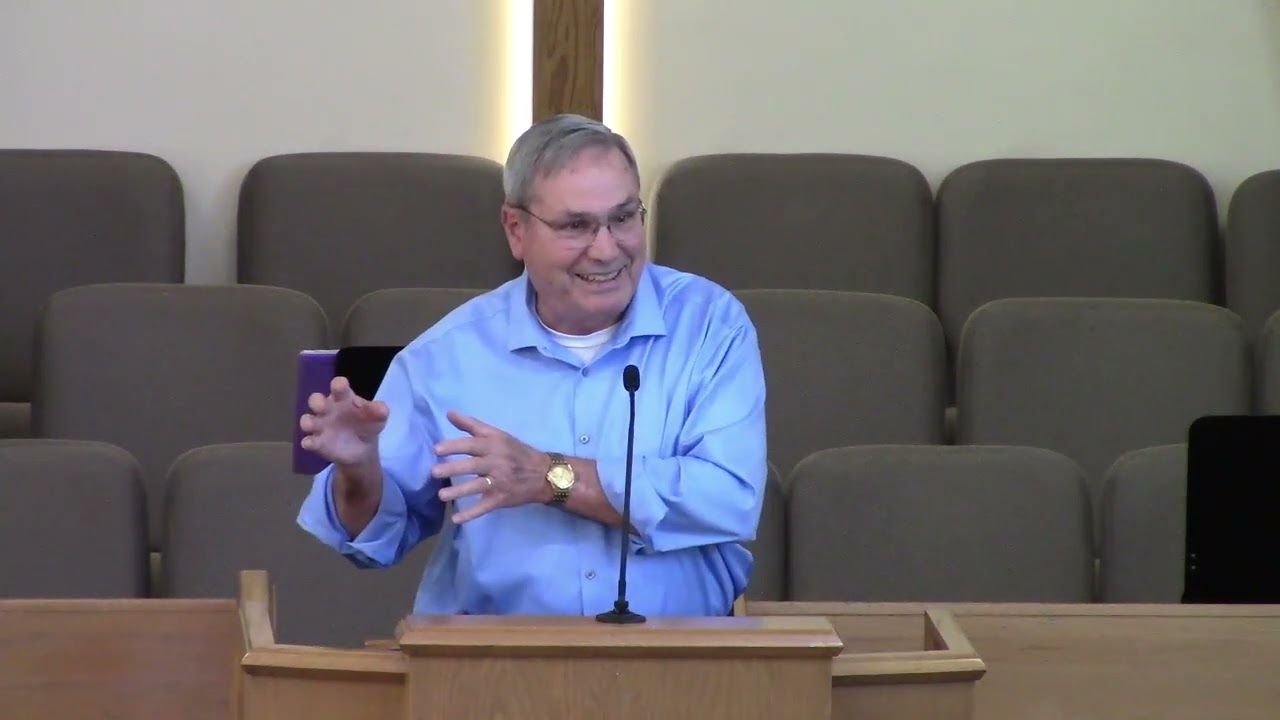
October 2, 2022 - Morning Message Faith Bible Church - Sacramento, CA "Behavior in the Church" - Titus 1:1-9
So this morning's scripture reading is from 1 Timothy 3, 1 Timothy 3, we're going to be reading verses 1 through 15, we're going to start reading at verse 1. This is a faithful saying. If a man desires the position of a bishop, he desires a good work.
A bishop then must be blameless, the husband of one wife, temperate, sober-minded, of good behavior, hospitable, able to teach, not given to wine, not violent, not greedy for money, but gentle, not quarrelsome, not covetous, one who rules his own house well, having his children in submission with all reverence.
For if a man does not know how to rule his own house, how will he take care of the church of God? Not a novice, lest being puffed up with pride, he fall into the same condemnation as the devil. Moreover, he must have a good testimony among those who are outside, lest he fall into reproach and the snare of the devil.
Likewise, deacons must be reverent, not double-tongued, not given to much wine, not greedy for money, holding the mystery of the faith with a pure conscience. But let these also first be tested, then let them serve as deacons, being found blameless.
Likewise, their wives must be reverent, not slanderers, temperate, faithful in all things. Let deacons be the husbands of one wife, ruling their children and their houses well. For those who have served well as deacons obtain for themselves a good standing and great boldness in the faith which is in Christ Jesus.
These things I write to you, though I hope to come to you shortly. But if I am delayed, I write so that you may know how you ought to conduct yourself in the house of God, which is the church of the living God, the pillar and ground of the truth.
May God bless the hearing of his word.
Barbara and I visited a church in New York City one time with some friends of ours, and we asked, who is preaching today, or who's the preacher's name? And they were more familiar than we were, and they said, well, they have three preaching elders and they never tell us who's going to preach.
Because some people say, well, I like him, and they'll come that Sunday, or I like him and they'll come that Sunday. Well, when Harold and myself decided, being fathers who've been through what we knew that Lauren and Iljin were going to go through, we said, we need to take the next Sunday service because we knew that he wasn't going to be having time to study and so forth.
So I thought, so now you've got a surprise, right? You didn't know, so you're here. And we thank the Lord for his faithfulness in all of that. We'll be speaking from Titus, the book of Titus, and it's considered one of the pastoral epistles because it was given to Titus from Paul, and it's a parallel passage with the passage in 1 Timothy that Harold read this morning.
I have taught a lot in my lifetime with Sunday school, but I'm usually down on the floor down there, and I like the interaction where I can talk and say, what do you think? And get feedback. Well, as I got hard of hearing, that got a little harder to do.
But even, and it's a joke with Barb and I, we attended about two and a half to three years to the Vacaville Bible Church, and I taught through the book of Matthew there, and I'd also taught through the book of Matthew here.
But one lady in the front row says, I don't buy that. You know, I had said, and so I said, I stopped and I looked at her, I said, okay, tell me what you think. And so we waited for her to get through that.
And then I said, well, I understand what you're saying, but here's what the scripture says,.
You know?
And afterwards, the pastor of the church and his wife walked out with us, because we, you know, like here, we close the church when we go out. And his wife turned to Barb and I and says, if that had been pastor, he couldn't have.
Handled it.
And then that's the way, but as I have not taught really a lot, I find it very hard to just to speak to you. So don't be afraid to answer me or say, no, that's not right, you know? And we look forward to a blessing from the Lord this morning as we get into his word.
And as we, let's just go to a word of prayer before we start, okay? Thank you, Heavenly Father, for your blessings that you give us. We thank you for the blessing of Micah given to us even this week and to pastor and Lauren pray continually for them, for their health and for their care and for their keeping.
We'd also uphold Wayne for the operation tomorrow. And we uphold also Jimmy in rehab. We would pray Heavenly Father for continued healing. And we thank you, Lord. As we get into your word, Lord, speak to each one of us through your word.
May you be in control with the things that we say. And we'll thank you for that. And we'll pray in Jesus name, amen. I'm going to read the first, I'm mainly going to deal with verses five through nine, but I'm going to read the first four verses first before that.
So follow with me, if you would, in Titus one, Paul, a bondservant of God and an apostle of Jesus Christ, according to the faith of God's elect and the acknowledgement of the truth, which accords with godliness in hope of eternal life, which God who cannot lie promised before time began, but has in due time manifested his word through preaching, which was committed to me according to the commandment of God, our savior.
And here's the key to Titus, a true son in our common faith, grace, mercy, and peace from God, the father and the Lord Jesus Christ. And where we proceed further, we're talking about the, what are the qualifications or the duties or the character that we should look forward to as church leaders.
Now you can do one of two things there, but I, um, as we look first of all at Titus, he's one of Paul's most reliable helpers. And the letter here to Titus deals chiefly with the conditions in the churches located on the Isle of Crete.
Now, if you look at a map, it's below Greece and so forth, it's an aisle just sticks way out in the South there. And Titus was placed over the churches in Crete. He is mentioned also in second Corinthians chapter seven and where Paul says he was a real help and a mercy to me.
So he has a great respect for Titus. And, uh, now he has said, okay, Titus, I'm sending you here to the churches of Crete and here's some things I want you to do there. So first Timothy, the one that, uh, Harold read this morning and, uh, Titus are parallel passages of scripture.
They both speak to how Christians in general should behave in the house of the Lord. And specifically they speak concerning the walk and work of Christian leaders. In first Timothy, the key verse that states the purpose of the letter is verse three, 15, one that he read and which you have up here on the board that says, Tim, uh, Paul is saying to Timothy in the portion read this morning, I'm writing to you so that you may know how you ought to conduct.
And I'm going to add and B or behave yourself in the house of the, um, behave yourselves in the house of God, which is the church of the living God, the pillar and ground of the truth. And he says, this is my reason for writing this letter to you.
I want to tell you how to behave in the church of God. It's his church, not your church, not our church in that sense, but he says, I want to tell you how to behave. And so the whole book of first Timothy and the book of Titus is telling all of us how we need to behave in the church.
And, uh, it, the passage where it says, it speaks of the church of God. It, uh, first to that visible body, uh, of professing believers called collectively the church. Now we, we just expect that everyone here is a believer in Christ, but that's not always the case.
There might be one or two say, uh, and we've even had one or two members here. I can remember specifically one dropped out, was just a young man and we saw great hopes for him. And he finally said, I just don't believe that stuff, you know, which kind of shocked us all.
And, uh, but we just expect that each one of us here are believers in Christ. And if not, we hope to give the gospel to those, to learn how to be followers of Christ. And, uh, I, so I believe that, uh, this verse really describes not only first Timothy, but also Titus because he repeats the same things in Titus there.
And, uh, so now I want to stop and now let's read verses five through nine. Now, let me just say, before I read this, this is qualifications for an elder, for a.
Leader.
Uh, but as I read these things, I, my thrust wants to be, if we believe that Christ died for our salvation and he promised us eternal life with him, should our conduct, whether you are a leader or just in the pew, should your conduct been any less than that required of the leaders?
What do you think? No, I think you're right. Should our conduct be any less? And so as we read through for the qualifications of leaders in the church, just think, do I come up to this standard and, or do you say, ah, I'll leave that up to the elders to live that godly life.
I think, no, God wants us to follow in that way. And I, so as we read this portion of scripture, don't just say, Harold, Victor, pastor, that's for you guys. And, but we want you to realize that that should apply to each one of our lives.
We should come up to that same standard. And so reading now from Titus one verse, starting with verse five, and we'll read up through verse nine. For this reason, I left you in Crete that you should set in order the things that are lacking and appoint elders in every city.
As I commanded, if a man is blameless, the husband of one wife, having faithful children, not accused of dissipation or insubordination for a Bishop must be blameless, a steward of God, not self-willed, not quick tempered, not given to wine, not violent, not greedy for money, but hospitable, a lover of what is good, sober-minded, just, holy, self-controlled, holding fast the faithful word as he has been taught that he may be able by sound doctrine, both to exhort and to convict those who contradict.
And the rest of the chapter goes on to say, for there are many insubordinate. And he talks about all the people in the world that could be in the church that want to overthrow the church. And so he says in this very last verse to the elders, you need to be able to teach and say against that sort of thing.
So the first point, as we go down through there in verse five, I underline the each little word. And a lot of times in my own studying, what I do is I look to a concordance. If you're unfamiliar with a concordance, it's usually they have every word in the Bible listed, and then they'll give you a little blurb.
Here's what it is in Greek, which means nothing to me. And then they have a transliteration, they put it, they type it out in English. So you have some idea of what it should sound like. And so we call that a transliteration.
And I'll look at that and say, okay. And but then I will look at the English word many times, and then I'll go to the dictionary. I'm a great one, or I'll go to my phone, tell me what this means. And it's very nice to have this phone that tells me what this means.
But then I check it with there's usually several dictionaries. And a lot of times it's good if you notice with the dictionary, I have it on a little older because I'm a little older, and it always has the archaic meaning.
In other words, this is what it meant 100 years ago, or so forth. And that's how I do my studying, just so you get some idea. So he said, I left you in Crete to set in order the thing. So he's talking about the churches in Crete, and I want you to set them in order.
And the thing that I think about is that our God is a God of order. You look at chemistry, you look at math, which I think God created. If you change, I don't like this, you know, I'm going to change this little bit in the chemistry, and it's not according to order, you might be dead, right?
And so in First Corinthians, it says, while addressing spiritual gifts and confusion in the church, you remember First Corinthians, there was a lot of confusion. So Paul's addressing spiritual gifts, and he's addressing the confusion that was in a church, and it could be.
So he states, for God is not the author of confusion, but of peace, and is it as in all the churches of the saints. And then jump to verse 40 of this is in First Corinthians 14, 33, and then 40 says, let all things be done.
What?
I bet you could finish it decently and in order. So as we look at this, he's saying to Titus, make sure that the church and the people understand there's not to be a lot of confusion in the church. It's to be decent and in order.
We used to have union meetings with us and the Russian church years ago, and they would meet and we would meet and we would be all together. But it got to be because of language differences and because of some tradition differences.
And so it was really confusing service, you know, and even during communion, we, it just fell on communion when we planned it. And we started passing out communion. They don't give communion. They don't offer it to anyone who's not a member and especially children below the ages of 16 or 18 years of age.
So we started passing communion down the road with these young people. They jumped up and stopped our service. And I say that we love them dearly. Don't take me wrong. It's just a different tradition that they have in their church.
And, but we said at that point, we love them. We love to have the union meetings, but the confusion was so great. No one got anything out of it. So it can happen in a church. And so here our Lord says, let's do things decently in order.
And he says the next phrase, I want you to set in order the things that are lacking. We don't know for sure what was lacking, but it looks like they had not set up elders in each church because he goes on to say, I want you to appoint elders in each church.
So there must've been, we believe in a multiplicity of elders. And when I was younger, I made a lot of foolish decisions, even being an officer in the church. And I found that it's very great to have someone else you can bounce off of or someone who's able to say to me, no, Victor, that ain't going to work, you know?
And it's good when you have somebody and a multiplicity of elders. And I wanted to just say a minute, different churches have different ideas of who should be in charge of a church. I've been in a, I've been members of a few different churches.
I've been in especially other Baptist churches. This is not considered a Baptist, but the doctrine, their doctrine and this doctrine is very close together, except in a lot of Baptist churches, they believe the pastor is the only elder and everybody else are deacons.
And so if you go to, we were a member and I was a chairman of the deacons in a church in Fresno for about five and a half years. And then the pastor resigned and left. And I said, am I an elder? Do I get up or am I a deacon?
You know, and I had to weigh that out, but that's their doctrine. Now we have an absence of an elder. And I said, well, call me a deacon, but I'm going to have to act like an elder.
Okay.
But I'm not against them. Don't take me wrong. I'm not speaking against that system, church system, but a lot of churches are that way. We, in our constitution, and I believe correctly have elders and deacons.
And I'm not going into deacons today, just the elders today. But there is also an interesting sidelight. I have been a member of a church where they felt they could not find anybody, even though that was qualified to be an elder or a deacon.
So they had a board and then they had committees. And they kind of bypassed the requirements of elders in the church. And so they had 10 or 15 different committees. And so then they would say, okay, we're going to have a leadership committee meeting, which all the leaders from each of these committees would get together.
But I'm just saying, it's a hard thing when you are a leader to look out and say, Lord, help us in finding someone who's qualified in this. I thought of going into, I won't go into it this morning, but our constitution spells out the, how we pick elders and deacons.
And someday we should go into detail with that. If you're unfamiliar or ask for the constitution and go through it. We try to stay closest to the word that we can in doing that. So he's to appoint elders.
And the word, when we see the word elder, as you go through the New Testament, you're going to see the term bishop, elder, or presbyter. You'll see those three things, but they're interchangeable. And there's two different original words in that one is a presbyter.
When I said there was this transliteration of presbyter was one of the transliterations from the Greek. And then there's the Episcopal. You ever heard of Episcopal church comes probably from that word Episcopal.
And then there's the, you ever heard of the Presbyterian church probably comes from, they believe that the elders are in charge kind of a thing. And the, so you see the words, they kind of show up. When we talk about a transliteration, here's the Greek word.
And it's, to me, it was interesting. Baptize is not an English word. The Greek word was baptizo, and they didn't know what to use for when they use the language. So they said, well, let's just use the transliteration and call it baptism.
You see what I'm saying? So going from the Greek. And so we believe that the scriptures in the original Hebrew and Greek, and most of us, besides pastor can't read the Hebrew and Greek. So we have to go to books to kind of make sure that we are accurate.
And we feel that the, the translations that we use are accurate translations. There are some that are, don't worry about accuracy. But we believe that the ones we're using as close as you can be to that.
So when we talk about a transliteration, they take and just take that word from the original Greek and make an English form of the same thing. And that's where baptize come. Just a curious thing, when the Roman soldiers went and dipped their spears in blood before they went to war, the word is they baptized.
That's where they got the word. And that's the Greek word baptized. When a ship sank, it baptized. That was the original. And so that's why, I mean, just, this is a transliteration. So when you are baptized, you should be sunk, right?
And in the, anyway, a side note, I get too many rabbit trails, right? So the qualifications here for an elder, let's, it says number one, and it says in verse six, he must be blameless. Now, when you and I read through this, we just kind of run through it.
And we don't really think if you're like me, we don't really think what each word means. So he said, first of all, if someone's going to be a leader, he should be blameless. And again, remember, this should be, should any of us be less than this?
But again, I go to the dictionary, blameless. They said innocent of wrongdoing, above suspicion, without guilt. But as believers, we're not perfect, are we? But their character and our character is a result of following Christ.
That's where we come into being blameless. He said, you need to check. And I think one of the things you hesitate sometimes to give examples. We did have a incident where one of our leaders left the church because there was an accusation made and we got the questioning of the leaders.
We had both elders and deacons at the time, and we got the questioning, what happened here? So we finally contacted the wife after they left. She said, you know, when you picked him as a leader, you never talked to me.
You understand what I'm saying? I knew what he was like. You didn't know what he was like. But you never asked me. Now, at the time, we as leaders had a list of when we're looking for who should be deacons, who should be elders.
We started saying, well, we should check this for our own sake. Let's here's the scripture. Let's check this, check this, check this. We pulled out the list and says, ask the wife. That was the next thing that we put on there because I thought, how dumb of us, you know, we didn't think about that.
But the Lord knows. And again, in every life that we have had failings, but the Lord wants restoration. Am I correct? And but when we're looking for leaders and then the next one says the husband of one wife, and I'm not going to deal with that.
You I said there's books written on that.
Right.
And we feel I mean, you could go, well, it could be this could be this could be. Divorce and so forth and all these things are involved. That's between you and the Lord right now. I'm not going to convince you one way or the other at this point.
And then it says after that, having children not accused of dissipation. Excuse me, having faithful children not accused of dissipation and insubordination. Now, Barb will tell you, and we joked about me last week.
I'm her secretary typing. And she'll say Victor has an alternate way of spelling. If you know what that means. And so that's true. But sometimes I think when I was growing up, they didn't know the word dyslexic.
You know what I mean?
I have a little bit of dyslexia. So I will look at a phrase and sentence and I'll see this part, but I won't see that part. It just doesn't register. You know what I'm saying? So when I first read this and most of my life, they haven't faithful children.
Stop there. And then not accused of dissipation, insubordination. I thought it was talking about the elder. You know, I didn't, I thought I, my mind saw a comma there. But here it says faithful children, not accused of dissipation or insubordination.
And so the leader and should this apply, all of us, especially that have been parents is being a parent, the easiest thing in the world, getting your children to mind, you know, and having them to mind without, how would I say, depressing them?
You know, that's a, that's a fine line to follow. It really is. But the, again, it says faithful. The word faithful talking about there is reliable, trustworthy. And in the English standard version and the new American standard version Bible, they rendered it believers.
So if you were reading this in those versions, it would say having believers, your children are believers. And, but then they said a lot of people question that phrase because how can a parent guarantee or that his children are saved or believers.
And so the interesting thing in the passage that. Harold read this morning in first Timothy three, four, it says the same thing, having children in submission with all reverence. And I would follow that personally, because we're talking about children that are in the home.
I think the word here for children and pastor can check me on that later, but I think it's talking about young children that are under the control of the father in the home. If your children, if you're still responsible for when your children get out of the home, that's something that we, the, the Bible says that children, when they get married, leave father and mother, and we can't really be responsible for them at that point.
But it's, there's a lot of question. And I know that I've talked with several men that have left the ministry or left to being an elder because their children kind of went wild after they left the home.
And I think there's a limit there. I think that the Lord can't hold you responsible once they're out of the home. You've taught them everything. If, if your kids are like my kids, they don't want to hear me say another thing, you should do this.
And we have a joke in our house, what a fellow ought to do, you know, is, and then you go, you rant on about what you be, should be doing, you know, but my kids don't want to hear that. My adult kids don't want to hear that, you know, so I got to be careful.
But I think it's talking about the children that are in the home and a person that should be a leader should have his children under the control because I like the King James rendering to that passage.
It says, faithful children, where it goes about dissipation and insubordination, faithful children, not accused of riot or unruly. In other words, your children shouldn't be a or they shouldn't be unruly.
You should have them under control. And I, I've in this day and age with all of the social media going on, it's very hard for a parent to properly discipline their children, but there's, and it's because a lot of parents wrongly discipline their children.
We know that, but there is a way and we have to pray for as parents, godly ways to discipline and bring our children under control. None of you and parents have ever got a call from the school that says, can you come pick up your child and don't come back until you bring him with you?
And I've never had that happen, right? So we, it's kind of a joke. My, my kids are all adults now, you know, and you bring one home and you're going inside your steaming and bitten, you know, and finally I say, you go in that room and wait a half hour.
So I'm going in here and call myself and pray the Lord, make me calm. You know, our kids have said that's the worst half hour in their life. But I mean, we need to do that because we're human. We really need to do that.
But now we're talking about leaders. Sometimes we can come up against with each other where we want to butt heads. And so he's saying, if you can't do it with your kids, can you do it when you're in a meeting with other leaders?
And so that's what he's talking about here. And I think all of you who are parents understand what we're talking about here. So the new international version says of children, not wild or disobedient.
And I thought, I thought those were good phrases to translate that there. Now it talks about the next verse for a Bishop must be blameless. We've already discussed that, but here's the word Bishop. And this one is Episcopal there, whereas were the four where it said elders, that was a Presbyter's was the original word, but these are interchangeable.
So a Bishop must be blameless. And so we've discussed that then a steward of God. Now it's an interesting, you could run over that and not even think about it. Webster's dictionary said a steward is one employed in a large household or estate to manage domestic concerns, supervise servants, collect rent and keep accounts.
So he's a steward is in charge of a household. An elder is in charge of a household. Is it his household? What's the next word after that? It's God's household. He's in charge of a household that doesn't belong to him.
And if you look at history, many, and most of the stewards were either servants or slave put in charge of their household. How did Paul, how did Paul start this chapter a bond servant or a servant or a slave of God?
I'm a slave of God put in charge of a house of God. And we need to remind ourselves of that. And so the household didn't belong to him. Do you remember the story in the Old Testament, Joseph in Potiphar's house, Joseph was his brother, sold him into slavery and Egypt.
And in the time he became into the house of Potiphar, Potiphar really liked him. He's a slave of Potiphar's. He put him in charge. And Paul is saying, that's the same position that we have as leaders in a church.
You're my servant in charge of my household. And so going to verse seven, not self-willed definition of self-willed, stubbornly doing what he wants in spite of wishes of others. None of you are guilty of that, are you?
I'm not guilty of that. Stubbornly doing what he wants in spite of others wishes. And so if you're looking for a leader in church, but should that be our lifestyle at home? We have to pray to be humble, right?
And then it says quick-tempered in our version. And I'm in a new King James, so you know where I'm coming, what version. And it's interesting, quick-tempered is inclined to anger an individual who rules with anger.
Have you ever known anybody, especially men, who rule their home with anger? I mean, it shouldn't be named among us as believers. Am I right? I know some of you have heard the story of Barb and I, and I won't go into good detail.
The church that we were married in, we had an elder who would greet you at the door and everybody loved him. And an incident happened, my brother was dating his daughter, and he was not married, he was living with us while he was in between college summers and so forth.
And we got a call from a man who worked with him. And he says, Victor, get your family and children out of the house. This man is a violent man. You don't know him. You know him only as an elder. Get your children out of the house because he's very angry and violent.
And he was an elder in our church. But that should not be where any of us rule our house with anger. If you don't know what I tell you, we shouldn't rule our own homes with anger. I tell you this, I was at that time not walking with the Lord as I ought.
Her parents came over to our house and I said, what do I do? He says, let's pray. I get down on my knees. My prayer says, Lord, take care of that character. Because if me as a young man, I was a young man at the time, went to the elders and said, you realize what this man did?
They wouldn't believe me. A month later, he died of a heart attack at 45. Changed our thinking on prayer as well as the Lord in charge. And so I'm just telling you, don't rule your house with anger. Don't allow your house to be ruled with anger.
Don't allow that to be part of you. So not given to wine. They say the original, and like I'm saying, they say the original says, staying near the wine is what it really says in the original. Staying near the wine.
In other words, don't be a person that's staying close to the wine. And really all the translation says a drunkard. Don't be a drunkard. In other words, as I think about that, in this day and age, when we were younger, you never heard about drinking in the church usually.
But now a lot of people say, well, the old Testament, they drunk and people drunk wine. They go on and on about that. And that's true. And because if you're in Europe, a lot of times you didn't drink the water, you know, because of the, what would happen.
But here's my thinking is don't stay near the wine. We're talking about leaders. We're talking about individuals. In Ephesians 5, 18, it says, don't be filled with what? Wine. And it words in excess, but be filled with the spirit.
And I'm just saying, what should be controlling you and I? It's the Holy spirit. Am I correct? The Holy spirit should be what's controlling us. And some people say, well, I can't get through this without having a little wine or get, because I need that control.
Well, we really need to back off and it's hard for us to back off and say, okay, Lord, you know, you need to be in full control. So it's an area which again, we don't say a whole lot about then goes on in verse seven, not violent.
And in the King James version, it says no striker. And even the Webster's dictionary says for violent, it means ready for a fight, contentious, physical force intended to hurt. So when he's talking about here, don't allow anybody to be over you in the church that is just generally violent.
You know, at the drop of a hat, they are angry and they want to take off after you. I used to read when my boys were young, we'd go through Proverbs and I would read, you know, the first day, Proverbs one, second day, Proverbs two.
I always enjoyed the King James version. That's just me because of words and enjoying that. Proverbs 18, six describes this man. And it says a fool's lips enter into contention and his mouth calls for strokes.
What's a stroke, a punch in the mouth. And I would say, I always thought that's a cute way to put it in Proverbs, but now they say it differently in other versions, but I like King James says a fool's lips calls for strokes, you know, and my father being a pastor would say every now and then that man deserves a holy punch, you know, but he's just kind of joking when you say that, but we don't want a man, nor should it be violent in any of us.
And the next phrase there is not greedy for money. And then what I think about when I read there is an individual who desires the position of an elder or a leader in a church for the purpose of getting ahead financially or politically.
I've been in churches where they have big boards and men vie to get on the board so that they have good contacts for their work. And I think that's the same thing as well, as we know of, we've seen some that have just done wrong with the money in the church.
And we try to be above board as we can be here at Faith Bible and have everything before you there. And in verse eight, he should be hospitable, hospitable, and it's generous to guests, friends, and welcoming to strangers and guests.
And in verse eight also, he's to be a lover of that which is good. And as I think about that, all I could think about was a lover of what God loves, you know, think about what is good. Sober minded in verse eight, that's our translation.
The new American Standard version says sensible. I like that. You want somebody that's in charge of the church to be sensible, right? And it's not a bad trait for any one of us at home, right? To be a little sensible.
And a sound mind and sane was the other versions that were put there. So the next phrase, elders should be just. And again, Webster's says, behaving to what is morally right and fair. Now we know just, you know, in the scripture and what it means before God, but when it talks about you and I being just, we need to behave morally right and fair with people that are around us.
And it goes on to say in verse eight, we should be holy, which is, I take that to be, we need to be pure. We need to be godly, or we need to be dedicated or consecrated to God is holy. Something that is dedicated or consecrated to God.
My father used to say, here's a holy piano. And I'd go, you know, he said, it's use is dedicated to God here. And I'm, you know, and we think about that. And even when we talk with your children, raising children, he would say, we don't put, you know, that the Lord is in charge of this, but this building right now is dedicated for God's use.
So in that, in that sense, it's a holy place because it's dedicated for his use. And when we talk to our children, we should say, this is dedicated to the Lord for his use. And it's a good way to, to put that.
And, uh, self-control is the last one in the list is the ability to control the emotions and desires, especially in difficult situations. Now, all of you control yourself, even in difficult situations, right?
You have all control. You don't get out of control with emotions. None of us, right? Well, that's a good for an elder, but it's also good for each one of us here today. Now I had another hours notes here, but I'm going to stop there.
Not really, but I was going to go into, I had another portion to go into first Peter five, and you might just go there and read that on your own. When you get home first Peter five, one through five. And I might just.
Take one second and read it and then we'll close. Okay. Turn with me to first Peter five. Oops. Got.
To get the right book. Second, Peter don't work. First Peter five, one through five. And this is really instructions to the elder by Peter, the elders who are among you. I exhort, I am a fellow elder and a witness of the suffering of Christ and also a partaker of the glory that will be revealed shepherd.
And some versions say feed the flock of God. Now, again, we're a steward with what God's flock, not ours, correct? Which is among you serving as overseers. And that's the Episcopal, the word for shepherds, or for elders in the beginning, excuse me.
And this is another word for overseer is the same as an elder in that sense, but that's his duty. And to be an elder, he said, I don't want you to be an elder by compulsion, but willingly. And I'm going to jump over and eagerly.
Do you see that at the end? Not for dishonest gain. And we dealt with that in the other portion of scripture in there, but not as being Lords over those entrusted to you, but being examples to the flock.
And I thought as we, as elders and leaders said, this is the way you're going to do it. You understand? No. It says, you're not a Lord over my place. You're, you're a caretaker. You're not a Lord. You're not a master.
You're a caretaker. And as being examples. And I always think when you come, when it same thing, when it comes to raising kids, when I said to my kids, go do this, everything was slow and hard. I'm going to say whenever real small, but when I said to my kids, I'm going to go out and we've got a driveway that's full of weeds.
I'm going to pull weeds. Here's a box for you. Here's a box for me. And we're going to pull weeds together. They loved it. It was a game, right? That's what as leaders should do is follow me. We're going to go do this together.
And that's what the Lord says through Peter here, not as being Lords over those, but I want you to be an example. And when the chief shepherd appears, you will receive the crown of glory that does not fade away.
Thank the Lord that he's promised us eternal life. And with that, let's close in prayer. Thank you. Heavenly father for your blessings that you have showered on us. Thank you. Heavenly father for your scripture that you have given to us as we read these qualifications and characteristics that should be in our lives.
Lord, may your Holy spirit give us the strength to do that. And we would thank you for it. And we pray this in Jesus name. Amen.