Keep sharing good news without ads.
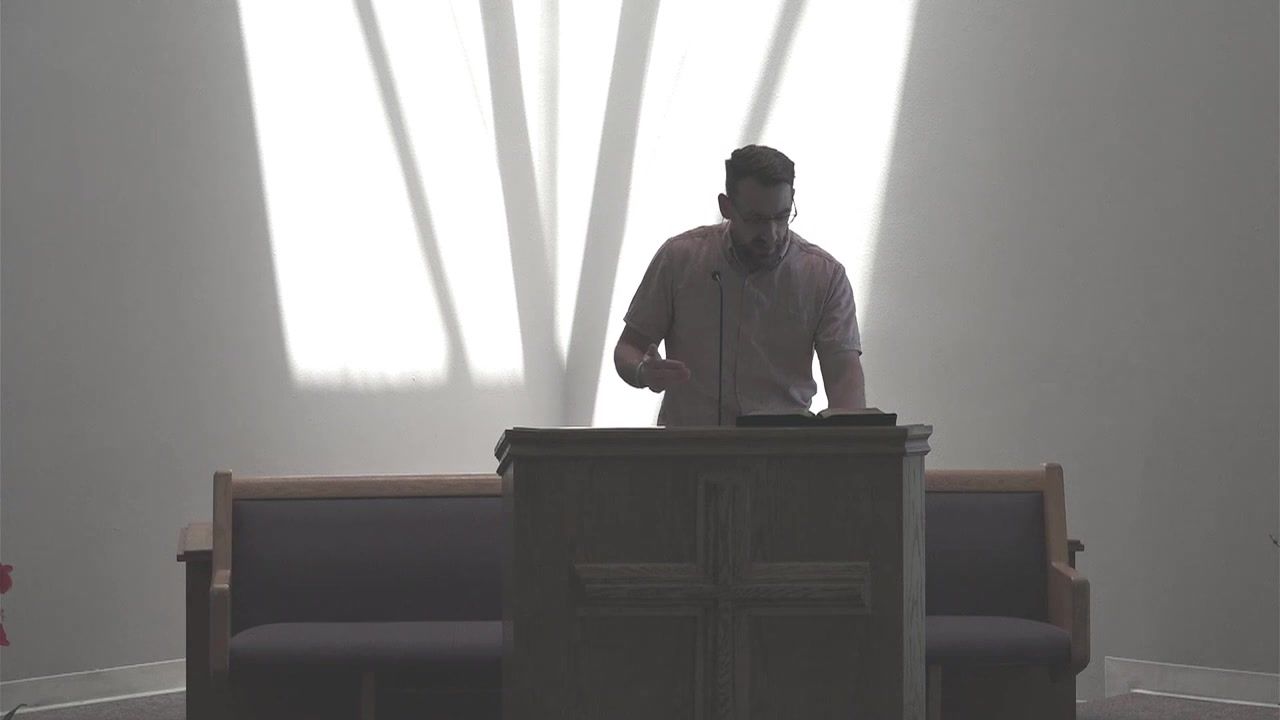
Sermon: Sensible Senses Date: July 9, 2023, Afternoon Text: Isaiah 32:3–4 Series: Isaiah Preacher: Conley Owens Audio: https://storage.googleapis.com/pbc-ca-sermons/2023/230709-SensibleSenses.aac
Amen. Please turn in your Bible to Isaiah 32. When you have Isaiah 32, please stand for the reading of God's Word. Behold, a king will reign in righteousness, and princes will rule in justice. Each will be like a hiding place from the wind, a shelter from the storm, like streams of water in a dry place, like the shade of a great rock in a weary land.
Then the eyes of those who see will not be closed, and the ears of those who hear will give attention. The heart of the hasty will understand and know, and the tongue of the stammerers will hasten to speak distinctly.
The fool will no more be called noble, nor the scoundrel said to be honorable, for the fool speaks folly, and his heart is busy with iniquity to practice ungodliness, to utter error concerning the Lord, to leave the craving of the hungry unsatisfied, and to deprive the thirsty of drink.
As for the scoundrel, his devices are evil, as he plans wicked schemes to ruin the poor with lying words, even when the plea of the needy is right. But he who is noble plans noble things, and on noble things he stands.
Amen. You may be seated. Dear Heavenly Father, we thank You this afternoon for Your Word. We thank You for the great promises of the gospel that are present in this passage, and we ask that You would give us hearts that would be eagerly receptive of all Your truth.
In Jesus' name, amen. So, something that has come up previously in Isaiah a few times is this idea of the deaf hearing and the blind seeing. And this is an important theme in Isaiah because if you remember, in the commissioning chapter of Isaiah, in Isaiah 6, which really starts off the book, that's where Isaiah receives his commission as a prophet, talks about how he is to preach so that people cease seeing and they cease hearing.
So, each promise that talks about people seeing again and people hearing again is speaking of an end to the era that Isaiah is ushering in. So, he's speaking of something beyond his own era, something that will happen where God will bless the people with true repentance.
It is said in Isaiah 29 verse 18,. And that day the deaf shall hear the words of a book, and out of their gloom and darkness the eyes of the blind shall see. And then, in the last verse of that chapter,.
And those who go astray in spirit will come to understanding, and those who murmur will accept instruction. All these things are promises of the gospel. The gospel opens eyes, it opens ears, it gives people understanding, understanding of who God is, of who they are, this world around them.
And this is all ushered in, in Isaiah 32, through the King. The King who reigns in righteousness, with princes ruling in justice. And who is that King? That King has come up many times in Isaiah, this branch that comes from Jesse.
It is Jesus Christ. Jesus Christ is that King. He is the one who opens eyes as demonstrated by His miracles, as demonstrated by His miracles of opening ears, of loosing tongues. All these things, demonstrating that He is the King that Isaiah spoke of.
He is the King that comes and makes people able to understand the truth. People who are wrapped up in lies, set free by truth. So it begins here in verse 3, saying,. Then the eyes of those who see will not be closed, and the ears of those who hear will give attention.
This is the natural state of man. The natural state of man is to have eyes that he can see physically through, and ears he can hear physically through, but to not understand spiritual truths. Because we are born dead in our sins, the truth of God is not evident to us as it should be.
Instead, though we know that there is a God, as Romans 1 explains, we suppress that truth in our unrighteousness. What is true and what is evident, we suppress because we, in our natural state, because of sin, hate the truth.
We do not honor God as God, but rather honor what is false, and we dishonor what is true. We dishonor the Lord. And so this is the case of ourselves in our natural state. Even the first conscious thoughts that a child has in a womb, are they thoughts that recognize the Lord and honor Him, though He is made in the image of God, though that child is made in a way that he should be able to honor God as God, because of sin, even then they reject God.
And as they grow older and they're able to hear and observe the world around them, this world that Psalm 19 says speaks of the glory of God, the heavens declaring His handiwork, do they recognize these things as being the works of God?
There are some who see these things and recognize that there is some higher power, but they do not honor God as God. They do not honor Him as they ought. And so while there might be some level of recognition, it is not a sufficient level of recognition.
And even those who hear the Word of God, so not just this truth that is evident within ourselves and this truth that is evident within nature, but even this truth that is spoken explicitly in the Word of God, what is man's typical response to the Word of God?
Apart from some special move of the Holy Spirit is to reject that. This is man's depravity. Man is, because of sin, totally depraved. He is unable to receive the truth because he is spiritually blind, he is spiritually deaf, and this is the way that Jesus speaks of those people at his time.
But Jesus, through His Word, through preaching the gospel, through the work of the Spirit in some, opened their eyes and opened their ears that they would understand the truth, that they would know what is right.
And He illustrated this by the physical miracles of opening eyes and opening ears. You know, these were not the ultimate miracles. They were just illustrations of the greater work that He was doing. As we look across our world and we see that the miracles of opening ears and opening eyes, while modern science can do this in some sense, these miracles aren't typically done.
It is not typically the case that one who is deaf becomes not deaf, that one who is blind becomes not blind. Why is it that such things cease? Has the power of God ceased in our world? No, the greater power that Christ was displaying in those works, the greater power of opening spiritual ears and opening spiritual eyes, that continues to this day and it continues in an even greater magnitude than it did at that time.
Because His Word is proclaimed by more and the Holy Spirit has been poured out in fullness since the days of Pentecost so that we have that work and even greater measure. A lot of people do not think that they are so blind.
They think that, well, what the spiritual deafness and spiritual blindness is talking about is a relative one. It's like the man who is legally blind, you know, he can see, he can get around, and it's just a little harder for him.
No, the natural state of man is to fully reject God until God opens his eyes, until God opens his ears. And then moreover, because of man's continual sin, God even adds additional hardness, so it's even more difficult for man to recognize the truth.
That's what it describes in Isaiah 6. In Isaiah 6, because the people had rejected the Lord for so long, Isaiah was to tell the people, keep on hearing but do not understand, keep on seeing but do not perceive, make the heart of this people dull and their ears heavy, and blind their eyes lest they see with their eyes, and hear with their ears, and understand with their hearts, and turn and be healed.
This is the greatness of the spiritual blindness that exists in our world. It is a deep and a wicked thing, but God has given His Spirit by which that may be corrected, by which eyes may be open, which ears can hear.
It continues on in verse, in this next verse, the heart of the hasty will understand and know, the tongue of the stammerers will hasten to speak distinctly. Now, let me tell you that if it is the Spirit that leads people to hear, to see, to understand, we need to be relying on the Spirit.
We need to rely on the Spirit in prayer. We need to rely on the Spirit for our own selves. We go to God's Word and we want Him, we want to understand what is said there. We need to recognize that even as believers, there is a lingering corruption, there is a lingering blindness, and that we should be praying to the Holy Spirit that He open our eyes, that we may be able to receive His Word completely.
We should be praying that for ourselves. We should also be praying that for others, for others in the church. You should pray that others in the church would understand God's Word, that they would have eyes that completely see without inhibition.
And, of course, you should be praying for those who do not believe, for those who have their eyes not opened at all, who cannot see a thing. You must pray for them. And the attitude of the one who recognizes truth is one who is at much more peace than the one who does not.
Because if you don't recognize this truth and you think that it is up to you to open eyes or to open ears, it can lead to much frustration, much frustration and anger as you don't understand why your family doesn't believe, you don't understand why your friends don't believe, you don't understand why you aren't able to persuade them, and you might spend lots of time trying to study better argumentation, and there's nothing wrong with learning how to speak persuasively about the truth of God.
But at the end of the day, if it is the Holy Spirit and you recognize that, then there is no reason to carry that in anxiety. Rather, you can speak the truth freely knowing that it is God's choice whether or not He will choose to open someone's eyes.
This is a great burden being lifted. And as you pray, remember the words of Jesus as He, after He gave the Lord's Prayer in Luke, He says, If you then who are evil know how to give good gifts to your children, how much more will the Heavenly Father give, what, to those who ask Him?
The Holy Spirit to those who ask Him. This is the primary thing that we are to be praying for. We are to be praying for more and more of the Spirit that we might understand the truth of God. The heart of the hasty will understand and know.
Mankind does not naturally understand the gospel. They may understand the propositions, you know, be able to explain the truth of what Christians believe, maybe even better than some Christians do. But that does not mean it is truly understood.
Nothing, in fact, is truly understood apart from knowing it in relation to God. Did you know that? That in order to know something truly, you must know it not just as it is um divorced from God, but as it is in relation to its Creator.
For example, let me give you an example. If I told you that I understand multiplication, and what I meant by that is I can go on my phone and use the calculator app, and I can say two times five is ten, and tell you what two times five is.
But I didn't actually understand that two times five is two added five times, or five added two times. Do I really understand multiplication? No, I have no idea what multiplication is, even if I have some functioning knowledge of it where I can fake it.
Okay, this is the understanding of the one who knows the things in the world, but not truly because they have rejected the God who has created the world. They do not know these things as being created by the Creator.
They do not understand themselves as being under the lordship of Christ. If they do not understand these things, they do not understand them truly. And apart from understanding it truly, do they understand it at all?
It is only through that King who reigns in righteousness that one can understand it. It's only when they are led by Him that they can understand things truly. First Chronicles, excuse me, not First Chronicles, First Corinthians 2 14 says, natural person does not accept the things of the Spirit of God, for they are folly to him.
He is not able to understand them because they are spiritually discerned. Spiritual person judges all things, but he but is himself to be judged by no one. For who has understood the mind of the Lord so as to instruct him, but we have the mind of Christ.
And in that passage, who is the mind of Christ? It is the Spirit of God who is the mind of Christ. The one who is led by this King has the Spirit of God so that they can understand things truly, not just understand them in this superficial manner, but understanding truly, knowing them in relation to their Creator.
Now, I'll have you know that what I am describing here is somewhat controversial, the idea that people cannot truly know things apart from acknowledging God. There are many who would reject that because it sounds silly to say that someone can't understand anything without knowing the Lord.
But if you understood that analogy I gave, without understanding the source of something, without understanding its importance, without understanding that One who gives meaning to all things, if you know something without the meaning behind it, do you really know it?
You cannot be said to truly know anything apart from knowing the Lord. You know, it speaks of this One who does not know prior to understanding, speaks of them as hasty. Now, what is the hasty person?
The hasty person is one who is quick to discern something. They're quick to discern good as evil. They're quick to discern evil as good. We must not be the hasty. This person, denominated by his former weakness, is called the hasty, but now he understands.
If you have had your eyes opened in Christ, do not be hasty. Meditate upon the Word of God. You know what that means to meditate? It's to spend time. It's the opposite of hastiness. It's to really spend time on God's Word, and not just on the Word itself, but even thinking about the things that it has said.
Right? If the Word tells us about the goodness and greatness of God, that is something to contemplate deeply throughout your day, to really meditate upon that truth. Think about what the implications are for your life, for this church community, for how you pray to Him.
We ought to not be hasty, but as the Spirit has given us understanding, to leave hastiness behind and truly meditate upon the Word of the Lord. I don't know what your Bible reading looks like. I don't know if you just read it and set it aside.
That would not be meditating. There's another practice pretty commonly called Lectio Divina, where people read the Bible and then they meditate, and there are ways that would be doing this appropriately and ways that are a little more mindless in the form of meditation, where you're kind of mystically hoping that God communicates something to you.
That is not real meditating upon the Word of God. You know, a real meditation upon the Word of God is full of deep contemplations about that Word rather than a mindlessness that's waiting for God to hand you something.
Now, we should wait upon the Lord, but I hope you understand what I'm saying there. I'm talking about a kind of mindlessness where you're expecting some sort of mystical communication from the Lord. He has given you His Word.
Meditate upon it. It says that the tongue of the stammerers will hasten to speak distinctly. The tongue of stammerers, once again, speaking of the people of God as denominated by their former disability.
This is the nature of man once again. The natural state of man is to be a stammerer, and not understanding truth, to speak what is foolish, to speak not plainly. Now, there are many people in the world who speak very smoothly when they're able to string words together.
They have far less ums in their vocabulary than I do. I'm always very impressed by speakers who just speak well. You know, I give a lot of my time to public speaking, obviously, but I'm not the best speaker.
There are a lot of people who speak very well. How can the Bible speak of them as stammerers? If you do not have a foundation for any of the things that you are saying, you are a stammerer. You do not speak distinctly.
This is the same with the knowledge, right? The one who claims truth, but does not have a foundation for truth, the God who created all things, how can they make the claims that they are making? The one who says that something is right versus wrong, yet does not know the God who determines what is right and wrong by His own character, how can they make such claims that things are right and wrong?
Especially, this is true of all forms of unbelief, but most especially of atheism, right? You think of, and I point this out because it's a common thing in our world, atheism. The one who says that something is wrong, but does not believe in a God who could make something absolutely wrong or absolutely right, you know, what does wrong even mean?
It just means that a lot of people don't like it or I don't like it. What does that even mean? It's a nonsensical statement. And for someone to even claim truth is basically saying it is right to believe this thing.
They're making a moral claim once again, and it all falls apart. It is just someone stammering, but the one who knows their Maker is able to speak distinctly. They're able to have truth that has a foundation and speak true things with a foundation.
They're able to say clearly who they serve, the Lord Jesus Christ, and for that to be something that's not founded on a bucket of lies like the beliefs of the world, but something that is founded on truth.
Now, you should understand that speaking distinctly is something that, once again, there is room to grow. Though the one who has the gospel, though the one who has the Holy Spirit is capable of speaking distinctly, there is room to grow even for the believer.
Look at Peter, and look how he confessed Jesus Christ to be the Son of the living God. Jesus recognized this did not come from flesh, but rather it came from His Father, that He was able to say this thing.
But yet, Peter, did he not stammer quite a bit throughout the rest of his life? Did he not very eagerly say that he would follow the Lord into anything and then very just as quickly deny Him? Did he not very quickly chop off the servant's ear?
We, like Peter, should understand that even though God has opened our eyes through the gospel, through His Spirit, there is room for growth and that we should continue to grow in this as we serve Him.
Hebrews 5 .12 says that not many of you, or excuse me, many of you should be teachers by now. For though by this time you ought to be teachers, you need someone to teach you again the basic principles of the oracles of God.
You need milk, not solid food. You know, I think that's true in almost every church setting, that many of the people who are there, they ought to be a much clearer speaker than they currently are. And I'm not talking about the, you know, your elocution or anything like that.
I mean that they should have a greater grasp of the truth, one that they are able to impart that knowledge to others more readily. They have more of the Word of God ready on their lips. This is the case even in the book of Hebrews.
It says that Christians, those who already know the Lord, should grow in their ability to speak God's truth to others. You know, consider your own life. Ask yourself, how long have you been in the faith?
Who are you capable of teaching? At what level do you think you would be capable of teaching someone? Could you teach an unbeliever the gospel? Could you teach another young believer the gospel? How would you be capable of teaching those who are more mature?
You know, there is room to grow. There is room to speak even more distinctly. And this can all be had through the gospel. As it says in that passage in Hebrews, it says that we should go on to maturity, not laying again a foundation.
But rather, through meditating on Christ, that's essentially what it ends up saying, is through considering everything in the light of Christ, we can grow in our maturity and our ability to teach others.
And so, it's a good challenge for yourself to ask, who would I be able to teach? How is the Spirit working in me so that I can not only know the truth but communicate it well to others? Because the one who understands should also be the one who is capable of teaching.
Speaking distinctly. Now, all these senses, you know, it talks about the eyes, the ears, the heart, the tongue, all these organs that it's using as spiritual metaphors, all these describe our experience of God, right, our understanding of Him.
How do you experience the Lord? You experience Him through hearing His Word, through seeing Christ, through recognizing in your heart the truth, and then sharing that truth with others. These things are most precious.
They are most precious. Jesus said in some of His parables, He described the kingdom of heaven in such a way that people would sell everything they have in order to seek it. It was the man who realized there was a treasure in a field and was willing to sell everything he had in order to buy that field.
Someone who is willing to, who traded in pearls and sold everything that they had so they could receive the best pearl. This is the attitude we should have toward having clear spiritual senses. This is certainly the case for the one who does not believe.
If they recognize this, if you do not know the Lord, you should run to Christ, ask for a spirit so that you might be able to experience God. And if you already do know the Lord, if you've already had your eyes open, you should be pursuing clarity through the gospel that you might know Him even better.
What is the great reward of the Christian life? On that last day, when we are raised again, we will see Christ. There will be what is known as the beatific vision, the blessed vision of God in Jesus Christ.
And so, as we see Him, that is not something that just comes naturally, that everyone experiences the same. You know, Hebrews 12, 14 says that we must grow in holiness in order that we might see God. There is a pursuit of holiness that allows us to see God more clearly.
You can experience Him in this life more clearly as you're able to see and hear and know Him. And on that last day, we can know Him even more clearly. But it is something that must be pursued, something that must be pursued, but it is something that is being amply supplied to us, and we have received everything we need in His Spirit.
So, if this is the case, if this is the great reward of the Christian life, then I would encourage you, not only if you do not know Him, to repent and to seek Him so that His Spirit would open your eyes, but even if you do already know Him, to seek that Spirit, to ask for the Spirit.
As Christ said at the end of the Lord's Prayer, God will give Him an ample measure that you might see even more clearly, that you might know even clearer, that you might speak this truth to others with clarity.
Let's pray. Dear Holy Father, we thank You for Your Word. We thank You for opening ears and eyes and doing this wonderful miracle. We ask that we would know, that we would know You more fully, and that You, by Your Spirit, would accomplish this work in us.
In Jesus' name, amen.