Keep sharing good news without ads.
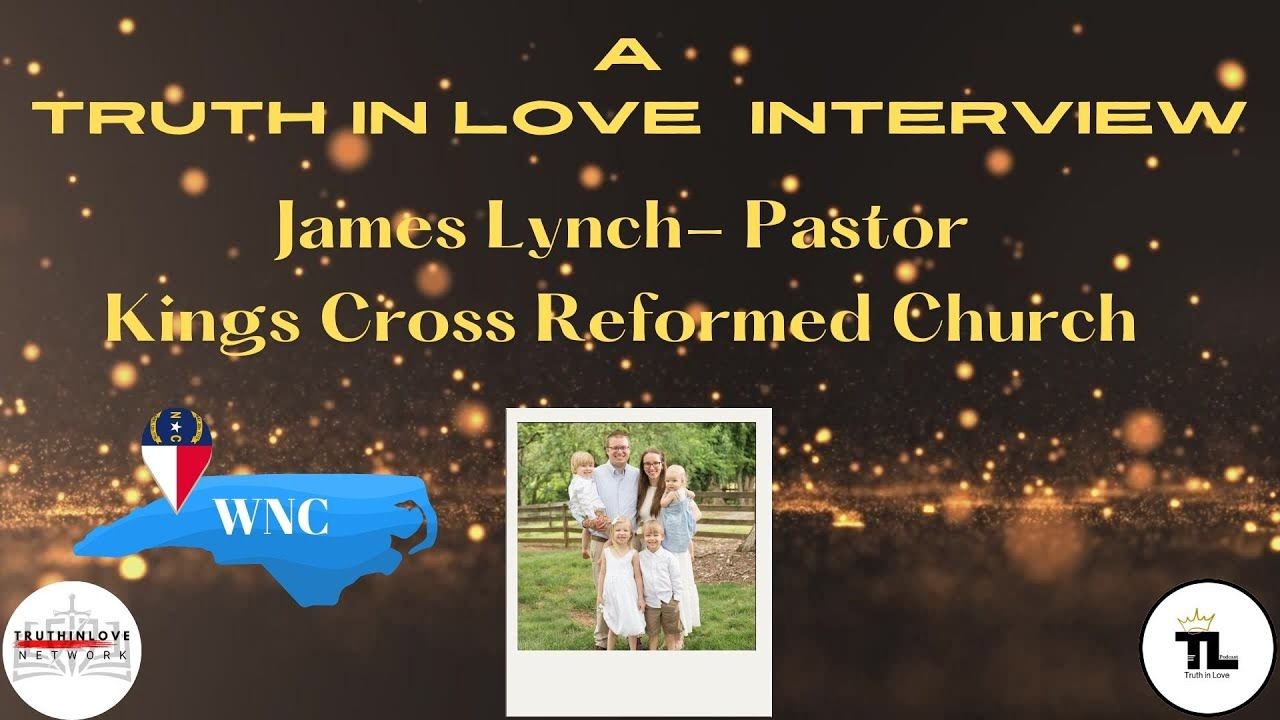
Join Dan and Rob as they interview Pastor James Lynch from western North Carolina.
Cling to the cross, then put both arms around it, hold to the crucified, and never let him go. Come afresh to the cross at this moment and rest there now and forever. Then, with the power of God resting upon you, go forth and preach the cross.
Welcome to the Truth in Love podcast. We are thankful that you are with us this evening. Tonight is another special interview. Stick with us. Welcome again to the Truth in Love podcast. If you haven't already, go to laborsconference .com.
Be looking forward to next April, April 2025, the last weekend in April, for the Labors Conference. Take up that cross. The registration is open. We would love to see you there. It's going to be in Newton, North Carolina.
So go to that website and register. The comment line is open. If you are watching now, or if you're watching or listening later, let us know. Say hi or ask a question. We'd love to hear from you. Dan and I have another special guest, and I'm grateful to have him with us, and I'm looking forward to hearing more from him.
Pastor James Lynch. James, how you doing, brother? I'm doing well tonight. How are y 'all? I'm doing good. I'm tired.
Yeah, yeah, I understand that.
We've had a bunch of weather up here, but I believe I'm most tired because we just, I just finished up a semester of seminary yesterday. So we got done four classes, got six more. Six more than you're done?
Probably not. Dr. Dan has a ring to it that I may have to go for. But so far, that'll be it for this degree anyway. Nice. Dan is a super hard worker, and I.
Look up to him and his efforts in his school and the work that he's doing. I appreciate him being with me on the podcast and the work that he does for the school and the preaching that he does and the work that he does with his family.
He's a good brother, and I appreciate him.
So,.
To you, Brother James Lynch, you are in Boone, North Carolina, so I'm not gonna steal any of the thunder. I'll go ahead and ask the first question. Share with us your testimony. Let us know how God saved you.
Yeah, that's a that's a great question. Well, I can't point to a single day where I was born again. I know that that day happened. I know that God has given me the new birth and given me his spirit, but I don't I don't have a memory of a particular conversion experience or a crisis moment in my life where I was converted.
I mean, I can point to a lot of moments where I felt like the Lord did a new work or humbled me or sanctified me in a moment and had new experiences of his grace, but I don't know when I was converted.
When I was raised in a... My parents divorced when I was very young, when I was three, and but they were both involved in my life. They both loved me very much, lived in the same town. I spent time with both of them, but I didn't have a holistic Christian upbringing.
There was not a sense of family religion. No family worship, things like that, but I did go to church. My mom made sure we went to church just about every Sunday. I don't really ever remember hearing the gospel, though, going to that church.
I don't know if it was just because I was spiritually dead or I was very young or because it wasn't preached, because it was a Southern Baptist Church and there are many, many, many faithful Southern Baptist churches.
But since then, since that time, they had left to be part of what's called the Cooperative Baptist Fellowship. And so they had gone a more liberal direction, and I don't know how much that was happening then.
But I do remember the first time that I have a memory of hearing the gospel clearly. I was actually at my grandmother's house, and we were sitting in her room watching Charles Stanley on TV, and I remember him explaining the plan of salvation.
And I thought, I didn't know that's how you got to heaven. I didn't know that's how your sins were forgiven, that Christ paid for my sins on the cross, and all I need to do is trust in him. And it was eye-opening.
And like I said, it wasn't really a crisis moment for me, or I didn't, you know, see any cloven tongue descend from heaven and rest on it. It was nothing like that. But I remember hearing that and thinking, wow, something's there.
And then I got involved in a youth group in middle school that some people had invited me to. And I think I had a typical experience that many young Southerners raised in churches that emphasize conversion and revival, which are wonderful things, have where I probably said what's called the sinner's prayer, you know, a hundred times in that youth group, and went to the altar several times.
And I think I had an unhelpful focus on, am I doing this right? Am I repenting enough? Is it real and very experiential type of thinking? And then, you know, finished high school, went to college and started dating my now wife, who I had really, really liked, had a crush on in high school.
But she was more smart and wise and godly than me. So she was not very interested then. But in college, we started dating. And basically, one day she said, I'd really like to read the Bible. Do you have any suggestions for how to go about that?
I know there's different plans and approaches. And I had, you know, I had never read the whole Bible. I'd read lots of parts. But I said, well, let's read it together, of course. And let's just start at Genesis and go all the way to the end.
And so we did that in a year from August 1st to July 31st of the next year. And we just read the Bible cover to cover out loud over the phone each day because we were in different states. And so just read three or four chapters.
And it was so, so formative. And I finally began to understand the great story of God, that there was one story, that there was one people of God, that God was sovereign, that he chose his people, that he did everything to save them, that we were helpless without him.
But he still loved us. And while we were weak, he sent Christ to die for us. And it was during that year that I really began to yearn for a deeper relationship with God. It's during that year that I felt called to seminary and to go into some form of ministry.
And it was, we then, I went to seminary. I got connected to a good local church. My wife and I got in, my now wife and I got engaged. We just began serving and just really throwing ourselves into kingdom work.
And we got married. And then we had, I graduated seminary. We hadn't had children yet, but I figured after seminary, I would just kind of step right into the pastorate. I feel like that was the picture maybe that I had imagined in my head or that someone had led me to believe in seminary.
You go through this step by step process, you get your MDiv and bam, there's going to be a pastorate waiting for you at the end. And as many of us found out, it wasn't quite that simple. And so I ended up working for 10 years at a Chick-fil-A restaurant as a manager.
We were blessed with now five, but during that time, four wonderful children that we have. The oldest will turn seven next month and just kept pursuing ministry in whatever ways we could. Began to really throw ourselves into family discipleship and doing daily family worship and catechism and these crazy things that I'd never heard or encountered growing up.
But realized that in the Bible and in church history, we have this treasure trove of godly ways of the old paths that we can walk in and that God's faithful in walking these paths to bless us. And so we've just been cultivating a Christian family and which requires with two centers leading five centers, daily repentance and daily forgiveness.
But it's been wonderful. It's been busy. It's been happy. And we're super grateful to be where we are walking with the Lord and now with me pastoring a church.
So I'm, I'm nearing the end of my seminary journey as well. I'm also going through the process of ordination with the RPCNA. So I'm doing different exams and brightened papers and, you know, talking with folks, getting asked to preach all over the place.
So we're kind of interested in asking folks about their journey into pastoral ministry. Like, what did your preparation process look like? Obviously you said you went to seminary, but what did it look like?
You know, the type of study you did, where'd you go to school? And how did that, that, a lot of the stuff I've been finding out is that seminary, while helpful, isn't where I was getting the best. I said that the most practical training was, is actually coming through, you know, working with my pastors and stuff.
So how does that look for you? How did you get your start in pastoral ministry?
Yeah, that's, that's a good question because yeah, seminary is just, it's, it's important. I would never denigrate it, but, but it is just a piece and it's not even the biggest piece for preparing. So I did get an MDiv.
Um, and then actually I took a year and a half off and then I went back to, um, do a PhD program. And, uh, focusing on Christian ethics, I thought I might want to teach. And, uh, when I started that PhD, I had one newborn.
And then by the time I got to four children, which was less than five years later and working a overtime job and preaching every week, I felt like I can't do this anymore responsibly. So I talked to my advisor and he said, well, do you want to be a pastor or do you want to have a PhD more?
And I said, I want to be a pastor. I don't care about the letters behind my name. He said, well, I don't, I had already done all my classes and comprehensive exams and mentorship. He said, why don't you just take a THM, which is like a research master's degree, a master of theology and, and head out.
And after I did that, I haven't looked back. I have enormous peace. And so I encourage you in your pursuit of the doctorate, but I don't think I'm ever going back to seminary, but yeah, like you said, it's, it's so much more outside of that.
For me, you know, the most important thing, I think the most important thing for any young man or old man, that's considering a call or, or discerning whether they've truly been called to ministry. Is to be, uh, the three spheres that you want to really be seeking the Lord in and serving is serving the Lord in your church, plugging into a local Bible believing church, um, leading your family.
Well, I just can't emphasize enough how important daily family worship has been for us reading the Bible with your wife, praying with your children, letting them see you repent, singing together. Um, and then just pursuing the Lord in your own devotion and prayer life and studies, whether it lines up perfectly with, you know, what you're doing in seminary or not.
Um, cause sometimes, you know, I mean, seminary is a, is a shotgun type of approach. And sometimes you might not be reading the books that your pastor would like you to read or you really want to read.
And, you know, there's different approaches to that. One is save all that until you're done and just throw yourself in your studies. My approach was do what I need to, to do the job well in seminary. But if I have any extra time to spend it on the stuff that I, it was either in my local church or that I felt that would, would benefit me more.
Um, so actually one interesting thing that we did that I don't even know if in the moment I was actively thinking, well, this is what I need to prepare me for the pastorate. But, um, we were, my wife and I were both in grad school and every single month we made our budget every single month, you know, it was red.
Uh, we didn't have enough money. We were scrounging around for food and it was just a trying time as two poor students. And one of my pastors said, my lease was coming up to an end and we were trying to figure out where we need to live.
And one of my pastors said, well, why don't you just come live with us? And, you know, we were just kind of sitting around the table and we all kind of laughed. Oh yeah, that'd be fun. Wouldn't it? And then like a week later I called him.
I was like, were you serious the other night? He said, yeah, why don't you just come live with us? And so me and my wife, before we had children, we lived with, um, one of our pastors and his wife and his four children.
And it was, it was wonderful. It was just a wonderful time. And, uh, very generous man. I mean, they didn't charge us anything to live there and it just totally involved us in the family. We weren't some separate group.
We did whatever the family did. We helped with the meals. We helped with the kids. We went to the parties together. And I think we need more of that is pastors are saying, why don't you just come live with me?
And that's what Jesus did with his disciples. And when he first calls his disciples, you know, they, he says, follow me. And, and, and, uh, you know, when John and Andrew start following him, actually, they see him walking by John the Baptist says behold, the lamb of God.
They, they leave John. They start following him. Jesus turns around and says, what are you seeking? And they say, master, where are you spending the night? I mean, they're already bought in, sold completely there.
I'm wherever you're going. I need to be with you because you're the real rabbi. And so I think we need more of that. And that's, that's really important. Um, and then as I, uh, just continued to grow.
And as I got done with my MDiv and was in my other school, you know, I really started to see more and more of my work as a ministry. I worked at a Chick-fil-A, like I said, for over 10 years, I had a boss who was a believer and he, uh, he basically, you know, he didn't put any roadblocks in my way to sharing the gospel or to discipling others.
He kind of gave me a green light. So I would just see that as a ministry, whether it's a, you know, teen girl in high school, who's unexpectedly pregnant and doesn't have people speaking truth in her life.
And I was able to be there or whether it's people, I met people who had literally never been in a church before or never heard the gospel. And so one thing I did was I did all our onboarding and all our orientations.
I would just, I would share the gospel with every single orientation person that I had come through the doors and I would give them, I would, I would get tracks from chapel library. And I'd give them, um, some tracks, uh, I gave them, I mainly gave away stuff from Horatious Bonar and we would talk through it together.
And I mean, it was just, it was awesome. It was a great opportunity. Not everyone has that. I think a lot of people don't have it, but I think a lot of people might have it and they don't take it. So you're seeing everything I could as a ministry.
And then the last, well, I'd say two more things I really did to try to prepare for the ministry was one. I looked for, uh, preaching opportunities and any preaching opportunity I was ever given. I took, I mean, anything it could be.
I mean, I preached in independent churches. I preached in United Methodist churches. I preached in SBC churches, uh, Alabama, South Carolina, Virginia, wherever I needed to go. Um, and the way I did that and an opportunity that a lot of Baptists have before them is I got connected with our associations director of missions and, and I don't know how it is in the RPCNA, but in the Southern Baptist convention, there's always a lot of empty pulpits.
Um, and so I just told him anytime you have someone that doesn't have a preacher on a Sunday, please let me know and we'll go. And my wife was so, so supportive watching the kids. Well, you know, no, we always worked together, but strange new environment.
And I leave her in the pew with all the kids, with new people. And she just, she was an absolute rock star and that was super helpful. And then I was long answer for the last thing I'll say, I'm not a big fan of, you know, there's a movement.
I feel like in some of our circles to go to all the conferences, to meet all the people, to do all the podcasts, to do all the blogs, the local church is where it is. Um, but I also have one exception.
Um, I had a very, very sweet, um, couple, uh, Lutheran Missouri centered, conservative, godly couple, elderly man and woman who I was preaching at this church. I only preached there four weeks. Um, and at the end of that time, it was Christmas and they gave me a Christmas card and inside the card, it was a check for a thousand dollars.
And they said, just use this for whatever you need for your ministry that you want to do that you can't do otherwise. And I had been reading a lot of books from banner of truth. And I said, I want to go to the banner of truth ministers conference.
And so I went and, um, that was, that was transformative too. So I go to the banner of truth ministers conference. I'll give them a plug every year. And I've met, uh, some really amazing brothers. Um, two of them there ordained me, um, that I had met there, uh, got connected with great opportunities and I'm on text chat with.
With a couple of those brothers, we talk multiple times every single week. So find godly, like-minded brothers, even if they're in other States. And those are kind of all the things I would say for how I've prepared.
Did you go to the one at Elizabeth town college?
Yes. Yes.
Yeah. I went there, I think it was 2019, 2018. So yeah, yeah, it was, it was great. Great.
Yeah.
Wonderful.
It's good stuff.
Well, I hope you, I'm going next year too. I hope you can come next year. That'd be cool.
I don't know if I will be able to or not, but.
It's a lot. I mean, yeah, you have to, you got to pick and choose.
Well, you were at Kings cross reform church in Boone, North Carolina currently. So tell us, tell us about how you came to Kings cross reform church. And also from my understanding, talking with you, there's a link there with CREC.
And you may want to explain what that is.
Sure.
And you were, you were, there was an association and now there's not the association anymore, so let us in on some of that.
Well, um, I had done a year of pulpit supply at a church that didn't have a pastor in Durham where we were living. And if there was ever a Sunday where I wasn't preaching, um, we were looking for another, uh, church home.
We had been part of a wonderful church there in Durham, uh, first Baptist Durham pastored by Andy Davis and a great church, but, uh, we had come to more reformed convictions over a few year period. And during that year of stated supply, we had really become convinced of.
Essentially Presbyterianism and all that that implies we'd become convinced of pedo baptism, baptizing infants and, uh, and other things. And so we knew, uh, it was important for us to find a church home where we could flourish within those convictions, serve, um, well, and be served well.
And so we had been visiting some other churches and, uh, we'd visited one CREC church and we liked some things about it, very friendly people. And they had let me know they were planting a church here in the mountains.
I said, oh, that's great. And, uh, the pastor said, we're really looking for a pulpit supply because we, we, we haven't found a pastor and we need someone to fill the pulpit. He said, you think you could do that?
I said, absolutely. You know, sign me up anytime. Uh, and so I come up here to this church plant just to preach and wonderful connection, I mean, really love the people, love the area, I loved the worship and just, I gave a few messages.
And so the church, uh, some of the families in the church, they really felt like we had a good connection and thought that it might be a good fit to call me as pastor. Um, but the sending church and, uh, was not as much in favor just because we had some doctrinal differences, uh, that I would say are pretty important.
Um, and I think the biggest doctrinal differences really boiled down to an emphasis on, and a clarity regarding the new birth, what it means to be born again. And the way we understand scripture at King's cross, and we're very clear about this, this is a very top tier issue for us is that, uh, the new birth is a sovereign work of God.
Uh, it is done totally by his spirit. When God's spirit, uh, enters in to a center, takes out the old dead heart, gives that center a brand new heart that will love God and obey God is a total work of grace and it's irrevocable.
It can't be undone. When you get born again, you're never going to be unborn again. You're never going to spiritually die again, that God who began a good work in you is going to carry it to completion.
There's an absolute guarantee of perseverance for those that are truly born from above. And the sending church, uh, just wasn't quite as, as clear on that. And I never, I never got an exact nailed down answer.
You know, is it more baptismal regeneration? Is it more what's called presumptive regeneration? I don't know exactly where they would fall on all the details, but I think the big difference was the focus that a lot of people have in the CREC and not all of them, um, but especially in what's kind of known as the federal vision camp.
It's such a focus on the corporate reality of being drawn into the regenerate body. And this idea that if you're a part of the church through her sacraments, through baptism, especially, then you are part of the born again body of Christ, which of course we would say, uh, yes, the church is corporately regenerated.
That that's true. Um, but in the circles that we were connected to and the people that we were associated with in that church, those church planting days, the corporate realities and the objective realities were really clouding out that inner subjective individual experience of the new birth.
And that was just a big concern for us. And so that was brought up in, in a number of conversations with the sending church and some of the, uh, men in our church plant. And we just saw things differently.
Um, we, we held, we hold to a evangelical historic church view. Uh, we believe what the Puritans believed about the new birth. Um, we believe what reformed Baptist and Presbyterians have always believed from, from what I can understand from history.
And they just had a different view. And so it, that was important enough for us to part ways on it and go a different.
Way.
And because of that, um, once the member families that were on that more, I would say traditional evangelical side, once they were no longer part of that CREC church plant, they were released, uh, on their own.
Uh, they said, well, let's not give up. God's called us to do this work. God has put this desire within us. God's opened up doors for us. And look, now we have a man who we think could possibly serve as a minister of the gospel.
And so they reached out to me again, after having some conversations with the home church and said, can you just come up on Sunday and every Sunday after that and preach for us and we'll have conversations and we'll discern is the Lord really in this?
Are we really going to go forward? And that was in February. And then in April, we moved up here and, uh, we have been sharing the gospel, living in community, uh, seeing God's spirit work. And it's just been a unexpected providence of God.
I never thought it would work out this way. And so it's wonderful. And so now we are independent or non-denominational. We may join a denomination in the future or, or another network, um, just in the reformed stream.
But right now we, we're happy to be where we are. If I didn't answer some aspect, I know I kind of rambled, let me know and I'll, we can circle back to something.
No, that was good. And, and I feel like you generated several more questions and that response, we could, we could go on for a little bit longer just on some of the things that you talked about, but we can probably get to the other questions tonight and maybe have those conversations later.
So, uh, your church, um, being up in the mountains of North Carolina, y 'all just had a, a major, uh, hurricane come through and, uh, end of September.
That's right.
Um, uh, how did that affect y 'all? Um, cause I know it hit, it hit different depending on the topography of where you were, uh, how close you were to streams, you know, what the valley looked like and the different stuff like that.
But how, how did y 'all do how the folks in your church do? And, uh, just kind of, kind of tell us how, how that went down for you guys up there.
In Watauga County.
We're in Watauga. Um, so Watauga didn't hit, didn't get hit quite as bad as some other counties, but we still did get hit quite hard. Um, yeah, we, we, it's kind of funny because me and a few of the ladies from our church had gone out to Appalachian state to do some evangelism on that Thursday and it was raining a lot.
We were out there just getting soaked, handing out Bibles and sharing Christ and kind of thought, Oh, what a, it's kind of a funny circumstance. Like what's going on? No one knew. I mean, we had heard about a hurricane, but no one knew what was going to happen.
We went home, dried off, went to bed. And then Friday morning, I remember waking up, just the wind howling, crazy, crazy loud wind and rain. And it was that Friday in the end of September that the hurricane hit.
And it was just, it was, it was something unexpected. We thought moving to the mountains. Well, we're getting farther away from hurricanes, which occasionally would kind of touch us a little bit where we were in the Raleigh-Durham area.
Cause it's closer to the Eastern part of the state, but it was totally unexpected. And, um, we did, uh, get out that day. Uh, we lost power for a little while, but me and my family, we left the house that day to go just see what was going on in town, try to get some cell service.
So we could contact people cause we didn't have any service. And we stopped by the church just to see what was happening there. And when we stopped at the church, um, there were several church members already there, uh, squeeging out water.
Cause it had flooded about three inches. So not bad. They're already there serving just, I mean, just pushing that water out the door and had been there for hours. We had fans up. We had to take the carpet out.
It wasn't, it wasn't that bad really. And we worshiped on Sunday and we, and part of our service, when we do our confession of sin, we kneel down and we stood up, everyone's knees were all wet. You could see all the wet spots, all everyone's knees that Sunday morning from, from, cause the floor was just still wet and, uh, but it did hit a lot of people hard, um, to lay elders.
They actually own a business together and they had a, uh, fairly sizable office building. It got flooded about four and a half feet of water. Um, so totally destroyed, uh, pretty much everything there and me and, and several of the church members and other people in the community, uh, we spent a decent amount of time just busting out drywall and tearing things up and breaking things down and getting that back to square one before the mold sets in.
Um, a lot of our young men, um, at church, they drove through the community, cleared roads, checked on elderly people, checked on friends and neighbors, checked on people they hadn't heard from, figured out new ways to get places.
Uh, I mean, our congregation and our community just stepped up massively. Uh, I live in a little gravel road, uh, dead end with a couple of little splinter roads that, that break off of it. And me and the neighbors all got together Saturday morning to, uh, clear some trees and branches that had fallen.
And it's just an amazing community spirit. Um, the body of Christ, uh, was, was just present. I went to Newland a couple of times. I went to, um, just a couple of places where I knew needs were to help out in whatever way I could and everywhere I went, people were there serving and they're still here serving.
We've got people coming to Samaritan's Purse to kind of be sent out all over the place, um, to serve in Western North Carolina, showing up at our church on Sunday and say, Oh, Hey, it's great. We have another visitor.
You know, how'd you, how'd you hear about us? Do you live in the area? No, I'm just here serving with Samaritan's Purse. You know, we've had that multiple times. And the body of Christ is just here. Uh, you know, it's not, it's not the government.
It's not the, uh, you know, social services. And of course we believe civil government has a role in their good, good things being done by community organizations, but it's just been Christian stepping up.
And we've just seen that over and over again. And the churches around here have been doing amazing. Uh, there's a bigger church near us. That's just better resource Perkinsville Baptist, and they've been doing wonderful things.
There's a, uh, Franklin Graham's home church Alliance Bible fellowship. They've been doing wonderful things. And so we were hit hard on the whole, but in our congregation, no one lost their home. No one lost their life.
Um, everyone's healthy, everyone's dry. And we're just working on rebuilding.
So you kind of answer the next two questions. Um, how are you all doing? How's the community doing? Uh, we, uh, those of us outside don't always, um, we get fake reports, reports, uh, so, so we don't know everything that's going on.
And so I appreciate you letting us know, um, how you guys are doing what happened. And, um, the next question would be, um, because I know the work's not finished.
Right.
In your opinion, those of us outside of the mountain area, your extended church family, how could they be of service? What, what are things that, that those who are able can help you and the other folks in your community?
Yeah, that's a good, that's a good question. I mean, the work of rebuilding is, is in one sense, really just beginning. Um, I was at a meeting of pastors the other day, and there's a group forming called the long-term recovery group.
There's several of them in Western North Carolina, but talking about, uh, just how, how long it's going to take. And, and the immense effort that is, has to go into rebuilding. Uh, there's different things with making sure you're up to code.
There are houses that now, because there's changes to floodplain determinations have to be elevated before they can even be rebuilt. And it just, the amount of machinery and equipment that requires. And it's, it's more than I would ever have thought.
Like, I never thought about being in the mountains and, you know, the city or your insurance or whomever, I don't know all the details, how it works, but it says this house has to be raised six feet, you know, or, or you can't rebuild it or you can't build here anymore.
You know, we can't have a house here because of, uh, this damage. And so it's, it's, it's, it's really tough. And there are still people who are displaced, still people who are, I mean, by God's grace, living with friends and family and neighbors and church family, but there are people whose lives are not back to normal and won't be for quite some time.
I would say, you know, the best thing we can do, our first resources is, you know, go to the Lord and pray. Um, that's not just kind of like a last resort, nor is it a cop out if you don't want to do anything.
I mean, to labor and prayer for someone is, is actually hard work. And I would just ask that people labor in prayer. Um, that would be a big need. Spend time praying for safety, for health, for a favor with the government, for favor with insurance companies, uh, for, for people to be saved.
People have been converted. I mean, God has used this event to bring people to know and love him. We have seen people converted to living faith in Christ. Uh, we have a couple of our ladies at church who've been serving very faithfully with Samaritan's person.
Uh, one of them came to a Wednesday meeting the other day and said she had been, uh, serving, cleaning out mud out of someone's house where just mudslide had gone in and, uh, the lady that lived there, uh, was, did not know the Lord, did not know Christ.
And, uh, during that time of recovery with Samaritan's purse that day, uh, someone shared the gospel there and she believed and she trusted in the Lord and she was, she was converted that day. And so the Lord's using this to bring people to know and love and serve them.
And so pray that there would be more salvations. And then for people that want to get boots on the ground, um, I mean, the best, the best resource, I think the best connecting point is Samaritan's purse.
Uh, and I know some people don't want to go through a big organization, but they, they are connected to the local churches. They know the needs are our congregation. You know, we have 45 people on a Sunday morning and we're new.
We just, we don't have the connections or resources to get you to the places you need to go. Um, so I would say the best place is to go there and they will get you to the individual people. They're not just doing food pantries and come show up and do donations.
They are sending teams out every single day to individual people's homes, to families that still don't have houses that are serving them, I would say, go to them. Uh, it's believers who run it and they're, they're thankfully a lot of brothers and sisters coming and working and laboring with them and, uh, and just helping us rebuild.
So that's definitely what I would say.
Cool.
Let's, uh, let's shift gears a little bit. And, uh, I wanted to ask you about, uh, discipleship. How do y 'all do discipleship at your church? Cause I know a lot of folks, a lot of churches will have discipleship as something that they want to do.
Well, they even try, but maybe they don't have something, something in place where they can, they can observe what they're doing. Uh, maybe repeat it. No, it's kind of just a, uh, well, I'll disciple this one by grabbing my Bible and that's helpful, but how do y 'all do it over there?
Oh, that's a good question. I'm sure we could use some refinement in, in, in our approach because we don't really have a super formalized system. I would say the way we do discipleship is, um, our number one emphasis.
Of course we have Lord's day worship, which is very important. And we also have a Wednesday meeting, but our number one emphasis for discipleship is that fathers would be leading their families to know and serve the Lord.
So we emphasize family worship. We want to equip fathers, um, by, you know, me or the elders coming alongside them, bringing people into our homes, bringing young families in our homes, sitting down at the dinner table together and just giving them a model of what it looks like to seek, to raise your family, to know the Lord, to disciple your children.
Um, it's like that pastor, you know, did with me, where I lived with me and my wife lived with him for 14 months. So it's a lot of life on life. We want to spend a lot of time together in each other's homes at each other's tables, knowing each other's kids' names, um, seeing how each other parent.
Um, and of course not everyone's in a family though. There are people that are single that are widowed. And, uh, we want to draw those into our families too, though. We don't want to leave them out. Um, I was really influenced and this is the discipleship and an evangelism, uh, thing, but I was really influenced a few years ago by reading Richard Baxter's, The Reformed Pastor.
And he viewed his calling as a pastor, not just as a teacher and preacher, but as a true shepherd who would go out and visit the people in his community. Not just the people that showed up for worship on Sunday, but every single home in his parish, he committed to visiting every single household at least once per year, and he had 800 households in his parish and he would, he would go to their home.
He would greet them. He would bring his Bible. He would ask penetrating questions. He would ask about their soul. He would offer them encouragement. He would teach them things. If they were confused, he'd leave them resources.
And so that's something that I've tried to do is during the summer, I spent one day a week doing visitation in the community where I would just go to every random door and knock on it and share the gospel and see how I could pray for and serve people.
And then as needs arise, you can connect those people with other people in your church, of course, and bring them into the life of the community. So that's, that, that was something that it is largely evangelistic, but it's, it's also discipleship.
It's not only sharing the gospel and then leaving. But keeping notes of that and following up with people, those would be the big things we do for discipleship. And then as a pastor, I just try to always talk to my people and know what's going on in their lives and see how I can encourage them.
Just the normal things pastors do. You know, if someone's got to have surgery, you go to the hospital. If someone's had a loss, you go to their family and pray, pray with them, grieve with them. We have, we've, thanks to our evangelistic efforts, which I think we'll get to talking a little bit about in a moment, we have a number of young men that are coming to our church and just, you know, getting lunch with them and meeting with them during their school day and just taking time to invest in them.
And, and it's, it's been a really rich, good time, but we don't have a great formalized system and maybe that's a strength or, or maybe it's a weakness. I'm not sure which, it might be some of both, but that'd be our general approach to discipleship.
Well, it sounds like you do have at least a formalized structural idea of working through fathers and the families and then drawing everyone together. So it, there's a familial concept there anyway.
Yeah. That's, that's good stuff.
And I think that was encouraging too, because you have, there's many folks who are, who are in the ministry, who, who see what's going on over here and feel like, I like those results. I need to implement this over here, but to hear your encouragement and what you do, that it's not formalized, but it's, it's familial, it's relational, it's those, those types of things that, that you're doing and it's not some, some massive program and it's all so neatly structured.
So I think that that was encouraging to me and I think hopefully it'll be encouraging to other folks too. So I appreciate that. And along those same lines, I was, one of the questions that I thought about too, which is the next one was, I think that I've seen, and you just, you mentioned it earlier, your evangelism efforts, that, that you go out and you do, and I think that you go to Appalachian State University some.
Yes.
So if you would share some of your, your desire for evangelism, some of your experiences there on campus, maybe some of the other evangelism efforts that you do, and then this is, this is always something that's on my heart.
I know it's, when you're in a college town or when you're in a city urban area, evangelism seems to kind of, it's a little bit easier in those places, but when you're in a rural community and people are more spread out, so if you've ever had any thoughts on how can folks in more rural areas be more creative that are, they don't have the advantages of having a college nearby or university, or, you know, urban setting where you can just walk them down the streets, maybe you could touch on that a little bit too.
Yeah, that's a great question. So yeah, evangelism is, is near and dear to my heart and to the heart of our.
Church.
During the summer, mainly what I did for evangelism was just pastoral visitation, going to just whatever doors in the community, whatever people in the neighborhood and wider area. And it's interesting, you mentioned the urban rural divide.
I live in a very small rural community of maybe a couple thousand people. We're unincorporated. It's called Deep Gap. And then it's just 15 minutes outside of Boone though. And Boone is, for a city, it's very small.
I think there's maybe only 15 or 20 ,000 permanent residents, but the college makes it, you know, feel a lot larger and crowded. And you're right, it is easy to evangelize in an urban area. Anyone that says being in an urban area or a liberal area makes it hard to evangelize is confused.
Because it makes it way easier. So during the school year, what I've done is once a week, I try to go to, or at least once a week, that's the goal, is go to Appalachian State, which is a public university.
I don't know how big it is, but it's not small. It's not a tiny little college. It's a, it's a good size public university here in Boone. And we've done a lot of different things. I've done open air preaching a number of times where I just go to this area called Sanford Mall, which is just kind of like the hub of campus.
It's just a big grassy area and buildings all around it. So students are constantly walking to classes or eating lunch out on the grass or playing, you know, Frisbee or soccer or whatever. There's always people there, no matter when you go.
So I'll just go there and just stand up on a little brick wall or stand up on whatever elevated or slightly elevated surface I can find and just preach the gospel. And it's just a simple message of salvation.
Calling center centers to come to Jesus, to just come to the cross, to trust in him, to believe on him. And I would say a lot of people are afraid of open air preaching. And if anyone happens to be watching this and think I can never do that, I'm afraid of open air preaching.
I would say that I think a lot of open air preachers are afraid of open air.
Preaching.
I'm afraid of it. I am nervous. I mean, every time I drive to campus to do open air preaching, I immediately think of a million reasons not to go. And there's always something that could steer me away.
But once you stand up there and open your mouth and proclaim the gospel, there's just what I've experienced is just an amazing divine unction and anointing, empowering from the spirit to preach. And he blesses that.
And so I've done that a number of times. I've also gone out and one of the young men that I met there on a day where I'd gone to do evangelism, I had not, I didn't actually do preaching that day. It was just more kind of talking to people, conversational.
But I connected with this one young man who he was also very interested in evangelism. He's a student there. And we got each other's numbers. We talked and he reached out to me one day. He said, I'd really like to do some evangelism.
Would you just come with me?
And I said, absolutely.
You know what?
I'll do anything. And it's so sad. I said, well, have any of your pastors ever come with you? He said, no, no, they've never come with me before. I said, man, that's sad.
You know, yeah.
Whenever you want to go.
And so we'll go out and, uh, what he, what he has done and now we do together is he just brings a whiteboard, like a, kind of a larger whiteboard and writes a question on it, like, who is Jesus? Or do you believe in a higher power?
Something like that. And we'll just stand on the sidewalk and every single person that comes down, we will just say, Hey, you want to answer our question? It's amazing.
College students said, yeah, sure.
Items for question. And then as soon as they take the marker, we'll say, you know, okay, you. Oh, see, you put this answer. What's your faith background. And just immediately opens up a conversation. We've had conversations with people who did not know the gospel with people who were raised in the church and had walked away from the faith with people who had vastly different beliefs, crazy things.
And we've had conversations with true, devout, loving believers who feel alone in that public university space and have been so encouraged. I mean, I've talked to people that have just started crying because they feel alone and, and they feel like, you know, like everyone else has vowed the knee to.
Bail.
And, and am I the only one left that really believes the Lord and follows him and sort of encourage them and pray for them and, and just love them. It's been wonderful. And then we've done a, we've done other things where we'll bring Bibles and hand out Bibles or along with cookies or, or some type of treat just to bless people.
Handed out cake one time, but always with the gospel, whether it's tracts or Bibles or preaching or whatever we do. And it's a great time. It's a wonderful time. And we've had, of course, some angry pushback and things.
But normally that's not a dominant theme. You know, you'll have someone yell at you or someone say something crazy or try to bring up some, well, of course you can't believe the Bible because the Bible says this, you know, some type of gotcha thing.
But we've also found people that just seems are not far from the kingdom. And we know that God's word says that no one seeks after God. And that's true. But there are also people that God's spirit is drawn and hasn't, hasn't given them true new birth yet that, that you can see almost, and we can never be certain, but you can see that they're on the road.
They're hungering and thirsting for something. They're looking for something with meaning. And we are the ones that have been entrusted with the gospel and the church has the gospel. These people are hungry and we have the bread of life and we can give it to them.
So it's, it's, it's wonderful. It's, it's, it's a great opportunity. And yeah, I would say if you're in a college town, if you're a, if you're a man who has been blessed with the gifting and ability to preach, if you have been, you know, I know different denominations and different traditions approach things a little bit differently, but if you have been given the go ahead from your church to preach, or if you, if you're in a tradition where it's more open and, and you just feel an urgent need to preach and, and, and go out and do it.
And if you're not, if you're not in that circumstance, but you still are a believer, you can, you can still go out and have conversations with people about Jesus. You can, anyone can hand out a tract.
I mean, my, my toddlers have handed out gospel tracts to people. They have the words of life on them. It doesn't take any training to do that. You don't have to be qualified in any way to do that. So there's, there's a lot of opportunities if you do live in a town or especially in your college town and then in a rural area.
It is, it is sometimes harder, but I've, I've heard of people that live in rural areas that'll go to the convenient station, which if anyone's in a city, that's not a gas station, that's where you can take your trash.
So you don't have to drive all the way to the, uh, the landfill, go to the convenience station and preach the gospel in the open air there, or hand out tracts to every car that drives in the convenience station, or just meet people in your neighborhood.
A lot of people will think it's weird if a stranger knocks on their door. I mean, that would be the dominant response, I think, but a lot of people are grateful, even if they're confused at first or thrown off at first.
I've had one lady. I remember I knocked on her door and she was utterly confused why I was there. I said, I'm a pastor and I'm here to share with you about Christ and see if I can pray.
For you.
And, uh, she said she'd never had a pastor show up to her door before. Well, you've had salesmen show up, probably had heretics show up, Jehovah's witnesses, Mormons, whatever, had all types of people show up to your door, political canvassers, people for the census, um, but had never had a pastor show up.
So there's, there's always an opportunity, um, to share the gospel and, uh, we just got to take it and be faithful. And the Lord blesses it. He always blesses it. Uh, his word doesn't return void.
I had an opportunity to meet my neighbor a few weeks ago, uh, as we were both hunting in the backyard and he heard me shoot, he was able to come over while I was, uh, cleaning one out and, uh, talk to each other for a little bit.
Good stuff.
That is good. That's definitely a fun way to meet people. Yeah, I was actually, uh, I was, my, my convictions about the Lord's day were really tested yesterday. Uh, we had gotten home from church and my daughter says, daddy, there's three deer in the backyard.
Get your gun. I said, no, no, I'm not gonna do that right now, sweetie. But let me just go look.
Let me make sure they're, uh, calm, calm back. Tell them to meet me. They're here tomorrow.
You got the, you got the next one?
I don't know. I lost, I lost track of where we're at. I was just enjoying the conversation.
No, it's good.
We'll just, we'll just let you finish up with the, with the next two. Um, so how can folks find you? Um, I know I, I found your sermons and I really enjoy your sermon that I listen to and how can, how can they find you?
How can they support you? How can they pray for you? And then after you tell us that, um, we end every episode with the gospel. So if you will share with our folks, the gospel of Jesus Christ and how, how they can be safe, how they can respond to that, we appreciate it.
So how can you find us? Um, well, there's a number of ways, uh, you can go to kingscrossboone .com. That's our website. You can also find us on sermon audio. So if you, uh, if you're not familiar with what sermon audio is, it's just a treasure trove of, uh, sermons where pastors from.
I find it to be mostly reformed and evangelical pastors. Uh, so I would say you can generally trust the sermons on there. Uh, but go to sermon audio .com I think is the website. And there's an app also that you can find really easily on the app store and we load all our sermons onto there.
And so you can just listen to them when you're driving in the car, when you're at home, if you're sick one Sunday and your church doesn't have a live stream option or something, you can click on there.
Uh, you can also find us on Facebook. And you just look up Kings cross reform church. We're in Boone. I think, uh, I don't, there's nothing else with that exact name here that pops up. There are other Kings cross reform churches that exist, but we're the only one in Boone.
Um, and then, uh, you can also, uh, find my Facebook. My name's James Howard Lynch. I'm on Facebook and I believe it's a totally public profile. You can reach out to me. Uh, we have a contact form on our website.
You can reach out there. Also, if you have any questions, um, I'd love to talk to anyone about anything. I mean, uh, if you have questions about the gospel or the Bible or what our church is about, and then if you're ever in Boone, or if you are thinking about going on vacation to Boone, and if you're here on a Sunday, then, uh, don't, don't forsake the assembly just because you're not at your home church, you know, find a good Bible believing church.
And, and, uh, we'd love to have you at ours. We're on highway 421, right. As you enter into Boone coming from, uh, the east on highway 421, uh, just right up on the left, it's got a white sign. It says King's cross, uh, just as you cross over the new river.
So yeah, we'd love to have you sometime. Um, and then share the gospel. You said, is that the next thing? Well, the gospel, I mean, that's, uh, when, when Christians say gospel, what they mean is the good news of Jesus Christ.
The Bible tells us very clearly that God, uh, is an eternal God. He's from everlasting to everlasting. He's a God who is loved. He is, uh, a God of justice, a God of mercy. He is a God who is glorious and wonderful.
And, uh, he decided, uh, out of the overflow of his love and to, uh, the display of his glory to create everything that we see to create the heavens and the earth, and he created it all very good. Everything was great.
There was no, uh, sin. There was no sickness. There was no death. And he especially created mankind, Adam and Eve in his own image and likeness. And he put, um, Adam in this wonderful, beautiful garden.
And he had fellowship, Adam had fellowship with God. Everything was, was wonderful. And Adam had the moral law written on his heart. Uh, but he also had one specific, unique command not to eat of the tree of the knowledge of good and evil.
And Adam broke that command. God had told him, if you, if you eat of this tree, then in the day you do it, you will surely die. And so Adam ate of the tree and he did surely die spiritually. That day, that very day, he surely died.
And, uh, the apostle Paul tells us very clearly in Romans that because, um, because of that sin, we actually all send in Adam that he was our representative of the whole human race and that all of mankind died and Adam that day.
And so now all of us are born spiritually dead. And of course, it's not just spiritual death. Adam also was now consigned to die physically. We were not supposed to die. Our bodies weren't made to die, but he was sent away from God's presence.
He was sent away from God's love. Death had entered sin had entered sickness. It entered all the bad things, um, in this world began to just creep in, uh, at a quick rate because of Adam sin. And now every one of Adam's children is born into sin.
And so, uh, you don't have to send your children off to sin camp to learn how to sin. They know how to sin within their hearts. They, uh, they are in the flesh haters of God, even it's, it's, it's, it's terrible, um, that this is, this is our nature, but it is the truth.
And we can't, we can't deny it. And then of course, it's not just something we blame on someone else. We all choose to sin often. We make choices to do the wrong thing. And so God would have been just in all of this to not only say you're spiritually dead, but you're spiritually dead forever.
I'm, I'm sending you all to hell. He would have been very just to damn everyone to hell. We had broken his law. We had despised his word. We had not believed his, um, his voice. We had not obeyed him.
He would have been just to do that. But God is love. God is a God of love. He is a God. That's not willing. They didn't, he should perish, but that all of his children would come to know him, to love him, to repent.
Um, he is a God who, uh, makes away. Uh, some people say, you know, I've heard the phrase, you know, I would move heaven and earth to do this or that, but God, that's exactly what God did. He was willing to move heaven and earth to save his people.
He won't compromise with his holiness. He won't negotiate with his holiness. He won't break his law. He will never do that, but he will. He will fulfill it completely for us. And so God sent prophets.
He sent promises. He gave his old covenant people signs and symbols of his love for them. He showed them ways to repent and he gave them the tabernacle and the temple for worship. And these things, what they did was they, they represented in a very clear, visible way that even when we sin, God is providing a way for us to be forgiven.
All those animals that you read about in the old Testament, if you ever read, Exodus, Leviticus, Numbers, Deuteronomy, all these animals being killed constantly. What is this about? It's showing us how horrible our sin is, how God has provided a salvation for us in sending a substitute.
God would pay for our sins himself. He wouldn't just wipe them away and forget about them. Our sins have to be paid for, but God would provide a way to pay for our sins himself, and ultimately he did that by sending his own son.
God himself was born as a baby, God and man. He is Jesus Christ. He came to earth. God sent Jesus to live under the law, under the same law that we are born under, but to live it out in perfect obedience, to perfectly obey every aspect of the law.
And just like those animals that were killed, they had to be spotless and pure. God said, you can't bring any lame or, or messed up animal into my presence. I have to have a perfect sacrifice. Just like those animals that were led to slaughter, even though they didn't, they weren't the ones that sinned, Jesus himself.
Offers himself up as a sacrifice. He lived that perfect life. He was sanctified and set apart by God. He goes to the cross at the hands of lawless men's to pay for the sins of all of his children. Everyone who would call upon him, Jesus paid for all those sins.
Jesus was the perfect sacrifice. He was the way that God provided for us to have our guilt taken away for our debt to be paid for our shame to be turned to honor. And so Jesus died on the cross as our sacrificial lamb, as the lamb of God who takes away the sins of this world.
And then he was laid in the grave, but death could not defeat him. Death could not hold him down. He was perfect. And God would not let a perfect sacrifice. He would not let Jesus Christ see corruption.
He would not let him go to hell. He would not let him suffer in dignity of death, even long. And so God raised him up on the third day, Jesus rose again from the dead. The Bible says he rose again, which secured our justification are being declared righteous in Christ are being looked at as holy because of Jesus's love.
He was raised again, promising us new life that we, even though we died in Adam, we were dead in Adam, that when Jesus raised from the grave, we were promised new life in Christ, that we can be born again, that we can be raised from the dead and we can't earn this.
It's, it's a free gift. We cannot do anything for our salvation. Remember, it's all about God providing our salvation for us. And so God says, all that he asks of us is that we would believe him. What Adam failed to do in the garden.
Adam didn't believe God's word. We are to believe God. And if we believe it's because God has given us the gift of faith. We are to believe that God is who he says he is, that he truly sent Jesus Christ, that Jesus is the Lord of lords and king of kings, that he did die on the cross.
We have our sins that he did raise again from the dead on the third day. And that he has promised all of us. If we would just trust in him as Lord, who would believe on him and believe on his resurrection, that we would be saved.
That sacrifice would be perfectly sufficient for us, that our sins would be totally wiped away, that the power of death and sin and the stranglehold that they have over us would be gone. And that we would not only get to have his presence in this life, his spirit within us, our old dead heart taken away, but we would get to go to heaven when we die and that our eternal home would be in the new heavens and the new earth with God, our savior.
And so it's not just individual though. This is the message for the nations. This is the message that Jesus Christ has conquered death and he is now conquering all of his enemies, either through bringing them to salvation or by bringing them ultimately to judgment.
And after he raised from the dead, he gave his church what's called the great commission. He said, go into all the world and teach the gospel to all creation. He said, make disciples of the nations, baptize them and teach them to obey all things whatsoever I've commanded you.
And lo, I am with you always, even to the end of the age. And we have this promise from Christ that the gates of hell will not win, that the church will win, that God will make the nations his heritage, that the world will come to know Jesus Christ as Lord.
And that the knowledge of the glory of God will cover the earth like the waters cover the seas. And so we are heading for a wonderful kingdom. God is redeeming us. He's redeeming the world. And if you're hearing this message, if you're hearing us, if you're sitting under these words, then the free offer of the gospel of salvation is extended to you that late, we would ask you to lay hold to the claims of Christ, lay hold to that forgiveness that's offered to you and trust the Lord.
Don't harden your hearts, but trust in him and love him.
Amen. Praise the Lord. Well, brother, I'm glad that God saw fit to have our paths cross. I'm glad I finally met you and I'm glad that you are serving here in North Carolina, where I am, um, thankful that we're to have you here in North Carolina and the work that you're doing there, your church.
Um, thanks for being on the true love podcast. Dan, would you mind to close us out?
Uh, dear heavenly father, thank you for all that you've done for us. Thank you for your word. And we pray for our brother's ministry as he continues to preach the gospel. Pray that you would, uh, uplift him and those folks in Boone.
Thank you for, uh, for your son, especially in Christ. Let me pray. Amen.
Amen.
Thank you everybody for watching the truth and love podcast. We really appreciate it. Remember as always, Jesus is King. Go live in the victory of Christ. Go speak with the authority of Christ and continue to go out there and share the gospel of Christ.
Hope to see you real soon.