Keep sharing good news without ads.
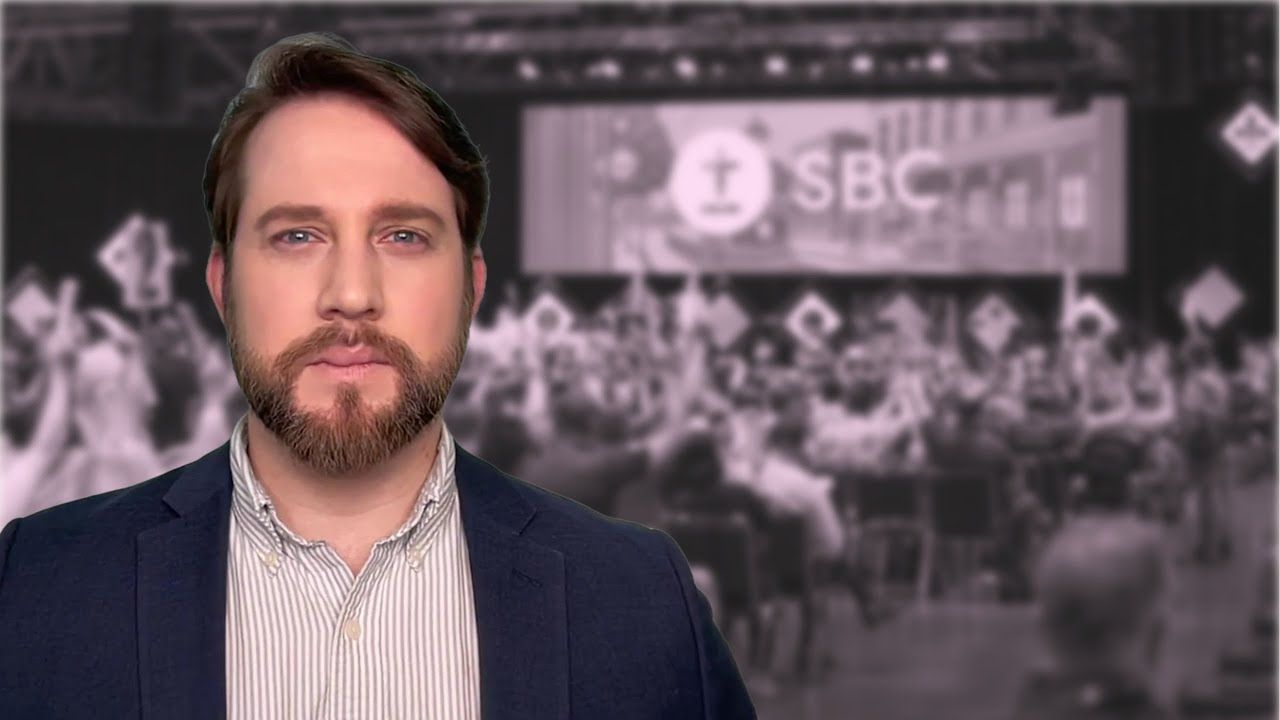
Jon has William Wolfe on the podcast to talk about the upcoming Southern Baptist Convention in Indiana including what conservatives can expect and hope for.
Welcome once again to the Conversations That Matter podcast. I'm your host, John Harris. We have a guest on who's been on the podcast before, William Wolfe. How you doing, William? Good, John. Thanks for having me back.
I think the last time you were on, you were not at the Center for Baptist Leadership because it didn't exist yet. So you're gonna talk to us a little bit about what that is, Southern Baptist Convention's coming up, what you hope to accomplish, the ground game, all of that stuff.
I'll let you respond to some preliminary attacks that are being made personally on you, as well as the Center. I wanted to say before I let you do all that, that this podcast has been around since 2019, I guess, and leading up to Resolution 9 and everything that happened.
I mean, this podcast predates that. And I was very opposed to pretty much all the issues that we're currently seeing the left push in the Southern Baptist Convention. And it happened before I even started the podcast.
Some people like to say Resolution 9 was the beginning, but I actually think that this goes back quite a few years, maybe even to the Great Commission resurgence in 2010. I know others will say 95. I mean, everyone's got their dates, but certainly in the 2010s, we saw an increasing amount of enthusiasm for the diversity of the SBC, which meant sometimes it was unofficial, but these racial almost quotas, I don't know how else to say it.
I mean, there was a concern, it seemed like every convention just about for, even if it wasn't in the news, they'd have to have a resolution about something related to a concern over racism of some kind.
And usually it was from a leftist framing. In fact, I think every time I can think of it was. And then of course we had the Me Too stuff that came in. We have now there's a fight over women pastors. And this is the first one, William, I've seen conservatives actually find a little bit more spine as far as like as a group.
And maybe that's because they fought over this in the conservative resurgence version one. This is perhaps conservative resurgence two, at least that's what you want it to be. So I just say all that to say this, that people in this audience, many of them I think have seen this for years and they have battle fatigue if they're in the SBC.
Some have left. There's those in the audience who have still stayed and want to keep fighting, but every year it gets discouraging when they see loss after loss. Last year, maybe the first time they saw something they wanted win, but it was something that I think in their minds was obvious like of course the Southern Baptist Convention has for decades been against women pastors.
So my first question comes from kind of a negative perspective, and that's because of this unique audience and how they've, I think, seen this issue. What kind of hope can you give that for those in the SBC, they should hold on to and a reason for them to come out and fight and that kind of thing?
Yeah, I think that's a great question. And your framing there was helpful. And I think just to pull the camera back and think about how this works just in conservative institutions, whether it's denominations or Christian colleges or even political parties, is that the liberals infiltrate and subvert.
They cross their fingers and swear they're on your team. And as soon as you give them a seat at the table and let them into your organization, they start working against you. Gary North wrote a whole book about this, literally called Cross Fingers, how liberals infiltrated and subverted the Presbyterian Church in America.
And so I think what's happened, John, is that conservatives really have been playing catch up on this fight for the last few years. I think you're absolutely right. It started before 2019. And really we had this period of peace, so to speak, in the Southern Baptist Convention, where I think a lot of guys let their guard down and the peacetime was sort of squandered.
And then on the racial issues in particular, that was really the entry point. That was the entryism into the Southern Baptist Convention. And of course it was because of the Southern Baptist Convention's history and its founding.
And so it was a really critical spot, a soft spot, a vulnerability for winsome oriented pastors and leaders in the Southern Baptist Convention to be infiltrated and influenced by new critical theories and forms of cultural Marxism coming in in the guise of racial reconciliation.
But even as you briefly charted out, we went from racial issues to Me Too issues to egalitarianism. And even now we have climate activism and LGBT compromise happening in the Southern Baptist Convention.
And it just reminds conservative Christians that it always all comes together. The camel's nose under the tent of the SBC was on race. We were particularly vulnerable to that. We didn't deal with it well.
And look at the host of other unbiblical ideologies that have been brought in along with it. And so I say that to say that I wanna give hope to conservatives because we have been playing catch up and that's sort of on us in some ways, but we are, I think, pushing back.
And in terms of showing up to fight, I of course wanna always give credit to the people who showed up to the Nashville Convention in particular in 2021. That was a massive turnout for conservative Southern Baptists who realized something was going deeply wrong with the convention.
And they got close to a big win if they could have elected Mike Stone as president, that would have been a massive win for conservatives. And unfortunately, Stone got attacked and slandered and really drugged through the mud.
And so coming out of 21, I think conservatives have been continuing to regroup and try to pick different targets to fight on. And this one on women pastors is such a big issue. And we did win last year in New Orleans with the first passage of the law amendment.
And another point of hope I would give to conservatives is that, I'd say we've had six years of really bad leadership in the Southern Baptist Convention. I'm not gonna mince my words or apologize for that.
Three years of J .D. Greer, one year of Ed Litton, and then two years of Bart Barber has done nothing to stop the slide. But this year is an open presidential election year. Bart's not running again. We have six candidates and we've got some really good options in Jared Moore and in David Allen as strong conservatives who I think have a real shot at winning.
And so when I look at Indianapolis here, four weeks from today, when the convention starts, I see hope for conservatives if conservatives will do the one thing that we need them to do, which is show up.
Very good.
Well, the center for those who don't know yet is the Center for Baptist Leadership.
What is your position there? Are you the president? I'm the founder and executive director. I guess I could have given myself the president title, but I went with executive director.
Okay, yeah, it's pretty much the same thing, I suppose. And so you have a website. I would, I guess, ask this. Really, I wanna get into the evidence for SBC Drift, the current issues and then strategy, and then some of the opposition that you've experienced.
But I do wanna ask this first though, which I, so I'm jumping the gun a little on this tragedy part of this, but Center for Baptist Leadership is a website. What more than a website are you though? What kinds of things does the Center for Baptist Leadership do that can contribute to this overall fight?
Yeah, the Center for Baptist Leadership obviously has a website and we publish articles and we have a podcast as well. And we have, and we're doing a lot of organization for conservatives behind the scenes.
But the goal for what I hope Center for Baptist Leadership will be over the years, I mean, we've only been out publicly for just over two months now, is really a reform and change agent in the Southern Baptist Convention with future orientation.
Our mission is to cultivate courageous and uncompromising Baptist leadership for the SBC for the 21st century. We want to help raise up a new generation of leaders in the Southern Baptist Convention at the institutional level, at the pastor level and at the lay member level.
We really wanna help educate, activate and equip lay members to be involved in this because that's really where quite frankly, the power lies in the Southern Baptist Convention. And so we hope to be able to help sort of shift the framing of what it means to be a conservative Baptist in the United States of America and the Southern Baptist Convention and really bring us back Lord willing to a point of prominence for good, Christian conservative good in the United States of America and around the world, while we also evangelize, share the gospel, plant churches.
And so we have sort of two main timeframes in mind with the Center for Baptist Leadership. One is like a 10 year effort, really that's what it's gonna take, a 10 year effort to revitalize the Southern Baptist Convention from within, that's our first line of effort.
And then the second timeline is sort of year over year educating and equipping messengers to come to the meeting and driving turnout so that they know what's going on, they're showing up to vote. So those are our two timelines, year over year with the convention, 10 year timeframe of institutional renewal in the SBC.
And as we thought about our mission at the Center for Baptist Leadership, you can think of a home or you can even think of like a castle or a fort. And so that first one, revitalize it from within, we would say our foundations are failing, we need to reshore up our foundations, our commitment to sound doctrine in the Southern Baptist Convention, whether that's on complementarianism, whether that's on biblical sexuality and biblical sexual ethics, whether that's on the biblical approach to climate issues or a biblical approach to racial issues, or, and quite frankly, ecclesiology, there's still a lot of work to be done in the Southern Baptist Convention in terms of our church practices, our baptismal practices, we've really fallen prey to the seeker sensitive movement that's taken over the United States of America in many ways.
So we wanna revitalize it from within, rebuild our foundations. The second one is we wanna defend it from those who seek its destruction. And that's a little bit of a different line of effort than what I've seen from really any other conservative group out there, which again, we love, Founders loves Conservative Baptist Network, but at Center for Baptist Leadership, we recognize that there are bad actors being paid to infiltrate the Southern Baptist Convention.
So we wanna sort of equip our watchmen on the walls to spot those bad actors before they get in and start causing havoc for us. One great example on that, John, would be the After Party Curriculum, published by David French, former Southern Baptist, Russell Moore and Curtis Chang.
That is an entryway into the Southern Baptist Convention for liberalism. So we want to help arm pastors and institutional leaders to be on the guard for things like that and not let it within the tent.
And then the third thing is to be a better Baptist voice in the public square. And so if we can reshore our foundations, equip the watchmen and the SBC, the leaders, to look out for the flock sort of inside our tent, so to speak, then third and finally, we wanna equip people to go out into the public, out amongst the walls, so to speak, and boldly proclaim the truth of the gospel and the uncompromising applications of Christianity to all of life, cultural, political, in the home, in society.
And so that's what we want to do. And again, that's our vision. Right now, again, we have the website, we have articles, we have a podcast, we've got, I've got great ambitions, John. I would love to have Center for Baptist Leadership chapters on seminaries and Baptist colleges, future Baptist leaders, so to speak, and start trying to get after the next generation.
We hope to publish white papers as we get a little more developed, we get past the convention, we have time, there'll be sort of historical deep dives on major issues in the Southern Baptist Convention.
And then in the next few weeks here, we sort of hope to publish a packet to equip churches and messengers to be prepared for the convention. This is a question I get quite a bit is, hey, I'm gonna talk, I'm a deacon, I'm about to brief my pastors or the deacon board on what's going on at Southern Baptist Convention.
Do you have anything I can use? We wanna be that go-to resource for people to get equipped for issues.
In the Southern Baptist Convention. All right, well, that was a nice thorough answer to the question about the Southern for Baptist Leadership. And I wrote down some questions as you were talking. Let's start with evidence before we get to strategy.
You mentioned, because I do know there will be people, you may be even right wing watch, who knows? They'll be watching this podcast and they might not exactly be the people who normally watch it and are already briefed on Southern Baptist stuff.
So you mentioned climate and LGBTQ issues. I think that might surprise some Southern Baptists who might be used to some of the more critical race theory stuff and the Me Too stuff, but they might be surprised about those issues.
The climate issues, are you just referring to the series at Southeastern? Okay, I wasn't sure if there was something else there.
Well, I mean, I think that's the main one, that's the big one, but as I've learned, at least in my years of working in politics and in denominational issues, if you find a big issue, I can almost guarantee that there's smaller issues elsewhere and in other places.
So I would not be surprised in the same way that many Christians are falling prey to emotionally driven manipulative language on climate issues that yes, we saw one bad, very obvious example at Southeastern, but I'm sure there's more out there too.
Yeah, one of the things I noticed.
Tracking some of these issues years ago and to some extent still today, I don't focus on the Southern Baptist nearly as much, but there would be just on their YouTube channels or social media feeds. Sometimes there would just be information that people had not watched.
Some of their videos, I went to Southeastern, that's where my degree's from. They would have students in the room and the students would be exposed. These are your future pastors. But as far as online presence, sometimes some of their videos didn't get any views.
No one knew what was really happening because in part, no one was paying attention. Now they've gone underground with some of this stuff as I understand it. But there just aren't people, like the left has all this manpower to watch even a podcast like this to find out if there was a gotcha moment with what William Wolfe said.
But we don't have the resources to go to various Southern Baptist institutions to keep an eye on what they're doing. And so you had some like blatantly obvious things that organizations at the time, like Pulp and Pen or Capstone Report would publish on.
But as far as people doing research and trying to figure out what's actually being taught to students, not a lot of it going on. So I'm just reinforcing what you said that there probably is more material that people haven't detected because of the lack of resources.
But yeah, for those who don't know, Southeastern did a few sessions that they exposed their students to that were blatantly and overtly progressive on the issue of climate change. Even with one session I watched, Jonathan Moo combining its climate change activism with the gospel itself, which there's no excuse for.
That's just getting into heretical territory. So what about the LGBTQ plus issue? Where do you see this infiltrating the Southern Baptists?
Yeah, well, I think that the Southern Baptists, like almost all of American evangelicalism have been really taken for a ride for the last decade on what the Bible really teaches about sexual morality, sexual orientation, the ontological nature of being a sexed male and a sexed woman and what that means for our attractions and our desires.
Jared Moore, Dr. Jared Moore, who is running for president of the Southern Baptist Convention, wrote what is so far our most read article at the Center for Baptist Leadership called the queering of the SBC, which the last time I checked, it had over 7 ,000 reads, which is huge for a new organization like ours.
And in it, he walks through examples of how compromised teaching on human sexuality has infiltrated the Southern Baptist Convention. He looks at people like Preston Sprinkle, who while Preston Sprinkle is not a Southern Baptist, his material has been used by many Southern Baptists and promoted at Southern Baptist seminaries.
And one notable individual, Rachel Gilson, works with Preston Sprinkle's ministries and is a PhD student at Southeastern and was platformed at the Southern Baptist Convention 2023 Women's Conference, I think put on primarily for pastors' wives.
But she's the type of person who sort of balks when asked, should we use transgender pronouns? Also how J .D. Greer suggested we could use transgender pronouns as an active pronoun hospitality. And who did Greer get that from?
Who did Greer cite in that original article? It was Preston Sprinkle. But also we've had people like Sam Albury and Living Out Ministries being promoted. And some of the people associated with that and with the Living Out Ministries have done things like encouraging same-sex attracted individuals to have very, very intentionally sort of covenantal committed platonic relationships with members of the same sex and even do things like engage in cuddling.
And there was this list of examples given of ways that same-sex attracted Christians could sort of do things to not act out on their desires, but still, I guess, in some way, gratify them by going to gay clubs or even going to nudist beaches.
I kid you not, that was one of the examples that was provided. And really, whether, you know, those are some of the more extreme examples, but when it comes down to the issue of orientation, you know, Jared Moore, I think, has rightly argued that this is a matter of the lust of the flesh and needs to be crucified.
And he looks at the example of Rosaria Butterfield and when she was living her lesbian lifestyle and met a Christian pastor and couple, that they told her to repent and, you know, forsake these attractions and seek to reorient her attractions in the way that would honor the Lord, so towards the opposite sex.
And Jared wonders that if Rosaria Butterfield was discipled by somebody like a Preston Sprinkle or J .D. Greer or Rachel Gilson or maybe even a Karen Swallow Pryor or others like that, or revoiced ministries, would she be a happily married, you know, heterosexual today, so to speak?
And I'm not sure that that's the counseling that many people are getting. And Jared had a great piece in there where he really walks through theologically how our temptations, whatever they are, are not the same as being tempted like Jesus in particular.
And that's where a lot of this entry point comes in on compromise on homosexual orientation is people say, well, if you're tempted to, you know, lust after the same sex, it's just like you being tempted like Jesus.
And Jared says, no, it's not, not at all, because that is a disordered desire. And whatever temptations Jesus ever had that he never sinned in his, you know, in that moment of temptation, it would have been for a good thing, a rightly ordered thing.
You know, when Satan tempts Jesus with the kingdoms of the world, well, that's a good thing because those are gonna be his anyway, and he resists that. But when you're being tempted to lust after a same sex individual, then you're not desiring a good thing in and of itself.
I'll pause there, a lot could be said, but the bottom line is that really sort of unbiblical teaching on human sexuality and sexual orientation and homosexuality has infiltrated the Southern Baptist Convention and really all of American evangelicalism.
And we're just sort of beginning to turn the tide on that.
It sounds a little bit like the LGBTQ issue in that many of the examples that you cited seem to be more organizations in evangelicalism that people who are Southern Baptists are paying attention to, but it's not like one of the seminaries is overtly necessarily advocating these things, if I heard you correctly.
Like you have Rachel Gilson speaking at Southeastern, perhaps, but it's not, you don't have official stands being taken, or they're not celebrating pride month or anything like that at a Southern Baptist institution from what I understand.
Yeah, I think it's maybe a little worse than that. So Rachel Gilson was platformed at the Southern Baptist Convention's Women's Conference in 2023. So that's a very official stamp of approval. And what she teaches is unbiblical.
And then also Jared had quotes from individuals like David Prince. The way we've seen this make its way into the Southern Baptist Convention is clips from sermons, really, or where we see Southern Baptist pastors and teachers saying things like, you know, God doesn't wanna make you heterosexual, he wants to make you holy, as if those could ever be divorced from each other.
And so David Prince, former president of, sorry, former chairman of the board at the ERLC has said similar things like that. Patrick Schreiner, who is a professor of New Testament studies at Midwestern Baptist Theological Seminary has also argued along these similar lines where he's saying that same-sex attraction in and of itself is not sin.
So it is, and we have it at trustees, entity trustees. We have it at our seminaries with our professors saying things like same-sex attraction is not sin. We have someone like Rachel Gilson who is thoroughly compromised in her associations with Preston Sprinkle and what she teaches herself being platformed officially at a Southern Baptist conference for women.
And so it's maybe in between those. Yes, nobody is saying go march in a pride parade as far as I can tell, though, I wouldn't be surprised if somebody has said something like that.
That's the defense they'll bring up those that, you know, we don't officially, we don't do what these Ivy League schools or really now your typical college is doing where there is a barrier, and there is a barrier there, but it's a barrier with some holes in it at certain points.
I should probably mention too, just because someone might call this out, J .D. Greer did reverse his position on the pronoun hospitality later on. And as I remember, it wasn't like the strongest of reversals, but there was a reversal there, at least admitting that maybe he shouldn't have said that.
Yeah, you're right about that. But that, you know, one of the things that bothers me a little bit, John, is that, you know, right now we have somebody like J .K. Rowling who, not a Christian, who just can bluntly speak the truth about calling, you know, transgender women men, which is what they are, right?
A man pretending to be a woman with no hesitation and no apology. And yet when you get Christian leaders like J .D. Greer and others, you give them a similar question, they sort of dance around it, or they say something wrong and then have to retract it.
Where is the bold, blunt truth being spoken about how God made men and women, who we should desire sexually, what is sin and what isn't. And if you're gonna cheer on J .K. Rowling but not say it yourself, well, quite frankly, you're part of the problem.
Well, let's shift to strategy here for a little bit and talk about, I mean, I have a lot of questions on this. Let's see. So let's talk about last year a little bit, because last year is where, after a series of defeats, we'll say, there was somewhat of a glimmer of hope that this law amendment got passed.
Of course, there was a committee formed with the support of past presidents in the SBC to examine the issue of cooperation, which this year, I suppose, will be the big fight. And so when we look at that, you mentioned conservative Southern Baptists were the ones who stepped up and made that happen last year, but they're also the people who decided to vote for Bart Barber.
They're also the same, it's the same group we're talking about that decided to vote for this cooperation committee. So how do you view that crowd? I mean, because you're calling them conservative, that they came last year, but I'm not so convinced it was the same or a different crowd.
I'm more thinking it was probably the same crowd. It's just that this is an issue of all the social justice issues infiltrating their way. This is an issue Southern Baptists have fought before, and it's probably more deeply ingrained in their minds that this is a compromise.
And so you have a kind of a split group of people who have a conservative instinct on this topic, but yet they're still voting with the platform on everything else just about it seems. And I would say the defeat of Mike Stone also seems like the leftward drift continues.
It's just that there's a, on an issue that they are more capable of fighting on, which I think they have been for the last 20 years at least, if not really more than that, they decided to maintain a position they've always had.
So it's more of a maintenance in my mind, but you see this as a hopeful thing and you see these as conservative. So maybe explain that and why you're hopeful.
Yeah, well, I think you make a good point, John, in terms of how the room in New Orleans voted about at a 90 level, we could see the recorded vote on that to kick out Saddleback. And I was saying that I think the room voted at about an 80 level to affirm the law amendment.
John Whitehead on his appearance with Aaron Wren yesterday said he thought it was maybe more along like 90%, but it was definitely overwhelming. Yet at the same time, Bart Barber won reelection with about 70%.
So yes, I agree there's overlap there. I guess I'm encouraged that we've found a line that many of the messengers are unwilling to cross, even when they are being encouraged to cross that line by the leadership.
So I don't think we should overlook the fact that you're not doing this, but just that the executive committee of the Southern Baptist Convention went up on the stage and said, here's the law amendment and you should vote against it.
And they didn't listen to them and they voted for it. And sometimes, as you know, that can hopefully be a radicalizing moment for some people. It pulls down the veil a little bit and helps them realize really where their leaders are that they would be recommending that they vote against simply reaffirming our commitment from the Baptist faith and message that only qualified men, according to scripture, can be pastors.
And so I think on this issue, the messengers are in a conservative place, whether they're in a conservative place for everything else, in terms of personalities or leadership or presidential votes. And so, however, since it passed last year, there really has been a very conservative effort by a small slice of Southern Baptist leaders to work against it and to really try to poison the well against it.
They're throwing everything at the wall to see what sticks, to try to beat it. And so I am hoping that the messengers stand strong again this year and ratify it.
So let me ask you this. You have two conservatives that are running, you said, Jared Moore and David Allen. And it sounds like you're supportive of either candidate, so you haven't taken an official position on one or the other.
If either of them get in, what would change? This is hypothetical, of course. And we need to also, maybe we should talk about this first. So how do you get them in? Let's talk about that first strategically.
What's the ground game? And then we'll talk about what they would do and how they would reverse the trend if they had one term.
Yeah, well, the way you elect a solid president in the Southern Baptist Convention is by conservative turnout to the convention. And that's really something that we have struggled with for many years.
And I'll be honest, we've not done enough turnout work this year as I would have hoped we'd do. Like I said, we're just getting going. But the way you elect a conservative president is by having thousands of Southern Baptist churches realize that they need to take the effort to come to the convention.
John, I can't tell you how many churches I have had conversations with pastors, lay members, where they know that their church gets four, five, eight messengers that they could send to the convention and they're only sending two or they're only sending one.
And that is what the platform is counting on. They're counting that the base of the Southern Baptist Convention, which is about 70 of our churches are a hundred members or less. That's really what the Southern Baptist Convention is.
It's not these mega churches. They're the ones that get all the attention. But the heart of the Southern Baptist Convention is churches with a hundred members or less, but even due to those churches generous giving, they might get anywhere from six to 10 or even 12.
I know a small church in South Carolina, maybe 140 people that they get 12 messengers to the Southern Baptist Convention. And J .D. Greer's church, despite all its campuses and everything else doesn't get more than 12 because that's the cap.
And so they are trying to send all their messengers this year. And I know some are waking up to this, but that's really the bottom line. How do you get a better president to begin to really get all the appointments and all the things that come with it is by faithful churches not quitting and not sitting it out, but showing up and voting.
I see, yeah.
So a ground game then. I know you said there's probably is not as much work done as you would have hoped this year, but what has been done? What kinds of things are you seeing that. Maybe, you mentioned one example of a church sending 12 messengers.
I don't know if they've done that before, but other churches coming out of the woodwork that haven't been involved and that are getting involved now?
Yeah, I think that is the case. And on the law amendment in particular, John, I do think that many churches are realizing how important this is and they sort of can't believe that this is a point of contention.
They can't believe that they're seeing our current president, Bart Barber, oppose the law amendment. They can't believe that they saw essentially five past presidents in a roundabout way or explicitly as some of them have opposed the law amendment.
They think this is so basic. And so they are coming. I talked to one pastor in Tennessee who said he had been sort of checked out of convention life for the last five to 10 years. And then when he was watching what was happening to the law amendment, he's like, oh, I've got to come and I've got to bring my messengers.
That was last year. And he's gonna do it again. And I think churches realize too that this year that there will be sort of an empire strikes back liberal effort to get their egalitarian messengers to the convention.
And so I do think the law amendment is really driving turnout and drove it, I think in New Orleans to a certain extent, it was a pretty good size convention there, about 12 ,000. And it looks like we're on pace for about 12 ,000 again in Indianapolis, which is more than what we had in Indianapolis last time that we met there.
And so the main points that we've been hitting to drive this turnout, John, is know how many messengers your church gets, max out your messengers, plan to come, do what it takes. Mark Devine, professor at Beeson Divinity School wrote an excellent article for American Reformer a few months back, arguing that churches should view coming to the Southern Baptist Convention like a mission strip.
And I love that framing. He's like a mission strip for the future of the Southern Baptist Convention, for the future of your children in the Southern Baptist Convention. And I think that's the mindset.
That's one of the things we've been trying to work on to change the mindset of how churches approach the Southern Baptist Convention. But we've been messaging on this and hammering it. You have to come, you have to come for many months now.
And I do think that is bearing fruit. I've got plans for sort of a turnout operation that we could build over the years that focuses on the hotspot regions and has regional representatives, you know, every week in touch with churches and working this angle.
And we hope to do that more next year. But also I know that Jared Moore and David Allen have been doing a lot of sort of the ground game themselves as their presidential candidates, contacting churches, contacting messengers.
David Allen's been preaching in a different pulpit, it seems like, every Sunday, which is exactly what you have to do. Jared Moore has been doing a lot of outreach work. And then also I would say that the abortion abolitionists, because there are some candidates running for some downstream ballot officers, like first VP, second VP, things like that.
Wesley Russell, who's an abortion abolitionist. I know the abortion abolitionists are working the ground game as well. And so it is being worked and we'll see how it turns out. Yeah, they're a motivated group.
And I guess, so I have so many questions and I wanna just Try to be briefer. Well, no, no, no, you're doing good. I just wanna make sure that I ask the right ones. So you mentioned a mission trip. I guess Mark Devine had said it's like a missions trip.
And I think this is the hangup for a lot of Southern Baptists, in my opinion, at least I've seen that over the years, is they're in the Southern Baptist Convention for cooperation for the purpose of ministry specifically.
And when it becomes not about ministry, when it's not sharing the gospel, making disciples directly, when it becomes more of a political fight and it takes a lot of your church's resources, I mean, sending 12 messengers from a church that's a little over a hundred people, that's some serious cash.
I mean, and maybe there's a big, a donor that's stepping in or something, but not all churches have the access to funds. And so it's money that could be going for actual ministry in their communities that is now going to fight what feels like, at least for the past few years, it's felt like kind of a discouraging battle that things aren't going the way they want.
So talk to those guys who are thinking like, hey, the purpose of this whole thing was ministry. And now you're asking me to kind of shift into more of a political mindset. I don't like, I could spend those resources on actual ministry and just pull out.
Yeah, well, to that, I would say that this is actual ministry. The work of being present to have a say about the boundaries of your cooperation in a voluntary association, a denomination, is an aspect of the ministry.
It's an aspect of defending the gospel and seeing to it that the true and unadulterated gospel can be advanced. The Southern Baptist Convention churches partner together for the sake of the gospel, for missions work overseas, planting churches and reaching unreached people, for church revitalization and evangelism and church planting on the North American continent, for theological training for the next generation of pastors in our country.
Six of the 10 largest seminaries in America are these six Southern Baptist theological seminaries. I think it's about 40%. I can't remember the exact number, but a good big chunk of all future pastors in our country are trained by the Southern Baptist Convention.
So when you think of what type of pastor is gonna pastor the church that my kids grow up in, or what type of pastor is gonna pastor the church that I'm gonna be moving to if I have to move to a new area, there's a good chance it's somebody who's been trained at a Southern Baptist seminary.
And so this is ministry. Policing the boundaries, enforcing our doctrine is a necessary aspect of gospel ministry. And so I would just say to them that, don't say this isn't actual ministry, it is. And also just, I'd say, recognize the times that we live in, and we might not have asked for this, but we have a responsibility here, right, John?
So I've said before that you might not be interested in politics in the Southern Baptist Convention, but politics in the Southern Baptist Convention is interested in you and your church and the seminaries you wanna send people to and the missionary agency you wanna plant with.
And so you can't just shirk that responsibility to engage in the political effort of showing up and voting and being informed and treating the Southern Baptist Convention annual meeting as an outgrowth of your ministry from a Southern Baptist church and not a retreat for your pastors or a vacation for you and your wife, but really it's a job to do.
We have work to do. We have business to do. It's a business meeting. You have business meetings in your churches, and you don't view those as a distraction from the ministry of your local church because it's a necessary part of it.
Well, this is our business meeting as Southern Baptists, and it's necessary for the health and the longevity of the Southern Baptist Convention. And if you shirk that responsibility, well, I would just wanna have a conversation with you and help you try to reprioritize.
Now, I would assume that you don't leave organizations like the Episcopalian Church or the PCUSA are, maybe I'm wrong, but I would assume you don't think that like a Reconquista effort is probably the wisest way to go on those things.
And so there is a point at which it's not worth it. So this is a harder question for an organization just starting to revitalize the Southern Baptist Convention and you're in it for the long haul, but is there a point at which you say, if it keeps going in this more leftward direction, I guess we gotta pull out.
What is that point? Well, of course that point can exist. I mean, it's existed for many denominations and congregations within those denominations, churches that got out of the PCUSA and started the PCA or churches that got out of the PCUSA and joined the Evangelical Free Church or what have you, or the United Methodists right now splitting in the Global Methodist.
So that point does come. I just really, I'm really not convinced we're there yet in the Southern Baptist Convention because I do believe that there are a lot of ways in which you can be smart about your engagement with the Southern Baptist Convention and make sure that your dollars aren't going to anything that you would find objectionable.
So by staying in the Southern Baptist Convention where you have autonomy over your local church, and this is a really important point, John, is that Southern Baptist churches are autonomous congregational churches.
The Southern Baptist Convention doesn't own your church's property. They can't control what you do in your own church. So make sure your church is rock solid. Make sure your church is preaching the gospel, is not welcoming in any of these worldly ideologies.
But then with the money that you would give to the Southern Baptist Convention, to get your votes and be a change agent, you can direct them to the entities that you trust the most. So if you don't wanna give to the cooperative program, you can give to the IMB, and you can give your money to the IMB, and that way you can have a better sense that your money's gonna be used for good things.
And I would say, I know there are concerns with IMB, and I don't think they handled COVID and the vaccine well at all in particular, but the IMB actually still has a very strong statement on defending the role of pastor being reserved for men, even in different contexts and cultures.
I mean, if we could just adopt the IMB statement on who a pastor is, that would be excellent, right? And so access to that is still available, and being smart with how you give your funds gives you influence, but you can make sure that you don't give to the ERLC, or you can make sure that you don't give to NAM, or you can make sure you don't give to a seminary that's concerning to you, but you can give to the ones that you have confidence in, stay in and work to change, and make sure that you don't let any of this subversive, liberal infiltration come into your own church.
And so I really just don't think that we're at the point yet where there's no way to be involved in the Southern Baptist Convention without compromising. I think there absolutely is. You can be involved without compromising, and you can work for change.
And the reality, John, is that almost every time conservatives get infiltrated and they hand over a denomination, an institution, a seminary to the liberals and go start their own thing, that next thing is often diminished, right?
Or it takes a long time to be grown again. I would say if all the conservatives left the Southern Baptist Convention, I would be hard to see how in our lifetime we would rebuild something else with six seminaries and the largest international mission-sending agency in the world.
And I think that's worth fighting for, and the fight is not over yet.
Yeah, good answer. What would you say to pastors who wanna take your recommendation and they wanna give to good entities and not bad ones? Just tell us the who's who of what seminaries would you give to, what seminary should you not give to, that kind of thing.
Well, yeah, I mean, I think that everybody's gonna have different ways that they rack and stack these things. And some of our seminaries are in flux right now, and there's been issues at one seminary or another.
In fact, maybe with the seminaries, I don't know if I wanna pick and choose some of those. I mean, I do know that I think Southeastern, there are churches who have a lot of concerns with Southeastern and are going to be working to sequester their giving from them.
And I would not recommend giving to the ERLC right now. I think probably one of the safest bets in the Southern Baptist Convention right now is the International Missions Board. If you give to the IMB, you can be giving to what is by and large, a healthy effort to plant gospel and baptistic churches.
Now there have been issues in the IMB with sort of their missionary strategy and philosophy. They sort of fell prey to some of these like missionary movements that were trying to plant a lot of churches that weren't really churches and just sort of rack and stack the numbers.
And there's certainly some need for reform there. But by and large, I think that's a safe place. You can also give to your local associations if you have more confidence in them. And that still continues to get you access and votes in the Southern Baptist Convention.
With the IMB, the COVID thing was a huge, huge deal as well. I remember I have friends who came off the field because of that. And so let's talk, let me ask you this. This is kind of, since I'm already asking you questions that are politically hard to answer, I'm just gonna ask you another one.
Is Jarvis Williams at, and I'm just picking him because he's kind of been an obvious example of this, I suppose, and he's from your seminary too, the one you graduated from, Southern Seminary. Is Jarvis Williams a good brother in Christ, in your mind?
Well, I don't know Jarvis Williams personally at all. I mean, and I certainly have a category for people who are, you used the phrase good brothers in Christ. I certainly have a category for those who are brothers in Christ who are deeply confused on major issues.
And from what I've seen from Jarvis, he seems deeply confused about the nature of critical race theory and whether or not it can be a useful part of the Christian life. I would say that it can't be, it's unbiblical and should be rejected.
From what I've seen of what Jarvis has said publicly, including this 2017 interview with Matt Smethurst at the Gospel Coalition. Again, you were saying this stuff started before 2019 and it did. There's a 2017 interview with Matt Smethurst at the Gospel Coalition where Jarvis Williams is saying he wished that Christians would read more critical race theory.
So I think that's a deeply problematic. My personal preference would certainly be that people like Jarvis Williams with those commitments are not teaching at Southern Baptist seminaries. And so I would, you know, if I was ever asked, I would say, no, I don't recommend taking a class with Jarvis Williams.
If I was the president of the Southern Baptist Theological Seminary, I would seek to dismiss him unless he sort of publicly recants of his commitment and his propagation of critical race theory. I think that's pretty simple.
I'm sure this is gonna earn me a lot of enemies and frustration for saying that, but that's my personal opinion. I think that has no place in a Southern Baptist Theological Seminary.
Yeah, well, I mean, you are a friend, but coming on this podcast, I did say I was gonna ask some hard questions. And the reason I asked that one is because I think that has been maybe the number one frustration that what I consider conservatives, you know, Orthodox believers who are fighting for biblical integrity in the Southern Baptist Convention, who are unapologetic and uncompromising about it.
This is the number one concern that I have heard. You think of a guy like Russell Fuller, you know, he's the kind of guy I'm talking about, where conservative candidates for the presidency of the SBC and other leaders in the convention who have wanted to represent conservatives and are conservative in their instincts have been very unwilling to say that these guys, and Jarvis Williams is just one of them.
I think he's an obvious example because he says racial reconciliation is the gospel and that in his version, his racial reconciliation is CRT basically. So he is blatantly combining law and grace. I mean, Walter Strickland does the same thing blatantly.
I have many quotes where he does this, he misrepresents what the gospel is and it's heresy. I mean, I don't have a problem saying that, but a lot of guys have called them, and I use that term on purpose, good brothers, that they're just good brothers, they're confused.
And it sounds like you don't wanna necessarily say good brothers, but you want to still also extend that benefit of, well, maybe they're just confused on this, they don't really know. And my contention has been, if we're gonna fight for the integrity of the SBC, that there are real heretics that are pushing the needle left and in bad directions, and they need to be called what they are, they're wolves.
And I would say, Jarvis Williams, just based on his teaching, he's teaching heresy, that makes him a heretic. And he's doing consistently without repentance for a number of years. So you don't have to respond to that if you don't want to, but you are obviously allowed to.
I just want people to understand why I'm asking that, why that's been a frustration. And I know Center for Baptist Leadership's a little more aggressive on these things, but I just, yeah. So if you wanna say anything you can, or else we'll move on to some of the attacks against you guys.
No, sure, John, I mean, I appreciate it. And it's a serious conversation. I was not, this is not a cop-out at all. I've not, I can't tell you the last time I've read something from Jarvis Williams, right?
Like I'm not sort of focusing on him. And so, but when I use that word confused, I do wanna clarify and maybe even be a little sharper here, which is that I don't think Jarvis Williams doesn't know what he's teaching and what he's advocating for.
It's not like he was taken for a ride. I think he believes it. And I think, so confused sounds a little too nice. I think he's wrong. And I think you're right, that it is, that that is a heretical teaching.
It is heretical to be syncretizing the gospel with critical race theory. And so I think, again, in terms of divining somebody's, the sincerity of somebody's profession of faith, of course, only the Lord knows that.
But what I think can be done at an institutional level is drawing really clear boundaries and saying that if you are advocating things like these, we do not understand or accept these as Orthodox Christian teaching, and that's not gonna be allowed at our seminary.
We're not, so we're not a salvation tribunal. We're not excommunicating you. We're not issuing a pronunciation on the status of your salvation, but we're saying that we recognize that these teachings are outside of the bounds of Orthodox Christianity, and they're not gonna have any place in our institutions.
And on issues like critical race theory and others, and quite frankly, on the LGBT issues or the approach to homosexuality that we were talking about earlier, I think our Southern Baptist seminaries need to draw those very clear lines and say that if you're teaching contrary to scripture on some sort of syncretism of critical race theory in the gospel, some sort of syncretism of critical gender theory or queer theory in the gospel, that we will not give our stamp of approval on this as an Orthodox Christian teaching.
It will not be tolerated in our institutions, and anybody who is advocating for this either needs to repent and recant publicly, or they need to find somewhere else to work.
Yeah, good response. Let me squeeze it just a little more. So Jonathan Moo just made this presentation, what, last year maybe, I think it was, or at least I think they posted it last year, at Southeastern on climate change, and he did the same thing on that issue, conflating it with the gospel, and it's, or saying that this is part of the gospel, this is your responsibility as Christians to participate as activists essentially, and yet when he was called on the carpet, well, I shouldn't say he, but when people at Southeastern were called on the carpet for this by folks like Megan Basham, and then Tom Buck even got involved, there was no distancing themselves from that teaching.
So you had guys like Ken Keithley coming out publicly and trying to smooth it over as if they had all these other, they had opposing viewpoints there as well, which they didn't. I mean, I think Mark Liederbach was like their supposed conservative, and I had him for ethics, and he's a nice guy.
I mean, I liked him, but he's definitely not, he would not be a conservative, I'm talking politically on the climate issue, and there's some concerning things even in the book that he had us read, but all that to say, it was just a defensive posture.
There was no recognition that actually you had future students going to SBC churches from an SBC institution who hadn't been exposed to heresy at the direction and the endorsement of SBC leaders. There was no distancing themselves from that, so this is my question.
You look at a guy like Jonathan Moo, who I would say, okay, you got false teaching, he brought it in, and now you got guys who have been given ample opportunity to repent for that, to distance themselves, to put some kind of warning, and they haven't done it, they've doubled down.
What do you do with those guys?
Yeah, well, I think fundamentally you can't trust them, right? I mean, that's what it comes down to. You can't trust people, and I think this gets to John really one of the greatest pathologies, maybe that's the word I would use, the pathologies of present American evangelicalism is this complete allergy to owning to any mistakes and to saying that, hey, we had somebody here who said things that were heretical, who compromised the gospel, and they got it wrong, and we got it wrong for bringing them here.
We apologize. Evangelical leaders, Big Eva acts as if repentance, grace, and restoration don't exist in the Christian life at the institutional and public level, and that's just not true. I know that so many, yourself included, so many of you listeners, myself, is that we wanna see repentance and restoration for people who have embraced or defended heretical teachings or syncretized versions of Christianity with any number of progressive ideologies, and yet instead what we almost always get is the double down.
We get the defensive posture. We get the sweep it under the rug. We get the, well, you're just being conservative rabble-rousers trying to make a mountain out of a molehill, and so when we see those reactions, to me, the number one thing it tells me is that these men care more about their public image than they do about the gospel of Jesus Christ and about the stewardship that they're currently entrusted with, whether that's equipping the next generation of theologians and pastors in the United States or in the Southern Baptist Convention or planting churches.
I mean, we could bring up NAM and all their egalitarian church planting practices that have been exposed also by people like Tom Buck, et cetera, and so I'd say the bottom line is it shows you that you can't trust them and you shouldn't trust them until you see genuine fruit of repentance and some humility.
A little humility would help.
So this is why I ask. Let's say you get Jared Moore or David Allen into the presidency of the SBC. They have a task in front of them. They have years of what I would consider to be rot. They have, we'll just take the Southeastern example since that's the one I just brought up.
You have an entire administration that would probably need to be fired because they have been not just derelict on their duty, they've been damaging to students who actually go to their school by not defending them against bad ideas that have challenged the very premise of why the institution exists.
So you'd have, I don't know what the percentage would be at this point, but I'm assuming it would be a whole lot of professors that at Southeastern that would need to be fired. All the ones that I knew that were the safe professors, I mean, a lot of conservative students had like, we had an unofficial list of like, these are the guys that you go to when you go to Southeastern because you're not going to get any of that garbage.
None of those guys are still there. Well, I don't want to give too specific, so people, because we try to keep that list secret, but most of those guys aren't there. And so the president of the SBC now, it's kind of like Trump when he gets into the White House, right?
He has now a deep state around him that's ingrained and they're going to start saying the things he wants to hear to keep their jobs and so forth. And what does he do? How does he deal with this mess?
And so that's my question is, what can they do? What can Jared Moore do or David Allen in a year term to kind of, and you said a 10-year, I guess, strategy is what you're looking at, but to reverse this.
Right, so whether it's Southeastern or any other SBC entity, what you're touching on, John, is the issue with our trustees and the management of our Southern Baptist Convention entities by their boards of trustees.
And that's why when the original conservative resurgence started, they realized the path to long-term reform lies through the president and through the presidency because the president gets to appoint a committee on committees and the committee on committees gets to appoint a committee on nominations.
And the committee on nominations is the one that recommends slates of trustees. Year over year, we vote on trustees for all of these entities. And the messengers need to take a much more active role in this process.
The messengers need to remember that the messengers don't answer to the trustees, the trustees answer to the messengers. And so that's where one term of conservative president gets us one batch, one percentile better trustees in the Southern Baptist Convention.
A second term gets us more. And then if we get another conservative president after that, more and more. And so I don't know if it's really, it's not really 10 years, it's really more, I think around five or six years to sort of help cycle through and replace the trustees that are overseeing these entities with strong, biblically grounded, convictional, conservative Southern Baptists who are actually gonna do their job and not just go along to get along.
And so, yes, I mean, it would make a difference. One year would make a difference if you can get 15 strong trustees on these boards and start causing issues and good issues, start causing godly trouble.
And this kind of gets back, John, to the whole American reformer mindset, which American reformer was integral in helping launch the Center for Baptist Leadership, which is we're trying to find those coalitions of constituencies within Christian institutions to help make good change and to beat back the liberalism.
And that often involves trustees. So if you can get 15 strong trustees from one year of a conservative presidency, and then we can connect those trustees with solid resources, get them equipped, help them be prepared for these meetings to show up and to advocate for responsibility and for accountability, get those trustees willing to go out and on the record about things that are happening behind the scenes that Southern Baptists need to know about.
I mean, even that would begin to have an impact. You get a second year and you get more and more and more. And so I do think we need four or five, six solid years of good presidents to replace these trustee boards.
But a great example would be somebody like John Whitehead. He's on the advisory board of the Center for Baptist Leadership. He's a trustee at the ARLC. He recorded two long episode podcasts with me on what went down behind the scenes at the ARLC with Russell Moore's departure.
And now that sunlight is sitting out there as accountability and showing so many people how broken our trustee system is with the trustees really acting as rubber stamps for the whims and the ego of the institutional leaders at our different entities.
And so that's how it works in the Southern Baptist Convention. It's how it's always worked. It's how the conservative resurgence was fought and won was with through getting the good presidents who are committed to appointing good trustees to oversee these entities.
And then I'll wrap it up with this. You think about what happened with Southern back in the day. The original conservative resurgence started in 1979. The trustees were not replaced enough to the point where they'd bring in what was at the time this young firebrand conservative who was gonna clean house in Albert Mueller until 1993, 79 to 93.
And then that's where we had trustees who brought in somebody like Mueller who cleaned house. We need to do that again and get a whole new class of young leaders who are gonna clean house in our entities.
So let me, with the last few minutes, just ask you on that note, I think that's a great transition here to talk about some of the attacks on the Center for Baptist Leadership and on you personally over this issue.
Because there's people who seem to be very concerned. I mean, whether the right takes you seriously, the left seems to. Like they seem to think that you have some momentum with this and are capable of doing some damage to their project.
Which I think conservatives, if you don't take any encouragement, if you're still in the Southern Baptist Convention, that may be a point of encouragement that the left seems scared by you, William. And it's not just people who even consider themselves on the left.
I mean, you got some more liberal types. And I mean, you're a neoconservative type liberal. You don't even know how to categorize them, but they would say they're against wokeness, but they're very afraid of you.
And so I just wanna give you an opportunity. Why I said this was a good transition is you mentioned Mueller. And that's one of the line of attacks I've seen from people who are, and I don't think there's many of them, but they tend to be loud on X about your connections to Al Mueller.
And that Mueller was someone who actually compromised and let in a lot of the bad teachers and some of the bad ideas. He also even advocated some of the bad ideas. I even write about this in my book, Christianity and Social Justice, that Mueller brought in CRT stuff.
He brought in the Me Too stuff. He was wrong on the, at least initially, he's reversed his position though on both some of his abortion positions, on whether women should be punished and his position on homosexual orientation.
I mean, there's so many things. And you, of course, and I'm putting you in an awkward spot and I realize this, so you don't have to answer, but you For the third time today. Well, yeah, you're gonna regret coming on this podcast, but that is a line of attack people use, that Wolf isn't really, so you got it coming from the, I guess the right, for lack of a better term, that Wolf really isn't conservative because he's got this Mueller connection and he went to Southern Seminary.
And I went to Southeastern, so I guess I would be sort of in that boat, but You're worse than I am. I am, it's more woke, yeah, it is. So what do you make of that attack? And then we can expand it to other attacks on the center.
Sure, yeah, and I do hope also before we wrap up that I can just touch real briefly on getting people to Indy one last time. But with this stuff, let's so, man, I would just say that I have been doing my own thing in many ways at great cost to opportunities and associations and other things because of what I believe in.
What I mean by that is, yeah, I went to Capitol Hill Baptist Church for 10 years. Mark Dever led me to the Lord and I'm not ever going to say anything negative about Mark Dever's love for me, his spiritual love for me, his sharing the gospel with me, his bringing me to faith, his discipling me in the faith.
The brother baptized me, he married me. I love that man in many ways as a spiritual father. And yet in my latter 20s, in my time at CHPC early 30s, I began to develop certainly different convictions or I would say that I was surprised by some of the things I saw from leading figures in the evangelical movement and even some of the things that came out of Capitol Baptist Church about approaches to social justice and racial reconciliation.
I was surprised by the way that men I looked up to responded to these cultural flashpoints and I, behind the scenes, no social media back then, you know, stuck to my convictions, held my ground, spoke up against things, lost friendships, I'm sure lost opportunities, you know, because I held my ground on that.
You know, it was through reading this interchange back and forth between Thabitiana Wibley who was a pastor at CHPC at the time and Doug Wilson on racial issues that I found Doug whenever that was maybe 2015, 2016, 2017 and felt like Wilson was really a lifeline for me during that time in terms of the cultural commentary from an unapologetic Christian perspective.
And so, yeah, I mean, I had a great time at CHPC, left there under very friendly conditions. I did their internship there. I was so thankful to do that. I absolutely believe in the ecclesiological project there of helping bring healthy practices back to Baptist churches and American churches, but I absolutely disagreed with, you know, even some of Nine Mark's public posturing on critical race theory, racial issues and in political issues, we had Black Lives Matter, Trump and COVID, and I found myself on the other side of the line of that as many people there in DC.
And that's just the truth of the matter. And I spoke out and held my ground. And if people want to accuse me really through guilt by association of holding views that I don't hold, I can't do anything about that.
I know what I've done and I know what I've stood for and what I've advocated for. I mean, even now, even in 2024, I often just get furious about what happened during COVID and speak out on it because I think it was a total tragedy.
And, you know, it's so funny. I led a book reading group at Capitol Hill Baptist Church with, you know, 10, 12 other members through cynical theories by James Lindsay and Helen Pluckrose to try to do a little bit of my own part to help inoculate Christians against critical theory.
And I'm sure, you know, that wasn't particularly
Yeah, James really loves you for that, doesn't he? I know, right?
And so then I went to Southern Seminary to finish my degree online. And I did the presidential internship in Mueller's office. I thought it was a good opportunity to learn what I could from Dr. Mueller as a major figure in American evangelicalism to see how he operates with the briefing.
And the thing is, John, is that I was a grown man. I was in my thirties. I'd worked for 10 years in politics. My own views were cemented and solid. I had a wife and kids. I wasn't going to be influenced or subverted in any way.
I felt confident standing on my own two feet with my own convictions, being incredibly anti-woke, if we want to use that term, and still having an opportunity to watch really sort of a historical figure in American evangelicalism operate and see what I can learn from that.
And if there's good things there to apply it to my own life, you know? And so I did the presidential internship there at Southern Baptist Theological Seminary. There's no denying that or hiding that. But at the same time, as I began to be outspoken on social media about conservative issues, issues in American evangelicalism, I would say, you know, I don't want it to delve into a lot of things, but I would say that the reception that I got on the campus there, certainly from some quarters, was not a particularly welcome one, right?
And there were concerns with me being so outspoken, and yet I continued to do so, even at personal cost. And so, again, this is not something that I just am going to air all the time, but I know where I stand.
I know what I've done. I know what I believe, and I'm my own man. And yeah, I know the truth before the Lord. And these guilt by association attacks are just, quite frankly, they're silly, they're petty, and I try to ignore them, but thank you for giving me an opportunity to rebut them.
You're welcome.
And I'll just say, since I've known you for a few years, and we've talked now and then, that I think that's one of the more ridiculous attacks, just because, a few reasons, but some of the same people that seem to not like you, and they're very enthusiastic about their dislike of what you're doing, are the same people who dislike what I've been doing.
And so, if you wanna put a friend's enemies list, ours would probably look fairly similar. The guys who also are pushing the needle left in the SBC, they don't seem to be, you don't see them publicly coming out to endorse what you're doing at all, which is not a problem for them when it's their own friends.
So, maybe there's an uneasy kind of, or I shouldn't even say uneasy, maybe there's a relationship that you've cultivated, like with someone like a Mark Deber, where there's a personal connection that existed previous to some of these political debates, so you're not gonna really attack each other, but there's no reason to think that you're a pawn in their hands in some way, because you once went to their school, or their church, or had a job with them, or anything like that.
And if that were the case, I mean, we'd have to really get rid of a lot of, we'd have to get rid of Trump, to be quite frank. I mean, we'd have to get rid of a lot of people who rub shoulders with others we disagree with.
So, the question has always been to me, not whether you worked with someone, but were you aligned in your purpose when you worked with them? Were you drinking from the same well, and spouting the same things, and wanting to accomplish the same goals?
And none of that's proven. That's something that people just kind of bring with a shadowy kind of, I don't even know what word to use, but just like assumptions that this must be the case, just because someone rubbed shoulders with someone else.
So, I don't see those attacks coming from a lot of people, but just because they are out there, and I think on this podcast in particular, there's a higher percentage of people who might be exposed to those attacks.
I'd figure I'd start with that. But why don't you respond to some of the other things? So, I see things out there about, mostly coming from people who are overtly on the left, that the center is political, that they're funded through nefarious, dark, shadowy, there's not a dark, shadowy thing to that one, but that they've got like political money pouring in, maybe it's even got connections to people who are enemies of the United States.
Yeah, yeah, I mean, all this stuff is kind of floating around that you're a crazy Christian nationalist who has insane ideas, and whatever you wanna say, go for it.
Yeah, the Center for Baptist Leadership is funded by very generous donations from Concerned Baptists. I mean, I did the fundraising myself last fall, and our support comes from churches, our support comes from private Baptist donors, and of course, I'm sure we've had some support from non-Baptists too, because there are many American Christians who are deeply concerned about the direction of the Southern Baptist Convention because of what a major player it is in American evangelicalism.
So, I mean, I'm not going to, for a second, turn away generous support from Presbyterians, or Lutherans, or Anglicans, or generic evangelicals, what have you, who care about our mission. But our mission is an explicitly Baptistic mission, and our mission, again, fundamentally, first and foremost, is for the revitalization of the Southern Baptist Convention and for the sake of the gospel and the churches that are preaching that gospel in the Southern Baptist Convention, our missions-planting efforts, our evangelism, our church-planting efforts, our theological training efforts at the seminaries, as we've covered.
But we do unapologetically recognize that the Southern Baptist Convention is a political player in the United States of America, and one of the reasons I unapologetically recognize that, John, is because the left knows it to their bones.
They realize how important the Southern Baptist Convention is and how important Southern Baptists are for holding back the darkness in America, and they want to chip away at the foundations, they want to break down the walls, they want to try to move that voting block to the left as much as they can, and I think it's a worthy thing to try to help whatever part of the Southern Baptist Convention plays into American political systems to help it stand strong, help it stay conservative, help it not be subverted.
So it's a both-and effort, but last I checked, we don't have any donations from shadowy foreign political figures or anything like that. In fact, if anybody's listening to this, we are running a week-long fundraising effort right now with a very generous match on the table for the Center for Baptist Leadership as we look to raise some additional funds for the sake of a convention event that we will be doing.
The Center for Baptist Leadership will be hosting an event at the Southern Baptist Convention. That has costs associated with it. It's gonna be a great event, some great speakers. We're also looking to continue to help raise some funds to help those small Baptist pastors have some travel stipends to get to the convention to produce quality resources, et cetera.
So everything you give to the Center for Baptist Leadership for the next week is absolutely matched, no apologies there. But those are ridiculous attacks, John. And I do think hopefully they speak to our efficacy so far and the recognition that we are being effective and trying to get good things done.
Let me ask you, this will be my final question, I suppose. And then we can talk about, you can make your pitch certainly for people to be involved and to come on out to the convention. But you, it's kind of silly for me to even ask this but a number of people I've noticed online have been spreading this idea that you're not even a member of the Southern Baptist Convention.
And behind that is you're in this for the political end of it, which I'll say this to defend you. First of all, you were in the Trump administration at a fairly influential position. And I find it laughable that people think that you're in it for the politics when you could have just continued that and you decided instead to go the seminary route and to put your, really go through a whole lot of inconvenience financially and otherwise when you could have had a cushier job in order to help the Southern Baptist Convention.
So that's going around though, that you're not really invested in this denomination. You just wanna inject your Christian nationalist ideas into it and subvert it and make it a political thing.
Yeah, well, I've been a Southern Baptist for 13 years, John. I became a Southern Baptist at the end of 2011, really when I became a Christian and was a member at a Southern Baptist church, was baptized at a Southern Baptist church, married at a Southern Baptist church.
I am a graduate of the Southern Baptist Theological Seminary and I'm a member at a Southern Baptist church here in North Carolina now. And so I don't know where these talks, where all this is coming from, but it's ridiculous.
My family and I moved back to North Carolina, back last fall and trying to find a Southern Baptist church and I am reformed. I don't make that a big piece of what I do because I believe that we need the non-reformed and the reformed conservative Southern Baptist to really join together against this.
But I personally am very reformed. And so trying to find a reformed Southern Baptist church that is not operating on a seeker sensitive model, which many do and are, that takes membership seriously because that's important to me, that preaches expositionally and then is oriented towards the fights of our current day in such a way that somebody like myself would be welcome there.
Well, that's kind of like trying to find a needle in the haystack just about anywhere you go these days. But by God's grace, he's provided an excellent church for me and my family here in this area. And so it's just, it's a ridiculous line of attack.
There's nothing to it. And if for some reason taking a few months to find a good church for my family after we moved back to my hometown makes me quote unquote, not a Southern Baptist, well then I think a lot of people would not be Southern Baptist.
But I've been a Southern Baptist for 13 years. The point here is to help reform the Southern Baptist Convention. This is not a, you know, this is not me trying to inject anything I personally believe into this effort, but really call Baptists to stand on what we say we believe and rearticulate it and defend it for future generations.
Well said.
Well, I appreciate, you've done a very good job answering these questions. What's your message to Southern Baptists who are listening regarding the convention coming up?
Yeah, I think to that, I would just say that if you're listening to this and you're in a Southern Baptist church, it is not too late for you to come to Indianapolis. We need you there. We need your church there.
We need your messengers there. If you're a lay member, let me encourage you to reach out to your pastor and just check in and say, hey, pastor, are you going to the Southern Baptist Convention this year?
There's some big issues. There's the law amendment defending the sanctity of the pulpit and the call that only biblically qualified men can be pastors in God's church. Would you support that? Are you going?
If you're a pastor and you've been weighing, can I make it or not? Let me encourage you to make the trip, make the travel, look at how many messengers your church gets. It's not too late to have a business meeting at your church.
Stand up there and say, this is a major year for the Southern Baptist Convention. Our church gets four messengers. I'm going, I'm looking for three more people to join me. We'll make this happen. If that's you and you need any help in terms of travel coordination or even potentially a financial help, if that's the burden, please reach out to the Center for Baptist Leadership at info at centerforbaptistleadership .org.
You can reach out to me directly on X, if you can DM me or flag me, so you can DM me for whatever reason you can't reach me, but come to vote for a conservative president, come to ratify the law amendment, come to hold our entities accountable for their mission drift within the Southern Baptist Convention and come now so that we can leave Indy in a much better direction than we've been heading so far.
All right, with that, William Wolfe at the Center for Baptist Leadership. Thank you, William. God bless. Thanks, John.