Keep sharing good news without ads.
Comments on one audience question/clarification
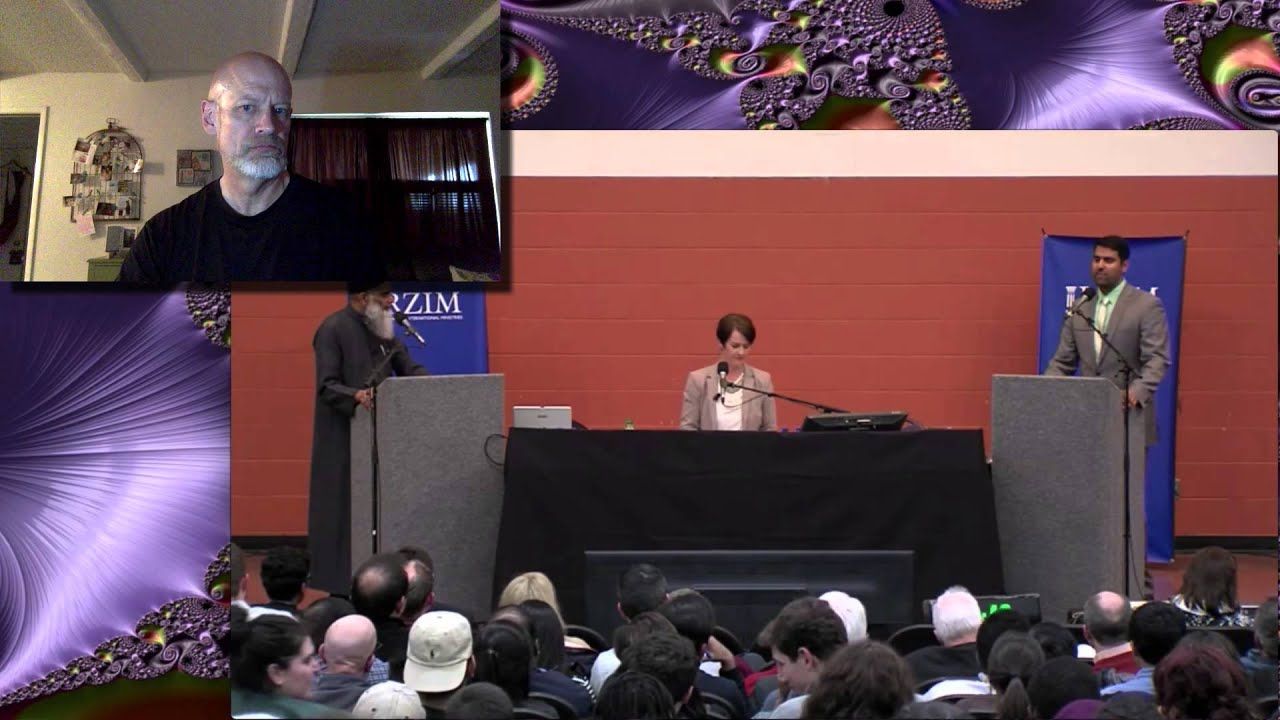
Okay, everybody in their second cousin has been asking me to comment on the Shabir Ali-Nabeel Qureshi debate. Not sure why. I guess it's because I think I've debated Shabir more often than anybody else.
Maybe Tony Costa has. I'm not sure. I don't keep track of that kind of thing. But I've certainly debated him on more continents than anybody else has, to put it that way. Anyway, maybe that's why people want to know what I thought about it.
It took me a while to get around to it. I fly out tomorrow for Spain for a debate with a Jesuit scholar on the Reformation on Revelation TV. So I really just haven't had a lot of time to get to it. But I did this morning on a real long ride I was doing.
And there wasn't anything overly new in the debate. It's pretty much what you would expect from Shabir as far as the arguments are concerned. We've heard them before. There is one argument that I might take some time to do, maybe on the dividing line.
Or maybe do a video on or something like that. I just consider it Shabir's weakest argument. Well, the Quranic Code stuff, I think, may be the weakest argument. But the weakest argument, specifically in regards to New Testament stuff, is his insistence that Jesus was not self-identifying as the Son of Man.
And I realize there are some oddball liberal scholars that go there. But it's just so painfully obvious. In fact, let me just pull this up here. Luke 22, 48. But Jesus said to him, Judas, are you betraying the Son of Man with a kiss?
How else can you read that? I mean, who else was Judas kissing? Was Judas going to be around when the future eschatological Son of Man shows up to kiss that Son of Man? There are just so many places where it's just so patently obvious.
And the only way you can even come up with that perspective is to chop the text into teeny tiny little pieces and just ignore the obvious fact that from Mark, earliest materials onward, Jesus is Son of Man, Daniel 7, whole nine yards.
So anyways, there's stuff like that. But what I decided to do on the ride was there was one audience question that just left me going, huh, what happened there? I did not understand Nabeel's response to an audience question.
And I was sort of listening for it because someone on Twitter had said something that sort of made me go, hmm, I wonder what this is about. Because the person on Twitter had said something along the lines of, it had to do with the text, Eloi, Eloi, lama sabachthani, my God, my God, why have you forsaken me?
I mean, you cannot witness to Muslims without getting hit with that constantly. And I always look forward to it because it's just a great opportunity to just open up a bunch of stuff because it's just based upon ignorance of the backgrounds and the context and stuff like that.
So it's a great, great question. I love hearing when someone brings it up. And so it came up in the Q &A, and I just didn't understand Nabeel's response. And I'm certain he's heard me respond to it. So I was going, does he have a problem with what I say about this?
Well, it came up on Twitter. And Nabeel specifically said, just a matter of minutes ago on Twitter, I misheard the question. I totally misunderstood it, went a different direction. I thought it was asking, how could Jesus take the sins of the world upon himself?
I didn't catch the part about, you know, why have you forsaken me? And so, you know, and that happens, believe me. Anyone who's done a debate knows. When I show it to you here, Nabeel was taking a drink of water right as she starts the question.
And there had just been a slight change in the way that the debate questions were being handled. Now the other person was getting an opportunity to respond. You know, I have jokingly said maybe David Wood was in the front row making faces at Nabeel.
Who knows? That's certainly something I think David would do. But anyway, it happens. And until you've done debates, you know, it's difficult for people to realize just how many things you have going on at once.
Just how many, you know, you're juggling. You're just juggling stuff all over the place. That is why people that do not multitask well should not do debates. I've said many times there's scholars a thousand times more brilliant than I could ever be who should never debate.
Because they just, they can't do that kind of communication and thinking and so on and so forth. So anyway, let me play the question and Nabeel's response. And then what I wanted to do is I wanted to play my response.
Not recorded for you here. But what happened and I decided to do this on the ride today and I'm sure Nabeel wouldn't mind. What happened is I was asked that question two nights in a row. Slight variations as you'll see.
But two nights in a row in two debates I did a couple years ago. One at University College Dublin and one at Trinity College Dublin, Ireland. In two debates I did with Adnan Rashid. Evidently some of the folks only attended one of the two which is certainly understandable.
And so the same question came up from Muslims twice. And you'll see a slight difference because one of them more emphasized the Trinitarian. One was really asking the question in regards to Trinity. The other was asking a question in regards to abandonment and salvation.
But both of them were just wonderful opportunities. And someone on Twitter had said that when they shared the responses that I gave. The kind of response that I give to this. Which by the way Nabeel specifically said in Twitter.
He said yeah I missed that. I would love to have introduced the Muslims to Psalm 22. So he would respond I would imagine in the same way if you heard the same question as I did. And so I just wanted to provide those.
The easiest way for me to do this right now because I don't have much time tonight. Is to just show these. And you can go if you want better quality or bigger picture or whatever. You can go look at the debates themselves.
But I'm just going to have different boxes on the screen. Because to do the moving stuff back and forth. And all the editing part I still have time with the packing. I still have to do and things like that before I leave.
So here's the question as it was asked.
Okay Dr. Cresci. If Christ is fully God as well as fully man. How can he speak of being forsaken by God as he dies on the cross?
That's a very interesting question. And once again we have to make sure that we don't go beyond what scripture says. And that's why theologians will discuss these things. Like we said in Tawhid. The answer for over a thousand years has been Bilakayf.
We don't know. And if we say Bilakayf for Tawhid. And we turn to the Trinity and say you need to explain everything. That's inconsistent. I think we should all understand the greatness and glory of God.
And that there is going to be some lack of comprehension. Because God is greater than our comprehension. He created our comprehension. All that said. The response that I've heard to that question that seems to work.
Is that when Jesus is on the cross. The death of his human self on that cross. Some people ask me the question of if God died. Where is he? Can God then rule the universe? And the answer is even when we die.
It's not like we cease existing. We're going to live eternally. In the same way when Jesus' body was killed on the cross. It's not like he ceased existing. But the punishment that was imputed to him upon the cross.
Is then transferred to kind of the divine nature. It's imputed. There's some interpenetration that happens. So when Jesus' body dies on the cross. It's imputed to his divine essence. And that's why it can pay for all the sins of mankind.
I find an interesting analog to this. And I've never said this publicly. So tell me if I'm wrong in an email or something. Don't get too mad. When people burn the Quran. Which by the way some people say I've burned a Quran.
I've never burned a Quran. I made a video in 2010 saying do not burn Qurans. It's not the right thing to do. But when people burn the Quran. Everyone gets enraged. Why is that? Why do people get furious when the Quran is burned?
It's because I think the Quran. By Muslim understanding has two natures. It has a physical nature. The pages of the text. The ink on the paper. Which everyone would say that's not eternal. That's fine.
It's just ink and paper. But then there's also this nature of the eternal word of God. That the Quran also has. A second nature. And when someone burns the physical pages. That offense is imputed to the eternal nature of the Quran.
That's why people get angry. It's because you burned this eternal word of Allah. No you didn't. You burned the pages. But it's imputed. In the same way when Jesus dies on the cross. That punishment is imputed to the eternal divine self.
Okay. Now. A couple things there. You need to. You need to understand. How difficult it is. To. Put together. A coherent response. To questions you've not. Had time to prepare. Most teachers have time to prepare for.
You know. A certain range of questions. And topics and things like that. In a debate. You have to be. Capable of drawing together. A tremendous amount of information. To provide answers. And. On that subject.
I think I understand what Nabeel was saying. As he said. He missed what the actual question was. And so he was responding to. How is it that. Jesus takes on the sins of the world. Evidently. In regards to his human and divine natures.
Something like that. I would simply point out. That really the only way. To understand that question. That he was answering. Is to have. A solid understanding. Of the hypostatic union. The nature of the hypostatic union.
I would probably look at. Paul's terminology. They crucified the lord of glory. He's exactly right. You always have to explain to Muslims. That we do not believe that death means. Cessation of existence.
Which they very frequently. And it shocked me. And it disappointed me. And Shabir if you're watching this. It really disappointed me. That at some point during this debate. And if I'm wrong about this.
I will apologize. But I'm pretty certain. That I heard you repeat Shabir. If Jesus died. Did that just leave the father. And the spirit running the universe. Objection and I'm sorry. After all these years.
You've got to realize. That that is just as bogus. You don't understand the trinity. If you're making that argument. Jesus did not cease to exist. Death is not cessation of existence. It really concerns me.
When the leading. Islamic apologists. Do not show evidence. Of having an even. Semi accurate knowledge. Of the doctrine of the trinity. And when they say. Well who could have. I know lots of folks that do.
I mean the teenagers. At my church do. So that means you could too. If you really wanted to. It really disappointed me. I'll have to admit. I'm going to have to bring that up with Shabir. Anyway. There's also.
Just in passing. Nabeel. I would challenge you. To think about what you just said. In light of. The federal headship. Of Christ and Adam. Theology matters. And federal headship. And federal representation.
Vital to an understanding of that. And that gets us. Into certain theological areas. That we still have to discuss. Anyway. There was Nabeel's response. He's admitted. I heard the wrong question. Was giving the answer to the wrong question.
Here is. My response. To that question. As it was asked by a Muslim. I'm going to start with the first night. This is University College Dublin. Hold on. This isn't going to be full screen. The camera does a.
Trying to get around. To the guy. I'm going to turn the volume up here. Hopefully it will be hearable. Even though I'm a little bit concerned. How this is going to work. Let's try it out.
I'm so thankful you asked that. There is such a. Massive. Beautiful text. Jesus is quoting the 22nd Psalm. Look up Psalm 22. Read all of the 22nd Psalm. I challenge every Muslim. Find the Bible. You're in college.
Find the Bible. Read Psalm 22. It's a prophecy of the Messiah. And his crucifixion. And Jesus. That's the song book of the early Jews. And so he is quoting. It would be like me saying amazing grace. How sweet the sound.
I don't have to finish the rest of it for my fellow Christians. Because they all know the hymn. And every Jew knew. Like Jesus saying. That he was quoting the 22nd Psalm. And when you read it. It talks about his suffering.
And his eventual vindication. But you ask the question. Who is he referring to? Well who is Jesus? Who is he speaking to in the cross? And he says Father in my hands. I commit my spirit. The doctrine of the Trinity is not that Jesus is the Father.
The doctrine of the Trinity is that there is one God. Yahweh. Who has eternally existed in three divine persons. The Father, the Son and the Spirit. It was the Son who became flesh. Not the Father and not the Spirit.
And so when Jesus dies. It's the God man who gives us life. So who is running the universe? You all. Even you don't believe death means extinction. And we don't believe that either. The God man gave his perfect life.
As an atonement for sin. He didn't cease to exist. That's the reason. That the hypostatic union takes place. Between God and man. So that perfect life can be given. As a sacrifice for sins. But God doesn't cease to exist.
The Father wasn't on the cross. The Spirit wasn't on the cross. It was only the Son. And obviously the Son did not cease to exist. Or anything like that. Instead you have the great condescension. Of God.
In that union of God and man. That perfect life. Jesus had obeyed every commandment. He had loved God perfectly. Every moment of the day. For all those 33 years. If that's how long he lived. You see my friends.
We need something more than just having our sins forgiven. Because you and I have all been commanded. To love God perfectly. How many people here today have loved God perfectly. In everything you did and said?
So if that's the commandment. How are we supposed to fulfill that? I need to have that perfect righteousness. To stand before a holy God. And it is because of what Jesus Christ does. On the cross and Calvary.
That I have that righteousness. Not because I purchased it. But because by faith it is imputed to me. As my present gift. That's why I have peace with God. Shalom. The faces of Romans 5. Justify by faith.
So who is he addressing? The Father. Thank you for asking that question.
Okay. There's University College Dublin. Then the next night. Again during audience questions. Again the question comes up. And it's in a slightly different context. Here it is.
I just have two points I want to make. I have two questions. First you said you knew. One question. One question. Take the best one. Take the best one. You said that Jesus knew he was going to be crucified.
It says in the Bible. Jesus says. God why have you forsaken me? So maybe you have a trinity of families. Where Jesus is God. One God and Jesus at the same time. It's like me saying. Oh me why have I forsaken me?
It doesn't make sense to me. How can I say God why have you forsaken me? If I knew I was going to be crucified first. And second if I actually am God. It doesn't make sense. I'm really thankful.
Last night you wouldn't have asked that question. Because I already answered once. But I'll answer now. First of all you do not understand. And I want you to give me your email address afterwards. And I will send you for free my book for Dr. Trinity.
So you can understand what the Dr. Trinity is. Jesus is not the Father. We do not believe he is the Father. The Father sent the Son and the Holy Spirit. The Son prays to the Father. Read Job chapter 17.
Father glorify me with the glory which I had in your presence. Before the world was. We do not believe that the Father is the Son. Or the Son is the Father. So Jesus is addressing the Father. We did not become incarnate.
And by the way what he is quoting is Psalm 22. Look it up. Psalm 22 is a Messianic Psalm. It is a Psalm filled with prophecies. The crucifixion of Jesus. Which you if you are a Muslim don't even believe happened.
Against all of history and the prophetic tradition. And in fact what I'm going to do right now is. Here is an entire book. On the prophecies of Jesus in the Old Testament. And I'm giving it to my friend Adnan.
And you can steal it from him if you want to. But. The entire. This 22nd Psalm is an incredible description. Of the crucifixion itself. And so he is quoting from the Old Testament. And he is praying to the Father.
Which is what the Doctrine of the Trinity teaches. So my friend. If you just understand the Doctrine of the Trinity. I would be happy to try to at least. Don't you agree that if you are going to reject something.
You should at least know what it is. I am taking the time. To understand what Tauheed is. I am writing a book. I am co-authoring a book right now. With a Muslim scholar on Tauheed. I have read entire books on Tauheed.
Why? Because I respect you enough to know what you believe. You need to understand what I believe.
Eloi Eloi Lama Sabachthani. Quotation. You have got to be ready for that. It opens up so many opportunities. To go to Psalm 22. You can talk about the crucifixion. You can talk about the resurrection.
You can talk about the Trinity. It is just a wide open door. Take it. Take it. I am sure from what Nabil has said on Twitter. He wishes he had heard the question. As it was asked. It would have been a much more profitable direction.
That he could have gone there. In the presentation. It happens. Like I said. I hope I have time. To look at some of the arguments. Some of the other arguments. That were presented. We heard Gregory Boyd being quoted.
Stuff like that. Again. The primary issue being. Shabir's willingness to utilize. It is always the same pattern. Quote liberal scholar. Then a few minutes later. Take that as a given. As something that has absolutely.
Been established. Just because you quoted the assertion. It is always a disputed assertion. Of a liberal scholar. Now it is a fact. It doesn't work that way. That is what we have heard. Over and over again.
Hopefully we will have a chance. To look at some of those things. In the future. For now I hope this was helpful to you. You feel better prepared. To deal with the issue. Of the abandonment on the cross.
What it really means. Quotation from Psalm 22. That will encourage you. To witness to your Muslim friends. With that. Thank you very much for watching. I hope this was useful to you.