Keep sharing good news without ads.
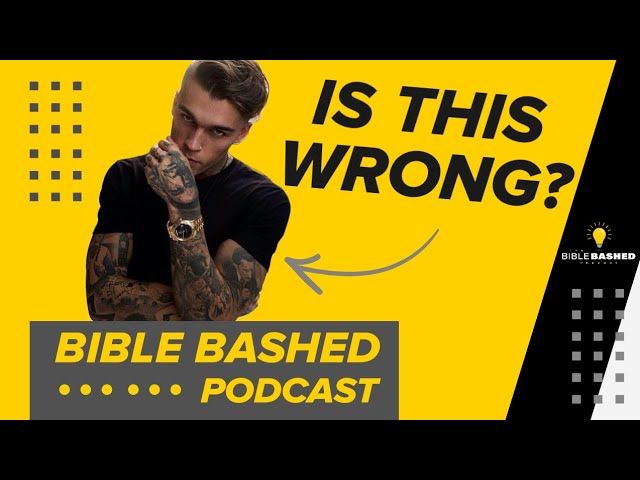
Join the Bible Bashed Podcast as we explore the biblical perspectives on tattoos for Christians. #Christianity #tattoos
Splash Page: https://i.mtr.bio/biblebashed
And so most, like, smart-out kind of people will say, okay, well, so you say, you know, Leviticus 19 .28, you say, you shall not make any cuts on your body for the dead or tattoo yourself, I am the Lord, but then you ignore Leviticus 19 .27, you shall not round off the hair on your temples nor mar the edges of your beard, right?
So why do you say the tattoo thing is, you know, permanently binding, but not the, you know, round off your hair on the temples or.
Mar the edge of your beard kind of thing? Pete Slauson All right, Tim, the question.
For today's episode is, can a Christian get tatted up?
Tim Cynova. This is one of those topics that really seems to get a lot of people offended. Pete Slauson.
Yeah, yeah, it's a big, it's a big, there's a lot of baggage with this conversation, it feels like, when you're talking to people, especially those who have already chosen to get tattoos, at least in my experience.
Tim Cynova. Yeah, I mean, it's a pretty strange phenomenon to watch. So I mean, I, you know, full, you know, all cards on the table, I don't actually have any tattoos. And, you know, I did, I did grow up in a Christian culture that largely was skeptical of tattoos.
So I mean, growing up, we were told not to get tattoos, because if you get tattoos, then you may, you know, not be able to get hired at certain forms of employment or something along those lines. And I mean, there's certainly something to that.
I mean, it's less the case now than it was growing up. But then, I mean, growing up, if you try to get a respectable job, and you come with like a sleeve full of tattoos, you're just not going to be able to get that job.
And so we were largely discouraged for getting them. And then I grew up in a Christian culture that largely viewed tattoos as overwhelmingly sinful. So if I were to do like a, you know, a Twitter poll, growing up, if Twitter existed, I mean, it would be overwhelmingly like in Christian cultures, like it's a sin to get tattoos, most people would think that.
But then, you know, we've done like a Twitter poll on tattoos now, and like the results are very different now. I guess it's not overwhelmingly obvious that in the minds of many people, it would be sinful to get tattoos.
And, you know, a lot of that's due to the fact that, you know, so many people are now getting tattoos, and so many Christians are getting tattoos. And it's even attached to certain, you know, like tattoos and Calvinism are now, like the new Calvinism seem to be going together in that kind of way.
And so many people are getting tattoos, like there's a dramatic increase in that in society in general. And it's almost like, you know, with just pagan girls or pagan guys out there, it's almost like a rare thing to see someone with no tattoos even, right?
Yeah. Yeah. So, you know, as tattoo use is increasing, it doesn't seem like, like, if you're just a step back, turn your emotions off for a second. I know that's hard for people to do. But you just take a step back and turn your emotions off.
Then you might ask yourself, well, what has happened in the past, you know, two decades or whatever, to where we've gone from a place where the overwhelming majority of Christians would say, this is wrong.
And to now you're at a point where the overwhelming, you know, maybe not the overwhelming, but at least it's, you know, mixed maybe.
There's a lot of people who are in favor of it or, or at least view it as like a,.
You know, a morally neutral thing. Right. Right. Which would be legalistic to take a position on. And so you, so one of the things that's happened is like, so you look at society and overwhelmingly, like we're checking a Christian morality at every single point.
So we're checking Christian morality and things aren't obviously getting better, you know?
Oh, yeah. Yeah. It's, it's pretty bad out there right now.
Right. Right. So, I mean, I mean, in almost every single way, imaginable things seem to be getting worse and worse. Like we're just watching the wreckage of Western civilization and it's just chaos out there.
And, you know, then you see an exponent, an exponential increase in tattoo usage at that point. And then, you know, I think in that kind of framework, it seems to be a very reasonable question to ask, like, what changed?
Right. So did the Bible change on this or did just, has, is culture deteriorating at that point? And, you know, the strange thing is like, you know, I haven't even given an answer on that yet. I've just, I'm just answering, I'm just noticing like phenomenon.
Right. So I haven't even taken a side yet, but then there's a lot of people who are predisposed to be just like entirely offended by the fact that I haven't just come out and like overwhelmingly say, oh yeah, no, obviously it's no big deal.
Big nothing burger. Everyone needs to quit being legalistic and get over it. And like, when you talk about this, like, I mean, I think one of the most embarrassing things that people do is they instantaneously default to these, like, like this ridiculous kind of antinomian posture that is just, I mean, it's frankly, it's just embarrassing.
Like, like in terms of like, like if you were to say, you know, yeah, maybe, you know, so like Leviticus 19, you know, 28 says, you shall not make any cuts on your body for the dead or tattoo yourself.
I am the Lord. And so if you're just look at that and you're even for a moment, consider, well, maybe God hasn't changed his mind about that, right? Like maybe he hasn't, like, if you were to say that, then instantaneously what people do is they, they go like just full on antinomian.
Oh, so you're saying that like, you know, if I get a tattoo, I'm going to damn myself forever in hell. And you're like, what?
Pete I just said, maybe, just maybe.
Jared I said, maybe it's wrong. Like, I mean, so, I mean, obviously Jesus died on the cross to forgive sins and like, you know, we're not justified by the works of the law, but then people just go like full on, like, so you're telling me if I have a tattoo, I've committed the unpardonable sin mode.
And you're like, and these are people who are, they're not just like, you know, theological dunces in other areas or something like that, but then they just go full, like, you know, the full nominal Christian, like, right.
Right. And it's just like, well, wait a minute. I mean, like, I think it should be a live question to ask. Like, it's like, it's a very live question to ask. Like, why did God put Leviticus 1928 there?
And is that like a ceremonial aspect of the law that's been fulfilled in Christ? Or was there something about that, that God, like objectively, like, should we put this like in more of like a moral law kind of category or like a, or a ceremonial kind of categories?
I just think it's like a, like a, it's a fair question to ask. And, you know, there's plenty of like sins that a person can commit that, you know, obviously are not going to damn, it's not like some kind of perpetual sin.
I mean, now, if you get a tattoo, now part of the problem with getting a tattoo is it's not entirely easy to get it off, which is, you know, why, like, and a lot of people have like buyer's remorse. Like, I don't know if you've seen, you've probably seen the no regerts meme or whatever.
The tattoo meme.
Really? Not even one letter?
Yeah. But I mean, it's, it's like one of those things where like a former generation would basically look at people and say, Hey, you might want to think pretty carefully about this because it's permanent.
And, you know, this is like, you're made in the image of God and you may want to think through these things. And, you know, they, they just had kind of a moral intuition to say that you probably shouldn't like identify yourself with the degenerate, you know, forms.
Of society. So, I mean, like, you know, you basically, you gotta, you gotta think real hard about if you really want that Solideo Gloria tramp stamp. Right. Right. That's pretty much. Yeah.
Pretty much. Yeah. I mean, so you, I mean, but you even had expressions like that, that would tell you, you know, it's kind of like getting a neon pink Mohawk or something like that. It's like, you're doing that.
You're making a certain statement and everyone knew what you're making is kind of a sign of rebelliousness. And now it's kind of like losing some of that a little bit where it's not viewed so rebellious, like to get a tattoo because it's become normalized.
But I mean, you can't even, like, you can't even ask the question anymore without people just kind of going full anti-no man on you and just losing their mind and, you know, basically calling you a legalist or whatever else.
So it's strange phenomenon to watch for sure. That's all,.
That's all well and good, Tim. And I agree that people get, I remember one time, you know, I was working a job and this guy who wasn't a, he, this guy wasn't a Christian. I mean, he said he wasn't a Christian to me, but he told me one at one point in his life, he had dated this girl who was a Christian.
And, and I think he said that she had broken up with him over all the tattoos that he had. And, and he pitched a big fit about it, you know, and he was like, what, what's the big deal? You know, like, what's the deal with all the tattoos?
Why, why do you not like them? And, you know, she, she was basically saying, well, you know, I don't think they, I don't think they're very honoring to God or whatever she said. I don't remember her explanation and his, she, or, oh, no, it was what she had said was, you know, hey, our, our body is a temple, you know, and so we need to treat our, we need to treat our bodies with respect.
And his response was to say, well, if, if my body's a temple, then I want to decorate the temple, you know? So, I mean, it's obviously not like a very, a very good argument from any sort of like moral justification kind of view, but, but I have seen, you know, that's just to say I've talked to plenty of people who for one reason or another have, have tried to justify their tattoos and typically respond with a lot of emotionally charged answers as the reasons for why tattoos are okay.
The problem is, Tim, that no one comes to listen to the podcast for maybes. That's right. So, so what is the, you know, I know you read the, I know you read the verse, but then what, what is, when we're posing that question, you know, maybe it's sinful, what is the answer?
Is it actually, yes, it is sinful, or is it, you know, no, it's morally.
Neutral? Yeah, well, I think there's probably, like you can have a, yes, it's sinful. You can have a, no, it's morally neutral, or you can have a, maybe a, it was called like in the language of ethics, like a morally dubious posture.
So, there's another option. So, like a dubious would basically say, like, it should be frowned upon, and whether or not it's like absolutely airtight, sinful, it's, it should be frowned upon, and you should, you know, like, I don't know if I'm willing to church discipline someone over it kind of thing, and God can obviously forgive anything else, but I think you should frown upon it.
And I, and I think that's kind of where I've come down on it in terms of, like, my actual answer to the question, if I'm not just talking about why I'm scandalized by everyone's reaction to the question in general.
I would say, I don't know that I'm ready to say it's, like, it's clearly a sin, but until I get a better answer for what's happening in Leviticus 19 .28, you know, I'm going to say, you know, better to be safe than sorry kind of thing.
So, that would be kind of my posture. Now, I mean, I think that, like, just looking at Leviticus 19 .28, like, if you think about the context, there's some things that would kind of push you in different directions.
And so, most, like, smart aleck kind of people will say, okay, well, so you say, you know, Leviticus 19 .28, you say, you shall not make any cuts on your body for the dead or tattoo yourself, I am the Lord, but then you ignore Leviticus 19 .27, you shall not round off the hair on your temples nor mar the edges of your beard, right?
So, why do you say the tattoo thing is, you know, permanently binding, but not the, you know, round off your hair on the temples or mar the edge of your beard kind of thing. So, it's like getting a beard cut, sinful.
But then the problem is, I mean, you go to 29, it says, do not profane your daughter by making her a prostitute, lest the land fall in prostitution and the land become full of depravity. So, I don't know that you want to, like, that was a good argument.
Do you get what I'm saying?
Uh-huh. Yeah.
Like, because, like, you know, meaning if we're just, like, going to the next verse, well, I don't think prostitution's okay now. Right, right. Okay. So, it's not so, I don't think you can really settle it that way now.
So, like, step one, like, it could go either way, right? So, that could be kind of like just an eternal reflection of God's character kind of law, or it could be something, you know, particular to making Israel like a distinct people.
So, it could go either way, depending on, like, context. Now, the second step that people do is to say, well, hey, like, you shall not make any cuts on your body for the dead or tattoo yourself, I am the Lord.
So, the tattoos then is being, like, modified with the for the dead part, right? But that isn't really it says you shouldn't cut yourself for the dead or tattoo yourself. It doesn't say, or tattoo yourself for the dead.
But either way, I mean, I don't know that any people would think that it would be okay just to cut your body now. Right. For the dead or otherwise, would they?
No. I mean, there are people out there who do that kind of thing, but then, you know, I don't even think that they do it. I mean, it's obviously not a Christian impulse.
Yeah. Yeah, and so, I mean, I think if you're looking at it like that, like, if you're asking yourself, well, would you do you think that you should cut yourself for the Lord, right, and not cut yourself for the dead?
And I would say, I mean, these are, like, deeply pagan kind of impulses to mar your body up and to mar the image of God in that way. And so, it's not intuitively obvious to me that either one of those things, like, if they were for the dead or if they were for the Lord, that doesn't necessarily make it any better, right?
And so, you know, I think, like, in terms of wisdom, it's obviously, like, there's the wisdom check of, like, most people get have regrets at a certain point. And, you know, part of this is, like, a body modification kind of discussion as well.
So, there's, like, the kind of individual who wants to make their face, like, look like a skeleton or, you know, some kind of animal or, you know, like, there's a like, I think there's, like, a very pagan impulse to mar the image of God, like, and, like, by permanently altering God's fundamental design.
And, I mean, and, you know, I don't know that it's intuitively obvious that when people get tattoos on themselves that they're making themselves objectively more attractive. I think they're just, like, hiding, like, when you think about, like, how God made skin, it has so many different colors and it's, like, it's kind of amazing, you know, when you think about it.
And then when you put, like, you turn someone into an ugly snake-looking person, like, with a sleep full of tattoos, I don't know that that necessarily helped. So, like, so, you know, I mean, looking at it, I think there is, like, an image of God discussion that's related to this topic in general, like, how, like, where is this impulse coming from?
Is this impulse coming from God or is it coming from, like, a pagan impulse to kind of mar the image of God there? And, you know, so, I mean, all that kind of leads me to have basically just a suspicious posture.
And then, you know, the worst one is that, you know, Jesus has a tattoo kind of argument and that's where, you know, he has a name written on his thigh, right?
Pete. You know, you know, at first I didn't know where you're, at first I didn't know where you're going with that. And then you said the argument, I was like, oh, you know, I have heard people, I have heard people say that actually.
So, yeah, what's the answer to that, Tim?
Tim. Yeah, on his robe and on his thigh, he has a name written King of Kings and Lord of Lord. So, yeah, they're using it as a tattoo argument. It's like, oh, come on. Like, do you think that Jesus, like, pulled his robe up and is showing off a tattoo on his thigh there?
Pete.
Okay. So, if that's not a tattoo, what does it mean?
Tim. It's just a name written on the robe, okay? At the thigh location. I mean, but it's so stupid. That's why it's such a stupid, like, argument that's being made. Like, that's like, he doesn't have his thigh hanging out, like, of a robe or something like that with a tattoo on it.
Like, so that's neither here nor there, that's, you know, not the point. So, yeah. So, no, I think, you know, all in all, I think most people will get buyer's remorse with tattoos. You know, I think it's most likely coming from some sort of pagan, there's a pagan impulse that's obviously taken hold of our society that is making this thing, you know, take off.
And, you know, as Christians, I'd really want nothing to do with it myself. But then, you know, it's one of those things that God obviously forgives people. But, I mean, you know, I would ask people if they're suppressing some kind of something, you know, in them, like suppressing some kind of sense of, like, where's it coming from?
What's the motivation coming from? And is it really, like, is this really about honoring the Lord? Is this really about, you know, just living out some kind of rebelliousness there?
Pete. Okay. Fair enough.
This has been another episode of Bible Bashed. We hope you have been encouraged and blessed through our discussion. We thank you for all your support and ask you to continue to like and subscribe to Bible Bashed and share our podcast with your friends and on social media.
Please reach out to us with your questions, pushback, and potential topics for us to discuss in future episodes at BibleBashedPodcast at gmail .com and consider supporting us through Patreon. If you would like to be Bible Bashed personally, then please know that we also offer biblical counseling, which you can take advantage of by emailing us.
Now, go boldly and obey the truth in the midst of a biblically illiterate world who will be perpetually offended by your every move.