Keep sharing good news without ads.
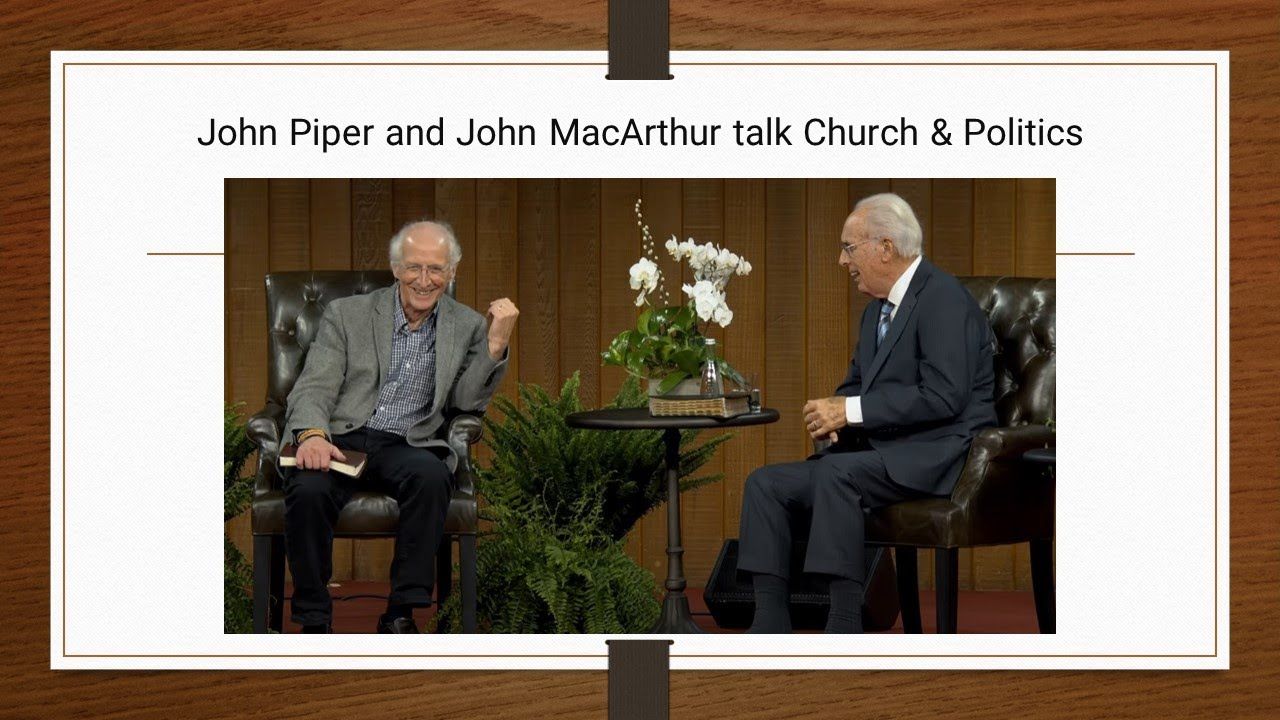
Jon talks about the recent Q & A session from the Puritan Conference hosted by Nathan Businetz and featuring John MacArthur and John Piper.
The Conversations That Matter podcast, I'm your host John Harris. I'm kind of in my work around the house outdoor clothes today because that's what I've been doing. I actually just set up an archery target.
I didn't think I could do it in my yard, but I did. I actually did. Thinking a little creatively, I had to make use of a hill. I live on a hill, so there's this elevation kind of Let's just say that I'm shooting up, but I have a rock wall that kind of captures whatever I shoot in case I have a stray arrow, so it's safe, but it's not straight.
I just thought of a range, somewhere to shoot, as being straight. It's having to be straight because that's always where I've shot. The closest archery range to me is like 20 minutes away, and I was looking at the requirements to be able to shoot there, and you have to join their organization, which means 15 hours a year of service work, which is fine.
I'm like, I don't know if I'm that into this sport, and then you have to pay, I think it's like 300 bucks a year or something like that. I was like, between the time, it was like 40 minutes there and back, and then I have to pay a toll going across the bridge.
That's gas. I started doing all the math in my head, and I thought, let me just try to be creative, so I actually built myself today, and for my Actually, I have my bow right here. I'll show everyone.
This is my Matthews compound bow. I've had this for This was one of those impulse buys in 2020 that I'm sure none of you did that. None of you went out and bought something in 2020 thinking like, well, now I have
I can't really get a full screenshot on this, but I thought, I'm going to have all this time now because everything's online. I was going to Actually, I think I had just graduated. There was some overlap with me doing my thesis work and graduating, and anyway, though, people weren't meeting.
Church wasn't even meeting, the church I was going to for the first two months, and so for the first few weeks, I was looking around, what kind of services are even out there, so Bible studies were canceled.
None of the stuff that I would have been involved in was going on, and I thought, I'll get back into archery because that's what I used to do in my teens a lot, and I enjoy it. I love archery. I think
I mean, that was my thing when I was probably like 12, 13, 14, had a bale of hay in the backyard, and I remember my first compound bow because I had a I think it was a recurve, I think, this kind of practice recurve bow, and then my dad bought me a compound bow, and I was overjoyed when that happened, and I got all into it, and I don't know what happened.
I guess I got into fishing or something else. I go through little phases sometimes, but anyway, I thought today I would take some time. It's like 67, 68 degrees it was earlier today, which is just amazing for the month of November.
It's been in the 70s, like the last three or four days, and so I thought, I only have a few more good days to do this, so I built kind of like a cage for my target. I got a target, put it in that cage, and I had to adjust it to my hill, which was pretty drastic, but I figured it out, and I have a lane
I got to measure how many yards it is. It's probably like 30 yards, though. Maybe I could I don't know. 30's probably my limit on that, but it's still good because in New York, you're not taking long shots most of the time if you go hunting, so I got my hunting license.
I got everything I need, and I could on opening day go out with a shotgun, or in my county I can use a rifle, but I'd rather use a bow if I can, so we're going to see what happens with this, but anyway, that's why I've got my work clothes on, and I have Bible study coming up.
Actually, I probably have to leave in about an hour, so I've got a hard break that I got to do on this podcast, but just trying to get everything done, helping my wife with hanging some shades, and just a work around the house kind of day, which is great, but it's also election day.
No, not the election day you Calvinists are all thinking of. No, it's the day that we go and we vote, and you get weird stickers if you live in my county in New York. That's right. This is what they gave me.
True story. This is what they gave me. I'm used to getting an American flag or something. That's what I was getting in Virginia, North Carolina, and I thought I was getting this in New York, as I remember, but this is the first time I've gotten weird, sleep-deprived, purple monster spider chaos man or androgynous figure.
I don't know if it's a man or a woman. Can you tell? I don't know. This is what they're giving out. I looked online because I was coming back from voting, and I was sounding like an old man according to her.
I was saying that this is crazy. This just shows kind of where we're at, and when I get an American flag, I get a purple people eater. She said, well, no, I've seen this before. There's an explanation for it.
Before you talk about it and go on a cross-politic tonight with A .D. Robles, because they said I might be doing that later tonight, talking about the New York gubernatorial race, and A .D. Robles is hosting cross-politic.
He asked me to come on. I said, I'm going to talk about this, and she said, before you do that, you may want to research. I looked it up, and there's no explanation. It's a 14-year-old kid who designed it, and they had some online contest, and I think it's a 93 of the people who voted voted for this sticker.
That's right. Above bald eagles and American flags, the purple spider people eater, sleep deprived, way too much caffeine man. I don't know what this has to do with anything civic related, but that is what's going on.
Local politicians, here's the thing, are getting in on it. In fact, one of the guys running for, I don't remember, I think it's a town board or something in a local election in New Paltz, decided to get it tattooed on himself before the election.
Literally getting this, this is tattooed, I think on his arm. You have others who are saying how great it is to participate in democracy. No one can criticize it. That's how you know you're in a bad state.
No one can criticize that. Look, whoever made this is good at those rage comics, but I don't know what that has to do. How is this a, I don't know, maybe my wife is going to say I sound like an old man if she hears this.
That was interesting. That was a difference this time around going to the polls. I don't know what the results obviously are at this point. It's evening, but I would assume, I think the polls close I think at 8 or 9.
So we'll probably start getting results obviously between 10 and midnight. And then if it's close, we won't even know until early in the morning. And who knows? Who knows, right? After 2020, maybe it'll be a few weeks before we really know.
But I think in New York it's likely that, I just can't see the Republican Lee Zeldin pulling it off in the gubernatorial race. I just can't see it. It's just because New York's become a one-party state.
And once a state becomes a one-party state, it doesn't really go back. I don't know if you've noticed that. I'm trying to think of an exception. I mean when the Democrats get in control. I don't mean if it's a Republican one-party state.
The tendency is conservatives tend to play on a, they want, they respect the rules of the game. They want a fair fight. They want the rules the same for everyone on the field, open field. Everyone gets a chance.
Democrats tend to lock the door after they get in the building and they gain control. They don't let anyone else in. That's part of it, I think. And then there's a tipping point too. When you get a voter base that's committed to enriching themselves through the public treasury, raiding it, then it's really hard to get back from that.
So anyway, that's where New York's at. I mean if Zeldin won, I would be grateful, but he's not a conservative at all. In fact, he's pretty much, I would say pro-abortion. I want to say that he's a cautious pro-lifer.
In fact, it's funny. The local Christian, believe it or not, there are Christian organizations in New York and one in particular, I won't say which one, but it's an organization that does a lot of good work, but they put out their kind of last get out the vote email and they're trying to paint Lee Zeldin as pro-life by using what the Democrats are saying about Lee Zeldin as if they were true.
But the Democrats, they're always going to use these scare tactics. He's going to force your little girls to have to carry babies, even if it's rape or incest, and they'll die on the operating table because the doctor won't be able to take the baby out that's threatening their life.
They do all that kind of thing to try to get you scared. But the reality is Lee Zeldin himself has said he's not going to do anything to stop abortion in New York State. He has no intention of it. And so either way, you're not voting for a pro-life candidate.
And he's even got the conservative endorsement. So New York, it's a huge, it's a big, big tent that includes libertarians. And I mean, pretty much every stripe of I'm not a Democrat, as you can imagine, is lined up against how do we depose of Hochul.
And Hochul is just, you know, she's underestimated, I think. A lot of people thought she'd be easy to depose, and that doesn't seem to be the case. But for all of you who don't care about New York politics, I hope that it's going well in your state, wherever you are.
I hope that the elections are fair. I hope that godly rulers are elected. And there's a few races that I am watching closer than others. Local politics, obviously, I can't know all the hundreds of politicians or statesmen running across the country.
But obviously, it's been getting a lot of press in Arizona, Carrie Lake. And I'm really curious to see what happens there. She's impressive in some way. And really, the thing that makes her impressive is the way she handles the media.
I think it's the same thing that's gotten Ron DeSantis traction, same reason Donald Trump had traction is because I think conservatives especially know that the, and Christians, I think, that are conservative, that are biblical in their values when they take those in the polling booth with them, they realize it's a battle against the media, it's a battle against every institution just about.
And so if you have a fighter, someone who will take it to the media, isn't trying to garner favor with them, that's automatically someone to watch. And Carrie Lake is certainly that. So that's one of the races I'm watching to some extent.
Obviously, the Florida race, a lot of people are watching that. So we'll see what happens tomorrow, but let's just pray. I think we're under judgment. I think that the Lord has given us the rulers we deserve, whether they were legally voted in in some cases or not.
But I think there's always, I mean, there's mercy. The Lord does give mercy, and we always pray for that. We don't want to see the effects of sin manifested in their full display, despite what some people say about loving persecution.
I don't like hearing that language so much. And maybe they won't say loving, but you hear things like, well, you know, the church is only pure if it's persecuted, and so as things get worse, that's going to be good for the church.
No, it won't. I don't know, maybe you could see in some ways how it could be when there's not an advantage to being a Christian, you get the pure Christians there, but you're still going to have heresies.
You did in the Old, you did in the New Testament church, and they were under persecution, and you still had false teaching. It doesn't eradicate it completely at all. You're going to have, you're still going to have problems, and I look at recent examples.
Look at the church in places like Afghanistan or Iraq, where Christianity was, the doors were open, and then in Afghanistan in particular, the Taliban takes back over. What did that do for the Christians there?
It wasn't good. It doesn't grow the church necessarily. I don't think that's a good church growth strategy, is let's get persecuted. So I'm always praying for politicians, leaders, who are going to not only respect God's law, but at least allow the church a place to exist in freedom, to propagate the gospel, to make disciples, to evangelize, to do all the things the church is supposed to do without being harassed.
And so anyway, I know a lot of you have the election on your minds, and in that vein, we're going to talk about a recent Q &A that John MacArthur and John Piper did. I've had a lot of people asking me about this, John, have you seen it?
And I finally decided, you know it, I'll listen to it, and I did today while I was doing some work outside, setting up my archery target, and I thought, well, this is actually, this is worth it, I'll just comment on it as I play a section from it.
And so I think that's, maybe we'll just jump to that right now. But hey, tonight, I just want to say this, I don't know where you would, I guess you'd go to Cross Politics website, I don't know, maybe the Cross Politics YouTube channel, but somewhere between 10 and 12, I think I'm going to be on there talking about the New York State gubernatorial race, Lord willing, so maybe I'll see some of you then.
All right, so let's go to this, let's see if I can pull it up here. Here it is, this is posted, Desiring God posted this, and you have Nate Buznitz, who actually I had in seminary in 2011 when I was at master's, Nate Buznitz was my historical theology teacher at that time, so I did at least, yeah, one semester with him in historical theology, and he was always, you know, always good to me, gave me good grades, which I appreciate.
But he's the one, I think they have him doing the questions here because it's a Puritan conference, that's the theme, and he's their church history guy at TMS. And so there's some good nuggets in some of this, in particular some things MacArthur shares about advice for new pastors and things like that, which I think, honestly, that's one of John MacArthur's, some of the best wisdom that he has is just very practical ministry wisdom for young pastors, I've just noticed.
I have a whole series, I think it's on my shelf somewhere, here it is, I think this is it, Insight into a Pastor's Heart, John MacArthur, I think it's the only CD set I have of his up there, but I just think he does so well when he talks about practical ministry things, because he's got such a long span to draw on.
But they get into this section on, oh man, I don't know if we're going to get through all this, so it's first, what is the pastor's role in speaking God's truth to the political sphere, and then how can Christians in America prepare for persecution, and I want you to hear this, there's just so many things, I don't know what I'll share and what I won't.
This is sort of spontaneous, I don't have any notes that I've written down, but I definitely have some thoughts, and there's some wisdom to be gleaned from some of this, but there's also some critiques I think to be made here.
These are two guys that are not, would not be considered at all on the religious right, by any stretch, especially John Piper, John Piper is the one who right before the 2020 election came out against Donald Trump, couldn't vote for Donald Trump, he kind of made this moral equivalency argument that Donald Trump's meanness and his, he put all his sins in the Greek and then he compared that to Joe Biden's support for abortion, and Donald Trump's got a big ego, Joe Biden supports abortion, they're both bad, can't vote for him, and he's been, I would say over the years, with the exception perhaps of abortion, he's been, he's pushed the needle left, there's no doubt, there's no doubt about it, he's pushed the needle left, I'm just remembering even what he's written about CRT, I know we've critiqued it on this podcast, it just muddied the waters, and it was a misunderstanding, and he definitely gives it a benefit of the doubt that he shouldn't, aspects of it, he definitely ran cover for people who voted for Obama, because he talked about even people on his pastoral staff who did, and how that was acceptable for Christians to be able to do this, somehow, he, with the, even the vaccine, remember, it was about a six month period, first he says look, there's a pro-life concern here because of the cell lines that these companies have used in order to manufacture the vaccine, and that being linked to abortion, and then six months later he's talking about, he's encouraging Christians, you better get the vaccine, and so he's been, he has not been helpful on some of these, MacArthur's been much more clear in my opinion, but MacArthur also, he hasn't pushed the needle left, in my opinion, what he used to do though, at least I used to have this thought, is he used to somehow, sometimes, I think neutralize Christians in some ways, some of the, the effect of some of the things he taught, I think, had the effect of neutralizing conservative Christians, because they would get the impression from him that God's kingdom is, well, here, check out this video, and you'll see what I'm talking about.
I think Christians ought to stand up against abortion, and gay rights, and the ERA, and a lot of other things. I really believe that we ought to take our stand on those issues. But somehow, what happens is, in the midst of wanting to take the right and legal means to take a stand and preach and proclaim against sin, we get diverted into the illusion that we can change our country by effecting changes in the political system.
The reason I don't belong to the moral majority is because I'm not willing to alienate all the Democrats. Well, what do I gain by that? Because politics isn't the issue. There's no such thing, by the way, folks, as a Christian country, and there's no such thing as a Christian government.
Well, there will be a Christian government in the millennium with Christ ruling. I don't expect my government to act in a Christian way. They have nothing to do with the church. There's no such thing as a Christian government, no such thing as a Christian nation, never has been, never will be until Christ establishes a worldwide theocratic kingdom.
All I expect out of my government is that I can get here when I want to get here, not get shot in the process, and that the water comes when I turn the faucet on. We want to do everything we can because we live in a democracy to bring about the best conditions that our people in this society may enjoy.
There's always the temptation to cross the divide between the kingdom of light and the kingdom of darkness and borrow things from the kingdom of darkness that you think are going to aid you. I mean, Jerry Falwell believed that, right?
He believed that, you know, if we're going to reach the world, we've got to have a Christian president, a Christian Congress, and a Christian Senate. That has nothing to do with the kingdom of God. And what you do in terms of social change, lobbying hard and fast for social change and giving too much of your time to that has nothing to do with the kingdom of God.
That's why Paul said we preach Christ and Him crucified. There's a singularity in our focus. We do it with love and compassion.
So hopefully you can see what I'm talking about there. Some of this is good. I mean, having a focus that's singular in the sense that for the church itself as an institution, the ecclesiastical realm, institution, the lane that we're in as a church, when I put my church hat on and I go to church, there's a purpose there to make disciples, to use our spiritual gifts for the building up of the body.
And to have a mission drift where you now make the church a political institution is absolutely wrong. And that's exactly, by the way, what the social justice movement eventually does with the church.
They turn it into a political institution. And, of course, they'll call it other things. They'll say that it's a justice issue or something, but it's a political institution. Where I think I've diverged from John MacArthur over the years, and again, with much respect for him, but where I've seen things, I think, a little differently when I read the Bible is I do think that it is good for there to be a Christian government in the sense that who knows justice better than Christians, right?
We want Christians in office. God's diakonos, according to Romans 13. And we're supposed to pray for our leaders so that what? It's not so that they'll become saved necessarily, although that would be good, pray for all those who are in authority, but it's so that we will live these decent and quiet lives.
We'll be unmolested from the government. If you don't have Christian morality or a moral standard that's being applied, a right, correct moral standard, then what's to prevent you from getting shot at on your way to church?
Eventually that's where things are going to lead to, chaos, when there isn't a standard. And the concern, of course, now is that another standard, a competing standard, which is utterly pagan is being substituted for what was a Christian standard.
And that has led to a lot of negative consequences for everyone, not just Christians, non-Christians too. It's not good for them when they're shut down in their houses because the government wants to take more power.
And given a gene therapy and told that the government is encouraging this when it's not good, or that you'll lose your job, or that abortion is fine, or a legitimate option, or that your 13-year-old can mutilate themselves, and that's somehow being true to what they actually are in their experience.
These are all evil, evil, evil, evil, evil things that are happening right now, and obviously John MacArthur would be against them, as I would be, but I think that the remedy for this is, in part, trying to get some godly people into office and trying to get Christians to take the lead when it comes to our public policy, writing laws, passing legislation, enforcing them, all that.
So that's where I come down, and I look at Jerry Falwell, I probably have differences with Jerry Falwell too, but I look at someone like a Jerry Falwell, and I think the guy was actually really trying to do something here.
He saw that there was a big problem, and he did try to mobilize Christians, and it's true that sometimes this can be confused, that people think that the church is now an engine for that, and that's true.
Sometimes that happens. We've seen that in the social justice stuff, but you can have that on the other side, and we have had it on the other side before, but I don't think that was Falwell's main emphasis.
He started other organizations. They weren't even necessarily all ministries. They were, I mean, the moral majority was really a political operation, but it was to mobilize Christians, and so when I leave, when I exit the doors of the church and I enter the, like I did today, the voting booth, I'm still thinking like a Christian, right?
I don't cease to be a citizen. I cease to have civic responsibility when I join the church. The two aren't mutually exclusive is what I'm saying. In fact, I think MacArthur makes a good point in what you're about to hear, and I'll start playing it in a minute, that actually it's the church really has the answers for the maladies affecting our society.
They inform the other institutions in society as to what their proper roles are because it's those in the church who are the most equipped and most responsible for articulating, teaching God's word, and so I think MacArthur has a tension in some of the things he, he'll say one thing over here, and then he'll say another thing over here sometimes, and of course you're looking over decades of ministry here, but even within, I don't know, the last few years, I can see this with him sometimes where he'll, he really I think has this motive that's so pure that he wants to protect the gospel.
He wants to make sure there's not a mission drift from the church, that they're pursuing things other than the gospel. He wants to give Christians the impression that it's the Holy Spirit work in an individual's heart that makes the difference.
It's not passing legislation. We can't get back to being a more Christian society just through political action. There's got to be something else, and I see that, and I agree with that, but I think he then overstates his case a little.
That's just, that's just my, I know, who are you, John, to say anything about someone that's been in ministry that long? I get it, and if you disagree, please put a comment in the info, or the comment section.
I'd be more than happy to, to be corrected if I'm off on this, but, and I, and I love John MacArthur. I just, I think though that, because I've seen it. I was there at Masters. I remember Nate Buzanitz did this one, I've talked about this before on the show I think, he did a session on, I think it was called What Hath Athens to Do, no, What Hath Jerusalem to Do with Athens.
I think that was the name of it, 2011 Shepard's Conference, and I remember I talked to him beforehand. I said, look, there's, there's people here in our class that think that it's wrong to be involved in politics, and please don't give them a reason to justify that opinion, and he appreciated it.
We had a good talk, and then I remember he gave the presentation. I don't even remember exactly what he said, but I remember going to him afterward, and I was probably actually thanking him or something, but there was someone who came, who was before me in line to talk to him, and this person said, thank you so much.
I used to be very involved in politics. I would vote. I wanted to try to get my friends to vote, because I thought we gotta stop these Democrats, and then I listened to you, one of your sessions, I listened to your teaching, and I don't even vote anymore, and I'm so much better off for it, because now I'm focused on the kingdom of God, and I thought, something's wrong with this.
Something's wrong with this. If people are getting the impression that they should just not vote, they should, they don't have a civic responsibility anymore, because now they're mutual exclusive somehow.
The kingdom of God is the only thing to be concerned about, and having godly, righteous rulers has nothing to do with the kingdom of God, and we have a problem, because guess what? They are related. They're not the same thing, but they are related.
In fact, this is one of the big things Stephen Wolfe says in his book, and I think he articulates it very well, and he draws on a rich history that we have in the Christian tradition, that the righteous ruler is, one of the responsibilities of the righteous ruler is to ensure that the freedom, that the church has freedom, Christians have freedom to share the gospel, to propagate the faith, to, for the good of society, implement the sacraments, etc.
So if you have a government that's opposed to that, very bad for society. A government that encourages that, very good for society, and this is what Christians have believed in forever, or in memoriam.
This is pretty much been the main view held by Christians, that that's a good thing when the government is Christian, in that sense, until very recently, five seconds ago, really. So anyway, I wasn't planning on giving all that background, but here we are, and I gotta start this video, so let's do it.
Let's talk about what Piper and MacArthur said here, and since people want me to weigh in on this, and I think if I can, I'm gonna speed it up, just for the sake of time, let's see here. What do they offer me?
So if we play it back, I'm gonna 1 .25 speed it, just so it's a little faster, so if you're listening on two speed already, they're gonna sound really fast, but here we go. When we look back at the Puritans, we see that they ministered at a time when those in governing authority were hostile to the truth, they persecuted the church.
We have great examples in the Puritans of pastors who spoke boldly God's truth to those in power. I know in 2013, Dr. Piper, you preached a message that you directed part of to President Obama on the subject of abortion, entitled, No, Mr. President, and Dr. MacArthur, last week, you wrote an open letter to Governor Gavin Newsom, the governor of California, calling him to repentance.
So I wanted to ask you men to comment on the church's role as the conscience of the nation, and maybe more specifically, the pastor's role in speaking God's truth to those in power.
Well, first of all, some categories. We understand that there are divisions of responsibility in the economy of God in the world. There is government, and government has a role. There is the family, and the father and the parents have a role.
And the church doesn't become the father to the family, it's not the parents, and the church is not the government, and the government cannot rule the church. I mean, we've talked about that. We did a document, Christ is head of the church and not Caesar.
But at the same time, the church informs everybody of what that role means. We tell the parents how to parent, we tell the government how to govern, because it's laid out in Scripture. So the division of authority doesn't mean that we sit back and let the government be whatever it wants to be, or let parents be whatever they want to be.
We have to bring the word of God to bear. The Bible is crystal clear that whoever rules over men must be just.
OK, so this is a point I was just obviously making, and I totally agree with what he's saying here. In fact, I would love him to weigh in on some of the things he said before that just seemed to, I don't know, when that has nothing to do with the kingdom of God.
Political involvement has nothing to do with the kingdom of God. And yet here he's saying that actually this is the responsibility of the church. And in other words, there's an obligation that Christians have, and the church as an institution has, to keep these other institutions, the family and the government, accountable to God.
That's what being an actual prophetic voice is, unlike Russell Moore writing from the New York Times to lambast conservative Christians. John MacArthur is speaking prophetically to these other institutions.
And so 100 percent. But I just want you to note in your mind, put a little footnote back there and say, we as Christians have a responsibility. That's what John MacArthur is articulating here, and he's doing it based on the fact that leaders must be just.
They have to have a moral standard they're utilizing. So who knows what the moral standard is? It's us. And we live in this society. In fact, I could extrapolate out and say, too, I mean, you see this in Old Testament Israel that there were times when the whole country, the whole nation would be punished because of the actions of a wicked king.
Well, why would they do that? Right. Why? When it's the wicked king's fault. Why not just him? Well, because there's there is a an obligation that the citizenry has to make sure that their rulers are following God's law.
And I don't want to put meat on all those bones right now and give you all the details of what I think that looks like. But but there is some kind of a an agreement or a covenant. There is something there between citizenry and the rulers.
In this case, John MacArthur says the church and rulers, the church has an obligation. So that's that's a high bar in my mind. That's. That's big stuff for the church to have that kind of a an obligation.
Putting in the fear of God, for example, so we're always going to be the conscience of the the family, the conscience of parents, individuals and the government. So that's just a kind of a categorical way to look at it.
What I've seen in the evangelical movement for the last 20 years or so when evangelicals have gotten into politics is that they are very busy trying to manipulate. The political picture, they want to go to Washington and they want to set up organizations that lobby with politicians.
You even hear it was Tim Keller who made some statements about we have a urban mandate to speak to the cities. Well, the urban mandate, for example, is it'll be better for Sodom and Gomorrah than it will be for you if you've heard the gospel and rejected it.
The urban mandate is to pronounce judgment on the rejection of Christ on every city that does that. And the responsibility for the church is not to somehow gain favor with the government by lobbying, which leads to compromise, which leads to compromise that is so severe and so bad that it can take a large denomination and fragment the whole thing into chaos.
We've just watched that play out.
He's talking about the Southern Baptist Convention here. Here's the question I have, and I obviously wasn't in the room to ask this and Nate Boosness doesn't ask it, but if there is this great obligation that the church has to government officials, then how come a mechanism like forming a lobbying group can't fit into that?
Now, I think if what he's saying is that if that's the sole thing you're doing, that's the only thing you're doing. If that's the recipe for success in your mind and that's it, and absolutely there's a problem there, but why can't that be part of the responsibility that he just articulated the church has to keep governments to speak prophetically?
Because John MacArthur, he wrote a letter to Gavin Newsom, but he's not, and he has a platform where he can do that. Most of you listening, if you're a small time pastor, you go to a medium sized church, whatever, you don't have that platform.
So how do you get the attention of leaders? How do you speak prophetically so that they know this is what God says and you're in violation? Well, you kind of have to go visit them or you have to have a voice that can speak to them somehow or apply pressure somehow or get their attention.
You're not probably going to get it just by, you could call, you could write, but it's more effective to have a lobbying group, especially in a day when every other industry and institution, group of people, business, they all have their lobbying arm.
So why not the church? Now, again, understand though, if what he's trying to say is that shouldn't be the silver bullet, totally get it.
Church has to speak gospel truth. We have to do this. We have to talk about righteousness, self-control and judgment to come. What Paul told Agrippa, that God has a righteous standard, you have exhibited the inability to live up to that standard, you are under judgment.
We don't have the political power to move the government. The only hope for a government is, the only hope for a quiet and peaceful life and godliness is to pray for the salvation of the ruler, 1st Timothy 2.
So it just struck me that I hadn't seen this done. And I mean, we've done things like that. I had written letters before to the state Congress about certain homosexual issues, but it seemed to me when the governor decided to quote Jesus to support abortion, that he had gone off the edge and I was terrified for his eternal soul.
I had met him. I did a Larry King program with him. I mean, I don't know if that's too far. I don't know what God has in mind for him. But the people following him, a whole state full of people, and all the people around him in government, I felt the only weapon that we have is righteousness, sin or self-control, and the threat of judgment, and to call him to salvation.
It probably should have been done sooner. I probably should have done that maybe years ago.
But... So I love the fact, because I talked about it at the time, and he showed himself to be so mature, honestly, in such a sea of immaturity when he wrote that letter to Gavin Newsom. And he has such an ability, I'll never have it, I don't think, and most of us won't, to just kind of get to the heart of an issue and distill information into what's necessary to know.
MacArthur has an amazing ability to do this with not just the Bible, but anything that he puts his mind to studying. It was a great letter, and in a very noisy news cycle, it really cut to the heart of what's important.
Yeah, you just had a governor of a state to justify abortion based on the words of Jesus, that's pretty big, that's pretty important, let's not, like, just ignore this. And then he spoke, very bravely, I would say, against what Gavin Newsom was doing.
Yet, what you hear him saying here is, number one, we have a responsibility, the church has a responsibility, to be the conscience, he said, to speak prophetically to these institutions, let them know what the law of God says.
But now, it just sounds like it's a mission that, he says, we have no influence, it almost seems like a failed mission, like, we have no influence to sway the government at all. And then he says, well, actually, what we do have is we can declare judgment to them, and that's what he did in this letter to Gavin Newsom, but lobbying's not right, we shouldn't really lobby.
So, I think it gives you a number of mixed things, like, depending on, if I took, like, a 30 second, you know, minute and a half segment from this, and I sent it to you, and it was just MacArthur talking about, we have an obligation, you may think, yeah, let's go, let's set up, let's do lobbying, let's try to get Christians to be involved in politics, let's really, to glorify Christ, let's honor his law in that realm.
But if I were to send you, let's say, a 30 second, like, what he said right after that, and you're hearing him say things like, we don't really have any ability to change the mind of our leaders, and we shouldn't lobby, and, like, you're gonna get a totally different impression.
And so, that's been one of the things, I think I just, it just illustrated right here, that I don't know how to reconcile with some of the things MacArthur says. Maybe some of you do. Put it, put in the comments.
If you know how to reconcile this, then please let me know. But I think it just sounds confusing to a lot of Christians. It's been confusing to me for decades now.
Zeal for your house has eaten me up. You know, the psalmist said, and then Jesus quoted that when he cleansed the temple, and I, it just seemed to me that I couldn't, I was, I was just shocked that a man would use the words of Jesus to support the slaughter of the ones who were created in the image of God.
So, it activated that. And my goal, I would, I'm praying, and our whole church is praying that he would bow the knee to Christ and be saved. I don't think there are political solutions, and I think what happens when people try to find political solutions, they compromise, so.
You have to, that's key what he just said. If you even try to find political solutions, you're in danger of compromise. Again, I just wish it was tempered with, if that's the only thing, if, if, if you think that finding a political solution is the only way, or that it's the main thing you should do, or you're putting all your hope there, that's a problem.
But if you, through trusting God and being led by the Holy Spirit, you have it on your heart to get involved and to try to, to, to, as, as an individual Christian, let's say, be that political solution, good.
And as the church, let's say, because I think that was the original question that was asked, you know, what is the church responsibility? And he said they have one. So if you're, as a church, you think, well, educating people so they know how to apply God's law in this particular, this particular, towards this responsibility of voting and being civically engaged, then I think that's good too.
And if it means setting up a para-church or trying to, or right, right now, I'll give you an example. Right now, my church in New York is involved with, I think, 20 other churches in, or named in suing New York state over an unjust law, a law that actually is bad for our people because it takes away the ability of the people at the church to protect themselves.
And it singles out a number of different institutions or public venues, churches being one. That's a problem. And that's being politically active. Is that, does that fit in the purview, the responsibility a church has?
Actually, I think it does. But it's not because we think that salvation is in politics. That's not why we're involved in that. It's because number one, we, we believe this is in accord with God's law.
Number two, we believe that it's unjust and unrighteous and it would be, it's a righteous thing for us to hold the government accountable when they overstep their boundaries, when they do things that are illegal, when they do things that are immoral.
And this is one example of that. So, so it's actually, there's an act of grace there with us. It's a corrective measure, if anything, towards the government. And then also it's loving the people in that church so that they can come and they're not a soft target for some shooter.
So it, we had this discussion last Sunday in a business meeting and I don't see anything preventing a church from doing this. Now, if let's say the pastor got up there and said, well, our salvation is wrapped up in this, or we're going to take America back.
And that's the main thing our church is about. And, and it was overly emphasized. And this is part of that, then we would, might have a problem. But if the priorities are straight, you can get involved in these things, including lobbying, including legal action.
Grace Community Church took legal action and you're going to see that in a minute. He talks about it. So it's like, so, all right, that's a political, that's engaging in the political sphere. I don't know how else to, what other sphere is it?
What would you say about it? How would you, how would you couch that in such a way as to prevent MacArthur's critique here from applying to getting engaged in a lawsuit? I mean, when the government oversteps its boundaries and comes right into the church, then you have to.
All right. All right.
So here's what John Piper says. Those categorical distinctions you made, I would agree with. And so I've been pondering, since these questions were sent to me last night, this one exercised me the most.
Why you got to a point where you did that and why I got to a point in 2013 where I did what I did toward Obama, because you don't write a letter every week and you could, because there's enough craziness going on by a lot of people.
By the way, I used to watch a lot of John Piper stuff. I saw him in person. I went to the, believe it or not, I was at Rick Warren's church. Yeah, I know. Right. For the, whatever it was, 25th anniversary, 30th anniversary of desiring God.
Um, Piper can get in, in these kind of very passionate modes, but he's not always like this, I would say, but it's way more frequent than John MacArthur for sure. He's a lot, he's a much more of an emotional man, but when he gets as worked up as you're about to see him get, there's something like there's something bothering him, there's like an ax to grind or a there's, there's a bee in his bonnet.
There's something there that he's thinking about that he just, that it bothers him. And I don't know exactly what it is. And I don't want to like, I don't want to guess at what it could be necessarily, but this, this whole area has him worked up, I think more than John MacArthur for some reason.
Could write a letter to every congressman or every governor or the president every day on a different issue. And you would be justified in doing so by declaring thus saith the Lord. And so in principle that it's right for any Christian to speak the word of God.
If the Bible says something, say it, say it at the PTA meeting, say it in the town square, say it at the legislative meeting, say it wherever you are, say what God says. And then you distinguish from him.
We don't necessarily move in behind that spoke and use every political agency possible to coerce that event. That's not what you're saying. So I'm back to my question. So what happened? And you just said what happened?
He quoted Jesus to support the slaughter of babies. And it just pushed you over the edge. What Obama said in 2013 was this, he said, I want my daughters. Now they're little girls at this time. I want my daughters to have as much reproductive freedom as men.
Do you know what that means? I want them to be able to have sex as much as they want with no consequences, like boys don't have any consequences. And the only way that girls can have no consequences is abortion.
That's the issue. I want my daughter to have free sex. I was so furious at that treatment of his daughters that that just pushed me over the edge. So I don't have any formula here for when a pastor gets pushed over the edge.
I really do want to discourage you from being over the edge every Sunday, because it will so contaminate the preaching of the Word of God that you will be known as a political animal or worse, a partisan animal.
And as soon as this church is known or this pastor is known for being mainly a political activist or a partisan in the political activism, I think your prophetic authenticity goes down. We want to be able to stand and say to Republicans or Democrats.
Okay, listen to this. This is so key to everything John Piper is saying here. Now remember, first of all, this is the same Obama that Piper said, hey, it's fine for a Christian to vote for Obama. I think we have someone on our pastoral staff who's likely voting for Obama.
So nothing wrong with that. That same Obama, the one who was, yeah. So, so he, so here's the thing. He's so against, it's so evil. It's so reprehensible. He wrote this whole thing against Obama, but yet still acceptable.
If someone sees reasons to vote for Obama, it's acceptable in a Christian framework somehow. I don't know how Piper gets there, but somehow he does yet, you know, fast forward a few years and it's, it's not acceptable anymore to, to, he's not going to support Donald Trump because Donald Trump's braggadocious.
It's, it's like, it's just, I don't know what to make of that, but this is, so Piper's a little all over the map in my opinion on this stuff. If you watch him over time and then he, his motive though comes out right here though, he says that what's your reputation is, what you're going to be known for if you get too involved in politics is going to diminish your ability to communicate, keep people, uh, minister to people.
It's, it's, so in other words, there's a cost benefit here. And he's saying like, the cost is too high. If you get too involved in politics as a pastor, the cost just gets way too high. So it's okay. Once in a while, I got, you know, 2013, I said this thing about Obama, you know, and I, and, and it's okay once in a while, but, and by the way, you're going to hear him later say that he writes on every political issue just about, so it's like, which one is it?
But maybe he means from the pulpit here. I'm gonna give him that benefit of the doubt. So it's okay. Once in a while to, uh, from, Oh no, it wasn't from the, that was a blog he wrote in 2003. So I don't know what to make of that either.
Cause then you're going to hear in a minute, him saying how he talks about Confederate monuments and CRT and you know, pretty much everything he hits it. So, um, okay. Well, once in a while, pastors can get involved in this stuff, but they have to be super careful.
They don't do it too much. Cause once you cross a certain line, I don't know where that line is. You are known for being a political person. And if you're known for being a political person, then your audience diminishes.
You can't minister to Democrats. You can't minister to, to, uh, certain ethnicities or genders or whatever. And, and so I'm going to actually reverse this just a little. I want you to hear it again. This gives you a window.
This is the whole, this is kind of what, what happens with the TGC winsomeness too. It's just, you're not used to hearing it being articulated, I think by someone like Piper in the language he's using, but it's the same thing.
Gets pushed over the edge.
I really do want to discourage you from being over the edge every Sunday because it will so contaminate the preaching of the word of God that you will be known as a political animal or a worse, a partisan animal.
And as soon as this, this church is known, or this pastor is known for being mainly a political activist or a partisan in the political activism, I think your prophetic authenticity goes down. We want to be able to stand and say to Republicans or Democrats, black and white, the truth.
And the only way to do that, I think is being careful. Okay.
He's saying this church too, he's sitting in Grace Community Church. Guess what Grace Community Church is known for now in the eyes of many people who weren't familiar with Grace Community Church before.
They're, it's, they're known for, they're the church that opposed Governor Newsom. They're the church that went to court and won because of the mandates. They're the church that has taken a stand against CRT and against a lot of the degeneracy going on in the greater world and in California in particular.
It's like, it's too late in my mind for Grace Community Church. They're already known that way. Now, whether or not people at Grace Community Church who have known of John MacArthur's ministry for a long time, think that way is a different matter.
That it's irrelevant actually, because he, Piper's not saying here that, you know, your people at least need to know that you're this way. He's saying, no, like a large cross section, black and white, Democrat, Republican, he's like, it'd be, it'd be horrible to be known as someone partisan and it's bad to even be known as someone political.
So, cause it, cause it ruins these opportunities, these ministry opportunities, and there's, I think there's some prudence to, you don't want to, I mean, I can't remember the name of the pastor and was it Tennessee?
There's a pastor who just like, he's known for being political because he pretty much is like in every sermon, like that's who he is. He preaches politically in a bad way where it's like, the focus isn't on the text as much as it is the current situations that are going on, and I think it's fine for a podcast.
Obviously you're listening to this podcast. I don't, I don't think it's a wrong thing for a podcast, but with the pulpit, there is a difference there. There is a reason the pulpits are elevated. The word of God is an honor sitting there.
And that's what pastors should be communicating is what the word teaches. And then you apply it. And that's when you get political is when you start applying it. But it's not always going to be political.
And if you have an obsession with politics and you don't realize there's way more to life than just politics, that that's a problem too. Life is so much bigger than just politics, but politics is part of it.
And here's the thing, the mainstream media, the quote unquote world, especially the left, they're going to look at you and they're going to one little misstep and guess what you're known for. That's right.
You're known for something political. You're known for the thing that they want to hang around your neck because they think that it's discredits you because you're a political enemy of theirs. Oh yeah.
They'll, they'll dig up something you said 20 years ago, and then they'll use that. They'll take it out of context even. And they'll say, this is who John MacArthur is. Uh, he is, uh, he is an evil man because of a, B and C.
I mean, that's how they operate. They do this with everyone, right? So, you know, good luck, good luck, just preaching about biblical sexuality and you're already in forbade in territory. And there's no escaping the fact that if you have a large enough platform and enough people here at, in your community, you will be known as the political guy and a partisan guy because, well, guess what?
That guy is certainly not a Democrat. What are they? Well, depending on the community, the Republican, or they're even farther to the right somewhere. So what Piper's saying may have made sense to some 10 years ago, 20 years ago.
Does it make sense in 2022? What are you saying? I submit to you. It does not one bit. It's, it's a total, I don't, I don't know what to attribute it to either a misreading of the times or an insufficient, uh, just understanding of how to operate in, in, as a Christian in this, as a pastor in this world that we live in now.
But he is, he's got like a B in his bonnet about this too. And if you, if you didn't know anything, if you didn't know what race community church had gone through for the last couple of years, you'd think they're having this, you wouldn't suspect that he might be talking about John MacArthur, but knowing what's just happened, it's like, you know, who is he talking about?
I, I remember the first time I listened to this, I was thinking like, is he, is that like a, like, is he insinuating MacArthur's in danger? Like if the church goes to, if they're, if they're known too much as being anti-CRT and anti the COVID hysteria and, um, and all that.
So, um, anyway, he's saying like a little bit's okay, but you can't be too political, but in a world where everything now to the left is political and the social justice advocates have made everything political and they are coming into your church, whether you want them to or not with their ideas, you're going to be hitting politics a whole lot more now than you were even five years ago.
About not being too politically entangled. That's really, so somehow it is. I don't know why you're clapping. I'm talking about you.
Grace community church. You could say that. No. Um, so here's, uh, they're, they, they clap at these things. They laugh at these things that I just think, I don't know. I wonder sometimes I'm like, what, what are they getting out of it?
Because I'm listening to this and I'm, I'm hearing so much just like, uh, there's some good again, there's like, there's, it's like this kernel of truth here where it's like, well, you don't want to be too political where you lose track of everything else, but it's like, if you know the circumstances we live in, you wouldn't be saying what John Piper saying.
And I don't know how it's profound or helpful. Exactly. It seems to me like if anything, it would probably give a great pause to pastors who would want to be more aggressive politically. And now they're like, well, I don't know, man, if it's bad to be known as someone political, then I guess I shouldn't say anything because one misstep and you're known as, as a, uh, an evil person, uh, from the political left.
At least it is possible. I'm you going on desiring God website. I've addressed just about every hot button issue. There is, um, at some point along the line, Confederate memorials. Wait, hold on. Hold on a minute.
Hold on. You, you gotta be very careful with how often you do this. Don't do it. Don't do it too much. And now he's saying I have addressed every hot button issue. There is, I just find that interesting.
Uh, and he's talking to pastors. So pastors, like if you're in follow John Piper's example, somehow you can address every hot button issue while simultaneously not being too political. Um, and not being known for being too political while also making sure that you don't talk about politics too much.
I don't know how you do that, but here he's saying that, you know, he's talked about Confederate memorials. He'll say he talks about CRT again, coming down on the wrong side of these issues and from, well, I I've at least articulated that you don't have to believe me, but we, we've talked about this enough that, uh, hopefully people understand those issues well enough to know that there is a, there are Christian principles to be applied.
And Piper, I don't believe applies them correctly at all. In fact, if you apply what he says about like a CRT and Confederate memorials and stuff, then, and take, take what his logic to its conclusion, then you end up ripping down the fabric of the country.
You end up with the nightmare that we have in our schools right now. And I don't think he sees it. I don't think he wants the actual effects of what he believes, but nonetheless, that's what is happening.
And if you are able to think two steps ahead and you can think, okay, if I believe this, if I apply the same logic, I apply to these Confederate memorials to Thomas Jefferson and George Washington to, um, our, our founding documents to, well, the same logic is going to carry through and it's going to just ban about everything is, uh, it's going to ban everything up through world war two, up through the seventies, you're going to, it's going to be a, uh, a total gutting of our national identity, our history, all of that.
And, and I don't think Piper wants that, but that's what you, it's inescapable. That's what I'm trying to say. And so we're not going to get on a tangent about that particular issue. I'm just saying Piper's, I think weighed in.
If you like looked at all the issues he's weighed in on, I would say he's been more towards the left in general. Abortion might be one of the things in marriage, of course, being the things that he's more to the right on, but, um, in the multiplicity of issues I've seen him weigh in on, he's definitely more to the left and he's now known, here's my point, he's now known unlike MacArthur in certain circles, certainly circles that I run in, in this audience, many of you would think of MacArthur as being more on the left.
And I think what did it finally was that article you wrote for the 2020 election. So for you, like it's too late for John Piper. He's already known. So by, so is that, is he breaking his own rule here?
Because he's known as being someone who's too politically partisan by some people in some groups, you know, it's impossible to not be in this politicized climate that we live in. We can't, you can't navigate faithfully as a Christian through life without being known in political terms by some groups.
They're just going to know you. And with Piper, because he's weighed in on the left so many times, people on the right see him as someone on the left. John MacArthur is seen very universally now as someone on the right.
And so what the advice Piper's giving, like we can somehow transcend this and be just known as, as, as Bible teachers is, you know, good luck. I mean, maybe with some, but you're not going to be known in the outside world that way with everyone, certainly.
What are you going to say about that? You know, should they all come down and so on. So CRT, you name it, I've written articles, but I think my people and those who are around me just don't think of me that way.
They don't think of me as mainly a political guy. They think of me as a Christian hedonist. They think of me as a Calvinist. They think of me as a happy warrior for reformed theology who wants the people to get out of hell and into heaven and rejoice in God with all 10 of their children die.
That's, that's what they think. And I don't know how you do that exactly. So I'm saying, say what needs to be said about the current issue that your people are dealing with, and then speak the whole counsel of God Sunday after Sunday.
So you're known as a Bible guy.
And you can't control that though, in this world, one misstep and you are not known. Like, so obviously MSNBC isn't going to come over and say, uh, to Piper's church. And he's like, well, you're just a Bible guy.
They're, they're going to see something that he said out of place and they're going to outside of their agenda. And they're going to paint them that way. Like they do with MacArthur. That's, that's how they operate.
So if it, if the standard is the people in your congregation, your reputation with them needs to be that you're a Bible guy. That's a little more understandable, I think. Um, but even then, uh, that's the two eventually become somewhat inseparable because if you're a Bible guy, you're going to be against these things that are contrary to the Bible, the two go together.
And so the key thing, and I think what they're not saying as much is that, uh, you cannot, what you can't do is find salvation through politics. What you can't do is find, um, if, if that's a concern.
And again, I don't think anyone's arguing that you can. Maybe there's some people, liberation theology perhaps, but, um, in that room, I don't think there would be people arguing that, but, but that, that would be a valid argument at least, uh, the concern that, uh, you might have mission if, uh, politics becomes the sole motivation or, uh, or emphasis of the church in that, uh, it's instead of making disciples, um, on an individual level of people coming in, it's all about lobbying or something like that.
And, and that's the way that you think you affect change instead of the way that God primarily directed us to affect change, politics plays into this. Remember what I said before? It's related. It's not a replacement for it though.
And so I think that's, in my opinion, that would be a better way to, um, to articulate this distinction because there is one between the ecclesia and the magisterium and the relationship between them and, uh, and the concern of churches being, getting, uh, overstepping their boundaries and being, doing what a political organization ought to be doing.
Christians acting independently in a political organization, perhaps. Uh, so anyway, let's, uh, let's keep going here. Cause man, I only got a few minutes. As we look ahead in American culture, speaking about this same subject, it seems as if things are getting more and more hostile to biblical Christianity.
The Puritans of course dealt with persecution. They dealt with hostility for us as American Christians. How can we begin to prepare for the persecution that may very well be coming?
Well, I think we have to anticipate it. Um, whatever vestiges of Judeo-Christian ethics or whatever vestiges of Christianity were, were still in the, in the culture have, have been evacuated. They're gone.
I wouldn't even call this a post-modern culture. I would call it a pre-Christian culture. Pre-Christian. This is like paganism 2 .0. It's as if Jesus never came. It's as if there never was a cross and a resurrection and a New Testament and a church and a Bible.
This is, this is like Rome or like Molech worship or Baal worship. This is blatant paganism. And, um, it, it is a kind of paganism that has levers to control everything with the control of the technology and social media.
Um, what this, what the current zeitgeist in the world hates most is the truth. I'll give you an illustration. We won our case with the COVID lockdowns with the county and the city. There were 12 different hearings that they set up for us.
The judge in our case was a man married to a man. So-called married. Yeah. But he wasn't any ally of ours as what I'm saying. So, and yet he kept postponing the 12 times. He postponed the case because he says, until you guys settle the first amendment issue, we can't go to the merits of this case.
So he kept pushing it back to the constitution. Finally, in frustration, because I was being given a jail sentence every week and a fine, they were all mounting and accumulating. And, um, finally our attorney said we want to depose the health department.
We want to depose the top three officials in the LA health department. Our lawsuit was against the governor of the state, the county, and all of that. So we said, we're going to depose the health officials in 24 hours.
They dropped all charges, all fees, all fines, and paid all legal bills, almost to a million dollars. Because the one thing they couldn't cope with was the truth. And that's the truth about COVID. They could not let that out.
So they're trying to control everything to sustain the narrative.
Can I just point something out here? This is an example of a church in this case, actually making a political difference and they made a difference. That it wasn't like there was no hope politically. They couldn't do anything.
They were hampered. And just, uh, the only thing they could do is pray, proclaim judgment. They actually had another tool at their disposal here. They had a political recourse and they took it. And thank God for Christian attorneys and thank God for, for his own sovereignty and providence in this and his working.
And they responded to a moral dilemma that they had as well. So this was a situation where the church actually got involved and it made a difference. Now you have to somehow reconcile that with what, what John MacArthur, I said before, which was, it seemed to indicate that there really isn't, uh, there, there isn't a political solution.
Well, in this case for Grace Community Church on this issue, at least, if you, if you mean political solution in the sense of like the world's going to be saved, uh, through political maneuvering, then okay.
But in this particular situation that MacArthur is talking about, there was a political solution and the Lord blessed it and they took it. And I think that's a good example to learn from.
And want you to, they don't want the governor just is in the process of signing in California, a bill that would basically say, if you're a medical doctor in California and you go against the current narrative, you can lose your license.
So they're trying to control everything. If they want to control those kinds of things, then how welcome, how much welcome will they give to the truth of scripture? Virtually nothing. So I think it's a short step from controlling narratives about political issues and social issues and structural issues and education and medicine and whatever and whatever to shutting down the spiritual and the biblical.
So I think that's coming. Um, and that's, I mean, that's going to be fish or cut bait, right? That's going to be, I mean, you're going to have to pick sides. Then you're either going to be faithful or you're going to compromise.
I saw this week that one church opened up after 900 days of being closed. That's, that's rolling over in a pretty extreme way. But, but I think we are going to the evangelical church, the faithful biblical church is going to very soon become the target because we don't accept anything.
Vanderbilt hospital has a gender reassignment surgery, big part of their operation. You may have seen about it. Um, they, they will brutalize, uh, they will maim young girls and young boys. Um, and the head of the hospital has a video basically said, anybody on the staff who doesn't agree with that, get another job.
And then they hired a bunch of homosexual advocates to go with every child that comes in to talk to a physician. They send an activist so that the doctor can't talk the child out of having their breasts cut off.
I'm going to just skip ahead here for the sake of time. Let me, let me see if I can go to where a Piper's talking more here.
Let's listen to this. First Christians and your aliens and your exiles on planet earth, and this world owes you nothing and you may expect suffering and that should be preached when things are going as well as they can possibly go because it's built into the nature.
So in a sense, I'm a little uncomfortable with painting the narrative of the present moment as so extraordinary that that's the reason we need to be ready. And I don't know whether you intended that, but I, I would want from the get go for 50 years, you help people see life is hard.
You're going to suffer. If they persecuted me, they're going to persecute you. This is just plain biblical teaching. It's not peculiar to America. All over the world, people are suffering and that would be true if America were heaven and on earth.
So I want to prepare martyrs. I want people to go to the hardest places of the world. So my answer to how you preach is that you preach the sovereignty of God. You preach the fact that suffering is to be expected.
You preach the flip side of prosperity theology. The problem with prosperity theology is that it lacks a doctrine of suffering. And so pastors, you want to build into your people capacities to suffer and not by being a child born who can't talk ever.
And you'll be caring for this child for the next 30 years.
I'm going to, I'm going to, I mean, amen to what he's, what they're both saying. Let me just see if I can skip ahead a little bit more here and get to the heart of what he's...
Concern in my heart that the way to get ready for suffering is to namely narrate how bad things are, which is what you just did. And I know that if you were preaching right there on Sunday, you'd have a text open in front of you and you would be leading people into and around and up to God.
My point in saying that is that the times have changed. I mean, it's different for us in America now than it was in terms of the tolerance of Christianity. That's all I'm saying. But the way I've always approached suffering, and you can't get away from it if you're expositing the scripture all the time, is to go back to James 1.
Okay.
So I have to, I have a hard break, but I'll, I'll just tie some things together and mention some things that I think are going to be, that I know are going to be said, but I just didn't have time to get to them.
So they're both talking about the current climate and the importance of being ready to suffer. And Piper seems to think you really need to lead people with a positivity. And I actually, in general, I would agree with him on that is it's not good.
You want people to know what they're facing. And, and I think part of the speech that I gave recently was focused on this. In other words, get real. If you don't see what's going on, if you're still having your head in the sand, if you think that Trump's going to save us or something, you got to get real, get to work, get real.
And, and so if you don't understand the situation around you, then yes, you're, you're going to have a problem. Um, so important to articulate that, but definitely important to make sure that you're not just in doom and gloom all the time, that's unhealthy.
Uh, and it ultimately, it can so easily lapse into, uh, complaining, doing things with grumbling and complaining, not really viewing God as sovereign and in control. And so, um, so good points that obviously good points that they're making there.
Um, I do remember Piper said something later that I didn't have a chance to get to. He talks about Jonathan Edwards and how Jonathan Edwards, uh, held slaves and that Piper was so it just shook him so much.
It was such a hard thing for him. And, uh, but that because Jonathan Edward also helped Piper get over, I guess, or helps him navigate. And, and I think what he said was get over racism he had or something that, um, somehow this justifies or not justifies, but it, it, uh, you got to weigh that in the balance.
You got to realize that Jonathan Edwards also had some redeeming qualities, so we shouldn't just cast them overboard. And I remember thinking because Piper's, uh, has not been charitable to people who have not been his heroes as much.
Uh, we can, we can, you know, some of these monuments, we can, we can, those men, we can, we can cast them overboard, but not Jonathan Edwards. Yeah, I know he owns slaves, but, uh, not him because he helped me get over some rate.
And I just thought that was, uh, it was kind of rich when I heard him say that. I was like, well, what if someone wanted to rip down a Jonathan Edwards? I mean, I don't know if there's probably a statue of Edwards somewhere, but, uh, forget, forget about the statues.
That's irrelevant. It's not about the statue. What if they wanted to get rid of, um, something that would remind people of Edwards displays of his books at the shepherd's conference, for instance, we can't display those.
He was a slave holder. I mean, what would you say to that? How would you, uh, you, you, you obviously have to argue that Edwards in his application of God's law was applying those principles to even things like, uh, his holding slaves.
And, and then I think when you do that, when you just think about it, biblically, you don't shake in your boots over those things, but you know, Piper throughout the whole thing, Piper seems to have a concern.
And I think it's a concern that seems like it's more a concern for it's it's people. I think across the aisle, people more, it would be more Democrats, I think, or Democrat adjacent people who just, cause they, who, who would think of John MacArthur as a political force or any evangelical Christian as a political as political first?
Well, it would be everyone on the left. That's what they evangelical, even in their minds now means something political. And it's not necessarily because of what evangelical preachers have done, though.
Some of them have perhaps contributed to this. I think it's a lot of it has to do with the fact that the left knows their political enemies and they're going to smear them. They're going to pigeonhole them.
They're going to blackball them. They're going to do everything they can to label them, to straw man them, to, um, make sure that people stay away from them, to discredit them. And that's one of the things that wait ways they do it.
If they approached people who believe in biblical ethics as, uh, if, as who they really were, it's like, well, you're a biblical scholar at first and foremost, and that's how they painted it. Then you wouldn't have, uh, it w you wouldn't be able to then easily identify them as a political enemy because you've humanized them and you've given them some credibility in an area that's important.
Uh, instead they, they like to bring on their left-wing theologians. If they're going to do anything related to the Bible. And of course they rarely ever do anything related to the Bible. They'd rather have a psychologist on or something or, uh, some activists.
So, you know, they, they've completely jumped, you know, they're not even in the same, they don't have the same assumptions. It's, it's like there's two countries, but the, uh, conservative evangelicals, um, are going to be known to those across the aisle in a political way.
And Piper, I think he, he is, I think, just very uncomfortable with being known in, in a political, uh, with, with a political label. He, he wants to avoid that somehow you see this. I I've noticed this in his blogs when he writes on political issues, even though he, he oftentimes I think comes down more on the left there, sometimes he comes down more on the right, but more, more so, and especially for conservative evangelical standards, he comes down more on the left.
He still has the struggle in his, even his blog posts of like, he just really wants to like, ah, you need to give, give both sides kind of a point. And, and, um, somehow just what's the biblical answer.
Let's transcend this. And the way I pointed out, sometimes he applies the Bible in ways that I'm just like, this isn't the correct, perhaps, uh, application of that principle or something, but, but I, I think sometimes the stretch for him is because he really does want to transcend that divide.
And I don't know what his church looks like. Completely. But, um, from what I've heard from people who have gone there, at least there used to be a, and at the seminary, there used to be kind of a, a right left split that was there and people had to kind of still try to get along.
And so in a church like that, you're going to try to, to transcend it as much as you possibly can. And so he seems nervous about that. Even the examples he gives of things he weighs in on, you know, he, he's, uh, he's very concerned with, with things that matter, um, particularly I I'd say to the left and, and he, he comes down on their, uh, he at least legitimizes their way of thinking on some of these things like CRT, like monuments, the two examples he gave.
And, and then you see him just really, um, being sensitive, uh, later in this video part, I didn't play to people who would say to try to smear Edwards because of his, uh, holding slaves. And so it may reflect the world that Piper's coming from.
I don't know, but him and MacArthur are definitely from different worlds. On this, uh, or at least from there, they're approaching this from, from a different perspective. And yet in this particular question, uh, this, this, this Q and a, they're trying to be, they're, they're being very general and they're saying things that the other can probably agree with for the most part, and maybe that's one of the issues is just too general.
But I think in, to top it to, to, to come to a conclusion on this whole thing, I think the issue with Piper is he's, he's so general, he's not really coming down solidly on anything. If you listen to what he's saying, it's, you're not supposed to be involved politically, but yet if you're a pastor really too much, but yet he writes on pretty much every hot button issue.
Well, how do you balance that? Like, that's not an option. You can't like write on every hot button issue and then not be involved politically. It's very difficult to do that at least. So, um, I guess the only, maybe a solution, I don't even know if it's a solution, but you try to just have a lot of sermons, a lot of Bible talk.
So people know that that's what you're mainly about, but what gets the coverage? What, what do I talk about on this program? I'm talking about things mostly that Piper says that is when he's enters this political fray on things.
And that's what a lot of people are going to notice more because that's, because they're interested in where the needle's going to move for this voting block in part. Um, I don't know if that's my interest as much.
I'm, I'm more, that's part of it, but I'm more interested in, uh, seeing Christians think biblically about these things and making sure that they apply the correct principles and they don't advocate, they don't, uh, run away from the battlefield when the battle is getting hot, just because it's a political battle and they're not supposed to be involved.
I want them to be involved in the right ways. So I pay attention to these things, but that's what I see from Piper. And a lot of people, that's what they're going to see from Piper. And so it's, it's a very hard balancing act to do.
And it, Piper kind of admits that from MacArthur though, you're also seeing this like really solid stuff he says of, about the church has this responsibility, but then it's, but then we, we can't have a, there is no political solution for us.
And the only thing we can really do is proclaim judgment. We can, we can pray for individuals. Uh, but we, you know, lobbying's not good, but yet at the same time, winning our, our case with the California state that in Los Angeles County, that was good.
So, so you get a confusion, I think to some extent there as well. And, uh, I don't know what to say other than I really appreciate John MacArthur and I love him, uh, dearly and, um, owe a great debt to him.
So I'm not, uh, this isn't meant to be, uh, hopefully overly critical. I'm not saying that this characterizes all MacArthur's ministry. I just think in this one area, he hasn't been as helpful as he could be.
And I think he's, he's improving, um, as, as they be, they have to get more politically involved because the occasion assess, uh, um, makes it necessary. I think he's gotten better with this, but, um, especially if you go back to like the, you know, 2011, uh, early, the nineties, you know, you hear MacArthur saying a lot of things about like how the American revolution was wrong and it was, and how, uh, getting involved in government is not something really Christians should be doing so much and, or at least the church.
So, so you, you hear these things and, uh, and I think there's less of that now, but there's still that tension there. So the only, the only reason I really want to weigh in this, on this, uh, podcast in particular was because, um, or in this Q and a was because people were sending it to me and wanted me to.
So hopefully that helps some of you who wanted to hear more about this. Uh, again, tonight, um, I will be on cross politic. We'll be on some, somewhere between 10 and nine. So check it out. Edie Robles is going to be streaming there and, uh, lots more, uh, hopefully coming later in the week, God bless.
Bye.