Keep sharing good news without ads.
Here are the articles:
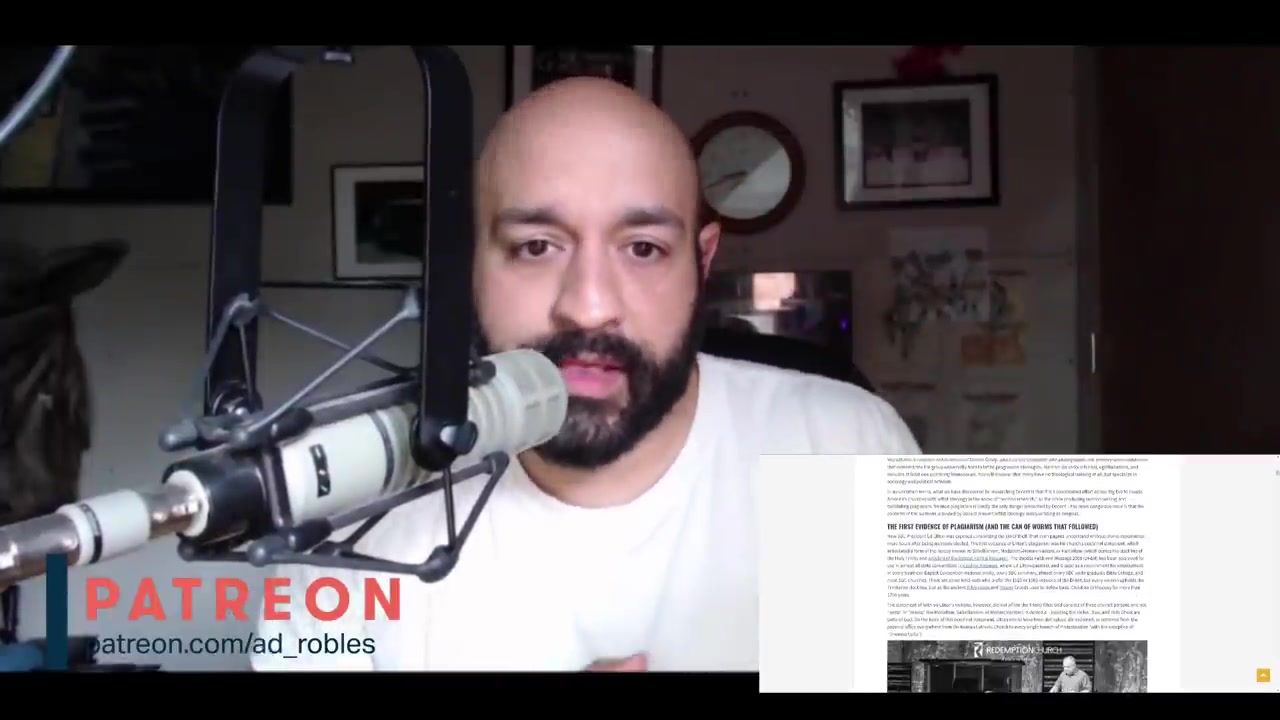
Docent: https://protestia.com/2021/07/19/docent-group-a-progressive-left-takeover-of-the-american-pulpit/
Pagan Woke Pastor: https://protestia.com/2021/07/20/ex-sbc-pastor-attacks-black-christians-who-say-im-christian-before-im-black/
You know, I don't know if it's just me, but in my opinion, the hit ratio for Protestia's
articles has been ratcheted up, in my opinion.
I don't read every Protestia article.
There's some stuff that I'm not all that interested in.
You know, there's just certain topics for certain people.
But lately, I've been very interested in many of the articles coming out of Protestia.
So I wanted to talk about, actually, two articles in particular.
In my book, Social Justice Pharisees, Woke Church Tactics, and How to Engage Them, this is an error copy.
You can see sort of the binding is an error.
I'm not going to send this one out.
You know, in baseball cards, if you have something like that happen, the card is worth a lot more.
I don't know if that's going to work the same way for my book, but in any case.
In this book, I provided a, I think it's like a two -and -a -half -page quotation of Thabiti
Anyabwile.
And the reason I did two -and -a -half pages, I dedicated to one quotation from him.
And the reason I dedicated that much space to it is because I did not think that if I tried to summarize the quotation,
that people would believe me.
Because it's that satanic.
I mean, when you read it, I've had probably, at this point, maybe 10 or 20 people reach
out to me and say, Man, I just read that Thabiti quote.
Like, wow, I had no idea how far this goes.
And the quotation is a very lengthy thing where he's, it's interesting because he's addressing it to woke white people.
Like, people that are friendly to all of his errant teaching.
Which is interesting because this is his allies that he's addressing this to.
It'd be one thing if he was addressing it to a guy like me.
I'm not Thabiti's ally.
But he's addressing it to allies, and he's saying, look, I know you want to help us.
I know you care about the things I care about.
But here's the reality.
I don't, what we need right now is not our shared identity in Christ.
I don't want you to identify with me in Christ.
What I want, what I need is for you to identify with my blackness.
You need to identify with his black skin, is what he said.
And he actually goes even further.
He says, if I have to choose, I don't, but if I did have to choose
between identity in Christ and identity with my black brothers, he chooses identity with his black
brothers.
I can't think of a more satanic teaching for a professed Christian who claims to be a pastor to
teach.
I mean, it goes against direct revelation from God.
There's a passage that I talk about in this book.
It's a very hard passage.
A lot of people don't know what to do with it.
It's where Christ says, if anyone would come after me, this is not a direct quote, but it's close.
If anyone would come after me, but does not hate his father, mother, children, even his own
life, he cannot be my disciple.
Now, obviously Christ is not telling you to overturn the law of God where it says, honor your father and mother.
So he's not saying you should treat your parents contrary to the law of God.
What he is saying though, is that your loyalty must be absolute.
Your loyalty to Christ and your identifying with Christ and his people and what he's up to,
that has to be total.
It can't be halfway.
There's no halfway crooks in the body of Christ.
It has to be a complete loyalty.
And so in comparison, your loyalty to your own flesh, your own blood,
looks like hatred.
So that's an important passage because what he's saying is it directly refutes what Thabiti is
saying.
Thabiti is not a believer.
So he's overturning what Christ would say.
Christ says, if you don't hate your father and mother, your ancestors, your tribe, you can't be my disciple.
It's just that simple.
You can't do it.
One doesn't work with the other.
Thabiti's saying, if I had to choose between my identity in Christ and my blackness, I
choose my blackness.
He's not hating his father and mother.
He's not hating his tribe.
It's the most basic, primitive way to identify.
Like, oh, look, you've got the similar skin color to me.
You kind of look like me.
We must be friends.
It's the most base level nonsense, of course.
But Thabiti has chosen that.
I mean, it's totally pagan.
It's a pagan way of looking at the world.
Now, I provided that quotation here, and I thought, you know, maybe Thabiti's, you know, I don't think he's alone in this.
But amongst, you know, Christian pastors, you know, I say Christian very loosely there, who are
known and are published and are celebrated, he's probably alone.
Because that's pretty extreme.
La Protestia reported here about Charlie Dates, who said something similar.
Now, I know that some people get upset when I do the hip -hop voice when I'm talking from a
black preacher's perspective.
So here's another voice that I'll do.
Well, I've got one idea.
It's how we've been trained.
The further in and the deeper down black preachers go into white evangelicalism, the more anti -justice and anti -black
they become.
They start saying stuff like, quote, I'm a Christian before I'm black.
So to Charlie Dates, it's a huge problem for a black Christian to say, I identify in Christ
before I identify with my skin color.
See, that's paganism.
It's not even paganism in sheep's clothing.
It's not even like veiled paganism.
It's caveman.
That's a caveman mindset, where your tribe is people who sort of look like you, and that's where your loyalty
lies.
I mean, the most base -level caveman thought that way as well.
But Christ, in his word, says that actually can't be where your loyalty lies.
It can't be with your ethnicity.
Your loyalty must be absolute, and it must be to Christ.
Again, that's not saying that you don't look out for good things for your family, right?
I'm trying to advantage my family at every turn, but I have to do it according to Christ's commands.
I can't do it contrary to Christ's commands.
I can't do it in spite of Christ's commands.
My loyalty to Christ overrides my loyalty to my family.
There's nothing wrong with me trying to treat my family well and to advantage my family, but I must do it, always
considering what my Lord, my Master, my King would have me do.
My loyalty to Christ overrides my loyalty to my family, and I don't have to choose this,
because God also commands that I love my wife and my kids and stuff like that.
That's one of Christ's commands, because he's a good King.
I don't have to choose this, but it's a very simple choice.
If it came down to my loyalty to my family or my loyalty to my God, I choose my God.
It's not a hard decision.
It's a very simple decision, because Christ said, if anyone would come after me, does not hate his father and mother, his children, his
wife, even his own life, he can't be my disciple.
I want to be Christ's disciple, and so my loyalty is absolute to Christ.
But it's interesting here.
Charlie, he identifies being anti -justice and anti -black as saying, I'm a Christian before I'm
black.
So if you're a Christian and you identify in Christ over your identify with your
blackness, then you're anti -black.
You're anti -justice.
How twisted is this world?
It's just so pagan.
This man, he has no business teaching anybody anything, because he's
basically at a caveman level.
He's thinking, well, I know Christ came, and I know he created the universe, and I know he said these
things, but I'm black, though.
So my blackness, that's what's important.
Christ is maybe alongside of that.
Maybe it's another.
God doesn't take any other gods before him, guys.
That's why that passage is so extreme.
It's like, no.
No, I'm sorry.
I won't take loyalty that's divided between me and your husband or me and your wife.
I won't take that kind of loyalty.
Your loyalty, your dedication to Christ must be total.
It must be total, or you can't be his disciple.
I don't think it's very—I'm not going out on a limb here to say that Charlie Dates can't be
Christ's disciple, and yet here he is preaching to many supposed Christians.
It's a real shame.
But anyway, so that's one article.
But really what I wanted to talk about is this article.
This is interesting.
This is part one, and according to Protestia, part two is going to contain information
about how Docent Research Group is funded.
And brothers, let me just say this.
This article is very extensive.
Look at this.
A lot of work went into this article.
I don't even want to know how many man hours went into this article.
There's screenshots.
There's Wayback Machine stuff.
There's videos.
There's audios, and it talks about a lot of the key players in Docent.
It talks about—it even has pricing.
So there's pricing structures here as far as doing the surveys and stuff like that.
I don't know if it has all the pricing, but it has some of the pricing.
Guys, let me just say this.
If you don't like Protestia, you don't like J .D. Hall and the people associated with him, well, that's just too bad.
That's too bad.
If you want to compete with J .D. Hall, go ahead and do what he's doing, and then do it in your nicer
way.
Listen, I might even like that.
I might even like that.
Who knows?
Maybe J .D. Hall is my cup of tea because he's the only one out here doing it, so I don't know
any better.
Maybe a nicer approach doing this exact kind of work would be better.
I don't know because nobody's doing it.
So if you think that he's a scourge on the church and he's just a slanderer, mocker, all this kind of stuff, if
that's what you think, okay, so then you try to compete with him.
Give us this information in the nice way you want to.
You know what?
Maybe I'll like it better.
I don't know.
I mean, I have no idea because there's nobody doing the things that he's doing.
You know what I mean?
It's just the quality here, the effort here is just unimaginable.
And Protestia guys, I know a lot of you guys, thank you for doing this.
This is important information.
This article talks about how deep the rabbit hole goes when it comes to the
docent research group.
And here is part one, everything but the funding.
That's coming in part two.
And also, if you want to see the cliff notes, there's a docent for dummies that came out as well.
But I recommend reading this entire thing.
This is just remarkable work.
It talks about how this all started, Ed Litton's plagiarism and
how Ed Litton has lied again and again, layers of lies allegedly on top of
each other to cover up the fact that he's plagiarizing people.
It talks about how that—you remember his unorthodox statement of faith that
had a Christian formal heresy in his view of God?
Apparently even that was plagiarized.
People did some searches, and apparently—allegedly this started from the Dallas Bay Church.
And it was word for word the same.
No credit was given.
Look, people use other people's churches' stuff all the time, but you give it credit, of course,
obviously.
But anyway, so it talks about all the evidence that came out after this, because obviously
once he started running cover and saying lies about what had happened, people were like, okay, let's look into this.
There's obviously—where there's smoke, there's fire.
So tons of stuff came out.
Tons of stuff came out about Ed Litton and all that.
And that's what led us to docent research group.
Right?
That's what led us to docent.
So people started saying, you know, I wonder if he really stole it from J .D. or
if they had like the same source.
It was like an extra source on the side that nobody knows what it is.
And that's where docent research groups started coming.
Oh, this one was interesting.
This was a video that Ed Litton lied—admits that he used to lie about his sermon
prep.
He used to say 24 hours of sermon, but really it's only like 10 hours of sermon.
And I got to say, if Ed Litton's spending 10 hours—I don't even believe that.
If he's spending 10 hours on a sermon and all he's doing is plagiarizing, that's pretty
lame, man.
I don't even believe that.
So anyway, so here we go.
A lot of interesting stuff here.
Talks about the articles that Big Eva had written over time about how plagiarism is so wrong
and disqualifying.
And I didn't know this.
This is very interesting.
So J .D. Greer—I knew J .D. Greer had written an article 10 years ago or so about plagiarism.
But apparently he deleted that article, you know, within the last few
days.
So he went back and he tried to clean up the article and the tweet where he shared the article because he doesn't want to
condemn Ed Litton.
So here's what happened.
So plagiarism used to be a sin, but now because it's his buddy, who's a social justice woke
warrior, now it's no longer a sin.
Or at least he doesn't want everyone to know it's a sin.
So I didn't know this.
He had deleted some of the evidence.
You know, I can't even believe that people still do this when they have public articles out there that they delete
their stuff because obviously we're going to find it.
I mean, everybody waybacks machines everything these days.
So the article's obviously still here if you want to read the article or see the tweet.
It's all still in the wayback machine and it's all contained here.
That's what I love about this article.
I mean, if you want a one -stop shop for this entire controversy, this is really good.
But then people said, oh, you know, J .D. Greer used to outsource his sermons.
Like he used to hire a docent research group to do his research for him, his sermon prep for him, and stuff like
that.
And so all of a sudden this theory that maybe they just have the same source started
gaining some traction.
But anyway, so here is—let me just pause for one moment.
I thought this was an interesting quotation.
So this quotes a few people that used to support and promote docent research group.
This one was from J .D. Greer, and he says, I've often had people remark to me, how many hours did you spend on that
sermon?
Where did you get time to do all that research?
Ha, thanks guys for making me look good.
So he's very happy that it appears to people on the outside that he's doing a lot of hard work,
but really he isn't.
He's just outsourcing it to docents.
So he's promoting it because you guys are going to look like you're smart too and all that kind of thing.
I've often wondered about J .D. Greer because he doesn't appear to be that intelligent, but his sermons are pretty engaging and
interesting, so I always wondered about that.
So obviously he's not doing any of the work.
The other one that I found was interesting was Mark Driscoll.
Mark Driscoll was apparently a user of docent research group.
Maybe he still is.
Nobody really knows.
But here's what his quotation says.
Docent has been invaluable to me.
I think I've had them do nearly everything but cut my grass.
They've saved me hundreds of hours of work and multiplied my effectiveness.
I have recommended them to lots of friends because any ministry that serves leaders who serve God's people is a great
gift.
So he's very excited about how much time he saves and how the docent does everything for him
except presents the information.
So basically Mark Driscoll is saying, I'm basically an actor.
I'm an actor and that kind of thing.
So then we have Tim Keller endorsing docent.
We watched this video before.
It basically says that ministry is too hard these days, and so now you need docent.
Back in the old days it was a lot easier, but now it's too hard.
You need to study sociology and stuff like that, and that's why docent is great because there are
sociologists and blah, blah, blah, blah, blah.
So again, I can't do this article justice.
This is just a couple of snippets that I found interesting.
It also goes into this is the people that work for docent and write for docent, and it
basically makes the case that these guys are just super progressive, super liberal.
There's not a conservative among them, and, of course, they are writing things and reading books and
doing the book studies and giving you sociological insights according, of course, to pagan
sources because that's what liberals do, and so it's just very interesting that, of course, the drumbeat is the
same.
They're all buying the same liberal information from docent research group.
Matt Chandler's doing it, all that kind of stuff.
Let's forward a little bit because there's a few.
Lots of screenshots promoting liberal causes, LGBT, soft on abortion, Black Lives Matter, the
whole thing.
All right, so let's continue.
This is a homosexual here.
He was a writer for docent.
So Caleb Murphy, a homosexual, gay advocate, faithfully LGBT, claims to be
a Christian and also gay.
He may have been writing your sermon's pastor's sermons for him.
So there you go.
All right, another thing that this article talks about is there's a lot of women here
as well that are working for docent research group, which is interesting because a lot of these
complimentarians, these fake complimentarians, at least they say, well, women can't preach, but is it really that
much of a difference if a woman is writing your sermon for you and you just happen to preach it?
And it's interesting because the effeminacy of the woman who wrote your sermon comes out very often.
A lot of these pastors, they have a very effeminate style about them and all of that.
They don't preach the way that George Whitefield preached.
They don't preach the way that Spurgeon preached.
They preach like women.
And a lot of people have noticed that.
And this is not a knock on women because women are caring.
They're nurturing.
My son, when he gets hurt, very rarely wants to come to daddy.
He wants to go to mommy because he knows that mommy's going to comfort him and stuff like that.
And daddy's a little bit, you know, he'll comfort him, but he'll also tell him to, you know, dry your eyes.
It's time, you know, like that kind of thing.
Like women are different.
You know, God made women a certain way.
And that way is not akin to, it's not, it's not good.
It's not effective.
It's not the way people are supposed to preach.
We've often noticed, you know, a lot of these big Eva guys are very effeminate and it makes sense.
I mean, women are writing their sermons for them.
So there's that as well.
All right.
Let's go.
I wanted to find one thing that I thought was interesting.
Here it is.
So this one was super interesting to me because one of the things that, I talk about
conspiracy theories a lot and all of that.
And one of the criticisms often that I get about conspiracy theories, and this is actually
something that Doug Wilson also criticizes about conspiracy theories.
And I think he's wrong about this.
Okay.
This is the second time I think maybe that I've disagreed with Doug Wilson publicly.
So we'll see how this one goes.
The first one went really well.
That was the church closing thing.
I think I beat him on that one.
So it was like, at 81, Doug Wilson, 365, or whatever it is.
Let's try another one.
Because he wrote an article about conspiracy theories.
And in it, essentially one of the cases is that it almost assigns too much
power to the enemies.
It assigns too much power to the government or too much power to NASA or whatever
it is.
Whatever the conspiracy theory is about, it's almost assigning godlike powers.
They know everything.
They can do everything.
They're just competent to the nth degree.
They make no mistakes.
They cover their tracks perfectly.
And actually, I disagree with that.
I really do.
Because I actually don't think that most of these conspiracy theories rely on
someone being very able to cover their tracks.
In fact, I think that most of these powers that be are actually pretty sloppy when you think about it.
I'll give you an example.
I was listening to a bond trader talk about the Federal Reserve.
And the case that he was making was that when you say that the Federal Reserve has all this power over bond rates and
things like that and the economy, that you're assigning it almost a godlike power.
And he doesn't think that they're that competent.
And actually, I don't think they're that competent either.
In fact, I don't even think that they're doing a good job.
I think it's totally out of control, and the Federal Reserve is flailing here.
They're trying anything.
They're trying this.
It's not working.
They're trying that.
They're failures, right?
And they're very sloppy.
The thing is when things are going great and everything's fine and you don't notice how
sloppy they've been because things are going okay.
Things are just kind of plugging along.
There's no reason to look under the hood of anything.
It's like, okay, great.
I mean, things are going good.
They were making these mistakes all along, but because things were good, you didn't notice them.
I question a lot of what I hear from NASA, a lot of CGI.
Let's put it that way with a lot of the stuff they give us, a lot of fake colors and stuff like that.
I remember the video I did where I pointed to Pluto and I said, this is fake.
And it's a picture of Pluto that's like red and blue and gray or whatever.
And I said, that's fake.
And, of course, it is fake.
I mean the colors really aren't red and blue, but they just added it to make it look cool.
There's pictures of the earth that aren't real either.
They just adjust it to adjust to your expectations with CGI.
And people are like, well, so a lot of people will say, well, so AD, what are you saying?
Like how are they able to pull the wool over your eyes?
Well, I mean if you're not really thinking about are they faking the Pluto picture, like why would you even question
it?
You're not looking under the hood.
So the mistakes that they're making, like I can point out, hey, see that cloud formation?
It's the same cloud formation four times in a row.
It's obviously a fake picture.
But if you're not even suspicious of it, you're not going to look for it.
And so that's what I think happens a lot of the time.
And with Docent, it's the same kind of thing.
Like here's a quotation from Jared Wilson, who was a Docent
author, writer, or whatever.
He used to write stuff for Docent.
And he actually makes an interesting admission here because Docent claims
that they don't do exegesis.
In fact, one of their sales pitches is that you can focus on your exegesis.
We'll give you all the sociological studies, the illustrations.
We'll do that work.
But you do the hard work of exegesis because, after all, that's what a pastor is supposed to be doing.
He's supposed to be interpreting the Word of God and presenting it to his flock.
The Bible says you preach the Word of God.
You give the sense of it.
That's the work of a preacher, right?
So here is Doug Wilson making an interesting—or not Doug Wilson, Jared Wilson making an
interesting admission.
And, again, this is sloppy, right?
This is very sloppy.
But there's no reason to catch this if you're not thinking about it.
Here's what Jared said at one point.
He said,
Okay, so what's the big deal there, A .D.?
Well, what it says is that he found this interesting because they didn't want
exegesis.
They didn't want references.
All they wanted were illustrations.
And he found that unusual.
Which means that Docent Research Group does do exegesis.
It does interpret the Bible for you.
You have people with great sociology degrees, very liberal, even women, interpreting the Bible
for your pastor who can then take their interpretations and pass them off as their own interpretations
so that they look good.
You see, this is sloppy.
Jared admitted this, and he had no reason not to.
But, from what I understand, you have to sign NDA, so I wonder if this was compliant with that.
We'll see.
But, apparently, they do do exegesis.
They do do the work of a pastor.
It's not just a little help here, a little help there.
They also will interpret the Bible for you.
So if your pastor's not interpreting the Bible for himself, what is he doing?
That's the question.
What is he doing?
This is a fascinating article.
I have to say that my suspicions about the leftward drift of
the church in the United States being an intentional thing, they're just
even more founded now that this company exists.
Obviously, pushing progressive narratives.
Obviously, this company should not exist, and I cannot wait to see who funds this company.
There's just so many possibilities here, and I'm just looking forward to it.
But, to be honest, if I was in one of these sort of like Big Eva -ish type churches where you know they've
got connections to like Acts 29, what's the other one?
There's a few groups, like Nine Marks.
If you go to a church with maybe a no -name pastor, but he's connected to some of these guys,
Gospel Coalition, New England, whatever it is, I honestly would ask my pastor, do you use
Docent Research Group or a company like it?
Because if you go to a church where your pastor is not doing the work of a pastor, then you need to get out of there.
That's a fake church.
I mean, it's just that simple.
You've got to get out of there.
But anyway, thanks to Protestia for doing this article.
I really appreciate it.
I hope you found this video helpful.
God bless.