Keep sharing good news without ads.
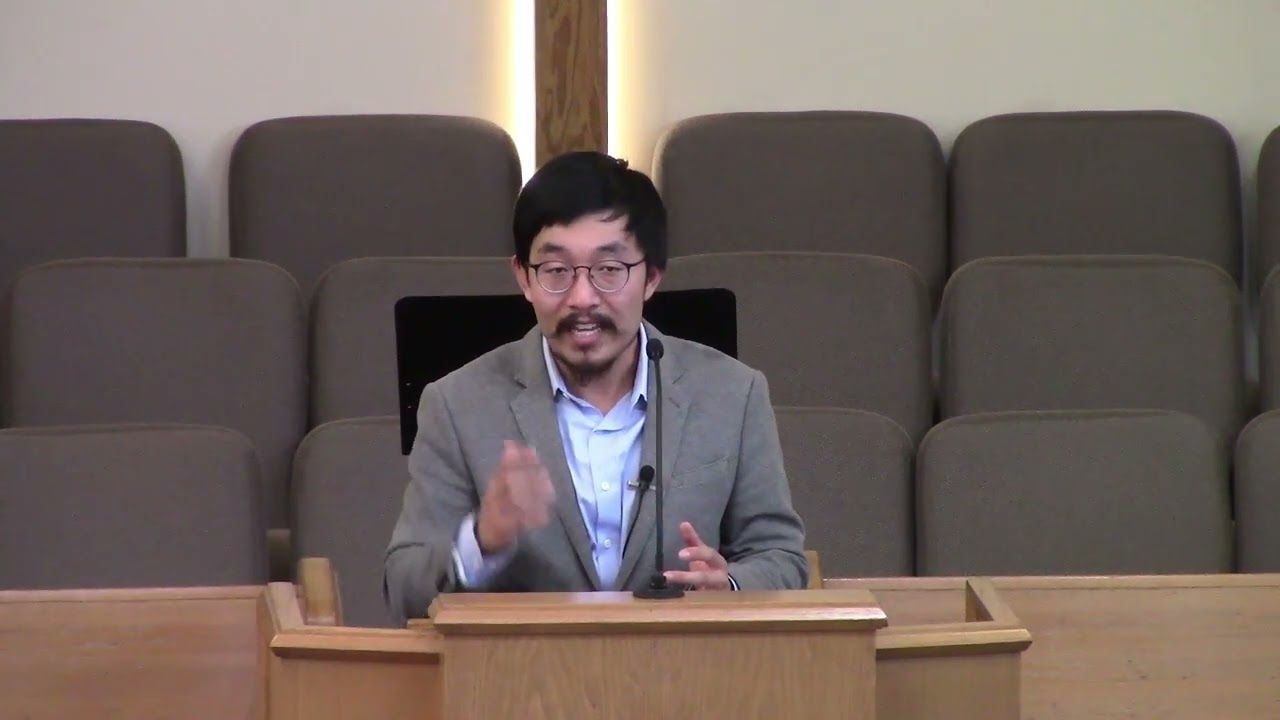
February 19, 2023 - Sunday Morning Service Faith Bible Church - Sacramento, CA Message "The Cost of Rejection" Luke 4:14-30
Well, good morning everyone and welcome to Faith Bible Church. It's a beautiful day outside. The spring is coming, isn't it? I found me in the yard yesterday, and some of you maybe if you have yard to get into, you've got to get out there and have some fun.
The room's comfortable now, but we turned the boiler off. Our gas bill is many times over what it was a year ago, and last month it was $1 ,300, and we just can't afford that as a church, and so we turned it off.
We have one unit that's electric that's in the back that heat pump, and we've got it going, and I think it's comfortable in here right now. So we're just going to kind of skate into the summer, spring, summer, trying to keep that boiler off.
Announcements, a prayer meeting tonight at six. The biblical counseling training is in March 11, 11 o 'clock that day. Everyone's welcome, and if you have other people, other friends or family or whomever that you think might benefit from this, I think it would be a great time of getting into the Word and specific to counseling.
There's such a tremendous need in our society today, and I think we know a lot of it is the lack of being grounded in the Word, and so that's a really core part of this is just going through what the Scripture says and then assigning that to relationships and roles and what people or folks are going through.
So anyway, that's March 11, so spread the Word, and it'll be on the website. It's going to have a link to that just to announce it as well, so be looking for that. You know, when we come to worship the Lord and corporately and whenever we worship the Lord, there has to be an essence of having a whole heart, that if it's really a heart worship is what it is because it begins in our heart.
It's not an external thing. It's not something that we get ourselves worked up with, with things that are around us, but it's in our own heart and our quiet time that we can approach God, and we have to do that with having confessed our sins.
We have to be right before the Lord because if we walk in darkness, we can't walk in darkness before a God of light, and so we have to confess that sin so that our relationship with the Lord is right and we can worship Him fully with a whole heart.
So as we go before the Lord this morning and as we lift our voices in song and hear God's Word shared with us, just have that mindset of knowing that we are serving a holy God, a God that is worthy of every ounce of what we can give Him in the celebration of our praise to Him.
So would you join with me in prayer? Lord God, we thank you that you have brought us here today, Father. We pray that our offerings of praise would please you, would be a sweet aroma, Lord, to you, that we might with one another encourage one another, that we might edify the saints, Lord, that there might be an awareness that you are supreme and Lord over all, and that we in our own personal lives can grow in faith and understanding, Lord.
God, we pray for those that aren't here today. We pray for the Arnettes and others that are not feeling well, Father, that you would comfort them, that you would have your hand of healing on them, that they would know that you are present, Father, and some are infirmed and cannot get out, Father, and that it may be a time of when the walls seem to be closing in, Father, but if they look up and they pray, Lord, we pray that you would help them to see you, that you would encourage them, Father, in their walk and in their quiet times with you, Father.
So, God, we come to you today humbly and with grateful hearts that you might lead us by way of the Holy Spirit, Lord, that we would grow in our faith, that we would give praises to you in all that we do, Father.
We commit our service to your care. In Jesus' name we pray, amen. Well, for this morning's scripture reading, we're going to be reading from Isaiah chapter 61. So, if you'd like to take your Bibles, Isaiah chapter 61, we're going to be reading verses one through seven.
My Bible has the heading of good news of salvation. Much of Isaiah's foretelling of Christ coming and who Christ is. So, Isaiah 61, verses one through seven. The Spirit of the Lord is upon me because the Lord has anointed me to preach good tidings to the poor.
He has sent me to heal the brokenhearted, to proclaim liberty to the captives and the opening of the prison to those who are bound, to proclaim the acceptable year of the Lord and the day of vengeance of our God, to comfort all who mourn, to console those who mourn in Zion, to give them beauty for ashes, the oil of joy for mourning, the garment of praise for the spirit of heaviness, that they may be called trees of righteousness, the planting of the Lord, that he may be glorified.
And they shall rebuild the old ruins, they shall raise up the former desolations, and they shall repair the ruined cities, the desolations of many generations. Strangers shall stand and feed your flocks, and the sons of the foreigner shall be your plowmen and your vine dressers.
But you shall be named the priests of the Lord. They shall call you the servants of our God. You shall eat the riches of the Gentiles, and in their glory you shall boast. Instead of your shame, you shall have double honor.
And instead of confusion, they shall rejoice in their portion. Therefore, in their land, they shall possess double. Everlasting joy shall be theirs.
May God bless the hearing of that, of his word. And all God's people said, amen. Please turn with.
Me to Luke chapter four. Luke chapter four, verses 14 through 30. Luke chapter four, verses 14 through 30. Then Jesus returned in the power of the Spirit to Galilee, and news of him went out through all the surrounding region.
And he taught in their synagogues, being glorified by all. So, he came to Nazareth, where he had been brought up, and as his custom was, he went into the synagogue on the Sabbath day and stood up to read.
And he was handed the book of the prophet Isaiah, and when he had opened the book, he found the place there where it was written, the Spirit of the Lord is upon me, because he has anointed me to preach the gospel to the poor.
He has sent me to heal the brokenhearted, to proclaim liberty to the captives, and recovery of sight to the blind, to set at liberty those who are oppressed, to proclaim the acceptable year of the Lord.
Then he closed the book and gave it back to the attendant and sat down. And the eyes of all who were in the synagogue were fixed on him. And he began to say to them, Today this scripture is fulfilled in your hearing.
So, all bore witness to him and marveled at the gracious words which proceeded out of his mouth. And they said, Is this not Joseph's son? He said to them, You will surely say this proverb to me, Physician, heal yourself.
Whatever we have heard done in Capernaum, do also here in your country. Then he said, Assuredly, I say to you, no prophet is accepted in his own country. But I tell you truly, many widows were in Israel in the days of Elijah, when the heaven was shut up three years and six months, and there was a great famine throughout all the land.
But to none of them was Elijah sent, except to Zarephath in the region of Sidon, to a woman who was a widow. And many lepers were in Israel in the time of Elijah the prophet, and none of them was cleansed except Naaman the Syrian.
So, all those in synagogue, when they heard these things, were filled with wrath, and rose up and thrust him out of the city. And they led him to the brow of the hill on which their city was built, that they might throw him down over the cliff.
Then passing through the midst of them, he went his way. This is the word of the Lord. Let us pray. Father, we are thankful that you have graciously shown us that Jesus is the fulfillment of the Old Testament promises.
Thank you that you have shown us so that we may believe. Father, we pray that you would help us to receive Christ just as he testifies about himself, not by what we think Christ ought to be. Father, we pray for those who are in Turkey and Syria who are suffering from the after effects of the earthquake, that you would provide for all of their needs, and also that this would be an opportunity for your church to serve and minister, that they may give not only physically but also spiritually, that you would give them the hope of the gospel that Jesus Christ died for their sin so that they may truly live.
Father, we pray that people who are hurting in Turkey and Syria would hear the gospel and believe in Jesus' name. Amen. Today's text comes after a series of testimonies about Jesus, and it still connects to chapter three, the baptism of Christ.
When the spirit of the Lord landed on Christ like a dove and the father testified about who Jesus is as the beloved son whom he is very much pleased, and today after the temptation which Jesus suffered in place of his people, and he actually succeeded and didn't fall into it like Israel and Adam and Eve, we see how Jesus testifies about himself.
Jesus testifies not by coming up with his own concepts and his own words, but by quoting scripture. Jesus testifies himself as the fulfillment of Israel's restoration, not just Israel, almost a global restoration in the context of Isaiah 61.
However, we do see the unfortunate reaction of the people of Nazareth who do not believe what Jesus has testified about himself. And so the main point this morning is that the cost of rejection of Jesus as the fulfillment of God's promised restoration is the removal of God's blessing.
The cost of rejection of Jesus as the fulfillment of God's promised restoration is the removal of God's blessing. And this point is all too important for us this morning because we live in a country in which there hasn't been this much spiritual resource and spiritual education in terms of Christian education than in any other history.
By the click of your computer mouse or a tap on your smartphone, you can access every translation of the Bible possible in existence. Not only that, you have access to commentaries of not only the modern theologians, but commentaries going all the way back to the early church fathers like John Chrysostom.
Yet, we live in a country that has rejected who Christ is. And I'm not saying an outright cursing of who Christ is. That's pretty rare still to this day. But rejection of who Christ is as Christ testifies about himself.
And to those group of people, only the removal of God's blessing remains. Some of you might know this, but some of the most outstanding, most well-known universities in this country were first established to train up pastors.
Harvard's main goal was to train up pastors. That's why their motto is veritas, truth. But they abandoned the gospel of Jesus Christ, abandoned how Jesus revealed himself, and started studying scripture as if it were fiction.
And God's blessing has left that institution. And people from Harvard left. The faithful ones left. They went and established a new institution, Yale. And the same story repeats. Then we get to Princeton.
And in the 1900s, Princeton separated and Westminster came about, a Presbyterian seminary. Now, there's a question mark over how that will go about. Will they hold on to the true gospel until the end?
And that's really important because the moment we lose the true gospel of Jesus Christ who died and rose for our sin, God's blessing leaves. And I'm not saying that the seminary closes down. Sometimes it's the case.
What's worse is that the seminary or universities stay open and they propagate false teaching about Christ. And that's the case for the Ivy Leagues today. They have lost the truth by rejecting Christ.
And they have made fools of themselves because they can't really define who men and women are anymore. And I would not want to stand before Christ on the judgment day as one of their faculty. So, the first point of this section is that filled with the Spirit, Jesus reveals himself as the fulfillment of the promised restoration of Israel.
Filled with the Spirit, Jesus reveals himself as the fulfillment of the promised restoration of Israel. Similar to the last section, Jesus' ministry is Spirit-led. Then Jesus returned in the power of the Spirit to Galilee and news of him went out through all the surrounding region.
The first two verses serve as the summary of Jesus' teaching ministry, his early ministry. And it is quite successful. The Galilean region was the northern region of Jerusalem. And Jesus' ministry mainly takes place around that region until he heads to Jerusalem to be crucified for our sin.
Now, it is important to note the role of the Holy Spirit in Jesus' ministry. From the beginning to the end, Jesus is filled with the Holy Spirit and is equipped by him to teach. Jesus did not lean on his own understanding.
He was not following his heart. He was following the Holy Spirit. And just as Jesus was led into the wilderness to be tempted by Satan and conquer, to win, to live the life of righteousness that all fail to live, so too this week Jesus is led and filled by the Spirit to teach, to reveal Scripture and the promises of the Old Testament to the people of God.
And as verse 15 confirms, Jesus' ministry was widely accepted initially. And he taught in their synagogues, being glorified by all. Jesus' teaching was so powerful that he was glorified by all. And this is an odd choice of word in this text because usually only God is glorified.
Luke is here hinting something. That word is reserved for God, but here it's shown in the object of glorification is Christ. Now, this is not to say that the crowd immediately knew Jesus' divinity, but rather that Jesus' Spirit-filled ministry was so impactful that he was praised at that magnitude wherever he went.
So there was something unique about Jesus that no other teachers and scribes could even come close to. He was not just another teacher even in his early ministry. Now, briefly we need to go over the significance of synagogues because nowhere in the Old Testament will we see a single synagogue.
So the locus of worship in the Old Testament was the temple, of course, after it was built, after the tabernacle. Now, however, during the Babylonian exile, it became impossible to worship the Lord in the temple.
First, the temple was destroyed. Second, people were exiled. They were nowhere close to Jerusalem. And because of that, in order to fulfill the need of God's people learning of God, they created something called synagogues.
A rather small group of people, at least 10 men, would gather and they would read God's Word together and some of them, qualified men, would teach, exposit what Scripture is trying to say and how that needs to be applied in their lives.
Now, traditionally, they would read the Shema. That's the portion from Deuteronomy 6, 4 through 9. The Lord, O Israel, the Lord is one. It starts with that right here, O Israel. And that's the part where it says that they need to obey God and also to love Him with all their heart, mind, soul, and strength.
That's the Shema. They would read that. They would memorize it. They would say it out loud as a reminder for their loyalty. Then they would read from a portion of the law, the first five books of the Old Testament.
And then they would read from the prophets. And we, Carol and I, we had a conversation earlier. No, at no time would they be read from Apocrypha. They did not consider that as Scripture and they still don't.
Then the teachings on these passages would follow. So someone would be there and explain to them what they just read and how that applies. And finally, it would end with the benediction, presumably Aaron's benediction.
And we will see a glimpse of this teaching in Christ in the following verses. Now, after introducing the popular beginning of Jesus' ministry, Luke zooms into an intense instance in Jesus' early teaching ministry.
Verses 16 through 17 give us the setting. Verse 16 tells us that it was in a synagogue in Nazareth where Jesus grew up. And Nazareth is on the west side of the region of Galilee. And verse 17 tells us Jesus started teaching from the book of Isaiah.
And he was handed the book of the prophet Isaiah. And when he had opened the book, he found the place where it was written. Now, the fact that Jesus was handed a scroll to teach from shows us that Jesus was a qualified man to teach from Scripture.
There was no doubt in anyone's mind that he had the right qualifications to teach Scripture. So even in Nazareth, people viewed Jesus pretty highly. Not everyone could teach from Scripture. Not only that, the fact that Jesus opened up and he had to find the place shows that Jesus chose where he was going to teach from.
Right? There was not a teaching rotation that he was following, but he intentionally chose to teach from the portion of Isaiah text that we read today. He didn't, he wasn't forced to teach from it. He chose to teach from it.
So it was a, Jesus revealed something about himself by choice. It's not that, oh, oh, I just happened to read this. Guess what? This is fulfilled today. But he chose to reveal it that day. And verses 18 through 19 is a quotation from both Isaiah 61 and 58.
Now Luke combines them together because Jesus probably thought through the whole section. And of course, Luke just gives us a brief summary of that, right? Luke wants to make a theological emphasis on what Jesus taught because he's showing how Jesus fulfills that.
And it would have been quite expensive to write out a couple of chapters of Isaiah in Luke's scroll. So he just gives us a brief summary of what he wants to show us as to how Jesus fulfilled the Isaiah text.
The spirit of the Lord is upon me because he has anointed me to preach the gospel to the poor. He has sent me to heal the brokenhearted, to proclaim liberty to the captives and recovery of sight to the blind, to set at liberty those who are oppressed, to proclaim the acceptable year of the Lord.
Now, first, it is important to not read the modern sociological and political agenda into scripture. That is never okay with any scripture. We cannot read with the modern eyes and lens. We don't get to import our baggage into an ancient text.
We wouldn't do that with any other text. In fact, we wouldn't do that with emails, right? If you email me and I misunderstand because I brought my own baggage into it, that is not the email sender's fault and that's my fault for reading it incorrectly.
Yet, people feel justified doing so with God's Word today. So let's go over this. When Luke first wrote this, the context of this text is not about a change in the governmental system or a social structure, but Jesus' work in restoration of God's people completely.
The poor hear the gospel, the captives are set free, not from the endeavors of political regimes, but through Christ's redemptive work. Second, this text is more than just a physical restoration. Socialists and liberation theologians believe that the powerful must be brought down and their power slash wealth have to be redistributed to the poor via political, economic, and even social means.
It's purely a physical phenomenon. However, Isaiah's text is more than just physical, but spiritual as well. Christ's restoration here is the picture of a comprehensive restoration, extending both physical and the spiritual realm.
Third, as we will unpack this, the freedom, liberty in this case, at the core is freedom from sin, and we'll get there. So the fact that the context is it is Christ's job to restore, not our job. It's Christ's job to make it right, not any governmental reforms.
Show us that we have no business importing any social agenda into the Isaiah's text or also Luke's text. That's not how the ancient audience would have perceived that. It would have gone right over their heads, and anything that the original audience would not grasp would be the wrong interpretation of the text because the author did not mean it to be read that way.
Now, Isaiah 61 starts with the work of the Spirit of the Lord. He has chosen Jesus. He has anointed Jesus. That is a messianic term, right? The Messiah means the anointed one, the chosen one. And this is affirmed from our previous verses, the Spirit at Jesus' baptism, and the Spirit who guided Jesus into the wilderness to be tempted, and the Spirit, the same Spirit who is teaching, who has empowered Jesus to teach Scripture.
And in the context of Isaiah, chapter 61 unfolds God's eschatological restoration through the Messiah, God's final restoration, God's restoration in the last days through the Messiah. And it's the Messiah who bears the Spirit, not a political system.
Now, the first role of the Messiah is to preach the good news to the poor. Now, this is not to say the gospel is only to the poor because Luke shows in Luke 19, I believe, that rich man Zacchaeus, a tax collector, he enters the kingdom of God upon encountering Jesus.
He truly repents. And Jesus confirms that. Yet he's a rich man. And this is not to say that an economic restructuring is required either. Jesus teaches in Luke 6, 23 about rewards in heaven due to the suffering and persecution that his people will face.
It's not about rewards now. So, what it's saying here is how the poor people are portrayed is that the physical poverty illustrates the spiritual hunger of those who call upon Christ. And this is a great illustration because the poor are those who cry out to God because they have nothing else to depend on.
They have nothing. They own nothing else to fall back on. It is the poor that they appreciate the good news preached to them because that's something that's good that they didn't have before. Their impoverished situation helped them to be aware of their immediate need for spiritual redemption in Christ.
And again, not to say that there are no unbelieving poor people. There are. But their physical situation prompts them, almost prepares them to know that they need help, that they need someone to rescue them.
Now, next, for some of our translations, the sentence, he has sent me to heal the brokenhearted is missing. That is from Isaiah 61. Isaiah 61 has that. However, some translations of Luke 4 has that missing.
And that's because the oldest manuscripts that we have do not have that sentence. And King James, the King James Version, which also is followed by New King James Version, they didn't have access to these older manuscripts.
Therefore, some translations have opted to take that out. So that's the explanation for that. However, whether it's there or not, the message is still clear. The Messiah has come to restore comprehensively, completely, his people who are hurting.
The message is still not lost with whichever manuscript you look into. Now, the next role of the Messiah is to proclaim liberty to the captives. Again, the temptation here is for the modern reader to read our current context whenever we think about captives.
So, some of us might be thinking, oh yes, prison reform. Right? Yes, free the captives. Free the prisoners. However, it's important for us to consider how ancient Jewish listeners would have understood the term captives.
Well, in the Old Testament context, the captives were none other than the exiled Jews to the Babylonian captivity or elsewhere. Remember, in the Old Testament, the land, the promised land was significant because it was the physical representation of God's blessing and their covenantal relationship with Israel.
If Israel obeyed, they would stay in the abundant land overflowing with milk and honey. No need to worry about any scarcity because God has blessed them because they have remained faithful to God. Now, however, if they sinned, they rebelled against God, they committed idolatry against God, which did happen.
God actually tells them, the land will vomit you out, right? This figurative language is that you will be kicked out. That would be the ultimate form of judgment, which means those who have been judged by God for their sin are those who are taken captive by the Babylonians or Assyrians.
Their captivity was the judgment for their sin. It's not captivity for running the speed limit. It's not captivity for drunk driving. It's not that. Captivity in this context of Isaiah and Luke is the exiled Jews for their sin.
Now, this part is what I mean that it shows the spiritual context of Isaiah 61. God's people are in dire need of redemption from their sin. They need to be rescued from the judgment of their sin. The fact that Israel is dispersed is a sign of their spiritual depravity.
Now, Christ precisely takes on the role to proclaim the freedom to those people to announce that their judgments are over. God has not forgotten about his people. He will bring them back even at such a high cost.
That's what it means to proclaim liberty to the captives. It's not just a physical sense. It's deeply rooted in the spiritual redemptive sense. Next, the recovery of sight to the blind. This one is also both physical and spiritual as well.
Jesus does recover, heal blind people. But, there's also this theme of light and darkness running through Luke. Luke 1, 77 through 80, there's this light that's coming. In the spiritual sense, Jesus is the light bearer, the one who gives spiritual sight to those who have been trapped in darkness, to those who have not been able to see God's truth.
Lastly, Jesus proclaims liberty to the oppressed. This is from Isaiah 58, 6. What's really important when we read the Old Testament quotation in the New Testament is that the New Testament authors did not just cherry pick whatever verse that they thought was appropriate out of context.
That would be spiritual abuse. They considered the context of the Old Testament passage and picked the verse that summarizes it really well. So, in the context of Isaiah 58, it's first a rebuke for Israel's sin.
Verse 1, cry aloud, spare not, lift up your voice like a trumpet, tell my people their transgression, their rebellion, and the house of Jacob, their sins. Right? Again, this is a spiritual context. Liberty here is not mainly physical, but spiritual.
What God is disgusted by is the external expression of worship at the failure to do the internal, pure worship. What God is disgusted by is their failure to show justice to the oppressed. The type of worship that God desires is not all the fasting and voluntary inflictions of hardship.
Oh, look, this is so hard. I'm so spiritually mature. Oh, look, I haven't eaten in many days. I'm so close to God. That's not what God was looking for. But the type of fast that God desired from Israel was righteous treatment of the lowest among them, the righteous treatment of those who are often forgotten in society.
And it is in this context to let the oppressed go free. Do what is right, oh God's people. And for Jesus to proclaim that, he's saying at the start of Jesus' ministry, this will be true. Justice will come to those who are forgotten and oppressed.
And then it ends with a note of the Jubilee to proclaim the acceptable year of the Lord. Acceptable here means favorable. It is God's grace. It's given freely. The coming of Christ signifies the release of the enslaved.
The coming of Christ signifies the release of those who are in debt, like in Jubilee in Leviticus 25. God has started this new age of salvation and forgiveness from sin. And God has started the process of total restoration of his people.
If you can imagine a giant set of dominoes all set up around the room, filling the room, that first domino has been pressed when Jesus had entered. And it's unstoppable. Now after reading such a magnificent text from Isaiah, Jesus closes the scroll and sits down to expound.
Verse 21, today the scripture is fulfilled in your hearing. This does not mean everything that was said has happened now. It's done now. That was the full restoration. But rather today marks the time in history in which God's complete restoration has started.
It's a marker in history in which you can't go back anymore. It's irreversible. It's unchangeable. Jesus is saying upon the coming of Christ, God has already started his redemptive plan. And Jesus marks the new era in human history because he brings about God's salvation and restoration to the world.
In one sense, even the secular world has to believe that the coming of Christ is a marker in human history by every calendar they buy and they follow. It is not arbitrary that we live in 2023. It's the coming of Christ that marks that.
The change from BC to AD is because of Christ. There's no other more important marker in human history than the coming of Christ. Now, while the prophet Isaiah proclaimed the same message, right? It's a quotation from Isaiah 61, a brief summary.
He had no power to accomplish any of this. The prophet Isaiah had no power to restore everything. He was just a messenger. He was just a mouthpiece. Yet we see here the fact that Jesus is proclaiming today this scripture has been fulfilled means that he's more than a prophet.
And according to John the Baptist, he is the mightier one who's to come. Jesus not only proclaims God's message, which he has because he's read that in the synagogue, but he fulfills it. He accomplishes it.
He takes it to God's intended end. And how does Jesus manage to carry God's promise of to fulfillment of this physical and spiritual restoration? Now, all the prophets who came before Christ pointed to Jesus who will restore God's people from their rebellion at the core of all the pain, all the suffering, all the rebellion, all the judgments.
The core problem is sin. It is because of Adam and Eve's sin that we wake up with pain in our body. It was not meant to be. And it is because of sinfulness of human hearts that there's war, that there's gossip, that there's broken relationships.
And for Christ to restore completely both the physical and spiritual, his restoration comes at his destruction. In order for the sinners to be reconciled and restored back to God, Jesus had to take their place and face the punishment that we deserved.
And that's really important because God can't, by fiat, just say, oh yeah, don't worry about it. The moment he does that, then he goes against his character of justice. We wouldn't want a human judge to just say, oh yeah, you're a murderer, but just don't worry about that.
We would not stand it. How much more so is God's standard of justice higher? And for God, for God to restore this fallen, sinful, rebellious world, he himself had to enter the world and take on the place of the sinners and face the punishment that they deserved so that they could be restored completely.
And for those of you who trust in Christ, that he died for your sin and he rose on the third day, you do have the hope of not just spiritual restoration, not just forgiveness of sin, but eventual physical restoration.
The world wants to deny the reality of the physical restoration to come. At most, they can slow it down with billion dollar industries of makeup and surgeries. But for Christians, your back pain has an expiration date.
Your diseases will end. You have a day of restoration in which your body will feel better than it has ever felt before. Even in your twenties, your body, your body will have physical restoration. And this comes because you're at first spiritually restored through Christ's death on the cross.
The hope of our restoration and reconciliation with God rests upon Christ's death and resurrection. And that's what Christ proclaimed about himself through Isaiah's text. Now, how does the audience respond?
It is a great news to hear that. Finally, we've been waiting for you. Finally, we've been under Roman oppression. Finally, I don't have to worry about this desire to sin anymore. No, when the audience rejects Jesus, they will miss out on God's redemption.
When the audience rejects Jesus, they will miss out on God's redemptive blessing. In verse 22, we see the audience's first reaction, and it's a mixed review. So, all bore witness to him and marveled at the gracious words that came, which proceeded out of his mouth.
Now, first, they are in awe because of Jesus' extraordinary teaching. After all, Jesus taught with the divine authority, unlike every other scribes and teachers. Yet, they remain skeptical. And they said, is this not Joseph's son?
What does this mean? Now, the crowd was thoroughly impressed by Jesus' teaching ability. Yet, they could not understand how Jesus could bring about this reality revealed in Isaiah 61. Their amazement is not Jesus' messianic claim that he's the Messiah who came to restore the world, but rather the delivery of the messianic claim.
It's how he said it, not what he said that they're amazed by. That was a good speech, but can you actually do anything about that? They enjoyed the TED talk. It was entertaining, but they don't quite buy it.
This happens all the time. You listen to a lecture, and it's really good. But, you know, I don't really believe that, so I'm not going to change my life around that. I like the idea of eating healthy, more vegetables, but, you know, I remain skeptical if I don't change anything about that.
That's their response. And knowing their heart, Jesus replies with the proverb, you will surely say this proverb to me, physician, heal yourself. Whatever we have heard done in Capernaum, do also here in your country.
This proverb basically means prove your words with your action. Yeah, if you are this great Messiah that you claim to be, do it. Prove what you have professed. And Jesus knows that the crowd doesn't really believe that.
They're just fascinated by the talk. They really don't think he will walk. Now, instead of rebuking them for their unbelief, Jesus uses historical analogies to show them what would lead from their unbelief.
What consequences would naturally occur by rejecting Jesus' claim? And, you know, sometimes illustrations are more effective than straightforward words. Oh, yeah, you will be judged if you reject me. Here, showing the logical consequences of rejecting Christ is more effective than just telling.
He's showing it. He's painting a picture. From verses 24 to 27, Jesus brings up two Old Testament prophets, Elijah and Elisha, his successor, to make his main point. First, verse 24 states the main point.
Assuredly, I say to you, no prophet is accepted in his own country. There's a wordplay here. Although Jesus proclaimed the acceptable year of the Lord, just a couple of verses before, at his coming, the crowd did not accept him.
The crowd did not find Jesus as acceptable. And verses 25 to 27 illustrate that point. As Jesus is rejected in his hometown, Elijah and Elisha, too, were rejected by their own people, Israel. Not only that, the prophets' ministries and their blessings occurred to those people who are not even Israelites.
And this occurred during the time of Israel's faithlessness, the lowest point of Israel's history. And this was a huge testament against the audience. So first, verses 24 through 26 cover Elijah's ministry.
Now, Elijah was sent by God to testify against Ahab, Israel's wicked king. But I tell you truly, many widows were in Israel in the days of Elijah, when the heaven was shut up three years and six months, and there was a great famine throughout all the land.
But none of them was Elijah sent to except to Zarephath in the region of Sidon to a woman who was a widow. Because of Israel's wickedness, God judged them for three and a half years by sending a famine.
Furthermore, the judgment's focus is not the physical famine, but a spiritual one. It is not that rain from heaven was absent, but words from heaven were absent, because the prophet was sent outside of Israel.
He was not found in Israel for three and a half months. And because Israel rejected the Lord, instead, he blessed a foreign widow. It's not that Israel was prosperous and there was no widow to be found.
It's that Israel rejected the Lord, so the Lord sent his blessing elsewhere to a foreign woman, a Sidonian widow, someone you would least expect to be blessed by the God of Israel. And this is a warning to the current crowd.
If you reject Christ and who he says he is, then Christ's blessing, that full restoration in Isaiah 61, will pass by you and will go to an unexpected group of people instead. Watch out. This will happen to you, too.
Don't be like the wicked Israel. The ones who grew up with Jesus, because it's Nazareth here. This is Jesus' hometown. We'll miss out on the eschatological blessing through him, because they refuse to believe him.
And verse 27 gives another example with the same thrust of the message. And many lepers were in Israel in the time of Elisha the prophet, and none of them was cleansed except Neem in the Syrian. Elisha was Elijah's successor, as mentioned before.
They're not the same prophet. Now, during this time also, because of Israel's sinfulness, an enemy military officer came all the way to Israel from Syria to be miraculously healed by God. No lepers in Israel were cleansed.
Again, because they rejected God, a Syrian commander received God's blessing when he visited Israel himself. Translation, if you reject Jesus, you're about to see his messianic blessing be poured out onto the most unexpected group of people.
The ones that you look down upon. The ones who are your enemies. Salvation will open up to the outsiders if you take the coming of Christ for granted, O Israel. In another sense, if you reject Christ, you are just like Israel at the lowest point in history.
And your faith reflects their faith, which is absent. And upon these colorful pictures, the crowd responds in verses 28 to 29, and it is not a favorable one. So all those in the synagogues, when they heard these things, were filled with wrath and rose up and thrust him out of the city.
And they led him to the brow of the hill on which their city was built, and that they might throw him down over the cliff. Because of Jesus' testament against their unbelief, they were filled with anger, wrath, so much so that they seek to kill Jesus by throwing him over the cliff.
Anger here comes from this fear that this might be true. Maybe what Jesus says about our faith is actually true. Maybe we are the Israel of the old days. And anger also comes here from their rejection of Christ.
I can't receive you that way because I grew up with you. I can't receive you that way. You're just a carpenter's son. I can't receive how God has chosen himself to deliver me. I just can't accept that.
That's the type of anger. I can't receive it. I can't believe it because it's not my way. It is not according to my standard. It's not according to my plan. However, verse 30 tells us what happened. Then passing through the midst of them, he went his way.
Now, we're not told how he survived this. However, one thing is for sure, this was not Jesus' time nor location to die. Jesus moves on. In the end, the crowd does not have any authority to decide how and when Jesus dies.
Only Jesus does. He is the one who chooses to give his life as a ransom for many. It will not be taken by sinful men, not in Luke 4. And after this rejection, his ministry will stay far away from Nazareth.
It will mainly be around Galilee until he goes to Jerusalem. Now, this is important for us this morning because we stand in a similar position as these Nazarethans. We lived during a time and a place in which Christianity and Christian resources, as I've mentioned, are more abundant than ever.
There are books written that are thicker than the Bible itself about one doctrine in the Bible. However, we're in a similar spiritual state as these Nazarethans. The question for us this morning is, will we be mesmerized by the teaching of Jesus but reject the person?
Jesus tells us the standard is not just appreciation, admiration of his speech, but acceptance of the person. Many in our city do not flat out despise Jesus. They see him as a good teacher. They see him as a great philanthropist.
He's a man of peace. Now, all of those things are true, but do they receive Jesus as how he has revealed himself in Scripture? They're fine with receiving Jesus of their own creation and of their own limitations.
Yes, I'm fine with Jesus who hangs out with the prostitutes, heals them, but I can't stand Jesus who would be judgmental. I can receive Jesus who speaks about peace, but I can't receive Jesus who sends people, anyone, sends anyone to hell.
That's the same situation we find ourselves this morning. Your speech is great, Jesus. Your teaching is wonderful, but man, aren't you just a carpenter's son? Aren't you son of Joseph? Isn't he just a teacher?
Isn't he just an ancient famous guy? That's the same juncture here, and what this text tells us is that we stand to miss out on his blessing of salvation if we refuse to believe how Jesus has fulfilled God's restoration of the world through the cross and resurrection.
If we are ashamed of the cross, then we stand to miss out on the blessing of his restoration. Anyone who is embarrassed by the cross, anyone who can't believe in our modern mind that someone could rise from the dead will miss out on both the spiritual and physical restoration.
The divine redemption does not depend on how we choose to receive and view Christ. The divine redemption depends on how we receive Christ just as he revealed himself in Scripture. We don't create Christ in our image.
We worship Christ as the revealed son of God who came to bear our sin and face the wrath that we deserved and rose from the dead, and one of the biggest judgments of this religious hubris, despite all the resources we have of Christianity, all the books, every translation of the Bible you could think of at our fingertips, one big sign is if you talk to a Christian from a third world nation who barely has a copy of the Bible, who barely can afford another book, their faith in Scripture is stronger.
I have a brother in Christ from seminary from Uzbekistan, former Soviet Union country, and he and his family are some of the first Christians in that country because Christianity was banned, and I told him when I accepted the job here to minister here, I told him, yeah, yeah, people here are really solid.
They really believe in Scripture. All the elders, they believe in six-day creation, and he pauses. He says, what do you mean? And I thought, oh, he doesn't believe in six-day creation? So I said, you know how in Genesis 1, right, day one, day two, day three, day four, day five, day six, that's how God created, right?
He's like, oh, yeah, of course, and he said, is there another way? Rarely nowadays in American churches will you find even a conservative evangelical pastor preach that Genesis 1 is meant to be read literally, but my brother from Uzbekistan doesn't need a Genesis commentary to know what God's Word says.
And we stand to miss out on that blessing if we cannot receive Christ the way He has revealed Himself in Scripture. Let us pray. Father, we're thankful for who You are, and we're thankful for Christ, who is the final authority and the very fulfillment of the restoration of not only our spirit, but our bodies.
Father, we pray that You would help us to grasp onto this hope and not to paint Christ in our own image, but to receive and appreciate and worship Christ revealed in Scripture. Help us to remain faithful until the end.
In Jesus' name.