Keep sharing good news without ads.
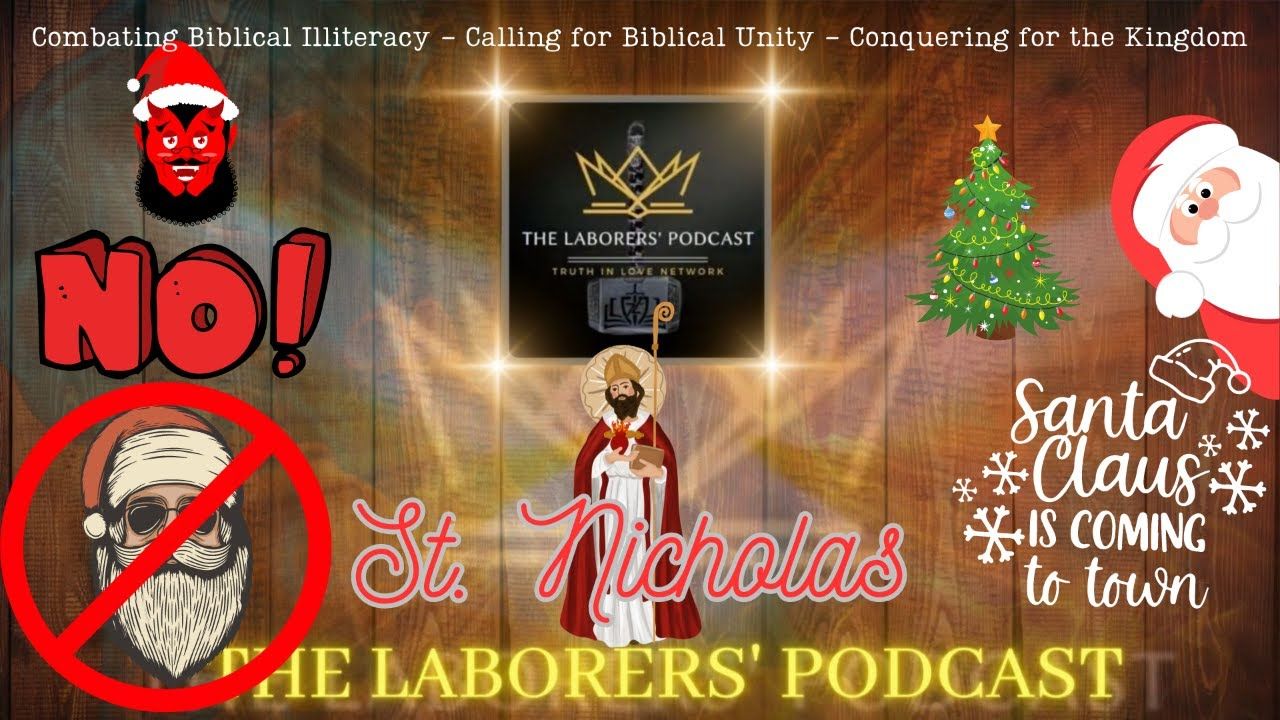
Join the Laborers as they discuss our non-religious Christmas traditions.
Welcome to the Laborers Podcast. Tonight we're going to be talking about Christmas, Santa Claus, and other Christmas traditions. What do you think about it?
Stay with us. Welcome to the Laborers Podcast, which is a part of the Truth in Love Network. Join us as together we strive to grow up together in all things into Christ. Subscribe and follow the Truth in Love Network on Facebook, YouTube, Rumble, Spotify, and iTunes.
Now let's join our laborers for tonight's.
Broadcast. What's up guys? What's up? I look at that little clip in the intro and it just it reminds me of all the great conversations that we've had thus far in the Laborers Podcast and I'm thankful the Lord has brought all you guys in my life and I pray that it will be an encouragement and help to to others and the Lord will use this this gathering how he sees fit.
But are you guys doing well? Doing good? Doing well. Good. How are you doing? Go ahead and answer that first. Well, I'm doing good. I'm doing good. I want to say Merry Christmas but also I don't know at the end I may be being pagan.
I don't know. You're a heretic.
Oh man. So full disclosure. I haven't watched all of Keith Foskey's his dissertation on this the other day. I was watching part of it and then somebody called and I was watching it on my phone. And if anybody ever watches YouTube on your phone you know how that goes when the phone rings.
You know when the phone rings. I don't know where I'm I don't know where I left off at. So I'm not sure how much of this is a rehash or how much is gonna be contradictory. I'm glad.
That you brought that up. I've listened to several different things and so I forgot some and I remember others so it may be but I did want to. I'm glad you brought that up because I did want to bring up his video.
One of our fellow laborers Keith Foskey he is he did recently or this week he posted a video on Christmas and I think the title of it is Christmas Pagan or Christmas is not pagan. I think that's what it is.
Yes. And so that was a great conversation. I enjoyed it and so go watch that video and this will just be hopefully compliment compliment it will compliment his video. He did say in our chat that he he had hoped to be with us tonight but he's got some sick children.
So pray for his family. Listen. So I I don't know if this is gonna get Keith in trouble or not but Matthew Henson he was one of the guys that was doing the video with Keith and he gave me and a couple other guys the heads up that that's what they were doing.
He was like this is what we're doing. Please don't leak it until Keith publishes it. So I was already getting ready and I have to say I have to strongly strongly disagree with Keith on everything that they said.
No I'm just kidding. I'll say you know my thoughts and I to be honest with you I haven't even finished the whole video because I listen to it while I'm working and so sometimes if I got to do things at work I got a positive so I haven't been able to finish it off but I thought it was so far a good conversation.
I do. I'm probably gonna you know agree with some things and maybe put some caveat into a couple of things. I did want to ask has nothing to do with our conversation tonight at the intro video. The intro video for the laborers podcast.
Who is that guy that does the voice.
That's an amazing radio voice. It's a friend of Tyler's isn't it? No we had a.
Gentleman who was at one point a member of the the Truth and Love Network group he was in our chat he had to he had to leave but in his time with us he had a friend and so when we set up the initial video with the voiceover we we wrote out this little that the little thing there and he had his friend to record it and he graciously at no cost allowed us to use it.
So yeah totally grateful for for that opportunity and he does the outro video. Yeah no it's great great talent.
Actually I wish I had a voice like that. No absolutely not even close. All right.
Sorry. That's okay. I guess I can start out with this question. Um is it happens every year maybe to different degrees. Like I know one year it was huge thinking about going to your your local shopping center and whether the cashiers said Merry Christmas or Happy Holidays.
I mean it was huge one year and so it seems like we have this this conversation every year. Is it. Do you think it's gonna be something that we ever settle or we're gonna have this conversation every year.
The Christian perspective on Christmas and its traditions and what what should we think about it? Are you asking if people are.
Ever gonna stop arguing about something because the short answer is no they're.
Always gonna argue about something. Yeah as long as we have different different opinions different denominations it's always gonna exist right? As long as.
People exist. There's gonna be something to disagree with. There's gonna be no end to. I mean there'll be no end to it. That's true. I think that we're as.
Christians way past the whole Merry Christmas versus Happy Holidays thing. I think we're at the point where we have bigger things to worry about. I'm not saying that I like the whole Happy Holidays replacing Merry Christmas.
I would rather say Merry Christmas because that's what we're celebrating. But you know there are so many bigger problems right now for Christianity that you know it's kind of like if you're in the middle of a battle.
Right. And you have this. You're in a fort I guess and and there's this whole army coming at you and there's this one guy just saying but listen like we need to clean the barracks because it's dirty right now.
You know. It's like okay. Sure that's important dude. But like there's this whole army coming at us right now. How about we focus on that. Like you know it we have my priorities. Yes absolutely exactly.
I think we have to start with what is the point of Christmas in the first place. It's not merely saying Merry Christmas or you know versus Happy Holidays is yeah what are we celebrating. Right. We got to start with that.
And whether you believe that Christmas is pagan or not. Right. Well I'm sure we'll get into that as well. But whether you believe Christmas is pagan or not historically it's been a holiday that has been celebrated by Christmas by Christians.
Whether they took it from paganism. Whatever. And so I think we have.
To start the conversation there what is the point of all this. Yeah. Well and it didn't it didn't dawn on me. And I'm only I'm saying this because it's on my mind and I don't want to lose track. And I don't want to lose track of your question either.
But I wish I would have thought about this question prior to the podcast because I would have wanted to do more research on it. But even even that word Christmas does it come from the Catholic perspective.
Is that it's. Or the origins. And so how do we how are we to view that from a Protestant perspective. Because we're we're talking about is Christmas pagan. Well the word itself as Christ mass. Yeah Catholic origins.
So how do we how do we deal with that. I mean decent questions to ponder. So listen. I'll just say this in Spanish.
It's not really a problem because it's Navidad which you guys know what that means nativity so we just call Christmas nativity so we don't call it. You know Misa would be mass in Spanish we don't call it Misa de Cristo although I guess if you're Roman Catholic you could.
But ironically enough Latins who tend to be more Roman Catholic they don't call it. They don't tend to call it Misa de Cristo which is the literal translation of Christmas. They call it Navidad which is nativity.
So just for my people out there that don't like Christ mass maybe.
Nativity could be an option just saying right. So what was your question prior to that. Can you restate your question. My question. Yeah I don't think I had one.
Did it look. I. I don't know. I'm all over the place. That's what I do. Go ahead. I.
Defer to big John. He only thing I want to talk about. Not until you. What it is. We'll wait on that. Okay we gotta work our way into the fist. Fist fight. The fist fight. Fine. Then is Christmas. Pagan.
I would say no. I mean not as a whole there's there's several things that we would we not necessarily observe from from what the Catholic Church may have began or may have took place in that wasn't completely altogether wrong.
You know I mean for instance I've read a historical document that was secular in its origin. It said that the cross that we got in our church is incorrect that the Romans used something to look more like an X but I didn't see people running around throwing their crosses away and and grabbing X's and putting around their neck.
You know you know I don't know exactly what a Roman cross that Jesus hung on would have looked like. But historically and culturally whenever I see a cross I know that it points to Christ and to the payment for sin that happened on that cross.
And ultimately more important to me than whatever kind of device look what the device looked like that Christ hung on whenever he gave up the ghost. So similar to we refer to Jesus Christ as Jesus in Spanish Jesus and in Jewish dialect it's a yeshiva.
Yes. Well well we know that we're talking about the same one whenever we use the name Jesus. So I I think if you're if you want to you can wind up becoming so contrary that you can't find common ground with anybody.
Or you can become so compromising that you don't find anything to to ever stand apart from the rest of the world in we talk perpetually on this podcast about staying out of ditches on either side of the road.
Right. I think if you're not careful then that's what you're wind up doing. You'll wind up saying that because Catholics began celebrating Christmas on December 25th that that somehow another makes it entirely altogether wrong.
And we must throw away the entire thing. Right. And if that's if that's your convictions and you don't want to celebrate Christmas on the 25th. If you don't want to put a tree in your home if you don't want to hang a wreath on your door like I look I'll be honest with you.
I hate lights me hang them on the house wasn't happy about it the whole time I done it. I was even like trying to find good biblical arguments is to say look my home. This is somehow another you know bringing shame on the way I do it.
But you know she didn't believe me because there was not enough compassion in my.
Voice when I said it so I think I got a solution for you. Rob. Are you familiar with the regular principle of worship. Yes okay so I I'm just trying to think of like what what we're gonna talk about Christmas here right.
And I'm thinking okay well some people object because of paganism. Some people object because they follow the regulative principle of worship. To a tee. Hey John do you know what that is we call. I call it RPW.
Just quicker I think.
What you're referring to is whether something is completely described in scripture as being authoritative in the only form or whether things aren't said at all and whether you use grace in them. Is that yeah yeah.
So there's there's the.
Regulative principle of worship which basically says whatever is not explicitly prescribed in scripture should not be practiced as part of our worship to God. And then there the opposite of that would be the normative principle of worship which says whatever is not explicitly forbidden forbidden in scripture thank you can be practiced as part of our worship to God.
So for your wife just say honey I am now following the regular principle of worship.
Nothing about lights. And so she's smart man. She made me get her my electric guitars. I mean I bought them for just just for church. I don't play them anywhere but church. And and the next thing you know man I'm out a really sweet strat a silver sky and a nice PRS custom 24.
And I mean you know em lights ain't gonna be up that long. I'll take them down here in a couple weeks. It's no big deal. I had another solution for you but oh I'm sorry.
Since you already given up I was gonna say you know when she tells you to get rid of your guitars you could be like well honey you know it's it's not really.
A lie it's a principle. I'm glad you I'm glad you kind of started with that question. Is Christmas. Pagan. I felt like I had some some decent thoughts on that as I was looking some things up and I do apologize full disclosure I'm not a memory dates and history and all those things.
So please forgive me but going back to the just the word Christmas you know there was a point where the Catholic Church was not the Catholic Church that we know today. The Catholic basically just meant what it still does.
Lowercase C means universal. Right. And so that's basically what it was. It wasn't necessarily the Roman Catholic Church so we would adhere to and be okay with you know some of those early creeds that they had and so I would want to know you know when they started using that with that word you know Christmas did it.
Was it more Roman Catholic or was it prior to that when it was the you know more universal Church. But I was thinking as I was going through the different arguments for Christmas and the different traditions.
You have decent arguments on both sides talking about the the date of when Jesus was born Christmas trees Santa Claus celebrating Christmas. You have decent arguments on both sides and it made me reflect on this idea of Noah and the ark.
You go to all the different traditions or geographical locations so like the Chinese and I've heard people talk about how the Chinese and their lettering is the word for I I can't recall it's been so long since I've heard it before but it's it's a boat a symbol for a boat and and eight people is is the word for something but so they have a tradition of Noah and the ark and the flood.
They have a flood tradition in China and you have a flood tradition in other cultures in other areas of the world and so that's that's kind of how it came to me as I was listening to traditions of Santa Claus because different regions had different ideas of Santa Claus.
I mean there were similarities but there were differences and you you've got course one of the arguments is Christians replace the the Saturnalia holiday or with Christmas and then what is it Easter and the resurrection.
You've got people say that we we stole it from the pagans who celebrate Horus and all these other you know false gods. But in reality you know all these different traditions and all around the world have similarities and their origin seems to stem from Christianity.
And so instead of Christianity stealing or borrowing from earlier religions pre-christian they like to say pre-christian religions. It seems like because these traditions have are so similar and they're so widespread in all across the world.
It seems like they all originate the the flood story the story of the resurrection the story of Christ's birth the celebration of Christmas. They're all around the world maybe different in some ways similar in other ways.
But they're all around the world that makes sense doesn't it. Yeah it makes sense. I mean the first point of view the flood was.
Worldwide right. So if you choose to not believe that everyone died in a flood save those that were on the ark it's reasonable to assume that every I said we're talking from a secularist point of view that every remaining civilization would have had a story of a worldwide flood if in fact was worldwide.
And from our point of view the Christian point of view we know that every living breathing person that's alive today is a descendant from one of those creature or one of those people I should say that was on that boat right.
So they would have told their kids and their grandkids and blah blah blah until you get to where we are today either way one way or another however you want however you cut that cake it's only reasonable to assume this is why the story of the flood is.
Worldwide right. And the same will be true for like I said these these other.
Events in Christian history. Yeah. So I mean I know the whole Saturnalia thing that they that that folks talk about with Christmas. But one of the one of the things I did catch from from Foskey's podcast the other day was why are we so quick to attribute things to the world whenever it's quite possible that the world will steal them from the church.
Right. It's just as likely that the pagans were mocking something that they saw the believers doing or the Jewish people before the church began. And I don't understand I don't understand why we as a people are so quick to take something away from the church and give it to the world.
And it's weird. It's always been weird to me why we just assume it that way right. Folks try to defend biblical creationism by harmonizing it with science for some reason right. Which is stupid. Right.
That's like that's like knowing the truth and then trying to convince somebody how a lie can somehow another be bent by the I don't know it just don't make any sense to me right. Why would you start with what you know and then just make up something you can't you can't prove.
Yeah. Yeah. Have you guys.
Seen that meme where like there's this this Spanish Chad guy looking real strong showing up like at an Aztec temple and saying the sacrifices will stop. Have you guys seen that me. You haven't. Okay. So basically the idea is like because he's bringing Christianity to to the Aztecs to the pagans.
It's like okay. Well the sacrifices are gonna stop. You know. Yeah. And so even if it were true right even if it were true that we took the the pagan celebration of Saturnalia and replaced it with Christmas.
So what. You know what I mean. So what. Even if that were true I don't think it's true. But even if it were true who cares. Like it's idolatry. Let's get rid of the idol. Let's replace it with something awesome.
You know. And biblical Christ is King. Submit. Sorry. And you know there is an argument to be had about whether Christ was born around around December 25th. I don't think you can really make an argument that he was born for sure on December 25th.
I forget the details of how it is it has to do with like you know when the angels came to the shepherds that was during a time when you know they would have been out at pasture. Right. Taking their flock to the pastures.
And then there's the whole timing of like when Elizabeth was pregnant with John the Baptist and all that. So you know maybe there's a case there but I would say even if it wasn't December 25th let's say it was in July.
All right Christmas supposed to be in July. Let's say that that were true Christmas in July. Sure. Yeah. Exactly. Let's say that were the case. It's okay to celebrate a birthday. You know when we don't know exactly when it was you know I remember an uncle of mine who they didn't know even what year exactly he was born.
So they gave him a year and the date and he was hey he was born I think was like 1930 January 10th or January 15th or something like that. They don't know if that was true or not. But you know that's how old he looks like he's about 70.
That's that. Yeah. Exactly I mean he already passed away. He was like a great uncle but but you know back then people didn't always go to the hospital when they had babies and things like that and so they didn't keep track.
But you know it's okay. You know we celebrate his birthday on January 10th or 15th and that's okay. You know we can do the same thing with Jesus. We want to celebrate his birthday. I was thinking about something.
Oh okay so a pastor of mine actually told me something that was pretty interesting. I want to see what you guys think about this. He was saying you know I have no problem with with like people in general celebrating Christmas.
I don't know if we should be observing it as a church because he he does hold to the regular principle of worship and so he says yeah me and my wife you know we'll we'll put up little decorations or whatever around our house but we really just try to focus on Christ.
But one thing that he was saying is even though we should celebrate the coming of the King absolutely he says some people missed the point or the part that is actually sad about it which was pretty interesting.
He says think about Almighty God condescending down to us abandoning all of his worship his comforts all of all he had all of his glory on in heaven and coming down as a mere human being to which is infinitely beneath him.
You know he was saying that's not. That's not joyful. That's not good. That's that's sad. Right. We should be sad that that's what it took. And so he was saying like even though we can celebrate right that we've been redeemed and we glorify him and give him thanks for coming at the same time.
Not enough. People appreciate how sad that truly was.
What do you guys think about that. I think that's great. I mean that's that's in keeping in in line with the gospel. You know we celebrate we celebrate the blood that was shared to cover our sin. And that doesn't sound at all like something that we should be gathered around to celebrate.
But if it wasn't for that where would we be. Right right now. Obviously the resurrection is what seals salvation. But I mean God had to die. And and that still trips me up. You know I mean he ever pondered on it much.
I mean that that the king of glory the prince of life had to die in order for there to be salvation so he can speak the world and everything in it into existence. But in order to set man right with himself he had to die.
You know that's a that's an unbelievably tall task. Right. And so yeah I mean I can. That fits with the gospel picture that that man celebrates that God came down and we should because it was. You know salvation is unattainable without him.
But uh from his point of view that's why it's referred to as a sacrifice. You know you know I thought I think the thoughts of.
This pastors are very helpful because it goes back to what John was talking about how our group the minds of our group is to stay away from the ditches and to remain balanced biblically. And so we want to do that in all your areas.
And the thoughts from this pastor helps keep us balanced at Christmas. And we we've done in other places. You know we talk about the beauty of the cross. The beauty of the cross. Yeah. There's beauty in the cross because of God's amazing grace and is glorious loving kindness to us.
But on the other hand it shows us our sin. Yeah. And why Christ had to be nailed on the cross. Yeah. And it shows us the wrath of God. And you talk about the law in the gospel like John was talking about.
We've got to know our sin. We got to know the state of our depravity. And then we we see the cure. We see God's grace in his through repentance and faith in Jesus Christ. And so I think it's a beautiful thought to keep us balanced at Christmas.
The the humility of Christ to come down even if the Lord says. And in Scripture that it was at the right time. But but imagine the time that he did live in being born in us in a stable. Yeah. Most the animals.
Yeah. He did not live in a palace. It was it was a hard life. Yes they had to walk everywhere. I mean it was. I can't imagine the difficulty living that life. Yeah. He lived it you know for the glory of God.
But to save us. Yeah. Yeah. And so I think.
It's tremendously helpful. I don't know if you guys think about this ever but I think about like when I was younger you know and I used to hear Bible stories like the the Israelites complaining and wanted to go back to Egypt after they had left right.
And I'm like man how can they be so stupid. Or like you know when you read about like people that were you know a week before celebrating Jesus is coming triumphantly into Jerusalem on the donkey saying Hosanna Hosanna in the highest.
And then like you know a few days later they're like saying crucify him. I was like man these guys are idiots. Like I would have done so well if I had been in biblical times. And then as I've matured and grown I'm like no no I would have been the first one to complain.
I would have been the first one saying crucify him. It was me right. It was me that put him on that cross. And when I think about that you know might as well have I know it was physically me but but it might as well have been me every time I sin right every time we said I don't know if you guys have thought about this.
But I thought every time I sin I'm nailing him to the cross all over again in a sense right I'm basically spitting in his face and saying I don't care what you did for me. I'm going to do what I want to do and that just man like it it crushes me.
You know I know this nothing to do with the conversation but you guys are it says we're talking about the the the solemnness of him coming down you know it's like he had to and I was the reason right.
Like I'm I'm the cause of it. And he didn't he didn't have to in the sense that he didn't owe us anything but it was the only way that we could be saved you know. So that's I mean man crushes you like hold him by my tears.
It's it's you know it's pray. I mean praise him praise him. That's all I can say praise him. Because man I don't deserve it. I don't deserve it. So anyway I'm sorry. Well no I think it's definitely part of.
This conversation because Christmas has become so commercialized. Yeah. You know in our hearts and in our homes it can be about so many other things. Yeah. But when we have that balanced perspective that you're talking about and remember our sin remember why he had to come.
Boy it puts it in perspective and it helps us to remember while we celebrate. To worship in it. To worship. Yes. Yeah yeah.
I think that if we were to take the word Christmas if I understand right masses means worship right. I clearly not a linguistic but I I'm not sure I I.
Thought mass meant like sacrifice to the not. Hmm. I can't I can't answer I guess.
In my in my opinion whenever people Catholics say they're going to mass it's like M A S S E. I thought that was their worship service. It is I could be wrong and the first time it was used it was it was spelled like that.
It wasn't filled with just M A S at the end however you know whether it's well that's what mass means or not. What we should what okay to be saying what we should be doing. What we should be doing is worshiping Christ and everything that we do.
Right. We should be worshiping Christ truthfully with everything your hand finds to do. You should be doing it. The glory of God you should have. You should have worship in your mind whenever you're working.
You should have worship in your mind whenever you're raising your children. You know I know that we we don't do that because we're fallible and there's times we get in our own way. I'm not trying to to paint some picture of sinless perfection but what I am trying to say is that the way that we combat the world's view of Christmas which is the commercialization of this holiday season.
Right. That's what you hear all the time is to worship God in it and to teach our children to do the same. Let's teach our children. So yeah I mean the way I way I approached it and I'm gonna throw a disclaimer out there if there's children watching that you are teaching your children about the large man in the red suit I give you an opportunity to cover their ears.
We never taught our children about Santa Claus. And this before I was a Christian I didn't want my children to be lied to. I did. I never wanted to set a a precedent of when it's okay to lie. So and this is this is pre-salvation.
And me my wife talking. I said I said we're not gonna do Santa Claus in the Jones house. And she said well I want the kids to have presents. So I just said we'll buy them presents. We'll buy them presents if you don't care buy them all the presents.
You won't wrap and put them under the trees put their name on it. And so that's what we did. And we never told them who they were from. We just wrote who they were to and that you know what they couldn't have cared less where they came from.
Right. I never seen one time them saying who am I supposed to thank for this. They hadn't present. I said hey thank you thank you daddy thank you mom. I said you're welcome baby. And that's and that's in.
And didn't didn't bring it up now. They heard about Santa Claus from television and from their friends and stuff like that you know. But whenever they come home they're like what's up with us. I got some people stupid maybe just just roll with that roll off your back.
You know. She said okay. And they I you only make things that way. If you give them the power to be that way. Yeah if you spend time running around trying to supersede every everything the world does you're going to be running around being known by what you're against instead of what you're for.
If you just tell them what Christmas is. This is when we celebrate the birth of our Lord. Do we know if he was born today. Nope. But since the rest of the world is going to take this time to observe Jesus's birth.
Let's teach you about Jesus's birth and what it means and why we celebrate. So we celebrate because we needed a Savior. Because of our sin. Because of because of the death sentence that was on all man God had to step in and God stepped in.
So let's praise him in it. Right. Let's tell the story. Let's make sure that we don't forget what happened. Let's not. Let's go ahead and give give praise. And and and honor words. Do. And let's let's talk about Mary and Joseph in this time about how Joseph decided to be a godly man.
And listen to the to the unctions of the Lord. Let's talk about how Mary was supposed to be favored among other women according to Elizabeth's testimony while we're at it talk about Elizabeth. Let's talk about John the Baptist.
Right. You don't have to talk about elves at a North Pole. There's so much other stuff that you can that you can spend your time talking about and find such wisdom in it and find such a growth in it. That and when they're when the kids are little truthfully they don't really care what you're gonna say to something you can't get so much information in their little minds before they're full anyway in 15 or 20 minutes and it's like all.
Right. Let's open presents. You know. Let's see some breakfast. Let's open some presents. Let's play if it. Let's play if whatever it was. I spent all night putting together. Yeah. That's a lot. I'm sorry I have a question for you guys is.
It wrong you know you kind of brought it up already John so I know where you stand but hey you said before you were a believer so maybe you've changed your mind. Is it wrong to tell children that Santa is real in the in the sense that.
Hollywood has made him real or you know just in general. Well there was a fella that was that was they called st. Nicholas right. Oh man you stole my.
Punchline see. I hope you guys my bad I was hoping you guys say yes. White lies.
I mean yeah you're talking about Hollywood version of Santa Tim Tim the tool man. Taylor you know what I mean getting a beard and getting fat. Yeah then that's that's entirely yeah that's entirely fictitious and entirely wrong to try to instill lies in your children.
Well I was hoping you'd say that right.
And Rob would say something similar and then I was gonna say oh I tell my children's Santa's real all the time. Okay. Because he was real because it was you know st. Nick who punched areas in the face.
There you go. Yes come in go for.
It. Yes thank you thanks big John. Violence. Right now what do we do. I got.
Much less to say I don't. I've said all I needed to say. Tell the story. Tell. I want you to tell the story. Why punched him. Well who he punched. Because it's.
Kind of awesome. Okay. So so st. Nicholas was a I guess you could say a saint in the church right. A church father and so you have. I guess you had a blanket on the word. There was a council right. A church council.
I don't. I think it was the council of Nicaea if I'm remembering correctly. And basically there's this guy Arias who's a he's a he was supposedly a Christian. He was a member of the church. I think he was.
He was an elder if I recall correctly. And hmm he basically denied the Trinity right. Like he I don't remember exactly. I'm I wish I had thought about this a little bit more clearly before I started talking because Arias what he had was something called what's called the Aryan heresy right.
And so it was a kind of well it was definitely a denial of the Trinity. And it wasn't it wasn't modalism because modalism is when when somebody says that the three persons of the Trinity are just three different forms of God but I can't remember what Arianism was.
For the life me. And normally I usually remember but of course because I'm doing the podcast I don't want to look like an idiot in front of everybody. I can't remember. The point is he was Trinity. Well we'll stick with that.
And he was saying so much heresy that st. Nicholas got basically fed up and punched him in the face. So you know that's as best as I can tell her Rob maybe you can you can tell a bit on.
Ikea. And I don't know so I think Arianism is the doctrine that Arias was was propagating which was that Christ was not eternal and that's what it was. And then therefore denying the triune nature of God God being three in one and equally eternal you know all persons being a hundred percent God.
And it was the Council of Nicaea in AD 325 and st. Nicholas was the bishop of Mira there.
You go. He was. I thought he was from the Egyptian city Alexandria maybe but it.
Doesn't matter. Sorry I'm. You may be right and I fact-check Association of Biblical Science and Archaeology. I can't tell you whether they're they know their stuff or not because we'll see. It may not be accurate.
I can't. I can only know what I see because I don't know I I'm going with.
You I mean I I'm doing this stuff of a memory and I haven't read. I'm impressed.
Areas because this is all I've ever heard about it right. So I mean and I shared it on Facebook because I was like this is epic. This is epic because it says deck the halls and heretics too so I had to click and and and I was like you know Merry Christmas you filthy animal.
It's it's one of those things. That's awesome that's awesome. I don't know that that's you know I'm not saying that st. Nick was adhering to that whole turn the other cheek but you know what I am glad to see but the zeal the Lord was in him you know by the way.
Speaking of that not really related to the Christmas discussion but related to st. Nicholas punching heretics. Did you guys hear about what happened Iowa where they set up a statue of Satan. Like the the Church of Satan set up a statue in I think it was like a a state court or something like that.
Hmm well because the argument is well you know if you can have statues of religious symbols and we can have any religious symbols and so they basically force their way in there and set up their statue.
And this guy who basically he is a Christian I think today or yesterday he he said basically I am going to destroy this blasphemous thing and basically beheaded Satan the state and that Satan statue and got.
Arrested. I was like man that guy's cool. Yeah that is cool. If you're gonna go to jail could you imagine sitting in your bunk. What are you in for. I didn't pay taxes. What are you in for. Parking tickets.
What are you in for. I beheaded Satan. Don't mess with this guy he's good. That's one guy whenever he walks into the Commons area in jail they're like well in this conversation he could be Krampus. Krampus.
You guys explain this because in our area I've seen a lot of stuff on Facebook and I had never heard of Krampus. People are up in arms like a German. Sounds like German. You know. Yeah story or something like.
And it's it's.
Just another just another tradition tradition they come from Germany. You had the the German form or German tradition of Santa and then you had his counterpart was Krampus and he was kind of a goat man kind of like Hollywood portrays what the devil looks like this goat man.
But Europe had so many other traditions that that are similar to that where they used figures to keep their kids in line like there's yeah the boogeyman lives out in the woods so don't go past the the wood line you know.
Okay so Krampus would come before Christmas and get the naughty kids and there's all kinds of things that they say he would do to them but he would bring them back. You're shooting got.
Invented so they wouldn't bring them back.
Have you guys watched The Office by any chance. I've not okay. Well do you guys know the character Dwight by any chance. He's like super awkward and weird. And he's he's. I think he's like his family's from Germany or whatever.
I mean he grew up like on a German farm and Pence in rural Pennsylvania. And so in one episode I think they're taking care of kids at the office because it's bring your child to work there or something like that.
And he basically because the kids are misbehaving he decides to tell him the story of Krampus. He basically starts telling that he's gonna eat off their fingers and like murder them in the middle of night or so just like people confront him like Dwight don't do that.
He's like what this is. This teach them teaches them morals it teaches them not to misbehave. He's oh my goodness. Listen. Don't watch it for yourselves if you guys ever. Anyway that that's where I learned about Krampus.
So fun. Fact. Well.
So for us in Lincoln there was a guy in a parade who dressed up like an old devil in a Santa Claus suit and caused no end of trouble to people in town. It's it's a big thing now right. So ignorant people like me have now heard of the Grinch or Krampus or whatever he is and the German fellow who undoubtedly is running around stealing children he probably fit in the Democratic Party.
Cancel those spam messages that we're getting. They're probably gonna get a real winner. Oh man. But that's kind of where I draw the line with. John had already talked about not lying to his kids about Santa Claus and I took a similar stance with my son.
You know I didn't want to I didn't want to lie to him about anything when it comes to that and so. But for me where I'm drawing the line is these are these are stories these are traditions. That's that's the part of them.
That are that are real. That's what they are. There's their stories and traditions. I mean we we have books when we're teaching our kids to learn how to read about Sally Jim Jane and who. They're not real people that but we're using those books that help them to learn how to read.
Kick back a little.
Bit on that we do have a history of a guy named st. Nicholas. Right. We do we do and and he did in my understanding give money to some people to keep their children from being sold in the prostitution.
Right. There was the story that I was told like a couple Sundays ago was that the same guy st. Nicholas had heard about somebody that went to his church. That was on hard times and one of the things that was going to happen was they were going to wind up.
His daughters were going to be picked up more or less by a debt collector and used as prostitutes to pay off the debt. And over the course of three nights three small little sacks of gold got through through the window and it was enough to pay off the debt collectors and nobody ever took credit for it.
And it remains a mystery as to who give them this money. And they said that it was. They figured it was this Nicholas of Myra guy because that was in line with what he had spent the bulk of his life doing which was a benevolence ministry.
Right. So yeah. You're exactly right. We do have a real character named st. Nicholas. Who. Who. Santa Claus. I believe we could track or trace show our traditions of Santa Claus back to st. Nicholas. And and not pagan roots.
However this whole season of Christmas and also celebrating the birth of Christ throughout time have inner intermingled themselves like I can't see in in three. What'd you say. 326. Three. Something. 325.
Where you had the Council of Nicaea. Yeah. Do we really think that they were putting trees decorating trees in their homes putting a wreath on their door get giving gifts on Christmas morning. You know it was.
It was separate and and they intermingled st. Nicholas. What does st. Nicholas have to do with the the birth of Christ. You know it's just these two things have just intermingled over time. And and so what.
What lines are we gonna draw. How. Like you said we can be talking about John the Baptist Zacharias. The all the characters in Scripture. That these true real-life characters in Scripture instead of you know make-believe L's and pretend that they're that they're real.
Sure. But on the other hand we read stories about Winnie the Pooh to our children and and show them there the cartoons. And they're not. They're not real. Yeah. We've got our Wars. Star Wars. Yeah. And we differentiate and we make.
And we I think we can do the same thing with with Santa Claus. Yeah. Tradition story. Not real. You don't have to ask him or tell him what you want for.
Christmas. So you're talking about living life in balance. Yeah. Yeah there's nothing. I don't see anything wrong with that and I don't know about the normative versus the regulative principles of worship and how that's applied to to every aspect of your life.
I assume it can be as somebody who doesn't know that as a as a doctrinal discipline the way that that I assume this is a more reformed take on worship or my incorrect in that it comes from.
Reformed theology but it's not it's not exclusive like there are non-reformed churches who adopt you know regular worship and things like that usually.
When I hear of these these topics and these terms it's usually through you guys right. And I'm not saying that in any way is a negative. That's just usually when I hear that. That's that's where I hear it from is is in these circles I suppose if you wanted to adhere to society's norms you know as long as you don't do anything that that contradicts scripture.
Right. Again. Sure we give we give our kids Christmas presents on Christmas morning. We we celebrate Christmas Eve Christmas morning the following day. But we don't do 12 days of Christmas. And I only know when they supposed to start or when they're supposed to end.
Right. We when it comes to. But what we talk about Krampus. There's a German tradition that my understanding only lives in a town called Cherville North Carolina. And some outskirts of Cherville in places like Vail where Rob lives.
Well there's a thing called New Year's shooting tradition. Have you ever heard of it. Yeah. New Year's shooting. Mm-hmm. I might have. Could you could you only on New Year's Eve. And provided doesn't fall on a Sunday.
The guy. There's a bunch of guys take black powder rifles and they run around town. Oh and they and they shoot powder in there at the end of a long chant for about 24 hours straight. And this has its roots in an old Germanic tradition of warding off evil spirits now to to be completely honest with with you Rob.
I've not engaged in this activity since I give my life to the Lord. Not just because I think it's absolutely silly right. But because there's a vast majority of the people that are there that are involved in drinking and stuff like that.
Now I have been to where they shoot and and stuff like that because colloquially you know it's kind of a thing around here where everybody gathers together usually for the first shot or two and then they go home.
And even I've slacked up on that. I've only took my kids a couple times just because part of it was a family tradition. Aren't my. I trace some of my lineage back through some of the men who started that tradition around here.
I.
Think you had. You had actually told me about that after a laborers podcast maybe a few months ago. Okay. So you you just reminded me. So so I know I've heard.
Of that from you before I didn't know your shooters watching put a musket pitcher in the in the comment section that'd be awesome. Basically what you.
Were saying was they're warding off the wrong spirits. Yeah so I mean we both.
Know that there's there's absolutely no power in a shotgun against the powers of darkness right. Or or a chant or any of this other stuff. And the chant itself has you know Christian undertones all the way through it right.
It talks about the Lord several times in it. And it's something that's clearly been adapted over the years from what was probably a very secular if not pagan originally right. Because the last words of it are.
And for good luck will fire a gun right. The chance a whole page long. And I don't remember all of it. And you sing it like an old prayer right. So there's just aspects of it that I don't they don't sit right with me.
So I don't I don't take my kids anymore. We don't do that right. We don't observe that so that you know just being contextually sound and try to be consistent with my teaching. I don't we don't teach Santa Claus.
But there's nothing wrong with celebrating Christ's birth and giving your kids gifts. Yeah. I do have a problem with gathering together with 50 men. Most of them inebriated. And then taking and over packing a muzzleloader with you know a thousand and a half gram of powder way too much powder for the thing.
And then setting off a number 11 cap in it and hoping and praying that everybody around you doesn't die when it blows up right. Good luck. That's what I was.
Referring to when I was saying they're warding all the wrong spirits no they're.
Welcoming those spirits there that's right.
Well I don't have you guys ever said we we've lost track and I mean this is a fireside chat and we're having a good conversation and I appreciate it. You you may be we talk about German traditions and you made me think about a movie that come out.
Have you guys seen The Last Sin Eater? The Last Sin Eater? Is that like a horror movie or something? No it is. It's about a German tradition it's it's a film based in Appalachia and when the people settled in the mountains and their nearest neighbor was probably about a mile away and when I don't want to ruin the movie it's it's kind of long and it's some people would like it some people don't like it but I cry at that movie because the German tradition was someone in the community had to be designated as the sin eater and so they would stay up way up in the mountain in a cave alone they had to be secluded their whole life and when somebody would die they would ring the bell everybody would come they would cover up the mirrors and you know follow all those traditions they would finally they would prepare the body take it out to the graveyard and turn their backs the the sin eater would hear the bell come off the mountain come down to the graveyard out of the back was turned they would have this meal bread and wine or whatever it was and and lay it there in the graveyard and I guess the sin was being transferred because the sin eater would eat the bread and drink the wine and it was the sin eater and so eventually this missionary came and brought the gospel and and the sin eater was freed from not only from not only from a sin but from this tradition and oh it just it brings tears my eyes every time so the freedom that Christ brings.
Is so wonderful. I saw something about not it wasn't that movie but I learned about that somewhere within the last two years. I think I don't know if it was like a documentary or something I learned about it but ironically enough I found out that it was a tradition that was being held by Scottish Presbyterians of all things.
Which is interesting because I don't think you know it was by Scottish Presbyterians. And so it was like people who were going to church and they would bring that sin eater guy or whoever it was into the church itself and the pastor would do a whole sermon before he would eat the sin if you will.
So it was this whole thing. It's like you know when I when I saw that when I saw the documentary or whatever it was I was like is this how Rome ended up. How it is. Right. Like you start mixing you know Christianity with like your own local traditions.
Mm-hmm. Because it was crazy to me to think like a pastor's doing a sermon right before the sin eater guy eats the bread and drinks the wine or whatever. It's just a mixing of paganism with Christianity.
That's what Roman Catholicism ended up being. So I'm like oh we're doing it all over again. Great. You know like it was like Foskey would.
Say something about superior theology in this moment not working out. Well I mean.
Didn't work out for the Presbyterians the Scottish people this was probably like in the 1700s and by the way these were if I remember correctly these were immigrants from Scotland to the United States right before the the American Revolution so you know it wasn't that far off from the Reformation that they were practicing these things.
Only what three to two hundred years or so you know which by today's standards that's not that far off right. You've never.
Thought about how traditions get started. One of the reasons why I don't refer to marriage as being a traditional marriage. And I refer to marriage as being biblical. And I said I separate the word because most of the time people want to take the word traditional and attach it to marriage and take it like a word.
What's the word in the use for other traditional. Somebody help me here. My kids walking in broke my train of thought. Cultural maybe? I don't know modern maybe. I don't know what the word would. They would use to be the opposite of tradition.
Oh the opposite. Progressive perhaps. Perhaps. But you know the problem with that is if you do something long enough it becomes a tradition. Even if it's bad in the beginning. Yeah all right. I know people who I love them.
The pieces they're like well you know we're not gonna have television in our home. I'm like great if you don't have television your home. Don't have television your home. Right. But they'll watch Andy Griffith and some of the older stuff.
Because it was good enough for dad. It's good enough for me right. Well I mean okay so there's nothing wrong with Andy Griffith either. I'm just saying that. What if pornography would have been good enough for dad.
Is that your excuse for what. What is going to become a family tradition. New Year's shooting would have been a family tradition. I don't adhere to it anymore. Mennonites and Amish people you know yesterday's technology is okay.
Today's technology is a sin. You see what I'm saying. It doesn't make any sense to me that things like traditions ever get woven into to the gospel in the first place. And it doesn't matter. I don't. I don't follow it.
And I think we do have.
Biblical traditions. I just think that because now we're getting into like our culture before we came to Christ. Right. Yes exactly. I do think that whether it's Christmas or whatever else. You know I had a conversation with Chicano Knox like a few months ago and he and I were talking about like you know Christianity and Reformation in Latin and Latinos.
Right. So and we were talking about like culture and how Christianity changes your culture. And we were also talking about how not all cultures are created equal. Right. This whole idea of multiculturalism and things like that.
Like it's not necessarily wrong to adapt other people's traditions and things to an extent. But let's not pretend like all cultures are created equal. Our traditions are created equal. Some cultures are better than others and because they're man-made traditions all of them are flawed at some capacity.
So when we come to Christ inevitably we're gonna have to leave some cultures behind. Right. It's kind of like the meme that I brought up at the beginning. Right. The human sacrifices will stop. Right.
Yeah exactly Christianity. When when Christianity comes into your life sorry you're gonna have to leave some some of your traditions behind. You're gonna have to adapt this new tradition this new culture which is called Christianity.
And yes it's a religion but it's also a culture. So that's right. Yeah that's.
Exactly right. Whenever we were in the Dominican there was this this talk this conversation kept being had over and over and over again and and honestly it frustrated me because they were like well culturally everybody has to wear this to church tonight.
I was like I mean okay I don't care right. If you if it's a if it's culturally acceptable to to be modest I'm yeah okay we're all about being modest right. We're men of God here we're talking about you should be covered up all the time but it become a costume right.
Yeah it's what it becomes. This is really who you are. You're playing church but you're playing the part whenever you get dressed to go to church just like he's going to a masquerade ball right. Or something like that.
Which is which is a little bit ridiculous it's a lot of it ridiculous either it's part of who you are or it's not. And if you have can if you have convictions about how much skin you're you're showing then that should be present everywhere and all the time right.
And that I'm just using clothes as an example here. But there were several things like that that were culturally appropriated because this is the way we do things here and I remember thinking what happened to all things have passed away and all things have become new whenever we find whenever we find new life in Christ everything about us is new and different right.
Everything that we find our identity in is supposed to be in Christ. We're not supposed to be finding our identity in our culture or our traditions or in our in our lifestyles we're supposed to find our life in Christ and he's supposed to tell us how we live and that it's easy to find.
It's in Scripture it's all over Scripture right. Whether it's normative or whether it's regulative either one I'm gonna keep using that word that's the word of the day is uh it's it's right here right.
If it doesn't say not to I'm fine with you doing it. If it doesn't say not to and I'm within reason right. Within reason there's some things obviously they're not written down and then we got common sense.
God give us a working brain to know that. Yeah we're talking about a sword but that this same can be said about a gun right. Let's not let's not take him and and say well where I'm not wielding a sword against against the world.
I'm using a rock let's not be stupid right. We know we're talking about a weapon sure you know I.
Think about like Paul you know he had a love for his original people the Jews right. Like he was in anguish over the fact that they had rejected Christ. So I don't think that there's necessarily something wrong with loving your culture to an extent right.
But at the same time it was Paul who said you know as far as it depends on misquoting that I think it's Romans or Galatians 610. He basically I'm paraphrasing here he says as much as you can do good to everyone especially to those of the household of faith right.
So there there's a priority list there he's saying you know your priority now because you are in Christ is the people of God right. Which is those who believe in Christ. Now you can love your culture that you come from right.
If it's not contrary to Scripture right. Like exactly you know I love I love you know a rock on and do it you know like it's a Puerto Rican thing. It's delicious. It's amazing. But you know if if like part of my tradition which I guess this is more modern tradition is like listen to absolutely disgusting music in reggaeton for example.
I'm not gonna do that right. Because that is contrary to my first and my first and most important culture my Christian culture. And so I guess tying this back to the topic of Christmas there's nothing wrong with having sex I guess you could call them like secondary traditions right.
There's nothing wrong with putting up the Christmas tree that doesn't harm anybody. You want to decorate it that's fine. You want to put up Christmas lights that's fine. You want to pretend like Oh Santa Claus brought us presents.
Okay. Sure that's fine. Are we pretending though. Right. But the the point is I would rather look if you're going to make it a secular Christmas I would honestly say listen then don't celebrate Christmas at the end of the day.
If we're gonna celebrate Christmas then let's celebrate Christ. That's right. Right. And that's the whole point. It's like you can have your little traditions and your your things. You know my wife.
Likes to bake cookies on Christmas. I'm sure I'm all about cookies. There you go.
Me too me too but but if the focus is not on Christ then what are you even doing. You know. Like what what is the point. That's right so I'm in full.
Agreement. That's crazy right today. Down hang on see me. I remember if we if we could set up a list.
Of like the essentials I think we will find that. I mean we already know this that Christians in general we love to argue but it's like my goodness do we.
Argue about secondary things. All right. Yeah. Well Christmas has become so intermingled like you guys have already been saying that there's an unnecessary tension that we bring in ourselves you know in our discussions about Christmas and what we celebrate what we don't celebrate.
Unnecessary tension I think. And that you know that's what I'm gathering that's what I'm learning from this conversation. Just unnecessary tension. Because if you get down to brass tacks all these things that we do at this time of year have nothing to do with with Christ's birth and celebrating his coming.
Absolutely nothing. But they become intermingled throughout time because of traditions. And now I'm gonna try to bring it to a point when I was looking at different articles listen different things on these different traditions that we have.
The one of the reasons why I think it's good the conversation is going to just continue to happen is because there's nothing out there that has definitive proof either way. I mean like I said before I've heard I heard good arguments about the Christmas tree with having pagan roots.
The Christmas tree Christian roots. Same with all the other traditions. Santa Claus started with st. Nicholas. No no it's pagan. You you've got both sides with with arguments and good arguments. The with the birth of Christ.
You know Jay you brought it up. I've heard two different arguments made from the same or two different conclusions made from the same argument they start with Zacharias and his term of service in the temple.
And then he comes home Elizabeth gets pregnant and then Mary and Elizabeth meet and so they they mark out the time of the the pregnancy based on his beginning with his terms of service as priests in the temple.
And two different people said no. Well Jesus was born in the fall because of that following that timeline. And somebody else said no he was born in December because of that timeline. And then I heard a third person say well we celebrate December 25th because the Annunciation is celebrated March 25th nine months later is in December.
And so you've got all kinds of different arguments good arguments for all these different things and and nothing's definitive all these things all these traditions have been mingled over time. But one thing that I'm reflecting on is this no matter how literally a person says they take scripture God is a God of symbols.
He uses symbols. He uses symbology to teach us to point to Christ. And just one clear example Jesus in the upper room says this is my blood. Yeah this is my body. Okay so God uses symbols. And if you want to know my side of things I think these things were it were used probably in pagan traditions but probably in Christian traditions had Christian symbolism and you can look up the Christian symbolism in the tree the being an evergreen.
What do you think that stands for. And then the decorations that are used the candle the light light is a you know Christian symbol. And all the other traditions that we have have Christian symbolism in it.
And so our God is the God of symbolism. And I think you guys are exactly right when you say Christ always should come over culture if we're if we're celebrating this in a secular way we're idolizing Santa Claus.
We're lying to our children don't celebrate it all. I like you know I appreciate what Jay said there you know if we're going to do it that way don't celebrate at all. But if we can you know if we want to be like Christ Christ uses symbols to teach lessons to teach about himself.
And I think that's I think it's totally appropriate to do that. You know we don't want to put the flag over the cross. Sure it applies to all of life Christ over culture in every aspect of life. Okay so I think it apply here by.
The way you're gonna upset the Lutherans though. I was there because you just said that God uses symbols and you pointed to Christ saying this is my body this is my my my blood. You know they're not too happy about you saying that.
That's just.
A symbol right. Well I also don't believe in baptism or regeneration either. I know.
You guys are still brothers in Christ. You guys just don't understand that it was symbolic. Okay. He is. He is spiritually present in the in the Eucharist. So I'm just anyway I'm not gonna get into that I'm gonna start a discussion.
What do we got here. Like five minutes or less. I don't want to start a theological debate five minutes before we wrap it up. So I apologize. I'm with you.
Always even to the end of the age amen. Even even at the Lord's Supper. Or you. There you go. What. Yeah we can wrap it up here. We went over an hour. Do you guys have any last thoughts. I don't know that we made any conclusive arguments.
I like.
The fact that that if for nothing else if if for nothing else for all the tradition for all the cultural significance surrounding Christmas that may not exactly be what we would like for them to be. From a Christian's point of view I like the idea that at least one time in the year that there would be some kind of a focus on on preferring your brother and preferring your neighbor over yourself in a moment that there'd be some some time that we stop and say you know what for for this little for this little period of time let's be charitable.
And what we do right. It doesn't bother me a bit to see the Salvation Army man outside the the Walmart and LinkedIn or terrible or wherever it's at. It wouldn't bother me if you stay there 365 days a year right.
It's not like charity needs to stop on on December 26th. But I do like the fact that around this time of year when I sit in meetings and things like that where people are talking about well we've got X amount of dollars in this fund that we want to we want to give it away and they start looking at homeless shelters and and children's homes and places like that that they can send this money to buy beds or feed them or pay the light bill for the next six months or whatever and it's there is it seems to be a focus on giving.
And I like that if for no other reason I like that I ain't saying it should ever stop but I'm not expecting the world that's not regenerate to act like Christians right. But if for if for just a day everybody kind of acts a little bit more like Jesus.
I'm totally.
Okay with that. Any last thoughts Jay? No I mean you know it's kind of like what we said you know if you're gonna celebrate Christmas then celebrate Christmas but celebrate it for what it's supposed to be celebrated for nothing wrong with you know giving each other presents nothing wrong with cookies and hot chocolate and all of that great stuff.
It's you know I love I personally love it you know. But let's not forget what we're celebrating and I think also let's take time to appreciate kind of like what what I was saying about my when my pastor had told me it's not just a time for celebration it's a time for reflection on something that is sad that it took our sin to get God Almighty to be with us in a physical sense and die for us so we we have to remember that component as well.
It's a.
Good word. Well I want you to hold on to that because after I make these last remarks I'd like you to share the gospel Jay and John you'll close us out but I think in this conversation I believe that we example what we were preaching that this conversation was not overwhelmingly about Santa Claus.
We talked about Christ and we talked about Christianity and we talked about our father and and so I think we example whether we you know we didn't talk about the origins in detail and paganism we talked about Christ and I think we example what we preached about what Christmas is all about so I appreciate that.
And one thing that I did learn in this little study that I did prior to the podcast is that the word Kris Kringle that we hear a lot of times at Christmas one of the meanings of that word of course again comes from Germany it means Christ child and at some point in time German children believed that baby Jesus brought them presents.
That's pretty cool. It was once again you know the tradition of Jesus or the story of Jesus made it across the world maybe not as accurately as it could have been but they had some form of Jesus in their culture and they called it Kris Kringle but Jesus does bring a gift.
He doesn't bring us presents on Christmas morning but that's what I'd like for you to talk about Jay is share with us the gospel the gift that Jesus does bring. Yeah.
Absolutely he does bring a gift. You know a lot of people think about Jesus as setting them free. Setting them free from you know maybe they're in a bad situation, they're in a bad marriage, they have abusive parents and certainly absolutely Jesus does free the oppressed, does free the fatherless, does free the lowly in spirit, right?
Jesus comes to free people like that but Jesus doesn't merely come to solve your temporarily earthly problems. He comes to deal with something that maybe people don't like to acknowledge but it's the truth and it's that every single one of us is guilty before a holy God of sinning and breaking his perfect standards.
It's the law, some people say no it's just God's moral standards. Okay, doesn't matter. The point is that God has an expectation of all men to do what is right and nobody, if they're being honest, nobody can say I've always done what is right.
Nobody can say that. At some point in your life, you have lied, you have stolen, you have treated somebody unfairly, you know, you name it, you've done it, right? Some people have murdered in their heart by hating someone else as Jesus said, right?
That if you hate someone, if you hate your brother, you've committed murder in your heart. If you look at a woman with lust, you've committed adultery in your heart. We're all guilty. If you're honest with yourself, you know you're guilty.
But the good news that Jesus brings is that even though you're guilty and even though there's no way to get out of it on your own because no matter how much good you do, that will never erase the fact that you are still guilty.
God has provided a way. God has provided a way to to make you righteous before him and that is through the sacrifices of his son Jesus Christ. See, Jesus came to die for us. People don't think about this though, but he also came to live for us.
Jesus lived the perfect life, keeping all of God's moral standards perfectly and then he died on a cross and that's when God's wrath was unleashed upon him so that whoever believes in him will not have to be condemned but have eternal life.
That's the wonderful news of this Jesus Christ that we that we worship, that we adore. The reason why we love him is because while we were still sinners, he died for us. When we were doing all of these evil things, when we were spitting in front of this Holy God, even before we were born, him knowing what we were gonna do, Christ died for sinners like me, like John, like Rob, like you.
And so what I would encourage you to do is to come before God. Come before God. God is angry with sinners, but God is also compassionate, he is merciful, he is loving, and he will forgive anyone who asks him for forgiveness.
Jesus told the story of a man who, a Pharisee, who prayed to God and said, God, thank you that I'm not like this man over here. He was pointing to another man who was clearly a sinner. He was beating his chest and saying, God have mercy on me, a sinner.
Jesus said that the man that was beating his chest, asking for mercy, is the one that received mercy and was justified before God. That can be you. That can be you. Repent of your sin, trust in Christ, turn away from your sin, ask him to forgive you, and you will find the greatest joy that you can ever find in your life, which is the promise of eternal life with that Holy God who has adopted.
You into his family. Amen. Father, I come to you in Jesus' name. I'm so very thankful for the new life that you've given me. I'm so thankful for the opportunity of salvation that is there because you came on Christmas morning.
Lord, I'm thankful for the opportunity to testify of your goodness and to share your gospel. I pray that you be with those who have heard it, and if there be any who don't know you, that they'll take these words that my brother has spoken, that they'll hide them in their heart and they'll repent of their sin and put their faith in you.
Lord, I pray that you use this network and use those that are on it, use this podcast and the means that you've given us to have your cross raised everywhere it can be, that your name will be lifted up and that your name will be glorified because you're worthy of it.
I'm so thankful. I'm so thankful, Lord. I don't have the words to tell you how thankful I am. Bless these men, bless their families, and I praise your holy name. It's in Jesus' name I pray. Amen.
Amen. Praise the Lord. I love you guys, and I love my fellow Laborers, and we appreciate you. Thank you for watching. I forgot to say that the comment line is open, and it still will be. It's not closed off.
If you have any questions, comments, critiques, if we can pray for you, let us know, but we hope to see you next time. We hope that you have a very Christ-filled and Merry Christmas.
Thank you for joining the Laborers podcast. Remember, Jesus is King. Live in the victory of Christ, speak with the authority of Christ, and go share the gospel of Christ. Be sure to tune in next time for the Laborers podcast.