Keep sharing good news without ads.
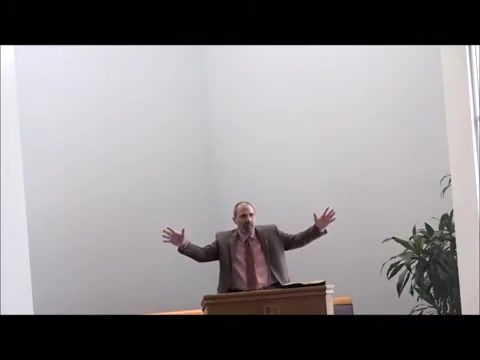
Oct. 8, 2017 The Judgment of the Gospel Romans 10:14-21 Pastor Josh Sheldon
Romans chapter 10, we continue this series through this great epistle written by the Apostle Paul. Romans 10, and this morning, God's help, we will finish that chapter in verses 14 through 21. But how are they to call on Him in whom they have not believed?
And how are they to believe in Him of whom they have not heard? And how are they to hear without someone preaching? And how are they to preach unless they are sent? As it is written, how beautiful are the feet of those who preach the good news.
But they follow only the gospel. For Isaiah says, Lord, who is believed, please hear from us. So faith comes from hearing, and hearing through the word of Christ. But I ask, have they not heard? Indeed they have, for their voice has gone out to all the earth, and their words to the ends of the world.
But I ask, did Israel not understand? First Moses says, I will make you jealous of those who are not a nation. With a foolish nation I will make you angry. Then Isaiah is so bold as to say, I have been found by those who did not seek me.
I have shown myself to those who did not ask for me. But of Israel he says, all day long I have held out my hands to a disobedient, and contoured the word of our Lord Jesus Christ to us this morning. You know, as we get to this point in Romans chapter 10, we have to notice that the Apostle Paul, by the Holy Spirit's inspiration, has devoted an awful lot of text to explain to us what has happened with the gospel in regards to Israel.
We can even turn that around and say, what has happened to Israel in regards to the gospel? Remembering that the thrust of this argument, really in the largest sense since we began in chapter 9, has been for Paul to establish the reliability of God.
That Israel's disbelief does not change or impinge upon the faithfulness of God. That's really kind of one way to summarize the whole argument here. And what about Israel is a fair question. His people for all those centuries, his people under his promise, under a covenant that God made with them, of his own free and sovereign will.
And yet, they don't believe. If they have not fallen prey to this great gospel, which all their advantages, the oracles of God, the worship, the sacrifices, all of that, all of that pointed to this gospel.
And if they didn't fall to the gospel, what does that say about God? What does that say about Jesus Christ? What does it say about the gospel? We just came out of an argument from the previous verses in the chapter.
Finding out how Israel had pursued determination and zeal. How they strained every core by the catholic to break the tape first. And what were they looking for? Righteousness of God. The righteousness of God.
That was the goal. And then the Gentiles sharing none of their advantages, which we just listed, did nothing and yet attained what Israel had been after. Of course, they pursued it the wrong way, Israel did.
They pursued it as if it was available to them, as if it was attained by the works of the law. And the Gentiles had no such idea because they didn't like the gospel. Pursued it by faith. You think of an Olympic athlete training for a swimming event.
Everything she does is for that one thing. All her zeal, all her energy, every bite of food she takes. She's counting the calories to see if it will help with this one event. Starting when the gun goes off and she jumps in the pool and she swims.
And all of a sudden somebody who didn't even know the event was taking place, doesn't even know how to swim, tries to get out of the way, trips, falls in the pool and wins. That sounds a little silly.
But that's sort of the way it is with Israel and the Gentiles. Israel having all the rules, having all the knowledge, knowing what the goal is. And all of a sudden, somebody just trips in the pool and goes home to God.
Israel and the Gentiles in that short little parable are pretty easy to identify. Christ, of course, is God's righteousness. Gentiles gaining it while Israel stumbled. They stumbled because they sought it by the works of the law.
They stumbled over the stumbling stone that is Christ. As we established a couple of weeks ago, Christ is Yahweh. That's where that reference came from in the prophets. They stumbled over faith. Israel's way of acquiring God's righteousness was wrong from the start.
And we established that in the last few messages. But it's more than just a mistake. It's more than just an error. You see, if you're in Yosemite and somebody comes to you and says, Where is Hafton? And they're looking at their map and say, You've got your map wrong.
You've made an error. They turn the map around and you turn with it. And look, there it is. That's just a mistake. Israel didn't so much misunderstand it as they disposed of it. They didn't misread the map.
They disposed of it altogether. And for that, dear ones, and to point to this message, for that they were judged. The gospel, you see, is God's final arbiter of whether or not you will receive in yourself judgment for your sin.
The gospel is judgment. It is good news. We want to be happy about it. We want to be joyous about it. We want to lift up our hands and say, Hallelujah, praise God, I'm saved. It's good news. The gospel, brethren, the gospel is judgment.
And that's what Paul means with these Old Testament references that he brings in. What John just read to you from Isaiah 52, what is that good news? Judgment has been accomplished. And what we call the second Exodus, the return of Israel from Babylon and back to the land, has been granted.
Judgment accomplished. You see, we need to understand, there is a consequence to our actions. There's a consequence to our actions. The choices we make during these short lives we live have an eternal consequence.
To reject this gospel of judgment is more than just saying with a shrug, something like, well, thank you very much, that all sounds good. I'm going to check out something else and see if that fits me better.
It's a rejection of God himself. To reject this gospel, which I plead with you, if you don't know Jesus Christ and believe, to reject this gospel is to reject God and reject the sacrifice of the Son. It's not something that he takes lightly.
God judges. And there is a bar of judgment now. There's a final bar of judgment. There is no more Babylon coming to Jerusalem to take the people away. There's no more return from that exile back. The gospel is the final word.
So the psalmist says it twice. A fool has said in his heart, there is no God. And then in the second psalm, we have God holding the ones who say that in derision. And the second psalm goes on and says, then he will speak to them in his wrath and terrify them in his fury.
This all may seem a strange place to you, that I should go there when trying to preach Romans 10, 14 to 21. Because when we get there, normally we get the imperative of preaching. And imperative it is because it is the means God normally uses to set the gospel before us.
The first four verses of that, verses 14 through 18, it speaks of the way faith is birthed. Now I'm going to explain it a little bit, but understand that in those verses, Paul is still speaking about how the Gentiles came to faith.
Now that doesn't mean that the Jews come to faith any other way. We all come by faith, by faith alone. Without faith it is impossible to please God. But understand that in these verses, Paul is still trying to explain how it is that the Gentiles did and the Jews did not.
So the first four verses, 14 through 18, how is faith birthed within us? It's by the hearing of the word of God communicated to you by the way of preaching. Understand that by preaching, the best preaching in the world, the best preaching that history has ever known, cannot bring faith to you.
But if God has given you faith to believe, it is preaching that excites within you and forces out of your mouth, I believe in the risen and the resurrected and glorified Lord Jesus Christ. I can give you faith.
I pray God has given you faith and something I say will make this faith that God has given you, burst forth into your spirit. So it doesn't happen because of the preaching. The preaching only comes alongside with what we pray God has already done.
I want you to be very clear about that. Titus chapter 3 verse 5 tells us it's the Holy Spirit's work of conversion, it's His infusion of faith that is the necessary, that's the only cause of conversion.
Paul is explaining here how the Gentiles came across the finish line in a race they weren't even running. That's what verses 14 -18 are about. We'll go into those in a moment. Verses 18 -21 then he explains how the Psalms and the law and the prophets all confirm for us this course of events.
So back to verse 14. How are they to call on Him in whom they have not believed? That's the first of a short series of questions that sort of go backwards. It goes from believing, which is the end point, to the preaching that incited the belief.
It's an assumed question that we have here. And it flows from verse 13, which we ended with last week, everyone who calls on the name of the Lord will be saved. But that last piece of the argument explaining the Gentiles' faith and Israel's unbelief.
And the question that sort of hangs in the air is how did this happen? We understand that they got what they weren't after by God's sovereign grace, we get that. But how? Let's take a moment and answer that question, how?
You see, God doesn't just open our heads and pour in a measure of faith, He uses means. He uses the foolishness of preaching as the catalyst of faith. To preach the word, as I said, doesn't create faith.
I'll take Paul's four questions here in order, beginning in verse 14. I want to give the applied answer to these questions. The first one is, how are they to call on Him in whom they have not believed?
Now what's the quick answer to that? They can't. You cannot call on the name of the Lord Jesus Christ in whom you don't believe, that's very simple. You can't. And Paul's sort of saying here, well they did call on Him, therefore they believed in Him.
How can they have done it if they didn't believe in Him? Calling on Christ, the one meant back in chapter 10, verse 13, I've referred to it a few times. What does that mean? Calling on the name of the Lord and being saved is to call on Him as the resurrected and exalted Lord.
It's to trust Him with your eternal soul, follow Him so long as we remain here. If someone doesn't believe that He is Lord, if you don't believe that He died for your sins, that He's resurrected, that He's now at the Father's right hand, if these are not believed, if these are not faithed, if you will, then you cannot call on Him.
But, there's a false saying here in this question. They did. How could they have if they didn't believe? Second, how would they believe in Him of whom they had never heard? Good question. They can't. You're not going to believe in someone you haven't heard of.
That's very, very simple. To believe in Jesus, you have to hear about Jesus. Romans chapter 1, verses 18 and 25 speaks to us of the revelation of God in nature, what He's imparted of His nature in what we can see around us.
As a powerful witness to God's eternal power, His divine nature, it can tell you much. It's awesome, this world He's given us. But it cannot tell you about Jesus. It cannot tell you about Jesus. The question is, you have to hear about Jesus.
How are they to believe in Him? How could they have believed in Him if they hadn't heard? They did. They heard. How are they to hear without someone preaching? Answer. That depends on how you define preaching, doesn't it?
Galatians chapter 3, verse 8 says that the Scriptures preached the gospel to Abraham. When Abraham believed the gospel, Genesis chapter 15, verse 6, he believed the Lord and that was counted to him as righteousness.
He didn't have the Scripture as we think of Scripture. What Paul's saying here, it's Scripture when God speaks it. It didn't have to wait for 430 years for Moses to write it down to become Scripture. That was preached to him.
But what Paul has in mind here when he says, how are they to hear without someone preaching, is the more ordinary sort of preaching. He means what's happening here this morning. And many churches throughout this world this morning as people come together, the gospel people come together to worship.
Proclaiming the gospel of salvation through a microphone, a podium, to a people. That sort of preaching. Not just a lecture on a subject, the God-ordained way, the means he uses of proclaiming the name.
So all that being the case, the answer to Paul's question is, they can't. They cannot hear the message unless it's preached to them. But again, it was preached to them and that's why they believe. Fourth, how are they to preach unless they are sent?
Being sent has the ring of a formal commissioning, which is of course the normal case, isn't it? Evangelistic preachers are sent and supported by their church. This was the case with Paul and Barnabas in Acts chapter 13.
The Holy Spirit said to the church, set aside for me Paul and Barnabas for the work which I have for them. They laid hands on them and then they went and preached the evangelistic message of the gospel of Jesus Christ.
This doesn't mean that we're headed back to 17th century England where it was illegal to preach the gospel without a license. John Bunyan was arrested because of this. We ought somehow, all of us, declare the gospel of salvation.
Do not we as parents tell our children, we tell our families, we tell our friends, we tell whoever God has put in our spirit. And at some level, that is preaching the gospel. Paul, means by sent, denies none of that.
He doesn't deny any of that at all. He's thinking again of his usual course where a man called, raised up, sent as preacher, preaches. So all that being the case, I know I went through this very quickly, but all that being the case, the answer to the question is, they can't.
They can't believe unless they heard. They're not going to hear unless they've heard the message preached to them. And someone's not going to preach unless they were sent to preach it. At the end of verse 15, verse 15 starts with the fourth of those questions.
The second half of that verse, as it is written, how beautiful in the feet of those who preach the good news. A couple of ways we can take this verse. There's a couple of ways that it applies. First, and let this be an encouragement to you.
As you wonder, can I actually tell this person the gospel? Oh, they're so much smarter than me. They have all the arguments. I've heard him argue for his agnosticism. And I'm intimidated by it. And it is intimidating.
This other one has never responded to anything. I don't have the way. I don't have the words. I don't have the clues to give him or her. But read these verses again. Especially verse 15, where the Lord says, how beautiful are these feet.
What is my point here? God has done what is needed. God has given what is needed. He's given you lips. He's given you faith. Perhaps he sent you to preach. Be confident in God. One of the ways to take Romans 10, 14 through 87 is to have the completeness of the supply of God in the proclamation of his message.
Now, most formally, most particularly, Paul is thinking of, as I said, this sort of preaching that I am doing at this moment. But it doesn't exclude the other. As you go to your sister, your brother, your mother, your father, your children, your neighbor, your boss, who supported it.
Tell them about Jesus. How beautiful are those feet. Don't ever think at the end, well, if only I had said this or explained that, then they would have come to faith. But we do try and frame the gospel the best way we can so people will understand it.
When I was being drawn to faith, a pastor at our old church told my wife, if only so and so were here, I don't remember their name, because that person's Jewish. And so he explained to this Jewish guy how to come to faith in Christ or something like that.
And my wife's answer was golden. She says, you don't need him. You tell them about Jesus. That's what he needs. That's what we all need. And brethren, God has supplied. God has given you what you need.
It's the old, old message. I love to tell the story to reveal my feeling of glory. To tell the old, old story of Jesus and his love is just an old story. It's an old gospel. As we've been going through Romans, you see how long ago, before the cross, this was all prophesied that gospel is all throughout the scripture.
It's an old, old story. And we can fumble. We can stumble. We can gum up the works by our crudely-lipped brethren. It's a wonderful gospel. And put your hope in that and what God has done. You don't have to spruce it up.
You don't have to fix the gospel. You don't even have to fix all other things being equal the way you proclaim it. You have testimony in Christ of your own life. You have lips that speak. And your feet bring you to a place where you can give testimony you are standing on beautiful feet proclaiming a beautiful Savior.
God has done it all, so don't worry about your eloquence, your delivery. Don't be concerned you can't tie it all together. You can't bring judges and the Psalms into sync with each other. You can't explain holy war.
It is the word of Christ that saves and it is a complete word in and of itself. If you take anything else from the first four verses of this chapter, of this section, take that. Faith comes from here in verse 17, hearing through the word of Christ.
That's first. Everything necessary for faith provided by Christ. That's the first direction for the beautiful feet. The second direction we can take that verse is the context of Isaiah 52 which is what I generally read the whole chapter to.
Now the seventh verse is of course the one with the beautiful feet. Isaiah here is in the midst of what we call his servant's psalms which are all about Jesus Christ of course. And the first six verses of chapter 52 are about Israel's return from exile, the so-called second Exodus.
And the beautiful feet are the ones that carry this message to them. Now if your Bible is open to Isaiah 52, or if you would please open there, I want to go through these a bit. I want us to understand what Isaiah was saying.
And Lord willing, bring that forward to how Paul is using this to explain everything that I said earlier he was trying to explain. See the first verse there is addressed actually to the city of Jerusalem.
But it means the people. His wall had been torn down. The temple had been desecrated by the Babylonians. And that is where in Babylon that's where they were in exile. Verse one tells them what? Put on your beautiful garments.
And then the promise. So soon after that, there shall no more come into you these uncircumcised and the unclean. And then verse two. Shake off the bonds from your neck. It's a message of return. It's a message of forgiveness.
It's a message of redemption. And what does Paul apply it to in Romans 10? The priest's word. This message of return. This message of redemption. It's a message that God who returned to his people will return to him.
We can stop right now and just ask ourselves a few questions. Have you sinned against the Lord? Do you have now in you unconfessed sin? Something that you need to go to God with and seek Christ's forgiveness?
Draw near to God and he will draw near to you. Those are the beautiful feet of James chapter four verse eight. Will you question? Will you be forgiven again and again and again? He is faithful and just.
Forgive us our transgressions and cleanse us from all unrighteousness. Say the beautiful feet of first John one nine. Has God's spirit seemed distant to you as though he has moved from his abode within your heart?
How beautiful are these feet. Malachi chapter three verse eight. Return to me and I will return to you says the Lord's host. This is the kind of beautiful feet Paul has in mind. The beautiful feet that told Israel in Babylon your exile will come to an end.
This was prophesied when Josiah said that they weren't there yet. It was a long ways off. And yet it did happen. It's how the Gentiles came to faith. By believing the preached word. When beautiful feet came they welcomed them and they believed in the salvation of their souls.
Last four verses here. Verses eighteen to twenty one. They alternate between the case of the Gentiles and the Israelites. And here is why my message is about judgment. Because judgment is the context of these final Old Testament references in verses eighteen to twenty one.
But I ask verse eighteen. Have they not heard? It's the Gentiles again. Have they not heard? Indeed Paul answers. Indeed they have for their voice has gone out to all the earth and their words to the ends of the world.
This is a citation from Psalm chapter nineteen or Psalm nineteen verse four. And again, I'm flipping around a bit but turn there to Psalm nineteen. I think it would help us to go through this. Psalm nineteen.
I'll read verses one through six. The heavens declare the glory of God and the sky above proclaims his handiwork. Day to day pours out speech and night to night reveals knowledge. There is no speech nor are there words whose voice is not heard.
Their measuring line goes out throughout all the earth and their words to the ends of the world. In them he has set a tent for the sun which comes out like a bridegroom leaving his chamber and like a strong man runs his course with joy.
Its rising is from the end of the heavens and its circuit to the end of them. For there is nothing hidden from its heat. Now Paul's point here in Romans ten were that the word of God has been made accessible everywhere.
He wouldn't have chosen verse four. He would have chosen verses one, two, or three. One, that the heavens proclaiming his handiwork or two, that the sky his knowledge is revealed there where there is no speech no words where its not heard the sun which eats everything it sees.
But he took verse four. And I think there is a reason for that. He speaks of a measuring line in verse four. Their measuring line the measuring line of the words being spoken in the testament of God their measuring line in the original Hebrew is a word that means a way of judging things like a plumb line to judge something when the whole picture of the world is straight and true.
Metaphorically its used as a standard of judgment of kings. Let me just give you a few quick examples you don't have to turn to these. Isaiah chapter 20 verse 17 speaks of a plumb line the same word a plumb line of righteousness Lamentations chapter 2 verse 8 speaks of the destruction of Jerusalem in 586 BC which I referred to a few moments ago as a line the same word again a line that God stretched over the sea, a line of judgment.
Just one more, Isaiah chapter 34, verse 11, the plumb line of emptiness. Again, this line, this word going out, chapter 19, verse four, the way Paul took it, they're measuring the line, this judgment standard is what he meant.
So the meaning in Psalm 19, verse four, that's the meaning originally. The declaration of the heavens of God's handiwork is a means of judgment on those who will not see and discern that it is God's glory they are seeing.
You're not just looking at a beautiful scene of nature back east with the fall colors, when the cold snaps and the colors just turn bright red and orange and it's just unbelievable. You are, you know, you see?
And the judgment is, you must discern that there's God in that, that God did that. The nature song, it's a beautiful song, it's a wonderful song, it's an encouraging song, it's a song that speaks of judgment for those who refuse to discern the glory of God being declared in the heavens.
And the measurement line that nature represents. We need to consider a moment that God looks upon his gospel like this, with the utmost gravity, a joyous message, yes, it is also a brave message because souls hang in the balance depending upon the receipt of this message.
This has to make us all the more determined to proclaim this good news to everyone. At the same time, let us be sure that we tell it rightly, that we don't cut corners in order to make it more palatable.
There's nothing new here about this judgment line and about God using others to judge his people. The Gentile Naaman, his healing of leprosy was a judgment on unbelieving Israel. When Pharaoh Nebo spoke for God and King Josiah of Judah refused to listen, that was judgment, and King Josiah died in that battle.
When the word of God went with Jonah to Nineveh, that was judgment on Israel, which is, by the way, why Jonah tried to desert his duties. Turn, if you would, please, to Matthew chapter 10. Matthew chapter 10 and verse 14.
Jesus is giving instructions to his disciples on how to preach this gospel, this line of judgment going out, and Paul didn't mean that the gospel's gone to every place indiscriminately everywhere. He's just talking about the broadcast of the message.
It did, in fact, go out. That's what he means there. But look what Jesus says to his disciples as he's sending them out to declare that the king has come, meaning himself, preaching the good news. And if anyone will not receive you or listen to your words, shake off the dust from your feet, Luke adds, as a testimony against them.
When you leave that house or town, think of the graphic as the Lord Jesus Christ is saying, you tell those people that their dirt is not good enough to cling to if they will not hear this message. This, brethren, is judgment.
The line has gone out. Truly, I say to you, it will be more bearable on that, on the day of judgment, for the land of Solomon and Gomorrah and for that town. We don't have to turn to Genesis 19 to remind ourselves of what happened in and to those wicked cities.
If you've heard this gospel and yet you do not believe, I need to warn you, the measured line of judgment has been set before you. On this, you will be judged. Do you or do you not believe in the Lord Jesus Christ?
That's the measured line. That has gone out in all the earth. If you're gonna count the number of counties it hasn't gone into, I say you're wasting your time. What are you doing? It's gone to you. The measured line has been set forth in this standard by which God will judge every soul, every soul from all history.
Verse 19. But I ask, did Israel not understand? First Moses says, I'll make you jealous of those who are not a nation. With a foolish nation, I'll make you angry. Yes, they understood. Yes, they did understand.
What about the Gentiles? The country that I'm in. What about Israel? Yes, they understood. In Luke chapter four, they understood so well they tried to throw Jesus off a cliff. When Paul was converted, the Damascus Jews understood so well that they tried to kill him and he had to go down to the wall in a basket.
They did understand, and by a foolish nation, meaning one without the law, without the sacrifices, without the oracles, without all their advantages, by that foolish nation, they were made angry. Any more examples can be multiplied.
Some were converted, like Paul, of which I thank God. But for the most part, Israels, Jews today, just get angry, exactly as the prophet said, exactly as Paul uses here in Romans 10. Move on, verse 20.
Then Isaiah is so bold as to say, I've been found by those who do not seek me. The Gentiles again, been found by those who do not seek me. I've shown myself to those who do not ask for me. And let's sort of take this back to chapter nine, verse 30 to 33, Romans, where Gentiles gaining that which they had not sought.
But of Israel, verse 21, of Israel he says, all day long I held out my hands to the disobedient and contrary people. Hands open, this welcoming gesture of God, one of warm fellowship, one of acceptance.
And God has done this, he says, all day long, holding my hand open, giving them the prophet, giving them my word, giving them my judgment, showing them my forgiveness, restoring them. End of second Chronicles, after the disaster of Babylon and what they did in Jerusalem.
The author writes, the Lord, the God of their fathers, sent persistently to them by his messenger. The New King James says, he arose early and sent the messengers. I think sent persistently is a better translation, but I like the feel of God waking up early.
God doesn't wake up. But just the idea of God getting up early, first thing, first priority, most important item of my day is to send a messenger to this windward people. Sent persistently to them by his messengers because he had compassion on his people and on his growing place.
But they kept mocking the messengers of God, despising his words and scoffing at his prophets until the wrath of the Lord rose against his people, until there was no remedy. It's like Jesus' parable about the tenants in the vineyard.
The owner desires his fruit, he sends his servants, and the servants are beaten and sent back and beaten and sent back, and finally he sends his son. Sends his son, who's treated even more shamefully.
What is this summons? There was no faith, there was no belief. Stumbling over that stumbling stone that is Christ. Jesus finishes his parable here. There's quite a few verses, but I won't read it all.
Finally he sent his son to them, saying they will respect my son. But when the tenants saw the son, they said to themselves, this is the heir, come let us kill him and have his inheritance. And they took him and threw him out of the vineyard and killed him.
Now to the listening Pharisees he asks, when therefore the owner of the vineyard comes, what will we do to those tenants? They said to him, he will put those wretches to a miserable death and let out of the vineyard two other tenants who will give him their fruits in their seasons.
Jesus said to them, have you never read in the scriptures, the stone of those who have been rejected has become the cornerstone. This was the Lord's doing, and it is marvelous in your eyes. Therefore I tell you, the kingdom of God will be taken away from you and given to a people producing its fruits.
And the one who falls on this stone will be broken to pieces, and when it falls on anyone, you will crush him. The gospel is joyously good news. The gospel is the final measured line of judgment by which every soul will have his or her eternal fate decided.
Paul brings in these Old Testament verses, speaking of this judgment that was coming and came. See, sin is judged, we should say sin was judged. It was judged in him, it was judged in Jesus Christ. God poured out his fury at your sin upon him.
And as Paul is speaking in these Old Testament terms to these people, trying to explain Israel. See, what they did here, the Gentiles heard, of course they heard, that's why they believed, but you know, Israel heard.
Israel heard, not only in God's words, but in their history. Where Isaiah said in chapter 52, God will redeem you, he will bring you back, he will forgive. And then in history, God spoke to them by doing what the prophet had sinners before said to him.
And if not, if your faith is not in him, if you're not calling upon the name of the Lord, the risen, the resurrected, glorified Lord who died for your sins, then sin will be judged. You will answer on that great day.
But God will inquire the answer from you. His answer will be judgment, not you pay for your sins. Or it's Christ. It's Christ, and what I've been proclaiming, what I've been pleading with you to do then, I pray God has given you faith that this sermon will incite that faith within you, you'll come to the Lord Jesus Christ, you will repent of your sins.
The gospel, you proclaim it to your friends, your neighbors, your children, your parents, your subordinates, your boss. Do you know what these verses also tell us? That you have set before them the line of judgment.
You have set before them this very measuring line, which is the way Paul uses, Psalm 19, verse four, in Romans 10, 19. When a wife, first period three months, admits in a godly way to her unbelieving husband, it's with the hope that he will see her gentle and meek behavior for Christlikeness and believe.
But how does this also work? It's a judgment upon him that she sets out when she lives the gospel. Just as for any of us, in all the venues in which we live, you are living out the gospel, even if you don't proclaim it in that way, just by living it in a meek and gentle and faithful way.
It's a setting forth of this judgment line. This gospel needs to be treated with great respect. We need to be careful of the gospel. We need to be sure that we understand the gospel when we're proclaiming it.
It doesn't mean we have to have our PhD in theology. It just means we need to know what the gospel really is, that Christ Jesus came into the world to save sinners of whom I am the foremost. Treat it with the gravity that Paul has, that it is a good message.
It is a joyous message. It is good news. It is also great because you're setting before them to borrow from Moses life and death, the final judgment line by which all can be judged. Let me just close with a word from Peter.
For there is salvation in no one else but Jesus, for there is no other name other heaven given among men by which you must be saved. Amen? Father, thank you again for the day you've given us and for the ordinance you have before us.
I thank you, Father, that you've shown so many the judgment line of Christ and his gospel, and that you've granted faith so many can believe to the Savior their soul is saved. I pray, Father, for anyone here in this place who knows nothing of Jesus Christ, that you, Father, may give them faith to believe this ordinance and preach that whatever clarity I've been able to put forth, Lord, that you would use these words to make that faith flow that you, Lord, would water and bring them to a saving knowledge of the Lord Jesus Christ.
We do this, Father, for your name's sake, for we pray in Jesus' name. Amen.