Keep sharing good news without ads.
From the Moore's Corner Church Statement of Faith -Visit our website - https://moorescornerchurch.com/
All right, we're continuing with the Morse Corner Church statement of faith. So far we've looked at many of the essential teachings of Christianity, things really that all Christians believe. The authority of scripture, the deity of Christ, the person and work of Christ and the Holy Spirit.
Again, these are essential teachings that any sound church would hold to and have probably in their statement of faith. Unfortunately, they might not have some of these other teachings that maybe they're not primary issues, but they're very important issues.
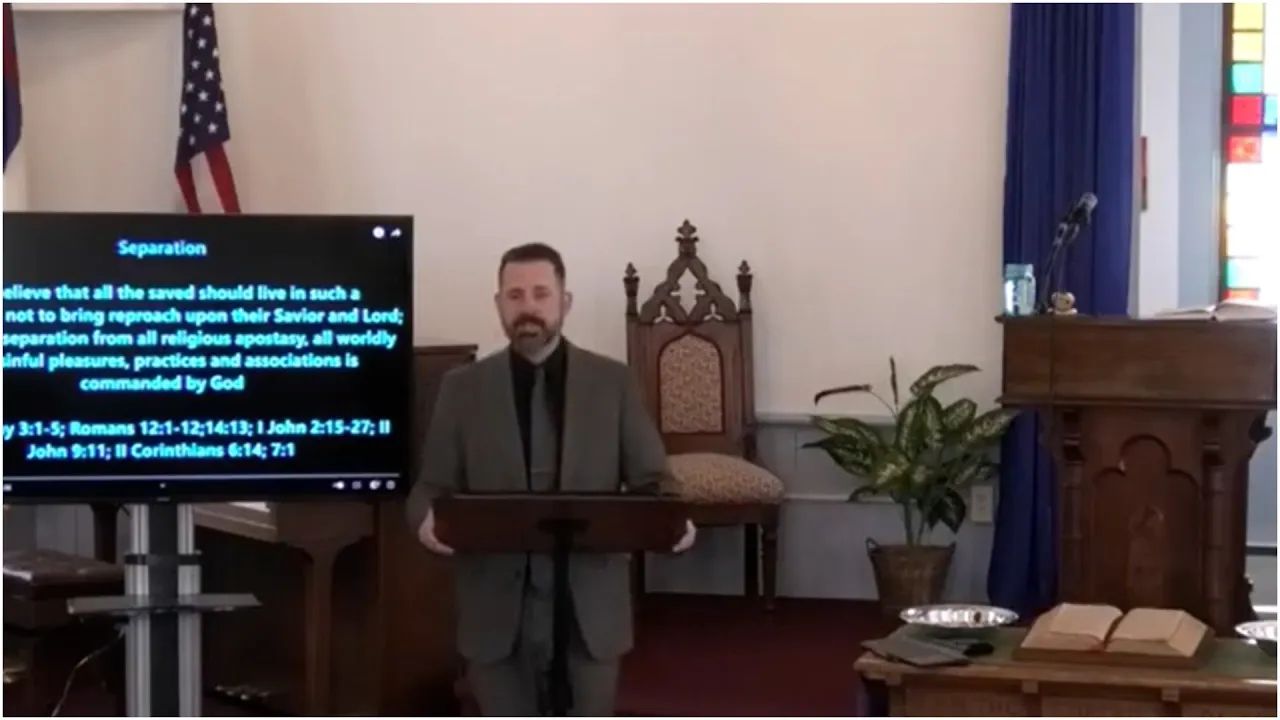
So what are we going to be looking at today? The doctrine of separation. So this probably would not be as common to find in a church doctrinal statement. Let me just read this and again, you can follow along on the screen.
We believe that all the saved should live in such a manner as not to bring reproach upon their savior and Lord, and that separation from all religious apostasy, all worldly and sinful pleasures, practices, and associations is commanded by God.
And then there's a list of verses. So let's look up the first verse. Turn to second Timothy chapter three, second Timothy chapter three separation. How many of you have heard of this? Maybe a sermon or heard me talk about it in the past.
How many separation? This is familiar to you.
Okay.
Couple.
How many of you are really unfamiliar with this whole idea? Separation. The, the doctrine of separation, the idea that Christians are to be a holy, a set apart.
Separate.
We are to be separate from the world basically is what we're talking about. I think you'd be hard pressed to find any, any church member or any pastor that says, no, we should be embracing and promoting worldliness.
You know, we should be celebrating sinful pleasures. We should be joining together with apostate groups. I don't think anybody's going to say that, but guess what? A lot of people do it. A lot of churches these days are, are doing that.
So just to give you a quick example of what this might look like, our church will never hold a joint worship service with the Mormons.
We're not going to be yoking up and having a joint prayer service with a, with a Catholic priest. That's not going to happen.
Why?
Because we practice separation. Morris corner church is never going to you know, endorse a pride parade. Some churches do. We don't because we practice what separation, uh, we would never even enter into a partnership with a secular organization, even if they're doing good.
We still are not going to officially, uh, join together with them or rent out even the church building. I mean, I don't know that this would be the end of the world, but even to rent out the church building for some secular event, um, because we believe in separation, but there are evangelical churches, um, who do some of these things and then it's just kind of getting worse as time goes on.
Now it can get complicated. Would we partner with a group or with a church that would do some of those things? Well, some of those things, no, we wouldn't. Um, but working with the Catholic church, I mean, I can think of one, one church that does that and I don't understand it.
Uh, we would never do that, but you know, would we work with someone who would work with someone who would work with someone, you know, then you get into degrees of separation. So really, where do you draw the line?
Where do you draw the line? These are some of the questions we're going to be looking at. Are you confused? Are you following along?
I see a few perplexed looks. So let's read second Timothy three, one through five. The apostle Paul writes, but know this, that in the last days, perilous times will come for men will be lovers of themselves, lovers of money, boasters, proud blasphemers, disobedient to parents, unthankful, unholy, unloving, unforgiving, slanderers without self-control, brutal, despisers of good traders, headstrong, haughty, lovers of pleasure rather than lovers.
Of God.
Having, and this is the part I want you to pay attention to having a form of godliness, but denying its power from such people. Turn away.
Let's repeat that last part. Verse five, having a form of godliness, but denying its power from such people, what turn away.
So right off the bat, you can see that the scripture commands that there are people that you should separate from. There are people who have a form of godliness that you should turn away from. Some from such people turn away.
He isn't talking about, Paul isn't talking about, you know, the dregs of society or something like that, or some, um, temple of Satan, you know, turn away from them. No, he's saying these people have a form of, of godliness and he's writing it to a, to a pastor or into a church.
So these are people who, who may identify as Christians, but they deny the power. And this isn't the power of signs and wonders or anything like that. This is the power of a changed life. So they affirm a belief in Jesus, but it really has no bearing on their life.
It has no bearing on their worship, has no bearing on the way they behave and think. So Paul says in the last days, perilous times will come. Do you think that is a fair, uh, assessment of the days we're living in?
Yeah.
Well, it is, of course it was a fair assessment of the days Paul was living in as well. So we're living in the last days. This current age that we're living in right now from the first coming of Christ up until the second coming of Christ, basically the last 2000 years, this is the time period known as the last days.
This is the last age before Christ comes before the day of the Lord. So when Jesus returns to this earth, he's going to rule and reign. And that'll be a time really like a golden age for the earth where Jesus is here ruling and reigning.
But until then, this age will be marked by religious apostasy. Uh, we don't have time to go into it, but in Matthew chapter 24, we see what Jesus said about birth pangs or the beginning of sorrows, uh, that these things will increase like a pregnancy.
The, the, what do they call contractions, right? They increase as you get closer to birth, they increase in frequency and intensity. So things are going to get worse and worse. The closer we get to the end, it's going to increase.
So every faithful believer, we're trying to live, uh, the way the Lord said we should live. Uh, but as time goes on, things are going to get worse and worse. What does the word apostasy mean?
Right.
A falling, falling away. Uh, it's really amazing. Some of the things that, uh, some Christian churches are promoting these days. I don't know if you follow along, uh, with the news and Christian news, but if you do, it's pretty depressing.
So if, you know, if you're not, you know, it, it's okay to stay away from it, I guess is what I'm trying to say, but you could say they have a form of godliness, but they deny the power. Uh, so what should the response of a faithful believer, someone who's trying to live faith faithfully in this age?
What should our response be to all of this? Uh, well, the apostle Paul makes it clear. Our response is to practice separation from such people. Turn away.
Romans chapter 12. Let's turn there. That's the next, next verse on our list. Any questions so far? So, um, if you, sometimes people ask me, well, you know, who do you listen to? What pastors would you recommend?
What books would you recommend? What study Bible would you recommend? And if you ask me, there's certain people I would say, yeah, this guy's solid. This guy's solid. If there's a well-known pastor who says, you know, I think Mormon is, you know, it's a little different, but Mormons are Christians too.
I would never recommend someone like that. And no other evangelical should ever recommend someone like that. But in the day and age we're living in, yeah, that, that kind of stuff actually, actually does happen.
So let's see. I told you to turn where Romans chapter 12.
So based on that passage alone that we just read in second Timothy, nobody can deny that the Bible teaches the doctrine of separation. Can anyone deny that from such people turn away? Let's say an individual behaves that way and their life is sort of characterized by that list of bad behavior.
You know, they're headstrong, haughty, lovers of pleasure rather than lovers of God. And it's just clearly evident and they almost brag about it. What should we do? What should be our response? Embrace them as a brother and sister in Christ or do what?
Well, you, you know, if you're friends with them, you say, Hey, you know, uh, how you doing? What, what's, what's happening here? I heard that you said this, or, you know, you posted this, like how, how's, how's things going?
You know, we want to try to reach people, but there are many in, in the church today in God's name, they're, they're promoting worldliness to, to say the least. So remember our goal is to help people.
Our goal is to ourselves conform to the image of Christ, but we want to see our fellow brothers and sisters conform to the image of Christ. Our doctrinal statement says, we believe that just to read it again, we believe that all the saved should live in such a manner as to not bring reproach upon their savior and.
Lord.
Um, I think this is, this is a sticky topic, but, um, pastors in time past, uh, didn't have social media to contend with. You know, social media didn't exist. So if somebody was saying and doing something that was just outrageous, you, you might never know.
But today, uh, Facebook is like a window into people's, into people's heart. They need to shut the blinds. Well, they need to clean up their heart, but they need to shut, they need to shut the blinds.
So what if someone is consistently doing those types of things, promoting worldliness, promoting ungodliness, and they refuse to change? What is the job of the church?
Right?
Discipline. So Matthew 18, 15 through 17, uh, you go to that person and you try to talk to them. Um, if they will not hear you, you try to bring two or three. If they will not hear them, you bring it before the church.
If they still refuse to listen to the church, Jesus said, this isn't what I said or anyone.
Else said.
Jesus said, that person is to be to you like a heathen and a tax collector. In other words, from such a person turn away, uh, this has got to be one of the most unpopular things. Uh, but I made a commitment that I was going to teach what the Bible said, not what I want it to say.
I'm going to teach what the Bible says, not what people wish it said, whether we like it or not. The Bible teaches shunning. Oh, that's terrible. Well, right. It is terrible. It's a terrible thing to be shunned and hardly anybody does it, but that's what the scripture teaches from such people turn away, let them be to you.
Jesus said like a heathen and a tax collector. When somebody is put out of the fellowship and you know, uh, a church member reaches out to them and says, Hey, Hey, you're looking good. You know, you're looking, Hey, things are, you're treating it like nothing ever happened and you're really undercutting, undercutting the church.
You're undercutting the word of God. You want to reach out to them and, and try to bring them back in, not affirm them and, and praise them in, in what they're doing.
Romans 12 verse one. Any comments?
No.
I beseech you therefore brethren by the mercies of God, that you present your bodies, a living sacrifice, Holy, acceptable to God, which is your reasonable service and do not be conformed to this world, but be transformed by the renewing of your mind that you may prove what is that good and acceptable and perfect will of God.
Paul then gets into the spiritual gifts. So just to stay on topic, skip down to verse nine, it says, let love be without hypocrisy. In other words, love needs to be sincere. He says, abhor what is evil and cling to what is good.
That's a pretty strong statement, right? Abhor what is evil. Now the last time we looked at the doctrine of the two natures of the believer, do you remember that? It was probably what month, month ago, the two natures of the believer who wants to kind of give a definition of that.
The two natures, or I'll just call on somebody.
How's that sound?
Dad.
So there's the sin nature and then there's the new nature. So a believer is at the same time, both sinner and a saint.
So I can say that I am a saint because I have placed my faith in Christ. I have the Holy spirit within me. I am a saint, but at the same time, I still have the old nature and I'm still capable of sin.
And at times I do sin. So I am a saint, but I'm also a sinner. So every believer has the two natures. So we have our new nature. We also have the sinful flesh. So, and we had said that sinless perfection is not obtainable in this life.
We will experience that when we get to heaven, but living in this world, let's face it. We are all tempted. We are all influenced. And if we are not in the word and seeking to obey Christ, we're going to be conformed to the world, right?
What does Paul say? I beseech you, therefore, brethren, by the mercies of God, that you present your bodies a living sacrifice, holy, acceptable to God, which is your reasonable service and do not be what right.
Do not be conformed to the world. So Paul says along those same lines, a poor, what is evil? There are some things that are just not a temptation for some of us. There are other things that will be a temptation, but it's our flesh that desires those things.
What's repentance? A change of mind. That's where it all starts. A change of mind, which hopefully leads to a change of behavior. Let's look at the next verse, 2 Corinthians chapter seven, verse one. And again, these are kind of unpopular topics.
You know, if you want to get a crowd, if you want to build a church with the maximum amount of people coming in, this is not the type of thing you're going to teach on, right? The doctrine of separation, that'll clear out a room.
But honestly though, the fact that you come here and that you are willing to sit and listen to this. If I taught this in some Sunday school classes in churches throughout, you know, I'd have people coming up to me and they would not be very happy.
The question is, what does the Bible teach though?
Does the Bible actually say this?
All right.
Second Corinthians seven, verse one, therefore having these promises beloved, let us cleanse ourselves from all filthiness of the flesh and spirit, perfecting holiness in the fear of God. So this is an ongoing action.
I remember somebody told me a few years ago, they said, well, if you want the church to grow, you need to accept the LGBTQ movement. You know, that's why your church isn't growing because you're not accepting that, you know, well, that's a trap because this ain't going to happen either.
But if I tried to bring that mindset here, we'd have a church split, right? But people try, well, just compromise on this. Just compromise. Just bring in this worldliness. Just bring in this outside idea.
Is that what the Bible tells us to do? So this is an ongoing action that we need to cleanse ourselves and not to single out.
Them.
You know, we all need to cleanse ourselves, right? We all have our issues and our temptation. So we all need to do this on a regular basis. People take a bath. People take a shower to clean yourself, right?
You need to do that spiritually as well. Going back to what we read in second Timothy chapter three, a believer may at times be tempted or given to temptation, but that should not be something where we just adopt it as a pattern of life.
The word holy means to be set apart, or you could say the word holy means to be separate. So Christians, we are to be different. We should not think the same way that everybody else thinks. I know you've noticed this, that, um, within American culture, every five or 10 years, there's some new thing that people 30 years ago never would have done this, never would have thought this, never would have gone along with this.
But now that's the new thing starts in Hollywood and the media and politicians. And isn't it funny that the world just, they'll go along with anything it seems like Christian. That's the difference between us and them.
We don't go along with just anything. Am I off base or is this separate? When you hear the word separation, what do you think of? How many of you have heard of Christians that are called separatists separatists?
Well, what brings to mind when you hear someone who is a separatist, a Puritan? Okay, good, good. Historically, what has happened that the large institutional churches, the denominations over time conformed to the world.
Just as an example, this has been a controversy. Like I said, if you follow along with Christian news, this has been a big controversy within the Southern Baptist convention that they're just kind of going along with whatever the culture is doing.
Social justice. You've heard the term woke critical race theory. All of that stuff is in the realm of politics and culture. Well, now they're bringing that right into, right into the churches and you're hearing sermons about this stuff and they're promoting it.
Obviously, they have softened their stance on LGBT and many people within the convention are now separating themselves and say, you know what? I am no longer a Southern Baptist. They are, the churches are leaving the convention.
People are no longer identifying as Southern Baptist.
Because they are practicing the, the doctrine of separation. So the label separatist was used for those who separated themselves. Originally, this started with the church of England. The church of England was persecuting certain groups.
The separatists were going out of the church of England and the separatists believe that each local church should be ruling themselves. So that's what we believe. We believe that Morris Corner Church should be ruled and run by the people here at Morris Corner Church.
Is that, is that a radical concept? To me, this is so basic. Morris Corner Church should be run by the people of Morris Corner Church, not by some archbishop off in another state. So here's the thing with the large institutional churches and the denominations that they eventually all go bad.
There are some that haven't gone bad yet, maybe smaller groups, but really I think it's only, only a matter of time because the bigger you get, the more people you have to please, the more money there is and, and people just start looking to defend their, their place in their position.
So the large churches typically will go bad and then people will separate from the large institutional churches. Just an example of this. You've heard me tell the story before. In the 1940s, Morris Corner Church was part of the Congregationalist denomination.
And we saw, I say we, like not me, obviously, but I don't think anyone here, but the people of this church saw what was happening in the Congregationalist denomination. They viewed the gospel as offensive.
Now they didn't say that, but we love Jesus and we believe the gospel. Well, they redefined the gospel. The idea that Jesus died on the cross, that God sent his son to die for our sin, and there's all these songs in the hymnal about being washed in the blood that offended them.
So they don't preach that. We don't believe that God would punish his son for our sin. Take the hymns about the blood out of the hymnal. We saw the handwriting on the wall. We left the denomination.
Because we practiced separation. Those saints here at Morris Corner Church in 1942 or whenever it started, you know, God blessed them because who knows what this place would look like today. I have an idea what it would look like.
It would look like a lot of the other congregational churches. So this is the doctrine of separation. There are some things that we are not going to go along with. There are some things we must separate ourselves from.
Can anyone give an example of something that, you know, maybe you were part of another church or you know, you don't obviously don't mention names or anything like that, but you know of a Christian who say you need to adopt this or they were trying to get this idea and they wanted you to go along with it.
You said, no, I'm going to remain separate.
Well, here's the thing. Everyone draws a line somewhere, right? Even the so-called liberal progressive denominations, they want to separate themselves. They would want to keep a distance from the fundamentalists, right?
Here's the thing I want you to remember. Everybody practices separation.
Everybody.
There are some things that these groups will not endorse. There are some things they will not go along with. So the question is, what is the standard? You know the answer to this. What's the standard?
The Bible.
God's word is the standard. What happens if something is in the Bible, but. Ooh, that's, that's not really popular.
Let's figure out how we can, let's figure out how we can compromise it and not make it look like we're compromising. That's the way people operate these days.
Philippians. Um, let's go to Philippians four.
Yes. I saw him.
I was just going to say, I don't know if you've heard of the case in Helsinki, Finland, where they're prosecuting two people for hate speech, for quoting the Bible.
I did hear something about that.
So that's kind of scary because that can set precedence.
Right. Yeah.
You know, and that's kind of, that's kind of the big issue of our day. And trust me, if I talk about that, it's not because I want to, it's just the kind of elephant.
In the room.
It's just the issue of, of our time. And the other side, they want to paint a picture like, well, you're just, you know, you're hateful towards them. Well, I mean, I know there are people that are hateful.
There are people who are hateful on both sides. But like I said, everybody, everybody struggles with temptation and it's not a matter of singling somebody out. If there was a movement that Christian churches need to accept lying and let's say, let's have a parade where we're proud of lying.
We'd be against that too. Hey, let's have a pro covetousness. We'd be against that too. So any, any sin where you're saying this is good and should be, so we'd be against any.
Of this.
So it's not a matter of singling out certain people.
I told you to turn to Philippians chapter four. Any other comments?
There's a verse that we just read recently that I know I've heard taken out of context in first Corinthians five, it starts in verse nine. It says, I wrote to you in a letter not to associate with sexually immoral people.
I did not mean the immoral people of this world or the greedy and swindlers or idolaters. Otherwise you would have to leave the world. So I can see how people could take that out of context and, you know, say, well, it's okay to, as long as you're not a believer, it's okay to hang out with them.
Right, right.
The issue that Paul is dealing with is someone who says, I'm a Christian and I, I promote.
This.
Um, that, that's what he's addressing. Uh, because you know, the world does what the world does. I mean, that's just the way, the way that it is. You know, if you had to separate yourself from every, yeah, you, you'd have to go out.
Of the world.
You couldn't live on planet earth, right? Philippians four verse eight, Paul says, finally, brethren, uh, whatever things are true, whatever things are noble, whatever things are just, whatever things are pure, whatever things are lovely, whatever things are of good report.
If there is any virtue and if there is anything praiseworthy meditate on these things. So the biblical teaching we're looking at is separation. Uh, the church should be focusing on, uh, talking about promoting good things, not celebrating evil things or not promoting worldly things.
It's, it's so basic and yet, uh, that's kind of what's happening. Yes, Marcus.
That Philippians four eight, I came to a new understanding of it because the first thing is whatsoever things are true, there's a lot of things that are true that are like all the bad news, you know, all the bad news, everything bad that's going on.
That's what the news reports. But then it goes on and says, whatever things are honest, just pure, lovely of good report. So if you want to set your mind on something, set it on something that is all of those things.
And I had asked for a, um, example. Let me give you a personal example. Uh, every Wednesday morning I'm on the radio live at 9am and for years I would drive to the radio station listening to the radio.
And there was another church locally that was on before me. And I heard what this guy was teaching and he was not practicing separation. He was taking all the worldliness and sin and you could see slowly he was bringing it into the church and now you need to support this.
And I, I told the station manager, I'm like, this guy should not be on the radio station. Uh, he is not teaching the Bible. He's departed from the faith. And it took a little while, um, for the, you know, that final evidence to come out that, okay, we can't deny this.
But I didn't want my program being on right after this guy, when he's saying outrageous things. And now here I am, people are going to think, well, yeah, we're just two churches, two ministers. No, I want to be separate from him.
So if the station didn't drop the guy, which eventually they did, uh, praise God. Um, I would have said, okay, you know, I'm out. I just, we have to practice separation. It's not easy though. I understand that this is not easy.
It's much, it's so much easier to just let things go and go along with the flow. But, um, let's turn to first John chapter two, we have about 10 minutes left, but now we're going to get into the subject.
So we've kind of been talking about worldliness and sin and how we should, uh, separate ourselves from that. But now we're going to focus on religious apostasy and second Thessalonians two, verse three, the word apostasy is translated.
As some of you said, falling away. So apostasy is a departure from the faith, a falling away from biblical truth. And as Paul said, the more time goes on, the more of this we should expect to see. Uh, first John chapter two verses, uh, we'll start in verse 15.
John says, do not love the world or the things in the world. If anyone loves the world, the love of the father is not in him. Uh, the 20th century saw the rise of what is called the seeker sensitive movement.
I think most, all of you have heard of this and the idea of the seeker sensitive movement or the church growth movement that in order to reach the world, you need to become like.
The world.
Now you still preach the gospel, but in all these other areas, you know, you kind of become all things to all men that that was kind of the line and basically bring worldliness into the church. Well, they might not have put it that way, but that's what happened.
Verse 16 for all that is in the world, the lust of the flesh, the lust of the eyes and the pride of life, um, is not of the father, but is of the world and the world is passing away and the lust of it.
But he who does the will of God abides forever. Now listen to this verse 18 little children. It is the last hour. And as you have heard that antichrist is coming, even now, many antichrists have come by which we know that it is the last hour.
The term last hour is just another way of saying the last days, you know, this final age between first and second coming of Christ. So we're talking about the antichrist or John mentions the antichrist.
Guess what the antichrist is not going to do. He is not going to practice separation. He's going to bring all groups together. He is going to bring all religions together, all different Christian groups together.
And by the way, what does John say? Many antichrists are already here. He's saying that's a reference to the false teachers. Uh, in revelation 13, we've talked about this many times. Uh, in the end times, there's going to be a one world government, one world religion, one world economic system.
We're focusing on this morning, the, the one world, uh, religion. So when the antichrist comes, he is going to bring together, uh, all religions. Well, that's impossible, right? A hundred years ago, people would have said, that's not, that's not possible.
It might seem impossible for you this morning. I can see how that's very, very possible. In fact, it's already starting to happen. You know, if you're paying attention, it's already starting to happen.
I really believe something changed. I don't know what it is, but in the middle of the 20th century, things in the world drastically changed. Maybe it's not a coincidence that in the middle of the 20th century, you saw the reestablishment of the state of Israel, didn't we?
You saw the rise of the United Nations, uh, global governance. You've heard of globalism, right? Um, nationalism is a bad thing where, you know, you have your country and you know, you put your country first.
Ooh, that's terrible.
We need to have a global community.
That that's the antichrist spirit.
So, oh, we want peace on earth. We want the whole world to come together. That's never going to happen. That's never going to happen except when Jesus comes, he will bring. Jesus is the only one who's going to do it.
The antichrist is going to try. He's going to actually be somewhat successful. How are all religions going to come together again? What are we talking about? Separation. We're not going to yoke together with the Mormons.
We're not going to join together in a joint prayer service with the Catholic church. We practice separation. Is that being practiced though across the board? How many of you remember the memorial for the nine 11 victims?
And, you know, this was a nice thing. Generally, you know, come together and pray for the families. We can, we can support that. But do you remember what happened at that event? The Pope presided over an interfaith prayer meeting that brought together Catholics, Protestants, Hindus, Muslims, and Jews, and some other religions at a joint prayer meeting.
What's the obvious question you have to ask them? Who are they praying to, right? You know who wasn't present at that prayer meeting? The separatists. The people who really believe, really believe the Bible.
So something changed in the middle of the 20th century. With air travel, the world became smaller. And people started encountering other cultures. And, you know, now we kind of know people from around other religions.
And the one good thing that's come from it is, you know, that people get along a little better. How many of you can remember? Some of you can remember this, I'm sure. Back in the day, Catholics and Protestants didn't get along, right?
How many of you remember that? Okay, many of you. Catholics thought Protestants were of the devil. Protestants thought Catholics were of the devil. The cults thought everybody else was of the devil, right?
Now, you know, if they live next door, you can kind of get along. But they're lost. We want to see them saved, right? So that's the one good thing. People can get along, but we want to see them saved.
We can come together in a community and be kind and help them out. And if they're sick, bring them a meal and tell them you're praying for them. All that stuff is great. We don't yoke up together, though.
We don't have joint worship services with some of these other groups. Verse 22. Who is a liar but he who denies that Jesus is the Christ? How could you have spiritual fellowship with a religion that says Jesus is not the Christ?
You can't. You can't. Verse 23. Whoever denies the Son does not have the Father either. He who acknowledges the Son has the Father also. How could you have spiritual fellowship that denies that God the Father and God the Son even exist?
You can't. Any final questions or comments? We just have two or three minutes left. So this is separation. There's some churches that we're very much on the same page. We could have joint worship services together.
We do gather together for prayer. I gather together for a time of fellowship and prayer every month with people that are of different Protestant groups. And I don't see any problem with that. You know why?
Because I believe they're saved. We have different ideas, but they're Christians. I believe they're saved. There are some groups that there can be no joint cooperation with because they're not abiding in the doctrine of Christ.
Go to 2 Corinthians 6, and this is where we will end. Article 2 of the Church Constitution as to the purpose of Morris Corner Church, it says in Section F that we will cooperate with Christian activity functioning in harmony with God's Holy Word, the Bible.
So as long as there's a group that's seeking to obey the Word of God, we can have fellowship with them, and we should. I actually believe it's a burden on my heart to see more Christians coming together.
It might sound like I'm saying, no, we should just be separate from everybody. That's not what I believe. I think Christians should be coming together more than they do. But it has to be those groups that are abiding in the truth.
Look at 2 Corinthians 6, 14. Paul says, Do not be unequally yoked together with unbelievers. For what fellowship has righteousness with lawlessness, and what communion has light with darkness? So if they're saved, if their preaching is sound regarding Christ and the Gospel, we can, and I believe we should, work together with them.
You know, we're all going to live together in heaven with one another. We should start learning to get along down here. But there are some groups that do not hold to the true Gospel, and there are certainly groups promoting worldliness and sinful pleasures from them.
We must do what? Practice separation.