Keep sharing good news without ads.
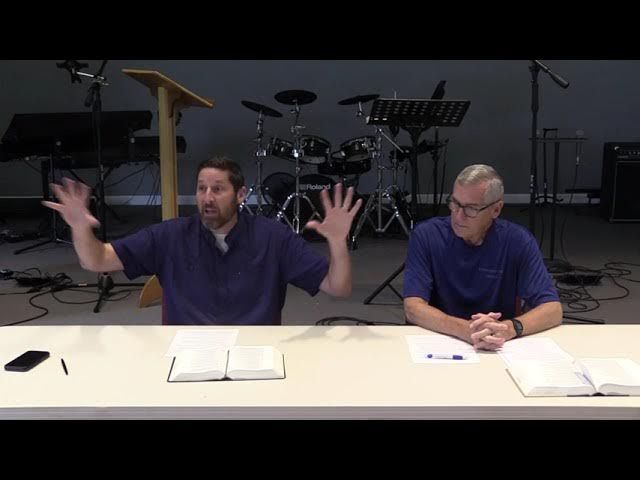
Isaiah: Prophet of the Suffering Servant Lesson 48: Isaiah 38 Pastors Jeff Kliewer and John Lasken
Open us up in a word of prayer, brother.
Amen to that. Lord, you are a sovereign God and your ways are beyond our knowledge, but we rest in your sovereignty. And as we look to the passage and we understand how King Hezekiah was nigh unto death and God had proclaimed, but Hezekiah prayed, then he prostrates himself before the Lord and the Lord hears.
Father God, you ordain sickness for your purposes and we accept that, but yet Lord, we desire as we look into your scripture today to understand how your love and your mercy, you care for your people.
Give us your wisdom, we pray in Jesus' name, amen.
Amen.
In another sign of the providence of God and His being with us, we come to Isaiah 38 today and the topic is sickness. Of all things, obviously our church has been struck with a multitude of people who have been sick, a number in the hospital.
By God's omnipotent power, a vast majority of the people who have been ill are being raised up and are being healed. That is the power of our Lord and Savior, Jesus Christ, to heal. There are still at least one, probably a couple people that are still quite ill and we don't know if the Lord will heal them in the way that we desire or heal them with life face-to-face in heaven.
We trust God for His sovereignty in matters like that. One of the things that I've noticed in this wave of sickness that's come over our church is it has been followed by a wave of love. Our church has loved one another in the midst of these sicknesses, meeting one another's needs, checking on each other.
It's a daily thing where people from this church are contacting one another, praying. We've prayed like never before and maybe that's why we're seeing such a move of the Holy Spirit with regard to people being rescued from abortion and the things that happen.
We don't have time to get into it now but just to let you know, after the training session, Jonathan and Brian Ottinger from North Carolina went to the abortion mill, the murder mill and the Lord opened an amazing door of opportunity for us that seems to be just supernatural.
Jonathan was telling me about it. So a place for us to go and stand that's right next to it. So just the providence of God of the people being there at that moment, it's just the power of the Holy Spirit.
Involved in that.
God works in mysterious ways and those ways often include sickness. All of us will have periods of sickness in our lives but it causes us to call to him in our distress and not just for ourselves but to learn to pray and intercede for others.
He has the power to speak the word and his servant would be healed. But he has purposes also in allowing sicknesses to be prolonged and we don't know his purposes but that often includes ultimately for all of us to die.
And so today we will address these issues of sickness and death and life through Jesus Christ. So read with me, if you will, Isaiah 38. John, would you be my reader today? We'll just do the first verse and we'll progress one verse at a time.
In those days, Hezekiah became sick and was at the point of death. And Isaiah the prophet, the son of Amos, came to him and said to him, thus says the Lord, set your house in order for you shall die, you shall not recover.
Okay, immediately for those of us who have read the story, we have a problem. Here's the problem. The word of the Lord said, you will die. And yet as we read on, in fact, He doesn't die. Has God's word failed?
May it never be. What's happening here is God is speaking into the sphere of our human experience from the perspective of us as we live, not knowing the secret will of God, but living within this realm as these events of our lives unfold, this is what will happen.
Now, that doesn't remove from God His freedom. So what we need to understand about the decree of God is that He knows things that are secret to us, and yet He condescends to us and reveals things as they pertain to us.
So we need to keep these two spheres separate. If we can do that, we can understand. Now, some people will say, well, here's the problem with God having a decree. He clearly changed His mind. But that would imply more than what any Christian would ever want to say, because if God simply has foreknowledge of events by looking down the corridor of history and seeing what's gonna happen, He even then would know what was gonna happen to Hezekiah.
The problem would still be there, right? So whether you take the Calvinist understanding that God has a decree, or the Arminian position that God has simple foreknowledge by learning, by looking down the corridor of history and discovering what's gonna happen even before it happens, in either case, God knows what He's doing.
The problem remains. So we need to understand these two spheres of sovereignty. And the best way to do that that I know of is from Deuteronomy 29 .29. I know many of you can quote that verse. Can you do it, Rich?
The secret things belong to God, but the revealed things belong to us and to our children.
The secret things belong to God.
There is a dichotomy in terms of the secret things that belong to the Lord our God, and those things that are revealed that belong to us. The Bible is spoken as revelation to us. And when the word of the Lord comes, it comes to us as revelation.
But there's still a higher sphere of God's sovereignty, His decree, His plan from eternity past that is utterly free, that He knows with certainty because God is not learning things and being surprised by the fact that Hezekiah will pray.
Within God's decree, there is no change. God Himself is immutable. He's unchanging. Jesus Christ, the same yesterday, today, and forever. Within the spirit in which we live, hear this, prayer actually changes things.
When we call on God, the circumstances of this life that seem to be immutable, seem to be inevitable, can actually be changed. So that's where we go to next in verses two and three. John, would you read for that?
Then Hezekiah turned his face to the wall and prayed to the Lord and said, please, oh Lord, remember how I have walked before you in faithfulness and with a whole heart and have done what is good in your sight.
And Hezekiah wept bitterly.
So Hezekiah turns his face to the wall. This action is like a physical demonstration of a broken man just turning into the wall. He's got no one else to turn to, even himself, nothing can rescue him. He turns his face to the wall and he weeps bitterly and he prays.
This is a teaching about prayer, the power of prayer. He begins to pray to the Lord, please, oh Lord. He's not demanding. The word please means if it be your will. It is a submissive kind of attitude of heart.
Oh Lord, remember how I have walked before you in faithfulness and with a whole heart and have done what is good in your sight. He's appealing to God for mercy on account of their relationship. I know you, you know me.
And even his sins have been forgiven and he appeals to God on that basis. So how do we put these two things together then? The decree of God, which is immutable, and prayer that changes things.
Well, I think about the fact that he repented. He wept bitterly for one thing. And then I think about Jonah. You know, God was gonna destroy Nineveh, but they repented in sackcloth and fasted. So God responds to man's repentant heart.
Okay, and I'm sure Hezekiah generally has a repentant heart. As like a believer, he's repenting of sin. But I think that verses two and three actually picture just the bitterness of dying. I don't think he's in sin.
I don't see any reference to sin. In fact, he appeals to his own integrity the way Job does. So rather than repentance here, I think it's just the distress of life, the weight of being so sick that you're dying.
And he's weeping because he's been told you're gonna die.
It shows how loving and compassionate our Lord is.
Yes, there's where it is. In that distress of heart, he turns to the Lord and prays. Let's get the next verse before I tie those two things together. Four to six, Jonah, thank you.
Then the word of the Lord came to Isaiah, go and say to Hezekiah, thus says the Lord, the God of David, your father, I have heard your prayer. I have seen your tears. Behold, I will add 15 years to your life.
I will deliver you and this city out of the hand of the king of Assyria and will defend this city.
Okay, now this is where it gets interesting. God has spoken, you will die. Intercession takes place for himself. Hezekiah begins to plead with the Lord and another word comes saying, you will not die.
It is essentially saying, I have seen your tears. Behold, I will add 15 years to your life. How do we fit those two things together?
Well, I don't think God, when he said, you shall die and not live, eventually he's gonna die.
Yeah.
That's not a lie, you know?
Yes.
But what God is doing is just prolonging that. So I don't think the statement that God said was necessarily inaccurate.
Okay, there's not a technical contradiction in the actual language. Okay, that is one interpretation of how to reconcile those two things. And it could be the case.
The Lord says God will never change his mind, but it doesn't say he won't be moved in his heart.
His heart is clearly moved, okay? So you're gonna, a distinction between heart and mind. All right, there is a route to go that way, that it was only technically that he wasn't saying that you're gonna die now, in 15 years, he's still dying, just 15 years drawn out.
In which case, he really wouldn't be dying in this episode. I think the better answer is to understand that God ordains the means as well as the ends. In other words, when God spoke, you will die. It was with a built-in assumption, unless I myself interpose, there's a built-in idea that God himself could change his mind.
That is assumed in the statement. He's not speaking in a grand sense as an absolute, you will die. There is built into that, unless I interpose. Meaning, the means of prayer was ordained before the foundation of the world.
God knew that Hezekiah would pray. He ordained that Hezekiah would pray. In the sovereignty of God, he gave the circumstance of impending death and told him that he would die in order to break the man, knowing, knowing with certainty that Hezekiah would pray.
And the answer would be given. This was all a part of the decree, including the rough circumstance and the prayer that from our perspective, in the sphere of our world, appears like God has changed his mind.
From our perspective, he did. That's the idea. Before John interceded for someone from our church, that person was gonna die. That was the course he was on. But when we joined together, brothers and sisters, and two or more agreeing in his name, God, from our perspective, changed the course of history.
You see?
And what was inevitable death became life.
So he knew he was gonna relent even before smoking.
Absolutely, that's what I'm teaching. And he not only knew it by learning it, as if he could look down the corridor of history and say, oh, Hezekiah's gonna turn his face to the wall and pray and weep bitterly and I'll be moved in compassion and I'll do something about it.
Beyond that, he ordained the whole of it, including the turning. This was the plan. There's nothing out of sorts here. And that's so hard for us because when we're in the midst of these struggles, when sickness touches your body, remember what Satan said to Job?
After even his children had died and everything else had happened, what will a man do for his life but touch him? And so Job was afflicted with boils. And by the way, this is probably a similar suffering that Hezekiah has.
At the end of the chapter, we'll learn about a boil that was breaking out on him. Probably like the black death kind of thing that you learn about where the boils under the armpits and something like that where he was being overtaken by this disease.
When you're physically suffering, it is so hard to trust sovereignty. But that suffering is part of what God has prescribed for us. Philippians 129, I quote it often. For it has been appointed to you, not only to believe on Him, but also to suffer for Him.
The suffering itself, which is part of the curse of the fall, all of the horrible things that happen in this world are appointed. Acts 4, 27 and 28, when the four conspire, Pontius Pilate, the Jews, Herod, the Gentiles conspire to crucify Jesus, even this was according to that bigger predestined plan for our salvation.
Everything is decreed. It doesn't threaten His decree to operate and condescend to us in speech of this nature. It's not an absolute statement. He's speaking to Hezekiah. This is gonna lead to death. It implies He Himself can change that.
But as things are progressing, it's inevitable that you can't be healed. There's no medicine that can heal you. You can't do anything. You're gonna die, but God. And when He prays, that was part of God's plan.
It seems inscrutable, and it is inscrutable.
It's inscrutable, yeah.
Remember Isaiah 55, 11, as high as the heavens are above the earth, so are my ways higher than your ways, and my thoughts higher than your thoughts. You're never gonna fully understand it. A lot of times, I think the Lord allows it to happen to increase our faith.
We have to just accept it by faith.
Right, right.
God's got our best interest at heart.
Yeah, so there's two ways to read this. One is to take the approach that by technicality, 15 years later, He still dies, and so it's technically true, but that wouldn't really apply to this particular illness leading to death.
The other way is to see this as a built-in assumption that God Himself can, from our perspective, change His mind, so that it's not, He wasn't saying, absolutely, even I can't change the situation. He's saying, from your perspective, human-wise, the way this is going, this is deadly.
This is not just an ordinary illness. You're dying from this, get it? But that itself was part of God's plan that Hezekiah would pray, and then He would rescue in answer to prayer.
That's all God's big plan.
So basically, what you're saying is Hezekiah had only one thing to do, and he did it.
There you go. Yeah, absolutely. And God ordained for him to walk in that good work that was ordained for him to do. So let's get another reader. Who would like to read for me Isaiah 38, seven and eight?
Thank you.
And this is the sign that the Lord will give you to prove He will do as He promised. I will cause the sun's shadow to move 10 steps backward on the sundial of Ahaz. So the shadow on the sundial moved backward 10 steps.
More?
No, you got it.
Before you go on, because I know what you're going on with. A few weeks ago, you were out, and I was in Joshua 10.
See, that's so funny, I was just thinking that. With the sun and Joshua, yeah.
Yeah, the reality I had to put on my engineering hat. I apologize.
I remember, I listened to your service. This can't happen.
Right.
But God makes it happen.
But God, yeah. It's a reminder of who we're dealing with here. He can make the sun stand still for a day without people flying off according to the rotation of the earth by gravity.
And in this case, he not only stopped it, but he made it go in the other direction.
Yeah, and nobody noticed, except for one person who saw the shadow. It's a supernatural miracle that can't be explained by ordinary laws of physics, it's just God.
And every miracle is that way.
It opposes, yeah. And the greatest miracle of the Bible is Genesis 1 -1.
In the beginning, God created the heavens and the earth.
The entire universe spoken into being. If this is the God we're dealing with, then we should not be afraid when we're sick and when things like this happen.
I saw a film of, what's her name, new age movie actors, what's her name? Anyway, she was saying, I am God, new age, I am God. Yeah, well, I'm thinking, make the sun stand still and walk on the wood.
Yeah, yeah, yeah.
Yeah, do the job. Who are you, where were you, and all that.
Right, amen, amen. So, is it wrong to ask for a sign, or would God ever give signs? Signs and wonders. Let's talk about signs and wonders for a moment. There you go, Judges 6, 36 to 40. What did he do, what did Gideon do?
He threw a fleece.
A fleece, he said, let it be wet on the fleece and dry on the rim, and then he did the other way.
Dry on the fleece and wet on the rim.
Right, and balancing that, go ahead.
Oh, I was just, as we were talking here, Proverbs 25 too came to mind, which is, it is the glory of God to conceal a thing, but the glory of kings to search the matter out.
Wow.
So, we absolutely, and this little commentary here is really cool, it says, so it is with the Lord, his truth is concealed for us, not from us.
Oh, wow.
Yeah, and I think that's an important, so, when it comes to signs of this nature, a wicked and adulterous generation seeks a sign, but none shall be given it but the sign of Jonah. For as Jonah was three days and three nights in the belly of the earth, so the son of man will be in the heart of the earth, in the fish in the earth.
In this case, Jesus rebukes them for not only seeking a sign, but demanding a sign. You see the difference? It is not wrong to ask God for signs in our life. It's wrong to demand it of him. And for our faith to be built on that.
It's enough that Jesus died, was buried, and rose on the third day. We don't need to see a sign in the heavens to prove God's word to us. Especially, we have the word. But God graciously, not demanded, but offers and provides here in seven and eight, a sign.
He often does that. How many times has God given you a sign to confirm something that you've been struggling with? A prayer that you've been offering? Over and over again, he does this. And that's something we should recognize.
Yeah, I was saying, Shirley MacLaine was the one.
Shirley MacLaine.
Shirley MacLaine's the apple of the lid. Oh, big new age.
I don't know her, but it sounds like a good one.
Even now.
Okay, who wants to read a big section here, nine to 15, on death and dying?
Nine to 15? I'll take it.
Rich will take that. No fear, brother.
This is the way that of Hezekiah appeared to them when he had been sick and recovered from his sickness.
Now, before you read that, think about what we get here.
We're gonna get Hezekiah's insight into what it felt like to have been at the point of death, sickness, and the terrible feeling that was going on inside of him.
Maybe this is something that the COVID people lost, but you should read it.
And you know what, once you read it, you'll realize, though, it's real. This is not a watered-down, sugar-coated version of what it means to walk as a Christian. Notice, as Rich reads this, the real anguish and distress of being at the point of death, even for a believer, because Hezekiah does walk in uprightness.
To what verse?
Just read nine through 15.
I said, in the prime of my life, I shall go to the gates of Sheol. I am deprived of the ringer of my ears. I said, I shall not see Yahweh, the Lord in the land of the living. I shall observe man to know more among the inhabitants of the world.
My lifespan is gone, taken from me like a shepherd's tent. I have cut off my life like a weaver. He cuts me off from the loom. From day until night, you make an end of me. I have considered until morning, like a lion, he breaks all my bones.
From day until night, you make an end of me. Like a crane or a swallow, I chatter. I mourn like a dove. My eyes fail from looking upward, O Lord.
I'm oppressed.
Undertake for me. What shall I say? He has both spoken to me and he himself has done it. I shall walk carefully all my years in the bitterness of my soul.
There is a bitterness to this dying. What do you notice is heaviest on Hezekiah's heart in that bitterness?
The shortness of his lifespan.
Yeah, it just didn't feel like he had enough, like he wasn't done yet. He was running a race and it just, he's only halfway done, the middle of his life. It's a reminder to us of the brevity of life that no day is promised.
It's just a vapor. Here one day, gone the next. And only one life, it will soon be passed. Only what's done for Christ will last. We need to remember this life is short and whenever a person comes to death, I think it always kind of feels like that.
Even the elderly. You know, is it really my time, Lord? Is this, is it over now? And there is a grief with that because life is so good. This actually teaches how precious life is.
Dr. Billy Graham told his grandson, Will, he said, it went by so fast when he was 99.
Yeah, he feels like his bones are breaking, like a lion is crushing him. There's a heaviness to it. Weary, looking upward, oppressed. But he's looking to God. I walked slowly all my years because of the bitterness of my soul.
Now, through those verses, you're seeing the reality of the anguish of death and dying. But look on. Who'd like to read verses 16 through 20? Louise had a hand up first.
Oh, good.
I'll hand up first.
Goodbye, Ellen.
Oh, Lord, by these things men live. And in all these is the life of my spirit. Oh, restore me to health and make me live. Behold, it was for my welfare that I had great bitterness. But in love, you have delivered my life from the pit of destruction.
For you have cast all my sins behind your back.
This portio does not thank you. Death does not praise you. Those who go down to the pit do not hope for your faithfulness. The living, he thanks you, as I do this day. The Father makes known to children your faithfulness.
The Lord will save me, and we will play my music on stringed instruments all the days of our lives at the house of the Lord. Now Isaiah has said.
Oh, you can stop right there. We'll do 21 and 22 in just a minute. That's a beautiful summary there of how Hezekiah, and it's so rich. Christians, we are pro-life, pro-life, pro-living. Hezekiah says the living, the living, he thanks you.
Life is such a gift. It is so precious to dwell on this earth that God has made and to represent him in his image and to thank him and praise his name that our breath would give him honor and glory. That's the meaning of life, to glorify God and enjoy him forever.
That's what we're here for, and we know that, and so we value life. Now, we live in a culture of death at the abortion centers where precious lives are extinguished as if nothing.
Without ever breathing.
Without having taken a breath of life.
That's just bonkers.
And I thought the Nazis were the only ones that capitalized on murder.
Yeah, yeah.
It is a culture of death from beginning to end, and we as Christians need to value life. Now, looking back at verses 16 and 17, what do you see is the lesson to be learned from Hezekiah? Very interesting, especially the beginning of 17.
What does that remind you of? Behold, it was for my welfare that I had great bitterness. Who else would have said something like that? Jesus would be an amazing example.
The answer's always Jesus.
For the joy set before me endured the cross. Many examples in the Bible.
Who else? James. James.
Why James?
Consider it all joy, brother, when you've counted various trials.
Exactly.
Consider it all joy, brother, when you encounter various trials, because these produce character and hope and all the virtues of Christianity. Who was it that was thrown into a pit and suffered for years in a dungeon in Egypt?
Joseph. But what did he say in Genesis 50, 20?
You meant it for evil, but God meant it for good.
God meant it for good.
Again and again in the scriptures, we see that even the sufferings that God lets us go through, even the bitterness of sickness, was intended by God for our good. Romans 8, 28. God works all things together for good to those who love him and are called according to his purpose.
So that's what it says in verse 17 of Isaiah 38.
And then there's that big.
It was for my welfare. Then there's that big little word.
Which is? But. But. But.
I knew you were gonna say but.
So even the bitterness for a season had a purpose. And then there's that little B-U-T. But in love you have delivered my life. God loves to rescue us, to deliver us from our distress.
I need a lot of rescue.
Yeah, we do.
We all do.
I heard an amen.
I think it was Louisa. She was reading. I think she had to pause and give an amen.
When it said,.
Amen. Hallelujah.
If he's given us nothing else, but the forgiveness of our sin, eternal life with him as a result. And he gives us no health. What if we're sick the rest of the days of our life? He's still good. What if the boil never heals?
And Hezekiah dies at the midpoint of his life. Blessed be the name of the Lord, says Job.
He's going to heaven.
He's going, he has his sins forgiven. So Christians, in all of these things, even in the reality of the pain of suffering, without making light of death and dying, we still have hope and we're still joyful.
That's why James can say that. Count it all joy when you encounter struggles of various kinds.
The joy of the Lord is much greater.
Amen, brother.
So God shows the living, the inherent goodness of worshipful living. At the end of verses 18 to 20, notice why he wants to be alive. She'll does not thank you. If my bones are in that resting place, that she'll until Christ rises from the dead and the heaven is created.
Then finally the kingdom, the new heaven and the new earth. Nobody, I'm not praising you from the grave. If I'm just waiting now, he, his spirit would still be present, but there wouldn't be a representation on earth or an imago dei.
He's saying, I want to live to praise you. Those who go down to the pit do not hope for your faithfulness. The living, the living, he thanks you. He recognizes that the meaning of life. Yeah, David said that a number of times.
He did.
David said the same thing. He thanks you as I do this day. The father makes known to the children you're faithless. He's thinking about his kids. I want to be here to train my children to walk in your ways.
And now the sad thing is in the next chapter, we'll see that his children won't and Hezekiah will not intercede for them the way he did for himself. So there's going to be a sad conclusion to this, but here that's not in view.
Here what's in view is this prayer is godly and good. He wanted to live. This is what he prayed. When he turned his face to the wall and he wept bitterly, he's saying things like this.
I'm too young to die.
I want to teach my kids to praise you. I want to raise up a godly generation. And God honored that prayer and gave him more years. The father makes known to the children your faithfulness. The Lord will save me and we will play my music on stringed instruments.
He wants to go to the assembly and play music and worship at the house of the Lord. Okay, now 21 and 22. Any questions or thoughts on that? Okay, would somebody like to read 21 and 22?
Hi, Pam.
Carol's got it.
Isaiah had said to Hezekiah's servants, make an ointment from figs and Hezekiah will recover. And Hezekiah had asked, what sign will prove that I will go to the temple of the Lord three days from now?
Now, this is a little bit disjointed from the flow of the text. It's kind of like an addendum at the back of a book, giving more information, a little bit more filling in details of something that happened earlier.
Notice in verse 21, now Isaiah had said. So you need to know this little bit of information. Let them take a cake of figs and apply it to the boil that He may recover. Now, who said that?
Isaiah.
Isaiah the prophet said it. That's not Hezekiah in the flesh saying, call the doctor, fix this boil. No, this is the word of the Lord. And so what can we learn from that as this little addendum? This is why I think it's in here.
What can we learn about medicine?
Many times God will give the antidote to somebody else to give to you.
Okay.
What about medicine in general, like as a field? Hospitals, doctors?
It's under God's sovereignty.
It's under God's sovereignty. And it's not inherently wrong. There's many Christian dominations, Christian scientists and cults usually that think it's wrong to take medicine. But God ordains the means as well as the ends.
If God heals one of our loved ones from the church using an oxygen tent in an ICU, and she comes out and recovers, that's no less a miracle from Almighty God just because it involved medicine. The medicine itself was from God.
And so what in this story was the ointment or the actual medicine?
A lump of figs.
Fig nuttins. Fig nuttins, did it?
It was the fig nuttins.
Rub some fig nuttins on the boil and somehow applying that to the boil, that he may recover. So it was instrumental. That word instrumental is important. It's an instrument that God, it's a means. Prayer is an instrument that God uses.
Medicine is an instrument that God uses. And we need to recognize this overarching sovereignty of God. The suffering was part of his plan. It didn't take him by surprise. The prayers that all of God's people raised to him were ordained to happen that way.
The doctors were at the particular hospital that you got taken to, apart from your even being able to know what was happening,.
God knew.
All of this is within the sphere of his sovereignty. And within our sphere, we're instructed to pray. From our perspective, he'll change his mind. Now, does he actually change his decree? Did God actually change his mind?
No, no.
It's impossible for God to change his mind, we're told in the scripture. So both of these realities are true. From God's perspective, his decree had all of this planned. From our perspective, within the sphere in which we live, we pray and we intercede and it changes things.
We see people being saved and baptized through prayer meetings. Doors opening at the abortion clinic for a place for us to stand and worship. That comes by prayer and fasting, the instruments that God has given us.
So we're advancing within the sphere in which we live. And that's not incompatible with God still having a decree for all of it. Once again, this theological concept that comes up so often, Isaiah chapter 10, compatibilism.
God has a decree and we have real responsibility. The prayerless Christian will have an anemic life.
There's another aspect to this too, that Isaiah let them take some fig newtons and apply it to the boil. Yeah, okay. So there are those who would understand these boils are terminal, there is no answer to these boils.
These boils mean death. But God allows others to participate in it and see.
Good? Yeah.
Excellent. And the last caveat, the last thing thrown in verse 22, Hezekiah also had said, so this again is filler for earlier information, remember? What is the sign that I shall go up to the house of the Lord?
We learn now that it was actually Hezekiah that asked for a sign. Earlier in the text, it just says, yeah, he had told us that part. It just said, this shall be the sign to you. What we learn at the end of the passage, Hezekiah had asked for a sign, which is why you guys got the question right, that it's not wrong to ask for a sign.
You can ask God to show you, am I on the right path here? Can you give me a sign? We can ask that of God. Now, can we demand it of him?
No.
And if he doesn't give it, should we pout?
But when he does, you'll know. You'll feel confirmed. You'll have that sense that he's leading you in the right way. When you're in the center of God's will, you know it. There are ways that you know it, and he confirms it through interactions you have with people and an email that confirms something or just some answer to prayer.
You know that God is with you when you're walking in the spirit. So, application. Approach death with the attitude to live as Christ, to die as gain. Now, that's that fearlessness, right, that Paul displayed all through his ministry.
But listen, Hezekiah reminds us of something. That can't be just like a flippant, no big deal kind of attitude. When Paul told, when Agabus tied up his hands and he prophesied, you go to Jerusalem, they're gonna bind you, and Paul says, I'm willing not only to be bound but also to die.
That's not a reckless spirit of someone who doesn't understand suffering. That's a person who's been beaten to within an inch of his life five times. That's a man who once was stoned and left for dead in Lystra.
He's been shipwrecked. This is a man who's counting the cost and truly gets it. He's not just devaluing life. What Hezekiah is saying here, remember from Hezekiah's example, life is precious and dying is bitter.
It is difficult. There is a real human suffering that goes with that, even for the faithful Christian. Remember Job's suffering. See, he was really going through it. And we don't diminish that. We need to be compassionate to those who are suffering.
And recognize when you're suffering, and you don't even feel close to God sometimes because the pain is all you can think about. God is with you in that pain. He's sovereign over it all. And Hezekiah gives us a glimpse of what that felt like to him.
It was real distress. And yet he's calling on the Lord, and God delivers him in this case. So all of these lessons about death and dying remind us of the value of life. We ought to value life and fight for life.
Our lives, the lives of others. And remember that we're here. The reason for living, every breath you have, is worship.
Amen? Amen.
John, would you close us in prayer?
Our Lord God, you have numbered our days from the very beginning. Yet Lord God, you care for us, and you desire that we come to you in prayer and in supplication and in submission to your sovereign will.
And you delight to bless your children. As Hezekiah went through it, and as Hezekiah experienced the true anguishes, yet he understood that but in love you deliver our life. Give us a picture of understanding of your sovereignty and of the blessing that we have to live as your children in worship of you.
In Jesus' name, amen.
Amen. Amen.