Keep sharing good news without ads.
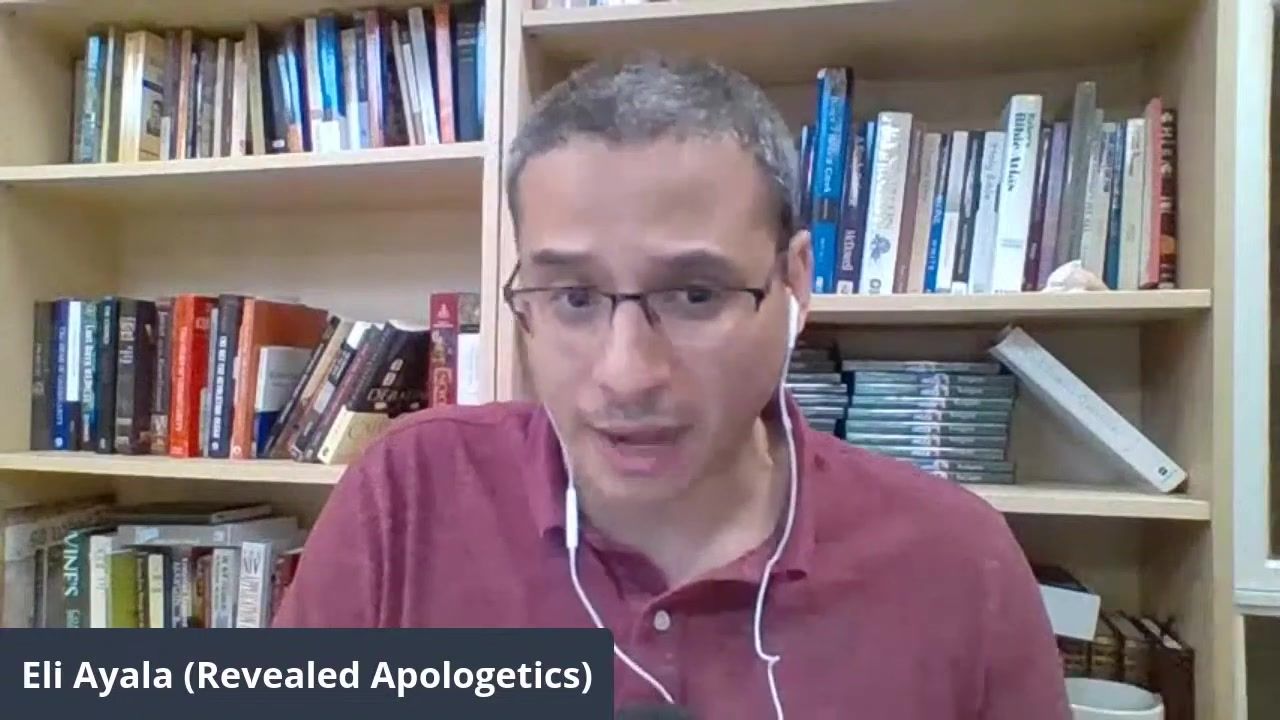
In this episode, I have the pleasure of interviewing a very close friend of William Lane Craig, Kevin Harris, the host of the Reasonable Faith podcast.
Welcome back to another show of Revealed Apologetics with your host Eli Ayala, and I am super excited today because we have a wonderful guest that I'll be interviewing to discuss the topic of the apologetic legacy of Dr. William Lane Craig of Reasonable Faith.
And so I'm going to introduce our guest in just a few moments just by way of quick announcements. I'm going to be having a couple of other interviews coming up with some very fascinating guests covering various topics that range from theology, apologetics, and all those other related areas.
Also if those of you who are following my ministry at any level, I will also be engaging in a debate on the topic, is there evidence for the God of the Bible, on June 2nd. So stay tuned for that as well.
And today I'm super excited because we're going to be talking about the legacy of William Lane Craig, who if anyone knows me specifically, okay, they know I'm a Calvinist and they know that I'm a presuppositional apologist.
And so you're probably wondering why on earth do I have a good friend of Dr. Craig, Kevin Harris, who actually hosts the Reasonable Faith podcast. Why would I have someone like Kevin Harris on my show talking about the apologetic legacy of William Lane Craig?
Well, if you are Reformed and you are a presuppositional apologist and you have a problem with that, you could always go to a different channel because regardless of my theological perspective and my apologetic perspective, I would have to be living under a rock to not acknowledge the apologetic influence that Dr. Craig is having in the world of Christianity today.
And more specifically, I would be very dishonest if I couldn't admit that Dr. Craig has had a profound influence on my own thinking. So it's a great pleasure and a joy to have Kevin Harris here and maybe one day we can get Dr. Craig as well.
I have been very influenced by Dr. Craig's work and I think Kevin Harris has done an amazing job asking the questions and sifting through material so that Dr. Craig can address those issues and can provide a great help to the body, even if there are those who come from different perspectives.
So without further ado, I'd like to welcome Kevin Harris. And if you want to take just a few seconds to tell folks about you, they probably know more about you than they would about me, but you can take a few moments to share a little bit about yourself and what you do.
I was in Top 40 in rock radio for a long time, all during the 80s, started when I was in high school and moved more toward production in the 90s. And I said, you know, how can I use my gifts in radio and in production and my love for apologetics and sharing my faith and sharing the cause of Christ?
How can I somehow put those together and yet also be as mainstream as possible? Because I often think that we as followers of Christ miss opportunities by just going into the Christian world. And we need to learn how to, in God's grace, navigate the mainstream because, well, that's where the people are.
And so I've tried to stay in the stream and be salt and light. I'm a salt and light guy. And that takes a lot of discipline and maturity, you know, to do that because it can be treacherous, you know, from time to time and eat up by the big entertainment machine.
But I think that we're really doing that with reasonable faith with these podcasts.
It's interesting, my introduction to apologetics was interesting. It came through my study of eschatology. And so my brother-in-law actually was called upon to DJ a wedding at the last second because the DJ had, for whatever reason, he was unable to do the wedding.
And so he wanted to borrow my iPod and hook it up to some speakers and use that for the music. And so after the wedding, he gave me my iPod back and I'm listening through stuff and he put music on there and a bunch of other audio material.
And I was like, who's this William Lane Craig guy? Like, and that was my first introduction to Dr. Craig and the reasonable faith podcast. And so from there, I have learned so much since then. And of course, I have Dr. Craig's book here.
And I know folks who are involved in apologetics, this is a very well known work. And as a teacher, prior to getting a job as a teacher, I was posted guard of the bathroom doing bathroom duty as a permanent sub from the morning to the afternoon.
And I spent my entire day guarding the bathroom like a boss and reading the living daylights out of this book. And so it was immensely helpful. And of course, in my study of Dr. Craig, I was very familiar with your soothing radio voice, which I have to admit, I've been listening to you for years before I actually saw what you look like.
And I kind of see like you don't look the same as the way you sound, which is usually the case with radio. Do you get that a lot?
Oh, yeah. Yeah. Gosh, if you listen to a tape of me when I was 20, OK, to a tape of me when I'm 60, which is now, OK, that's how ancient I am. I still sound 20. And so if people see me and go, ah, you know, well, you know, it's just part of it.
Your voice kind of stays the same. But but yeah, it's it's fun. It's so funny, the whole history of radio back when I started radio, you had to have a radio voice and just really puke and all that stuff.
And MTV changed all that about 1981. I mean, everybody said they were more casual. Hey, we got some music from Duran Duran coming up. Thanks for hanging out. And radio had to adapt because we all sounded like buffoons after we're talking like this is casual.
So that's one good thing, a little more transparent, a little more real and and the whole bit. And that's moved right on into what you're doing as well. We're having a conversation. The podcast that I do with Dr. Greger are very conversational.
I try to keep it on the lay level, which is not hard to do because I've still got some reading to do on some of the things that we discuss. So I ask from the position of a layman what the what the average person is going to is going to ask.
The thing about it is, is that people who listen to Reasonable Faith are so sophisticated, for the most part, that they're going, yeah, yeah, yeah, I've heard all that. But just think about, again, the mainstream, that there are a lot of people who are coming in and want to try to find that middle ground.
Yeah, and I think I think that's very important because I think one of the great tasks of the apologist is to kind of take that ivory tower material and bring it down to the everyday person so it can be useful on the everyday level as well as, you know, it's useful within that context of scholarship.
And I think that's a very, very challenging thing to do. But I think you do it very well because you're kind of like the inner voice in the lay person's head. Well, I want to ask this and you ask it and they're like, oh, there you go.
He asked it. And so hearing you kind of interact with someone like Dr. Craig and the way you ask questions, I think is to be honest, I think it's I think it's amazing on multiple levels, which is what I want to ask you about.
One of the reasons why I wanted to have you on. And of course, I mean, who wouldn't want to have Dr. Craig on as well? I mean, you know, folks like him are very busy and we understand that goes. But as I've been listening to you, I have actually found that there is great apologetic insight in what you do, not merely with Dr. Craig answering the questions and doing the explanations and things like that.
What do you think is the apologetic value of doing what you do in the sense of researching material, sifting through good information and bad information such that you can crystallize the issues to in such a way that, yes, this is the package.
This is what we're going to talk about. This is the important issue to address. How do you put your finger on the pulse of what's going on in the world around us such that you give us relevant information?
First of all, a lot of people help. I mean, I get emails and I need to put my email out there more often because maybe I haven't done as much. But even on Facebook, people will send me topics. Hey, you ought to do a podcast on this.
Hey, what about this? And so people have help from all over the world. You know, Brazil, Canada and everywhere. And so that's one thing. And oh, man, you know, I have to go into the sewer of the Internet and I have to wade through all the horrible things that people are saying about Dr. Craig.
Right. We'll talk about that later if you want. I mean, he's the real deal. I'll just give you a spoiler alert. He is the real deal. I'll tell you straight up and we'll talk about it. But but I'll wade through there and kind of see what people see if I can.
I'm pretty good at getting the buzz. What's what are people talking about? What's the chatter? I'll see what our atheist friends are talking about. Kind of wade through that and some things like that.
And Dr. Craig is a he's a philosopher. He's a professional philosopher. He's not an apologist. First, apologetics just kind of comes out of that and which is very valuable because we need to study philosophy and theology and all the disciplines and then culminate that into our apologetics.
And so we'll try to take his philosophical training and knowledge, which is like insane. He's such an egghead. But and then and then find the apologetic nugget nugget in there, mine that nugget, mine that nugget and bring it out so that we can use it in a practical way.
And so that's that's what I try to do.
Yeah. And and that and I'm sorry.
Can you say that again? Very accommodating of that, because he had rather talk about something else. And then I'll say I'll get him down. You know, I'll get him down off of the top shelf. But again, I have to say that people are becoming more and more sophisticated.
People in junior high, seventh grade, eighth grade, they know a lot these days. People are boning up on their on their apologetics and philosophy.
So it's good. So now I guess a quick question for you before we move on to Dr. Craig is, can you speak to the idea of the apologetic value of what you do? I mean, what. What is it what is so apologetically valuable to be able to differentiate between good material and bad material and zero in on those important.
Issues? Because you're going to run into not only some simple question that you've heard a million times from your brother in law, you're going to run into some of the most sophisticated, atheistic, non-Christian, materialistic philosophy out there.
And it's becoming more and more necessary to really wade through that, have the basics down and then, you know, build from there with a better, better standpoint. So I would say people tend to ask the same questions.
Sure. They're certainly getting more sophisticated these days. I remember back in the day, apologetics was a secret weapon. I mean, all of us apologists were running around in the 70s and 80s, cocky because we could knock you your argument out of the park.
And, you know, well, all of a sudden the 90s hit and the Internet hit. And I was shocked to find out that there were lots of my atheist friends who I didn't know too many until the Internet actually knew these arguments, too.
And I got a little longer. The secret evangelistic weapon, right? You know, or evangelism. We've got to be on our game and at the same time not lose sight of glorifying the Lord, because, you know, the tendency, of course, is to just get into a brawl and try to one up and stuff like that.
And that's one of the things I appreciate with Dr. Craig is that he is in the heat of the philosophical conflicts and watching. I think I've watched almost every debate he has because I've been listening for a long time and I have not I can honestly say I have never seen him ever lose his cool in the midst of the conflict.
And so even just for myself, I'm going to ask you the question, but just for myself, one of the the things that I think Dr. Craig is a perfect example of is what a Christian gentleman looks like, regardless of what people might, you know, other Christian brothers and sisters who may share his philosophical and theological positions or whatever.
No one can fault him for the godly character that he that he always presents, especially in the heat of conflict. And I think that's something very much that we all need to learn from. So I think that's important.
All right. Well, let's shift now. We're talking about the leg of the apologetic legacy of Dr. Craig. Let me ask you a question and it's going to sound a little morbid, but it's not. You kind of get the spirit of what I'm going to ask.
If Dr. Craig were to pass away and you are speaking at his funeral, how would you briefly summarize the impact he's had on you personally and the impact, as you have perceived, that he's had on the Christian world?
I'd walk out and I would open my Bible and I would say. The WLC. OK, because. It's it's it's screamingly obvious, I mean, not that I would I can't answer the question, but he has somehow been given the grace to do these debates and these lectures and other things that have been so disseminated and so widespread that there's just a whole lot of people who who know who he is and have been influenced by him.
And overlap between Armenians, Calvinists, Molinists, I mean, we all share the same apologetic value on things. And so that's what he's done as well. And you pointed out during the intro, which I thought was great, because while there are theological differences and things like that, there is a lot of common ground.
And so he has been able to hone in on that. Sure. He's been able to show that he's got three rebuttals for everything, anything that you can bring up. And so that says that makes people interested in learning.
Not again, not so you can one up somebody, but so that you can represent better so that you can make a bigger impact so that you can represent your faith better. And you're right. He is a gentleman. He genuinely cares and he's charitable.
He will give his opponent, his debate opponent, when he reads their material or if they say something, he'll give them the benefit of the doubt. He will try not to set up a straw man. He will try to really hone in on what they say and then interact with it.
So this has captured a lot of people and electrified them, has caused them to want to at least bone up. And a lot of people say, well, I'm going to debate like that. You know, well, it's I'm telling you, that takes a lot of research.
If you're going to have a mainstream debate, debates are great. You know, I used to do them and but but it takes a lot of prep.
Well, let's just say Dr. Craig knows how to come prepared for a fight.
You really got now.
Now, now, less people, I could say from my knowledge of him as kind of just the person who's followed his work. He's got a razor sharp mind, obviously. He's got a a kind of charming and cheesy scholar sense of humor that kind of is it's kind of like it's cheesy, but it's Dr. Craig, so it's OK.
But he uses that to his benefit when making some point that he wants to get across. And I think there is there is a there is a balance to how he presents arguments. And he uses a mixture, as I see it, of the intellectual strength of the argument, along with the Christian character, the character that's required to engage in those sorts of discussions and kind of that little charm that he has to make a point.
I think all of these things other apologists can can learn from in that we try to employ all of the the things that God has given us to the purpose of promoting the gospel, giving an answer to those who, you know, who ask us for the reason for the hope that's in us.
And I think he exemplifies that very, very well. Now, on a more personal level, what kind of for people who are only familiar with Dr. Craig at that professional level, what sort of person is he just, you know, when you're just having a basic conversation?
I have a friend who is he's over at Trinity Radio. Radio is a Christian apologist. I believe he's the president of Trinity Trinity Bible College. I think there's a complicated name. It's so it doesn't roll off the tongue.
But Braxton Hunter, who had the pleasure of going with Dr. Craig and a few others on a trip to Israel. And I asked him a while back, you know, how was Dr. Craig? And, you know, in that setting where he's kind of just hanging out, you guys are traveling along and he's like, he's exactly the same.
So I kind of get that consistent answer. Do you think that Dr. Craig is a different Dr. Craig when he's kind of like laid back, having normal conversations or or does he give you syllogisms for everything?
Well, what you see is what you get, he he really cares about people and he really cares about the arguments and he's disturbed by misrepresentations of the Christian faith. He's disturbed by unsophisticated theology that we need to be as sophisticated as we can in our theology and Bible knowledge in the grace of God.
And so he's very passionate about that. But he but he cares about people. He started in ministry in the you know, in college, working with young people, working with people in dorm. And he just he really does care this.
If you listen to the podcast, Dr. Craig's secret weapon, his wife Jan. That was great. Man, she is something. And she has she keeps him organized and has helped him. Really? In fact, I we all need a Jan in our lives.
My wife is pretty much that way. She's kind of like that. Very practical because Dr. Craig is thinking, you know, he's going over philosophy and theology and thinking about infinite regresses and and vicious ones.
And and so he's in thought and he's pouring everything into this. And that's hard to stay organized when you're doing this. Me, I'm a creative guy and my brains are totally on that side. So I'm it's hard for me to be organized.
And I've learned from Jan just from the over 10 years of of of watching her because I'm thinking pink, blue colors. And I can be just a, you know, real scatterbrain.
Yeah, I suppose I suppose if we are to talk about the legacy of Dr. Craig, it's really impossible to talk about the legacy of Dr. Craig without mentioning the influence of his wife and being behind. I mean, that in that particular episode of Reasonable Faith, where you guys spoke about, you know, Dr. Craig's secret weapon.
I mean, it just goes to show the importance of having a significant other that stands behind you in your ministry and gives you the strength to, you know, emotional strength or whatever, whatever kind of support that that that is a very, very important feature as to how an apologist or a minister or a pastor or whatever can be effective to to the best degree possible.
I think that's I think it's amazing.
Yes. And he's he's very disciplined. Of course, Jan, I'm sure has helped with that. But he does this at this point and this at this point and working from his home office. You know, you have to. Yeah, because it'd be very easy just to chill as we're all finding out.
It takes a lot of discipline if you're going to work out of your home and he sticks to it. He sticks to it. He has a time that he looks at email. He has a time that he's going to read and he's up early, early in the morning.
And if I could interrupt you there, I do apologize. I think people would be interested in this. And I know that Dr. Craig has mentioned it in articles because people have asked this question, but maybe you can kind of specify what does a study day for Dr. Craig look like?
Have you ever spoken about that with him? I mean, what time does he wake up? What does he like to read? How does that all work out throughout his day? Do you ever talk about that with him?
Yeah, I do. And he boy, he's been doing the same thing for a long time. He's very consistent. And that's why I think he's so effective. He is just he's up, I think, for 430 in the morning, goes to bed early, gets up early devotion straight off the bat.
He gets up and he will read passage, then he'll read a report or something that he's interested in that's more devotional rather than philosophical. Like for a while he was going to the to the church fathers and for a while he was going through his devotions, for a while he was going through the growth of the church in different areas.
And so he knew a lot about that. And then and then he prays, works out. He's got a muscular ailment that he has to really keep an eye on. He eats right. Jan sees to that. He's in really good shape. He has struggled with that health issues, but he has stayed on top of it.
And so he gets exercise and then he probably hits that study right towards seven o 'clock in the morning and goes till five, you know, or sometimes longer.
Yeah. So the key thing is is consistency.
Yes. And he I mean, he won't check. He won't check email. This is insane to me, you know, because we have phones. I mean, I got to check this thing every five minutes and email. He very seldom will he ever check it before five in the afternoon.
Jan will come down and let him know, you know, but he really sticks to it.
Well, that's actually it makes me feel really special because Dr. Craig is a high class philosopher. He's renowned around the world. I reach out to people all the time to, you know, do interviews like this.
And it's very hard to get in touch with people. And there are people who I've messaged multiple times and just, you know, I acknowledge people are busy and I reach out no responses. But I I have to say, I have reached out to Dr. Craig on Facebook and he has responded to every every even if it's a quick question, hey, what what Bible translation do you use?
It gives me the time of day. And I think for me, who I mean, he doesn't know who I am. I'm just a friend on Facebook. And I think someone of his stature who recognizes the impact that he's having, I think when he's able to, he finds it important to, you know, say hello or to or to, you know, answer a person's question.
I think that's that's really difficult to maintain everything you're doing and also pay attention to the people that are not really involved in your life. But you're just kind of aware of your even your Facebook profile or something like that.
I think that's very I think it says a lot about his character.
I guarantee you, he'll be on your show. You know, he's doing a lot more interviews these days. Yeah, I'll hook you up as well, because I appreciate that to be on. It'd be great for him to be on. So, yeah, yeah.
He's doing a lot more interviews these days.
Yeah, well, I would greatly appreciate that. I'd love to have him. You bet you bet. But now now when we're speaking about the legacy of Dr. Craig, what do you. What do you think in your estimation is the impact that he's making in the world of atheism?
I mean, how do atheists around the world, people that he debates, how is he being perceived on the philosophical landscape today as you see it?
You know, I think the respect for him has grown among the atheist, agnostic, non-Christian, anti-theistic community. For a while, everything you read was was just horrible. It was all at home. And, you know, if you think about it, suppose, you know, that you there were a Mormon apologist who was good and so smooth and so effective and three answers to everything that you said and could was an outstanding debater.
It'd be, you know, you'd you'd kind of go get a little sour grapes there. I know. Let's see if we can find something on this guy. So and which is not charitable and it's not like to do that. But a lot of it has been just because he's been so effective and his argumentation, his arguments are good and he's been, you know, has been consistent.
So I see a growing admiration for him. And there are others who have always admired him, who are very prominent in the like in the new atheist movement and in some of that group and who were around before all that happened in the early 2000s, who always admired him and are good friends with him.
So that's good. Somebody asked me the other day, Dr. Craig, really, he started kind of having an impact with Willow Creek debate in the in the 90s, late 90s. And because Zindler, the guy that he debated was just real formidable.
And people were very much that debate multiple times, by the way.
Man, he hit a brick wall and I watched that on like a VHS. I bought that that that debated VHS and I was stunned and I started calling Dr. Craig to interview him on my show because he did such a good job without being snarky.
Yeah. And well, and that kicked it. And then I was at a debate in Dallas, Texas, right around 98, 99, wherever it was when he debated Parsons, there were 4000 people at that big mega church. Yeah, there were overflow.
And it was a very I mean, that just launched this explosion. Sure. And they go, look, if he exploded and we've seen this renaissance of apologetics, which we have. Sure. And and and and believers and followers of Christ are finally starting to see the value in this, which they're supposed to do biblically, you know, all of us.
Why did the atheist movement, the new atheist hit right after 9 -11 and just grow so big? If you guys had such an impact, all I can tell you is imagine what it would be like had he not. Had that impact, had there not been an impact from Ravi Zacharias and Norman Geisler and and and others when it was just growing, you know.
It was almost as if. God was kind of prepping the planet for, yeah, as a as a result of 9 -11, you know, for the most part, the full horsemen of the atheists, the new atheists and things like that. And so.
Boom, a lot of people were ready.
Yeah. And that's in there and that's in there. I think that might have been the first debate I had ever seen Dr. Craig do. And one thing that amazed me was just his razor razor sharp intellect and an ability to kind of recall certain facts.
I think it was something where he mentioned a a quotation from Josephus, I think, where him actually just saying the quote and the reference where it was found actually brought the audience to a chuckle.
People are laughing like, are you serious? I mean, he was like on page this paragraph that. And on the one hand, you could see that as, wow, what a smart guy this guy is. But on the other hand, what an encouragement and an inspiration for believers to value the facts so much that in our own engaging within within the apologetics context that we learn to memorize certain facts and Bible verses and arguments and things like that.
I think that was the big impact that Dr. Craig had on me on the one hand, of course. I mean, he's a razor sharp guy, and I think a lot of people are attracted to his work because he is a brilliant mind.
But at the same time, what an amazing example. I mean, he definitely puts that bar up there. I'm like, well, I'm not going to be at the next William Lane Craig anytime soon. But sure, I can I can learn from some of those things that he's doing.
He can speak so much over the head sometimes that you feel like you've accomplished something if you grab just a little piece like, OK, I think this I think I was able to wrap my head around. And that is helpful.
It's useful. And it speaks both to the lay person as well as to the people with the more scholarly bend. I think that's why I think I read an article just on unreasonable faith not that long ago, which it's an older article.
But he was talking a little bit about how he double dips with his work. On the one hand, he will write something that is scholarly in nature. But then he'll take that information, kind of retweak it a little bit and provide something for the lay person.
And I think that right there is striking that balance that I think he does. He does so well.
Yeah, I think so, too. And another thing, because of his position, that by the grace of God, he is he has attained it because of these major secular or mainstream colleges that he goes to the highest echelons.
Sure. He also he'll read what his opponent has written or look at a few videos or something just. And that's part of that charity that he he's talking about that I'm talking about. He's charitable. He'll say, well, what do you believe?
What do you think? And then he will he'll he'll know what they're going to say. Right. For the most part. And that's why some kind of sometimes studying, they'll say Bert Bertrand Russell said somewhere that and then Dr. Craig will get up and say, yeah, that was on page twenty eight.
Bertrand Russell said, well, I've got it right here.
That's you know, that is such an important piece.
I've seen him do that. And that's because he's read their work. Sure. And and so you and you can benefit from reading people's work, but you can also test it and see where you think the person's wrong and what a Christian response will be.
Right. And so that's part of that preparation. Right.
And I think that principle of charity is a key point. Another another apologist that does that well. And I say this with caution because he can be rough around the edges and there's always controversy surrounding him.
And he doesn't always have nice things to say about Dr. Craig, but Dr. James White over at Alpha and Omega Ministries, definitely different perspective. Right. But what I've noticed between Dr. Craig and Dr. White is that in their debates, they go out of their way to read the other side.
And I think that's something that that that principle of charity that you want to you don't want to present your argument and not care what the other person has to say, even if you disagree with it. Yeah, but I but I think what you've explained with regards to how Dr. Craig studies, where he begins his day with devotional material, there needs to be that balance that if you're going to be immersing yourself in the work of unbelievers, that you also need to be catering to your spiritual formation and your devotion time and things like that.
Why don't you speak a little bit to that? Why is that such a vital aspect of not just being a Christian in general, but doing apologetics in particular?
Yeah. And by the way, James White has had such a great impact on me as well. I mean, I just watch him on the John Ankerberg show, which was very formative in the 80s when he had that Afro. You know, I've been watching him for a long time and I admire his his abilities.
If if I were. Hope the devil didn't hear this, if I were the devil, I'd be like, William Lane Craig is one of the people I'd really try to go after. Sure. Because he has had an impact. There are plenty of people that I would try to go after.
And so, man, he does recognize that is very humbling. And so he's very consistent in his prayer life and his life. It's an it really is an inspiration because yeah, he's under attack and he could it could be a lot worse.
And I know a lot of people are praying for him because of his position. But again, very, very humbling. And you better know that, especially online, we've all learned when this happened in the mid 90s and we all started getting on and doing our apologetics online when the Internet was new.
We had to learn not to get bent out of shape with each other.
Say that again. Your voice kind of skipped out. Can you say that again?
We had to learn not to get all bent out of shape with each other. We had to learn to be charitable and loving because, man, there was a knockdown drag outs and still, you know, it still is. And you want to, you know, you could just easily start getting at home.
Right. But. He he really sees the importance of that. He really sees the the need to to ask for God's grace and really protection, because, man, I would think he'd be a big target.
And I think that's an important piece to keep in mind. There's that there's that balance. You know, people can be so obsessed with apologetics that they that's all they focus on and there's an imbalance in their own spiritual life.
And that's a detriment in and of itself as well.
I've been there. I've been there. You know. Oh, absolutely. You go into that mode and just start kind of just depending on that one aspect of your life. And and then all of a sudden you haven't. You're not doing what you told everybody else to do.
Love the Lord, you got with all your your strength, all your, you know, with all your heart, with all your mind. You know, you know, us apologists is saying, look, guys, you're leaving the mind part out of it, you know.
And so there's been a very anti intellectual movement that we've had to deal with in the church. Yeah. A lot of it, unfortunately, came out of the charismatic movement. Some of the excesses of that. Sure.
And that's not all. I'm not trying to paint with a very broad brush, but there has been a real anti intellectualism. So we've been trying to get them to come along in that area. Sure. In the meantime, they've been trying to get us to come along in the heart area.
Yeah. So there is.
That's very true. Well, let's shift gears here. And I think those are super important points to keep in mind because I don't want to keep going on it because we can speak on that. That's a that's a topic worthy of an episode in and of itself.
The importance of keeping that devotional balance and that, you know, a full kind of fully robust, spiritually healthy life. A good apologist is one who is also being obedient to God in those other areas.
Right. Because I'm sure I'm sure you are aware that it is quite possible to do apologetics unbiblically. We can we can. Right. So so so let's leave that aside. That's very important. We give some folks something to think about now.
Kind of a fun question here. If you had to identify your favorite reasonable faith episode in which after you were done with it, you were like, man, that was a great conversation. You know, Dr. Craig was on point in these on these issues, and I think people are really impacted by that.
What would you identify as your favorite reasonable faith episode?
Wow. Well, one of my favorite episodes is because. Dr. Craig, he really gets into a zone and I do, too. We're we're we don't let our emotions show, you know, we're doing all this. And we kind of key off of each other.
The guys, you know, a couple of men. But we both got emotional several times. And one of them was Dr. Craig's secret weapon talking about Jan. And I let it in. I could have edited it out, but you could hear you getting choked up at the end if you listen to that.
That's that's one of them. I don't know. Sometimes we are so excited about a topic. That it'll really come out. This fight is fun. But the the the West Wing episode that we did homosexuality, a Christian response to homosexuality.
That has helped a lot of people, because I think he got some deafens down that needed to be gotten down and aspects of the issue of of homosexuality that needed to be spelled out and that we needed to be a little more precise in our in our terminology and some things, because it was just all kind of weird stuff.
And I think he did a job on that. Our compassion and love at the same time, spelling out. What we need to do as a church. For people of the same sex attracted, yeah, yeah. Of a big West Wing episode that, you know, that a lot of people that pointed to us nailed all you Christians, you know, in that in that episode.
It's well, well written. It's well written. It is it is quick and it ties things together. It hits all the stereotypical ways of looking at the world. At that particular topic with Old Testament laws and how you would apply it today.
And it was sharp. And of course, you have someone like, what was it? Michael Douglas, who played the president or something like that? Was it Michael Douglas?
And Shane Martin. Michael Douglas, there we go. Sheen, there we go. Martin Sheen did play, though.
OK, I remember the episode. I remember the actual episode of the show. I remember the reasonable faith episode. Yeah, OK. And so let me ask you a more subtle question. And maybe you could answer it. Maybe you can.
I asked you what your favorite episode was. What do you think is the most important episode that you've done that afterwards you're like, hey, this is a central issue that people need to get down. They're talking about it and this and after coming away from that episode, you were like, yes, this is going to be very helpful and important to the church as people listen in.
Well, we've done several on same sex attraction, sexuality and some things that I think are really going to help. There are three or four. All of them are good. And so those those have been important because for so long.
I mean, we had to resist. That's all. And in the last several years, all people wanted to know, what did I think about gender issues and things like that? And he's disciplined enough where he will stay in his lane.
And so he has sometimes he's we're we're into a story that's not his specialty, like social social, what am I trying to say? Social issues and things like that. Where you have to be pretty versed in sociology and culture and that.
And so people want to know what he has to say about these things and I'll push him from time to time, Bill, you're going to have to talk about this. Even if you just go pastoral, you know, maybe just offer some of the insight and things like that.
Most of the time he he goes, I need to stay in my lane. This is this is my area, you know, but yeah. So but anyway, we do get into important cultural and social issues from time to time, and some of those, I think, have been very important, but probably not as important as some of the stuff that we've done on cosmology and the Kalam, the design argument, the moral argument, Platonism and things like that, because that will give you a foundation by which to launch against and tear down these arguments effectively, because all of them will have tentacles from these from these views, from these worldviews, from this philosophy.
Right. These philosophies that we need to evaluate and be able to respond to. And so and and I'm like, boy, boy, that's really hard. I'd have to really for a while. But his work on the atonement is also very, very important because and we we'd kind of gotten lazy on the atonement in the church, it seems to me, and we kind of scattered out and didn't really know what we believed.
And so his work on the atonement for a lot of people, he's tightened that back up biblically and philosophically to where it really needs to be. OK, have a more rigorous view of the atonement, because sure.
You know, we were all over the place.
Yeah. Yeah. Now I have not read. I've read a lot of his work, not his not specific, although I might have something on the I think I have this little book over here on the atonement here that I have not read yet, but I eventually will get.
I mean, there's just so much to read, but I definitely want to get to maybe if I wake up at four thirty in the morning, maybe I'll have time to, you know, you would think Dr. Craig, when he wakes up, he's spending at least a half hour on social media.
Yeah, there you go. Well, you know, he's like, this is the this is a green screen background. So they're not even real. Now, you said something very important and I think is very useful for people is when you're talking a little bit about how Dr. Craig knows to stay in his lane.
Please unpack the the importance of this within the context of apologetics, because if you're familiar with online apologetics, you know, everyone's an expert, you know, right. Everyone's an expert on the topic.
And so they try to speak to areas. Christians will try to speak to areas that they have no business speaking in. Why don't you tell us the value of knowing to stay in your own lane and kind of use Dr. Craig as the example there, even being who he is?
You know, he's kind of the guy to go to in the area of apologetics for a lot of people, but he still knows, hey, that's not my not my area. Yeah.
It's OK to know a little bit about everything, by the way, the air conditioner just kicked on. That's OK. I need to run over there and turn it off. I will if it's OK. Pressures in. But it's great to know and have a well orbed be educated on a whole lot of things.
But where are your gifts? Where are your passions? That's that's a gift from God. And it probably when you were six, seven, eight years old, it was beginning to form. And so just look at your whole life.
And so, yeah, what? Where is it that I can be most effective? What are my areas of interest that I do well? And I think that all of us have to do that. But I'm telling you, you get online, you get online, you get in these chat rooms back in the day and in some of the forums.
Now, people ask a billion questions. And so the pressure is to know it all. You know, I'm. I have done so many podcasts with Platonism. On Platonism with Dr. Craig, but I I've put that off a little bit.
I need to bone up on that so much more. And I am interested in the topic. But there's still a lot that I need to read. Sure. You know, so I'll try to get to it and, you know, when I can. But where are and then I had to decide for me as well.
I'll tell you this. Well, am I going to be a person who teaches and who debates and who lectures and apologetics? Because I'm I I'm so overwhelmed with the with the. With the topic, or am I going to use my stronger gifts?
Production, radio, podcasting. Sure. Creativity, music and all that. And facilitate those who have the education. So for a while, they're thinking, do I need to go back to school, you know, and that'd be great.
Why did you get my Ph .D. in order to do this? And no, you know, you have to be smart. You should be informed. Sure. So and you can be largely self-taught. But there are a lot of people who they do need to get their Ph .D.
They do need to go to seminary. They need to be teaching. They need to be lecturing and debating and writing and doing that. But but not everybody. Sure. It's got that. And then those guys need you and me.
You know, as well, you've got. Some some of the creative things going on in the interview process. Yeah. What's happening? Yeah, yeah.
Now, now I've I've engaged in some debates online as well and some on YouTube that that are available on my YouTube channel. And I tell people right away, I have and this is a removing the burden off the shoulders of the apologist.
And I think this is this would be helpful. Just what I'm about to share about myself and what I'll share about Dr. Craig is that if someone asks a question, it is a great, powerful, apologetical tool to say, I don't know.
That's a great question. Let me let me go back, because that that shows that you respect where the person's coming from and that caters to prolonging the interaction. The people don't just look at you as kind of you're just trying to pull an answer out of thin air.
I think there is a great apologetical God honoring value in admitting when you don't know something. And I and I've never I've never heard Dr. Craig in a debate say, well, I'm not sure about that. Maybe he has.
But I did remember his debate with Hector Avalos, in which Hector Avalos pointed out an error in one of Dr. Craig's books, I believe. And I was like, oh, my goodness, is this true? And you're going back and forth the first time, you know.
And how is Dr. Craig and respond? And Dr. Craig, if I remember correctly, admitted the error and says, yeah, I got to change that. And I was so drawn aback by the integrity of here. You have Hector Avalos, who was just really going for the jugular and putting Dr. Craig in a corner.
And Dr. Craig had no problem saying, yeah, you know, that that's that's that's something I need to go and fix. And not only did that not derail Dr. Craig, his argument still came on top, even if you're granted the, you know, the error there.
He was able to be the gentleman, show his honesty in the discussion and mount a great defense for the resurrection.
Yes, absolutely. I've seen him do that a few times where he'll go, no, no, got to change that, you know. Yeah. Sometimes it's the publisher. You know, if you're in publishing, you got to make sure that that they get it right, too.
Right. Somebody online will you get an email from somebody who's reading on page 432, some some kind of thing. And you go, I didn't put that in there. And so you got to go back. And, you know, that'll happen time to time.
But, yeah, just be transparent, be authentic. Sure. Not right at all costs. You know, be willing to to just humbly say, well, yeah, yeah, you know, you're right. But one of the debates that he's done for the most part have never been that way.
I mean, the issues were clear cut. Yeah. They were large and just demanded rigorous philosophical, theological answers and responses, both defensive and offensive. Right.
Now, what would you say is your favorite debate that he's engaged in? What do you think? When you watched it, you were kind of like, man, that was a great back and forth. There's a lot of meat here. People are going to find this valuable.
Yeah. There are a lot of good ones. Probably the Zimler debate had the biggest impact on me because it launched this whole thing. I eventually called Dr. Craig and said, Bill, I've been for a long time.
I've been interviewing you. We need to do our own show for radio. He goes, Yeah, some people tell me that this podcasting thing's going to be a big deal. Maybe we need to do that. OK, well, let's try to do both.
So we are looking toward, you know, looking forward to doing some radio as well. Sure. Sure. Yeah. Oh, God, I see that I have one percent power left on this. I'm going to have to plug this in here in just a minute.
Yeah. Why don't you take a few moments and I'll just make a couple of announcements there. You want to plug that in now?
See if I can find a plug. Yeah. All right.
Well, folks, I hope you guys are enjoying this discussion. I love this sort of stuff. I know a lot of people like to just jump into some theological issues and apologetical issues, but I love to take an influential thinker and kind of look at their legacy, look at the impact that they're making, studied, you know, learn about the different ways that the person studies.
I like to learn about those sorts of things. And so I hope you guys are enjoying this, especially coming from Kevin Harris, who knows Dr. Craig very well. So we kind of get like an insider scoop, so to speak.
Now, of course, those of you who know my my own theological and apologetical convictions, of course, I am reformed. I'm a Calvinist. Dr. Craig obviously is not OK. And I'm a presuppositionalist in my apologetic methodology.
But at the same time, one of the goals that I have with doing this ministry revealed apologetics obviously is to promote apologetics in general and being a presuppositionalist, promoting presuppositional apologetics specifically.
But one of my goals also is to build bridges between the differing apologetic methodologies, because without compromising one's apologetic convictions, you can still find benefit from interacting with with other material and and seeing kind of the value that other apologists from different methodologies, the value that they can bring to to our study of apologetics.
And so I want to just kind of encourage people not to be so narrow that they just can't stand learning something from someone who doesn't agree with them. Right. And of course, we're not undermining those disagreements.
Obviously, certain disagreements are, you know, they're a big deal. I think apologetic methodology is important. I think the issues of Calvinism, Arminianism and Molinism, those those issues are important.
We don't want to downplay those things. But I think we need to learn to live with certain differences, seek to understand what the other side is saying. And then what you'll find is just as there are inaccurate representations of a presuppositional apologetics, sometimes there can be inaccurate representations of the presuppositional representing the classical side or the evidential side.
And so I think these are important things to keep in mind. I am by no means compromising my strong convictions. I'm a I'm a I'm a very ardent follower of the presuppositional methodology. I'm I have very high regard for Dr. Cornelius Van Til and Greg Bonson.
But I do not want to eliminate many of the other resources that are out there within the Christian community that can serve a great purpose. Now, I just want to ask you guys for just a few minutes. I'm going to try to reconnect with.
With Kevin here, and let's see if I can get him back on, I think, in his attempt to reconnect. Let's see here. That there is a connection issue, let's see. Just bear with me, folks. OK. And connect. All right.
Let me see here. OK, so I've sent Kevin the link here. Can someone give me a heads up if you guys can hear me OK? Yeah, OK. I'm going to put Kevin back on, let's see here. And you are back on. Sorry about that.
That is quite all right. No, no worries at all. Yeah, while you were while you were gone, I was just talking about the importance of being able to benefit from those whom we disagree again, as I mentioned before, I am a presuppositional apologist.
I am very heavily read in Cornelius Vantill and Dr. Greg Bonson, but I've always had a great appreciation for the classical tradition. And I do think that the methodological differences are important.
But I think that a lot of people have seen these differences in such a way that they've they've seen no value in looking at the other side and saying, hey, that's actually a really useful thing. Let's see if we can benefit from the different methodologies.
And we may have different theological convictions, but there's definitely kind of a a a how can I say this? There's there's a way to benefit even with those with whom we disagree. And I and my goal is to build bridges not only between presuppositionalists and classicalists, but with Calvinist and Molinists and Armenians, again, not to undermine the differences.
We have those strong convictions, but but let's talk about them. And I think a lot of people are so narrow minded in the sense that, nope, this is where I stand and I'm not even going, you know, heresy.
And then we throw that word around a lot. And so I was just talking about how we need to be careful about that.
Oh, yeah. And there is so much value to read each other and to to find out where you come down on a particular issue and why. Right. But if you're not reading Bonson, if you're not if you don't avail yourself of stuff that James White is saying and what he's written, you're ripping yourself off.
I mean, there's some good stuff. And so don't, you know, don't be so narrow. Yeah. And yes, you're exactly right. These are, as you say, important issues. They're still peripheral, but they are important.
You know, we hold to the essentials, of course. Well, one on one. But the peripheral issues can be very important as well. Yeah. And so, yeah, we can learn a lot from each other. A lot of these are in-house debates.
And I'm a little more charity for a while. We're kind of going after everybody's the cowboys were in the precepts. Yeah. I mean, and it just really nag getting in each other's grill and I'm saying, enough, guys.
Come on. Right. And now I'm seeing I'm seeing a little more dialogue, you know, and I'm seeing some good nerd ribbing each other. Right, right, right.
Well, that's what I'm trying to do here with this show. I usually get if I'm not doing something myself and teaching something apologetically or theologically, I like to have, you know, conversations.
For example, we did have James White on this show critiquing Molinism. And of course, I had Tim Stratton over at Free Thinking Ministries to come and respond to Dr. White's critique of Molinism so you could hear both sides.
And I think regardless of where you stand, that's a useful tool. I mean, you can learn from hearing both. Because what I find as I'm a Calvinist, I used to be a Molinist and I used to before that used to hold a different position.
But when I came out of Molinism, and I don't mean that in a pejorative sense, like I came out of it like it was some cult or something. That's not what I mean. But when I came out of it, I did notice that a lot of the critiques that were offered by my Calvinist brothers were misrepresentations.
And so, again, I'm a Calvinist. I someone's someone just made a comment. Eli keeps touching his face. That's a no, no. I'm so sorry. I have to be careful of what's going on over here. But I think having these kinds of conversations open up those gateways of communication so that even if you disagree in the end, at least you understand the person's perspective more accurately.
Think about Matt Slick. Matt Slick had one of the first. Christian websites of the planet, you know, called Christian Apologetics Research Ministry. Gosh, I guess it was the mid 90s. He got he got good at that.
He got good at making a website and bulletin boards and, you know, and and these debate boards and stuff like that early. He was he just had a network. He got con launched. And we all just flocked to learn so much from that.
And he's Calvinist. And I've stayed with in Matt's house a couple of days with his family. I mean, we have this great relationship. I didn't know that.
Matt's a good friend of mine. I didn't know that you guys are connected anyway. And so we learn to.
He's invited me to speak to some of his conferences and some things like that. We just learned where to be to be close and be friends, despite some peripheral differences. You know, I'm sure.
Yeah, now we're going to try to wrap things up and I want to kind of bring it back to Dr. Craig, but I think those are important conversations to have. And I think the communication between the different groups and different perspectives and things like that need the bridges need to be built.
And they don't always have to be built within the context of debate. And so a lot of people might be frustrated with Dr. Craig, for example, when he doesn't want to debate other Christians. And so you have the you have the people who are very hungry.
Well, we want to hear how he would defend against this person. They're so obsessed with this, you know, and I'm guilty of that, too. I'd love to see, you know, Dr. Craig and someone like James White hash out, you know, you know, apologetic methodology or Calvin.
That was interesting, you know. But at the same time, I kind of understand where Dr. Craig is coming from. I think he has a good sense. And maybe you can kind of confirm this. I think he has a good sense of the importance of the work that he's doing, that he doesn't want to veer off to engage in some of these never ending kind of disputes that are kind of in-house that are important, like you mentioned, but are not necessary for what he's doing.
Would I be correct there? Yeah.
In statement, you know, you can read the mission statement and also his personal mission statement is he will lecture and debate in the top colleges and universities in the world with some of the top scholars in the world.
And that's what he's been given the grace to do. A lot of people would do a really good job of debating some of these top atheist scholars. But they won't get a chance because they don't have the credentials and, you know, and things like that.
And you know, the whole credentials debate and things like that. Did you and you got to be as consistent as you can with your strategy and I think there'll be some really good debates from non-Ph .D. people who would like to debate Dr. Craig, but he's just trying to be consistent, knowing how academia works and how and if you're going to continue to be invited back, it's going to have to be a certain decorum and strategy and some things like that.
But at the same time, if you look on ReasonableFaith .org around the website, you'll see that he has interacted with theologians who are Christian, Orthodox and evangelical even on some of those in-house debates in print.
So he wants to do those just responding and and things like that. And the public debates, he's more interested in doing what I said. And that is, you know, debate the materialist, the atheist,.
The agnostic scholar, you know, and I think that's a very important to.
Oh, I'm sorry. Go ahead. Your voice skipped out. I didn't want to say that's him. But I am glad to see good interactions and even debates between brethren, between, you know, Christian scholars on some of these issues so that we can so that we can be educated on them.
Yeah. Yeah.
And I think it's important to recognize, too, that we live in a very visual society. And so everyone looks at these YouTube videos, you know, the podcast and things like that. And I think people need to understand.
I think people know this, but they don't really it doesn't really, you know, process in their minds. Dr. Craig is a scholar, and the majority of his work is in scholarship, research and writing. And so these debates, although very popular, is not the main focus of what he's all about.
And so to his defense, especially for many of my Calvinist friends who wish, you know, wishes he would debate some person, you know, whoever that might be. We have to grant him that even though he hasn't engaged in a lot of public debates on in-house issues, he has addressed those issues in writing that's available for people.
So we can't act as though as though those things don't exist. If you're interested in what Dr. Craig thinks about those areas, you know, read those materials just because he doesn't cater to our visual audio sensibilities to touch on the topics we wish he would.
He has addressed those in writing. And I think people need to avail themselves of that. And guess what? If you disagree with him. OK, that's what the material is there for. So you can work with and grapple with.
And I think he does that quite charitably. It's really a matter of sticking with your strategy. Sure. Because people think, why doesn't Dr. Craig debate Matt Dillahunty? You know, the big atheist spokesman who does the show down in Austin.
Well, it's not a pride thing. It's not an arrogant thing. It's just a strategy thing. And that's a good debate, you know. But Jeffrey J. Louder, you know, has wanted to debate Dr. Craig for a long time and admiration for for Dr. Craig.
But to his to Dr. Craig's credit, he is stuck with a strategy. And again, he knows kind of behind the scenes how academia works. Sure. If you get into too much, what they'll can be fluffy. That it could it could harm your ability to be invited for a lecture series or for a debate or to write in one of the journals to be published in all those things that we don't tend to know as laypeople.
But I do want to see good. You know, some good debates on doctrine, you know. And so we can start working on and have a better, a clearer aspect of God's sovereignty, human responsibility. OK, what are the views of free will?
What people need to know that people do need to know that. And so there's a lot of room for it. It's just it's just Dr. Craig. He's he's kind of got a strategy. He's probably going to stick to it now.
OK, so so we're going to try to wrap things up a little bit. I'm going to ask you one question, which is a reiteration of the first question I asked you, one of the first questions I asked you. And overall, if we were to summarize, then if we were if someone were to say, Kevin, what do you think is the the overriding legacy of Dr. Craig now and a legacy that you perceive him to leave behind when he's gone?
What are how would you answer those two questions? What is his legacy now? And what is his legacy, as you perceive that one day when he's no longer with us? What does he leave behind that is a great benefit to the church?
He has probably been instrumental in. In the Kalam cosmological argument and very cosmological argument that needs to be in the forefront, but we all stand on the shoulders of giants just like he does.
But and you know, and he loves Alvin Platt has great admiration for Dr. Platt again, but he's really brought the Kalam front and center. His his work on the atonement, I think, is very strong. And I want to tell you what what I think is going to happen.
I think he's again, by the grace of God, he's going to be very instrumental on where we are on any of the historical Adam and Eve. All the biblical, scientific, archaeological, geological, genealogical questions and all these things that are some of the new scholarships is coming out.
I think he's for some reason that a lot of this is moved toward him. And he's facilitating some people like Josh Swamadas, who've done a lot of good. God. And kind of giving them a platform as well and figuring out what you know, in light of some of the new stuff Bill is saying, and Dr. Craig is saying himself, where do I fall on this, you know, in light of some of the newest evidence?
And what is the newest evidence and things like that? Sure. And so you're going to see a lot of work coming out and also being either inspired or facilitated by Dr. Craig on this question. Yeah. So he hopes that his work on the Kalam and the atonement leaves a legacy.
But I'm telling you, I think that this Adam and Eve question and some of the newest stuff that's coming out, it's all good. You know, there's nothing. I don't think anything really radical going on there.
And another thing is he seems to think sometimes that when he's gone and the Lord calls him home, that that'll be it as far as reasonable faith and the legacy and things like that. I don't want that to happen.
You know, and personally, I don't. Not that, you know, I mean, his work is going to be around forever. But I want to continue to build on some of the stuff that he's put in motion. And he's not going anywhere anytime soon.
He works out that he's right. I could tell.
I've seen some pictures, man. He's got some pretty big guns for a guy his age. Now, I do think that there is one piece of advice that I can give to Dr. Craig, measly little me. If I can give any advice to Dr. Craig, if he wants his arguments to be sharper and more powerful is he needs to grow back his beard because he sounds much more convincing.
I don't know. Every time I watch those older debates with that beard, man, he sounds brilliant. I mean, he sounds brilliant either way. But the beard, it's got power that he needs to tap into again. What do you think about that?
It's hilarious. It's funny that the memes that come out are about Dr. Craig and his beard, you know? That's right. And I'm going to try to bring the mullet back. You can do it. My contribution to apologetics is bringing the mullet back, 1988.
But listen, we don't need the mullet anymore. If you bring back the mullet, it's going to add more ammunition to the problem of evil. If God is good, why do mullets exist? Come on. All right. Are there any closing words you'd like to leave us with or a word of encouragement or something before we wrap things up?
I think we've covered a lot of good bases. Eli, I appreciate your emphasis on getting along in-house, finding where we have common ground, because we do have the great commission that we're working toward together, and being charitable and being loving.
Not trying to just stand under a waterfall and take it all in at the same time, because there's a lot of information out there. But to learn as you go, find out where you specialize. But I will tell you this.
I'm a guy who's Texas. I'm pretty transparent. I pretty much tell it like it is. He is the real deal. He is a genuine caring individual who loves God, who loves his family, and who loves everything he engages with.
Yeah. He's got to be firm because of the onslaught of naturalism, materialism, atheism, and all these things. But he really is a decent, caring human being. We do these podcasts, and we break for lunch, and we try not to talk about apologetics and philosophy.
We try to get around other topics. I've been doing this for over 10 years, going to lunch with him. I can just tell you he's a real deal. We've been vulnerable. Then we'll go to dinner when Jan will come along.
They are an admirable couple. They have a great marriage. It's almost ridiculous. It's like It always makes you sick. Those pet names, Holly Feather. I'm just going, would you Enough already. Yeah.
They have a tremendous relationship. I'll tell you a secret. A while back, as good as their relationship was, they said, why not avail ourselves of some marriage counseling? If there's anybody who's not a candidate, it's those two.
I said, what? They said, well, why not improve? Maybe you can't always see things. They actually talked to a counselor friend of theirs, and it strengthened their marriage even more. Anyway, there is a great heart behind that great mind.
God has given him both. Pray for him. He's got some physical challenges, and then he's got the spiritual challenges that I think anybody that is in his position is going to have.
Well, thank you so much for that. By the way, Kevin, my birthday is in July, but we can pretend my birthday is a couple of weeks from now, and your gift to me could be getting me Dr. Craig on this show.
I'd love to interview him. You're on. I'm a very happy camper. You're on. Thank you for having me. I really appreciate it. Well, I appreciate you being on, and I think you give a very unique perspective on the work that Dr. Craig is doing.
I think with that gift that you have to take complicated things and simplify them for the average listener, I think that is in itself an apologetic valuable thing. Of course, everyone wants to hear the arguments and things like that, but as you mentioned before, that issue of strategy, I think that's an important strategy to have to be able to not only listen to what the scholar is saying, but listen to the kinds of questions that are being asked that are touching on those very important issues.
I think that makes you, in your own right, a very useful apologetic tool for people who are listening. Kudos to you, and I appreciate it. Guys, that's going to wrap up the show for today. I hope you guys enjoyed this.
I'm going to also be using the audio to put on the Revealed Apologetics podcast. If you have not already, please subscribe to Revealed Apologetics on YouTube. I would not imagine anyone who does apologetics and is not already a regular listener to Reasonable Faith, but of course, I would point you over to Reasonable Faith as well.
Their podcast, YouTube channel, and their website has many great resources there that I think people will find very, very helpful and useful. Well, that's it for today's episode. Thank you so much. If you guys have any Bible questions or anything, apologetics questions, you can email me at revealedapologetics at gmail .com.
That's it for today. Take care and God bless. Bye-bye.