Keep sharing good news without ads.
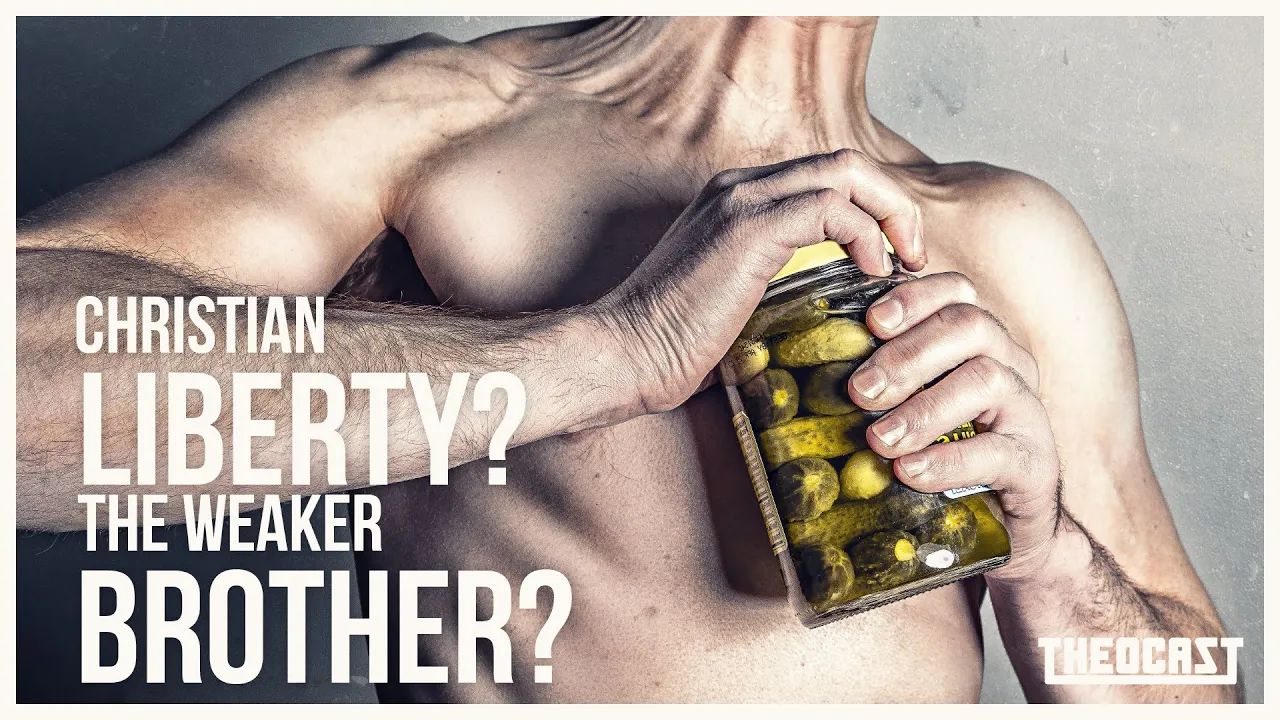
What is Christian liberty? Is it about more than alcohol, dancing, and music? What is the weaker brother? What is it that governs the exercise of our freedoms? Jon and Justin consider these questions.
Hi, this is Justin. Question for you, what is the weaker brother? If you have spent any time in evangelicalism, you have no doubt heard the weaker brother discussed. But what is Paul talking about when he uses that language?
We're gonna go there today in the regular episode. We're gonna talk also about Christian liberty. And is Christian liberty really about don't drink, don't smoke, don't chew, don't go with girls that do?
Or is it actually about something far greater and something much more wonderful? We're gonna talk about that too. And then in the members episode, we're gonna talk about how we would go about setting someone free when their conscience is improperly nailed.
We hope that this conversation is helpful to you. We hope it's encouraging.
Stay tuned. If you'd like to help support Theocast, you can do that by leaving us a review on iTunes and subscribing on your favorite podcast app. You can also follow us on Instagram, Twitter, and Facebook.
Plus, we have a Facebook group if you'd like to join the conversation there. Thanks for listening.
Welcome to Theocast, encouraging weary pilgrims to rest in Christ. Conversations about the Christian life from a reformed perspective. Our hosts today in the same geographic location are John Moffat, sitting to my left, your right if you're watching a video.
He's the pastor of Grace Reform Church in Spring Hill, Tennessee. And I'm Justin Perdue, lead pastor of Covenant Baptist Church in Asheville, North Carolina. We have met today to podcast, to talk all things Theocast and other exciting things that will be revealed in due time.
We are sitting in Knoxville, Tennessee at Albright Grove Brewing Company for the second time in about three months. It's exciting to be here. Yeah, in front of a live audience. In front of a live audience of like four people and guys that we sort of roped into coming with us for the day.
That's right. I don't know if we're gonna do roll call right now or not, but yeah, this has been a good day so far. We're kind of winding the day down before we all depart and head home.
And we're gonna record a podcast. And so we hope it's encouraging for people. Yeah, I mean, I publicly just wanna thank them. Justin and I, we're very passionate about Theocast, but we often wanna bring in other people that we think can add to the ministry and to the conversation.
And so we've been doing this since like eight o 'clock this morning. So it's been good. Left the crib a little earlier than that, amen. We left at 5 a .m. So it's been a morning. You're on that central time.
That's right.
Which means we're gonna get home early before you. So you guys will beat us home. So true.
Even though your drive is further. Go figure that one out. That's right. So JP, today's a pretty important conversation. And I think that we are going to make a lot of people uncomfortable, potentially make some people angry, not purposely.
It's not our goal. And the real point of the podcast is I think to liberate some people from some bondage and burdens they've been carrying so that they can be more meek and patient and kind. So what is the subject?
I mean, it's already in the title of the podcast, but.
We're not very good at not giving things away with our titles.
Bring us in. First of all, tell us why this conversation is important and why we're having it. And this conversation is important.
Even though it took us a while to figure out what we were gonna talk about today. As we sat here with these other brothers and we're just, you know, ideas are just popcorning around. Yeah, they could talk about that.
I could talk about that. Yeah, but we landed on talking about something that I do think, and you agree, is very important for us to discuss. And that is the topic of Christian liberty at a high level, but then also trying to say some hopefully helpful and biblical things about the weaker brother and what the weaker brother is, what the weaker brother is not.
And the goal of this conversation is as always to encourage people in Christ and to remove clutter that's often thrown on top of the gospel. And in particular, right now, we would be talking about clutter that's thrown on top of the gospel in the form of hyper heavy-handed, like what can I do, what can I do kind of conversations.
And I think the way that I would wanna kick this conversation off, John, is by thinking about what Christian liberty has meant to the saints who lived before, let's say, the middle of the 19th century.
Because the last 150 years or so, the conversation about Christian liberty is often reduced to matters of conscience. What is it okay for me to do? What should I avoid doing? The whole don't drink, don't smoke, don't chew, and don't go with girls that do conversation, right?
And that's a tendency, I think, that exists in evangelicalism, or there is a tendency, I should say, to obsess over behavior. It's just something that we do, right? Yeah, I agree. And I think we need to say, before we go any further, that Christian liberty starts with something that is so much deeper, so much greater, so much more wonderful than how we behave, right?
It starts with the fact that we have been set free by Christ and in Christ. That's right. We are no longer chained to this life of sin because of what Jesus has done. We are no longer paralyzed by fear of death and fear of the grave.
He's delivered us from that. We are no longer in bondage to Satan and forces of evil. We're no longer under the bondage and condemnation of the law. That's right. Christ has set us free from all of that stuff, and that's what saints have always meant when they start to talk about Christian liberty.
We are free from all of that stuff and free unto righteousness. We are free to live before God with a clear conscience, knowing that we've been reconciled to Him through what Christ has done. And so now I don't need to worry and wig out all the time about how I'm doing because I'm actually free, and Christ has settled that and handled that for me.
That's right. Right? So we would be remiss if we don't start there. Yeah, that's good.
Christian liberty is one of those subjects, it's like grace, when you start emphasizing the joy of God in grace, and people immediately want to warn you, oh yeah, yes, there's grace, but you know. Yeah, faith without works is dead, so there's works.
There's grace, but there's works. So when you talk about Christian liberty, what's the first thing that you immediately feel? In a word being used as liberation, you feel bondage. Yeah, it's like we're talking about something that supposedly is about freedom, but instead it sounds like slavery.
Yeah, you just got done describing Christian liberty, and I'm more in bondage now than I was before you described it, and yet you're telling me I'm free, because what they say is you are free from sin, not to sin, and so they want to always emphasize you are free from sin, not to sin, which is true, and I completely agree, but if we're talking about Christian liberty, the conversation should lead someone to feel cared for, affectionate, and ultimately should find rest, because if you've been liberated by something, and we're now titling it Christian liberty, it should have that exhale of finally.
Yeah, finally, and the feeling actually of a burden lifted, not a burden added to my shoulders.
Right, but when I hear Christian liberty talked about, it is a burden, and this is what I mean by it, is I don't know where I have been liberated from, because I might step on somebody's theological, and I would say preference, where I am now not at liberty to say, think, or do something because this person's conscience is bound by it, and if their conscience is bound by it, then I must, too, be bound by it, so liberty is only as strong as the loudest voice in the room.
Sure, yeah, couple of things. Talk a little bit of Bible here really quick. I'm not gonna quote chapter and verse so much, but for the listener, the main passages that we would refer you to if you wanna read about some of these things that we're discussing today, Romans 14, 1 Corinthians 8, 1 Corinthians 10, like 23 and following, and if I could, I'm gonna offer just a few high-level summary thoughts about those chapters and verses and those sections of Scripture and what they contain.
So one, high-level thought about the Bible's clear teaching on this topic. Only God and God's word can bind the conscience. That's right. All right, so one. Two, we are to love one another and seek one another's good.
I'm sorry, can we just back up?
I think you need to explain, we need to explain. Bind the conscience, meaning what do you mean?
I'll explain, that's fine. Like in terms of, yeah, like this is. No, we're on podcast, go ahead. Don't back out, go for it. Okay, I thought you meant edit it. No, no, no, not edit, go for it. So welcome to Theocast.
This is our professional and polished presentation. By the way, if you've ever wondered if we edit. Unlike most other podcasts out there, this is pretty much a first take. And so, yeah, like I say, welcome.
It's good to have you. Hope you're encouraged so far and not incredibly distracted. So only God and only God's word can bind the conscience. By that I mean, only God and what he has revealed specifically in his word can tell any human being what he or she cannot do or what he or she must do.
Right, so let me put it this way.
Only God can determine what should make you feel guilty for.
And what you should not feel guilty for. Sure, that's kind of how we feel.
Right, so binding the conscience, meaning that's the only thing that can say, you step outside that, you should feel guilty for it.
If God says we are to do something or if God says we are not to do something, we are obligated to do as he says. That's right, it's bound. What any human being thinks on his or her own doesn't matter.
That's right. Right, so God only can bind the conscience. We'll give some passages to explain that. Second big high-level truth is that we are to love one another and seek one another's good. So this is gonna be huge because I'm not trying to steal even my own thunder or yours either, John, but there is something that governs our exercise of our freedom and it's called our love for each other.
That's right. Right, third big truth. There are weaker brothers and weaker sisters who must be considered and we're gonna define what that means. What is the weaker brother? Right, and then lastly, we are not to pass judgment on each other over these issues of liberty.
I think it's a fair summary. I would agree. Because like Paul, for example, in all of those passages, he could have said, hey guys, under no circumstance ever whatsoever in any conceivable scenario should you ever eat meat sacrificed to idols.
He doesn't say that. He tells them to do something actually harder. He says love and consider each other. That's right.
And we'll unpack that more, but. So going back to the bondage, Paul writes to the Church of Colossae and as he's talking with him in the first two chapters, really chapter one, you have this explanation of the glory of Christ and who Christ is, who we are in Christ.
And he uses this transition phrase. He says, therefore, if this be true, this identity, this freedom, this joy that we have in Christ, therefore, let no one pass judgment on you in questions of food and drink or whether regards to a festival or new moon or Sabbath.
So we need to back up and ask, before we even maybe consider all this list he's given, which I think is a general list, it's kind of like these are things that someone may pass judgment. So judgment meaning guilty verdict.
You are guilty before God for doing such things. And he says, don't let someone do this, which is a very powerful statement. I think it sounds very much like Christian liberty. You have been set free from the burden of being found guilty, where there is no judgment coming to you from God.
So he says, these are a shadow of the things to come, but the substance belongs to Christ. Let no one disqualify you. Insisting on, and then he gives a list, asceticism and worship of angels. Going in detail about visions and puffed up without reasons, but have sensuous minds.
Not holding to the, not holding to the, I cannot read off this computer screen at the moment. It should brought my Bible. Not holding fast to the head. I know, from whom the whole body nourished and knit together through its joints and ligaments grows with a growth that is from God.
I love how he actually ends the conversation with what? The body being unified together. Thank you, sir.
Being served by our brother. Dink here. So thank you, brother. Well, and even the way he goes after that, yeah, the body grows together. And then he goes on to say, why, you know, if you in Christ, you died to elemental spirits of the world, why, as if you were still alive in the world, do you submit to regulations like do not handle, do not taste, do not touch?
That's right. You know, according to human precepts and teachings, these have indeed an appearance of wisdom and promoting self-made religion and asceticism and severity of the body, but they are of no value in stopping the indulgence of the flesh.
Now, Paul is not saying just do whatever you want.
No, but he is saying the opposite, correct.
But he is saying very much so here that we ought not pass judgment on one another for what we're handling, what we're touching, what we're eating, what we're drinking. And we ought not assume that there is inherent merit in this, right?
And that you think this does, if you live in ascetic lifestyle where you just deny yourself constantly, it does have an appearance of godliness, but actually in and of itself has no value.
Well, and I love how in the middle of it, he says not only does it not have value, but it is disruptive to our growth as a body, right? Because he says we are holding on to Christ because Christ is the one who's liberated us and Christ is the one who has set us free.
And then he says the whole body being knit together under Christ, not regulations.
Right, and he is saying, if in fact, Christ has done this for you, if Christ has done what he's done for you, why are you acting this way? That's right. Like if Christ has done everything that we have said that Christ has done, why are we quibbling and arguing and being silly about this stuff?
That's right. And thinking that what I eat or drink contributes somehow to my righteousness. That's right. And I mean, I think at least that's in part what's in Paul's mind there. That's right.
And yeah. Yeah, in and out, yeah, I think what is, what's so hard for them is that in Jewish culture, there were certain things that were absolutely simple for them to eat and wear and do and mark on their bodies.
Sure. Underneath the regulations. Underneath the ceremonial law. The ceremonial law. Paul comes now and then says, you cannot be held underneath that because Christ is, those were but shadows of the actual substance.
Christ has, he has abrogated, he has abolished the ceremonial law. That's right. Right, now he, we don't need to get into a conversation about the law here, but when it comes to that aspect of God's law delivered in the old covenant, like this is no more.
That's right. Because they were all, all of those ceremonial laws were pointing us to how God would make sinners righteous, how atonement was made, et cetera, and Christ has fulfilled all of that. That's right.
And so it is no longer binding on the Christian. That's right, yeah.
Right, so now there's a part of it here that this goes into the Christian liberty, meaning that we have been set free from two things, the condemnation of the law and the requirements of the law. So we are not going to be condemned for our sins.
There's no condemnation for those who are in Christ Jesus. That is the liberty of the Christian. But there's also no requirements to maintain, this joke we were having earlier was, there's no return policy on God's adoption, right?
If he purchased you, you can't be returned. So that means that you are now set free to obey without fear. Christian liberty means is that you cannot be bound by anything outside of what Christ has handed to us.
You are no longer bound by the requirements of the law for righteousness because Christ is the end of the law for righteousness. That's right. And that matters. The law, as we have said many times on this podcast, and I think it's fine to say it again, we do uphold the third use of the law, meaning the law guides our living in Christ, but we are in no way under the law as a covenant of works that we must keep in order to be in right standing with God.
That's right. And that matters, man. Yeah. I mean, in terms of our day to day and my own conscience and what I perceive about my freedom and my peace before the Lord.
Yeah. Yeah, so I come from a background, I've mentioned this before, and I know there are listeners who. Let them know, John. May come from a similar background. Amen. I come from the independent fundamental Baptist background, and there was much that was handed to me that was theologically correct and helpful.
I learned a lot from many of the pastors. My dad was a pastor. I learned a tremendous amount from him and my father-in-law, who is also a retired pastor and I love and respect. And one of the things that there was a confusion between Christian liberty and the weaker brother, which is kind of where we're gonna go here.
And that confusion was really hard for me to navigate. How is it that if this is wrong to an individual, at what point am I set free from them? And I would say their confusion of what God's law says or what the Bible says, and my ability to participate in such actions.
For the sake of argument, JP, we don't have to beat around the bush. I mean, you and I are drinking beers at the moment, right? For many, that is a very complicated conversation. It's highly emotional, and I understand why it can be so hard for people to really stomach the fact that two pastors are drinking something that seems to be very offensive.
And maybe if in the regular episode there's time, but certainly maybe in the members area, we could talk about alcohol in particular and why there is such a stigma around it.
I mean, it is the number one topic, I think, when you're talking about Christian liberty. This probably is one of the ones that come up. It's certainly in the top. Yeah, I mean, I can't really think of anything.
I mean, I'm gonna use the audience involvement here. Can you guys think of anything other than alcohol that becomes like at the top level of Christian liberty?
I mean, I think the next closest one would be media, maybe. Like what kind of movies you watch, what kind of entertainment you engage in.
Did you cancel Netflix? Because if you didn't, you don't really love Christ. That was like, two months later, people signed back up.
But like, while we're here, I mean, what kind of establishments we go to, what kind of food we eat, like how we think about our diet, fashion, clothing, modesty, schooling for our kids. Like, is it sin to send my kids to public school?
Are we required to homeschool? Is private school an option? Can we go trick or treating? I mean, we could do this all day, right? There's all kinds of things. I mean, in saying this right now, I'm like, man, it's incredible how worked up we get about this stuff that is peripheral.
That's right. It is in no way central to the Christian life. And before anybody objects and says, well, you know, but like God is God over all things and Jesus is Lord, amen. And we need to keep the main things, the main things.
That's right. Anyway, let's talk about the weaker brother. All right, in terms of, cause this really is important in terms of like what the weaker brother is and then what the weaker brother is not. And then in relation to Christian liberty.
Right. So I think oftentimes the way that the weaker brother is defined is incredibly unhelpful. So I'm gonna offer a definition and then I'm gonna maybe offer something that's not helpful. So I think the weaker brother, biblically, is a person, a real person, not a hypothetical person, but a real person in my midst with whom I have a relationship who would or will be pulled back into a lifestyle of sin as a result of being exposed to something that I'm doing.
Like, it is a very concrete, specific situation, right? The weaker brother is not a hypothetical, like, well, there might be a person out there who might be pulled back into sin by what you're doing. So, okay, well, that doesn't help me.
Because I'm living life. I'm living life in the context of a particular local church with particular groups of friends and particular relationships. Is there a weaker brother or sister in my midst with whom I have a relationship that is going to be brought into sin by what I'm doing?
If the answer to that question is no, then I don't think we're talking about a biblical weaker brother situation. Can I clarify one thing too?
They may be brought into sin, but it has nothing to do with you. Like, in other words, if they're falling into judgmental pride, bitterness.
But then, all right, let me say this. This might sound controversial. It isn't around this table or in this room, but some it might. The weaker brother is not, like, all capital letters, N-O-T, exclamation points, every place.
The weaker brother is not the most sensitive conscience in the room. Because that is generally how Christians talk about it, that the weaker brother is the person who is going to be offended morally by the fact that you're drinking a beer.
That is not at all what Paul is talking about in the New Testament. Because that person being offended in his or her conscience, but not being tempted in any way or led in any direct sense into sin, Paul's word to that person who is passing judgment on you is actually stop doing that.
Don't cast shade either direction, would be the exhortation of the apostle. Like, those who exercise our liberty, we ought not cast shade on people who don't. But then those who don't ought not cast shade in the other direction.
Like, if you were really godly,.
You wouldn't drink that beer. Yeah, your conscience can be, according to Paul, your conscience can be misled.
And I just want to reiterate, John. I'm just going to say this. I'm going to back up. You go ahead, and then I'm going to quote some Bible, okay?
How about that? I grew up in a context where there were people who were convinced if you used any other version of the Bible than the King James Version of the Bible. If he ain't on it, he ain't in it, ain't him.
Then you, and it was, and I'm not, this is real. People who are listening to this podcast know. I was raised from heaven in 1611, okay? I mean, and we're joking about it. I know, but I'm sorry. I know people who legitimately rest in their conscience.
They feel as if they read the ESV, the whatever, the numerator standard, that it bothers them. And those are the kind of people that I can look at and say, dear brother, dear sister, I don't want to make fun of you.
I don't want to bash you, but you have been bound in ways the Bible never intended you to be bound. Like, you're not supposed to feel that burden. If you're new to Theocast, we have a free ebook available for you called Faith Versus Faithfulness, A Primer on Rest.
And if you've struggled with legalism, a lack of assurance, or simply want to know what it means to live by faith alone, we wrote this little book to provide a simple answer from a Reformed confessional perspective.
You can get your free copy at theocast .org slash primer.
Right, and God didn't speak old English. I mean, God doesn't speak Hebrew either. I mean, it's just like, you know, he gave us his word in such a way where it could be translated.
And I could say something even more punchy. This is how different we are than Islam.
Well, you could, but you know, Jesus, you know, the New Testament's recorded in Koine Greek. Well, Jesus didn't speak Greek, you know, and it's just like, he could go all day. Or, you know, like when people talk like that, John, talking about bondage, I mean, Muslims understand that Allah speaks Arabic and that like revelation can only be in that language.
Hence, the Quran can't be translated. We don't believe such things. You know, anyway, back to the topic at hand. Can I read the Bible now?
Is that good? How dare I? We're gonna just give my wisdom at the moment. I can get the King James Version. No, don't be messing with those people, man. Leave them alone. Keep talking. No, so in all honesty, what I mean by this is that if you have a context where they convince your, it's not a preference, but it is a conscience issue, that if you do something, you are violating God.
I would say that there are many people who grow up in Christianity and music, dress, and alcohol are one of those situations where you do not have to participate, but there is a sense by which if you feel this, you weren't, let me put it this way, you weren't the weaker brother at that moment.
Just because you choose not to drink alcohol or maybe think alcohol is, I mean, there's so many different levels, right? It's like it's sinful, it's okay, but not helpful, and then it kind of goes down.
I will say that if you think that drinking alcohol is sinful and that basically you have violated God and you are guilty before Him, you are, I think, confused scripturally. I wanna be a little bit punchy.
Oh, man. About alcohol, I really wanna read the Bible and try to edify people.
Well, then read Proverbs 30, 31, five, and six.
No, I think just a brief word on alcohol, like abstention from alcohol as a thing.
Which is not a podcast about alcohol.
Because it is a thing in the minds of many people, to abstain from alcohol as a high watermark of righteousness is not a Christian idea. No. Now, there are Muslims around the world who would say that, right?
And then Mormons will come in and shame us all because they'll tell us we're in sin for drinking coffee. And it's like if we're going to use as the high watermark of sanctification. The most sensitive conscience.
Like abstaining from alcohol or something. It's like I think our definition of holiness is whack. I'll just go ahead and say that. No, I agree. When I'm saying something that a Muslim or a Mormon could heartily agree with, and it is not inherently Christian, but yet I am elevating this to some level of being like the arrival of an individual to a godly place when they've given up the bottle.
Can I just jump in real quick? This is like getting in the weeds a little bit,.
But I think it's okay to do. People will say, well, the alcohol in the New Testament or even in the Old Testament isn't as high as Here we go, folks. Right, which is fine. Look, it doesn't matter what level the alcohol was at because the command to not get drunk was still legitimately an option.
They had the option to do it.
This is why even Jesus is accused of being a drunkard, and so obviously what he was drinking had alcohol in it. Right, and then not only that,.
Paul says that the elders, those who are looking at the qualifications, should not be drunk with much wine, which is very easy for Paul to say flat out, just don't drink it. So you do have, it's hard to make the argumentation that like, yeah, I understand it's permissible, but here's a second argument in that it was saying that, well, they needed it back then because drinking sources were low.
Water is polluted and all this kind of stuff. And look, you are making argumentations that Scripture is just not going after. This is why he says, do not let them pass judgment on you, what you eat or drink.
Why do you think he mentions drink here? Because you could see very well how someone could be passing judgment on, well, how is it you're drinking something that could cause intoxication? And I think it's important
It's a slippery slope. Like if you drink too much, you're in sin, why would you ever touch it? Right, which I encourage the listener to go read a section of the Bible. You will not believe it's in the Bible, but it is in the Bible, Proverbs 31, five and six.
I mean, should I just read it? I mean, why not, John? Give the people what they want. So yeah, this is me being about as punchy as I wanna get, but this is, I remember And in about 60 seconds, I'll rein us back in after we've had this one.
Well, no, just listen. This is how often, not often, but the Bible does talk about alcohol.
And ways in which it's used. And in Proverbs I've never heard a biblicist use these verses. I never have heard a biblicist use these verses.
We should do an episode on biblicism soon. We will, absolutely. I've seen many times in the Bible where people use Proverbs to explain why you shouldn't drink, which I understand. You know, it just reads this.
Give strong drink, this is verse six, sorry, six and seven, I'm quoting wrong. Give strong drink to the one who is perishing and wine to those in bitter distress. Let them drink, forget their misery and their poverty, sorry, and remember their misery no more.
Amen. That actually, I'm not, that is like, that is in the Bible. The Proverbs 31 woman, by the way, that's the prequel. That's what's going on before.
I know we're being a little bit loose here with this, but like, so 1 Corinthians 10, 24, let no one, this is in the context of words Paul's writing about these issues. Let no one seek his own good, but the good of his neighbor.
Okay, like that verse alone is incredibly helpful in thinking about Christian liberty and Christian freedom because somebody could listen to us right now, John, and say, okay, well, you guys are contending for freedom in Christ and you're making it clear that we're not bound by these kind of silly things that people often want to shackle us with.
Okay, great. So does this mean that we would then just act however we want to act and do whatever we want to do? Like, just kind of like the world says, I'm just going to do me and then everybody needs to be okay with it and celebrate it, whatever.
No, we are saying something like the apostles said, like Paul wrote, that as I alluded to earlier, is actually much more difficult than a broad sweeping prohibition could ever be. We do well as human beings with extreme positions, like go all in this way or abstain completely this way.
We're good with that. But when we're told, no, actually you are free to eat and drink as you see fit in the Lord Jesus Christ, but you need to love your brothers and sisters and you need to consider one another, that's something that we just lose our minds over.
That's right. And I think it's astonishing that the thing that regulates the exercise of our freedom is not some kind of heavy handed law. It is in fact, the exhortation to love your brothers. Like, holy smokes, it's like God said that because he says it all the time, all over the New Testament, love each other.
And it's what we're called to do. We were joking a little bit before we hit record on this about how when we begin to discuss the fact that our good works are not ultimately for God, they are for our neighbor and God is glorified, you know, that our neighbor benefits from our good works and we are called in a pointed way to love each other, people get all kinds of nervous.
And they think that we're somehow trying to cheapen the glory of God or they think that somehow we're making a slide into the old liberalism, you know, the fatherhood of God and the brotherhood of man and we just need to love each other and it's all gonna be great.
It's not at all what we're saying. But if you are thinking about what the Christian life is characterized by and what marks a Christian, if you're gonna answer that question biblically and love for the saints is not at the top of your list, you're not reading the same Bible I am.
That's right. And so that conversation about love for one another needs to govern how we think about the exercise of our freedom. That's right. I'm gonna consider who I live with, the brothers and sisters that I am in community with in particular at Covenant Baptist Church for me.
And I am gonna make sure that I love and consider those people in everything that I do. That's right. Including what I drink or what I eat or what kind of music I listen to or how I might speak or frame something.
I'm not bound by some law that's gonna condemn me before God but I'm encouraged because Christ has done everything for me. Now give your life away, homie, in love for your brothers. And it's like, this isn't complicated.
No. That's what drives and motivates us. And that's just not the tone and tenor that I hear in any of the conversations about this topic. And that saddens me.
Yeah, it does. I will say, people are definitely concerned about obeying God. They are concerned about what does it mean to be holy and righteous. Which are good concerns. Right. And I wanna say this as, I don't want this to come across as I'm patting on the head but there has culturally been handing to Christians a certain standard of living that isn't necessarily biblical.
Thanks, man. Everybody say hello to Patrick. He's planting it. Oh man, about to kill the podcast. Patrick and McKenzie, strong work. That's right. About to plant a church here in a couple of weeks. So going back to it, my desire for this podcast is actually to help people liberate you and in your thinking that we often feel this, this bind on our own conscience where because you don't think this is biblical and yet I can't find it in scripture, I'm now bound to it.
Actually, there's two things. I've been set free to love you and not feel that. But also, I know a lot of people who don't think drinking is a sin. They're watching certain movies as a sin. There's a great friend of ours and deacon in our church and he cannot watch violent movies.
Like it legitimately messes with his head. He doesn't think it's sinful though. You know?
He just doesn't like that. Right, now his wife does. Yeah, that sounds about right.
Right, but the reason I mention that is that I'm refraining from participating because it's not beneficial for me versus no one else should participate in this because it's not beneficial for me. So if it's not beneficial for me, how can it be beneficial for you?
And that is what we're trying to say. We need to be careful of not making those two connections.
Agree, it's a very myopic perspective.
Yeah, and there's also the, I'm gonna just kind of round something back around. And then I'm gonna take us in a different direction. Right, the potential, I hear this a lot, the potential of hurting, I wanna go back to the hypothetical weak brother.
There could be someone out there that we could offend. Well, I will tell you that I offend people all the time because of things that I choose to choose not to do, but those people aren't in my church.
And I have not seen where Paul binds me to the culture that's around me, whether it's a Christian culture or not. Which is, we could even talk about masks and all kinds of things that go along with that.
But do we really wanna do that? Nope, we're not gonna do that. But the point of it is, is that I have been called to the local body and I need to be considerate and concerned about them. And if I am going to lead someone in legitimate, what I would say, entrapped in sin, not critical, not judgmental sin, they need to be rebuked of that.
But we're talking legitimate enslavement to, at the time, Paul does have mentions of, maybe they're gonna fall back into idol worship. You know, when he's talking about the weaker brother and he's talking about meat offered to idols there, there's a long, strong pole that's going on there.
And so Paul's trying to be conscious of what's going on in the context. It doesn't bother him, but there could be a pole that ends up going back into that direction.
Sure, yeah. All right, so I might put the pastor hat on for a minute. Yeah, we got a couple minutes left, yeah. Cool, all right, so I'm even gonna turn my hat around. Oh, wow. Anybody's ever seen Over the Top, old Stallone movie in the 80s, you know what I'm talking about?
No. Arm wrestling movie. So seriously, like he turns his hat around. Anyway, somebody get, Paul here gets it. Paul got it. I'm glad Paul is here today, although I'm doing the opposite. Anyway, don't worry about it.
I'm gonna talk as a pastor right now. I mean, John, we say this all the time. I mean, we love Theocast and pray the Lord continues to grow this platform and we are unashamed about being pastors first, right?
So we pastor local churches. I know for our own elders at our church, and I'm sure that you guys at Grace Reform would say the same thing. I'm sure for Jimmy even, you know, at Christ Community, his guys would say the same thing.
So a few things that guide us in our thinking about these matters in our church. One, if the Bible calls something sin, we call it sin. That's right. It's not an option. Two, if the Bible doesn't call something sin, we will not call it sin.
Not negotiable, right? Don't really care how you feel about it. The Bible says that if the Bible doesn't say it's sin, then we're not gonna call it sin.
And we were having a little quick dialogue beforehand and we have to clarify that, because what someone may say is they will name something like, I don't know, illegal drugs or something like that. It actually fits within
It fits within a biblical paradigm. Right, because if it's illegal It's immoral. Right, because we are called to what? Obey the authority that we're Unless it does what? Contradict scripture. Unless it contradicts scripture.
Unless, right. So almost anything can fit underneath the category of scripture. I mean, it does a broad brush. It doesn't have to literally say heroin is wrong.
So then a few other things that matter here. We will not, like we said earlier about binding the conscience, we've already defined that. We will not bind consciences where the scripture doesn't. Right.
That's a big deal in a local church. Next, we will not allow, this is controversial perhaps, we will not allow the conscience of a single person or a group of people, that includes the pastors, to dictate terms for the whole church.
Right, so there won't just be this one person or this group of people who have really strong convictions about said issue, right, that is then going to determine for the entire church how we're gonna set our trajectory on this matter.
It's not gonna happen. Including the pastor. That's what I said, including the elders. I mean, we're not gonna do that. Another thing, we will seek, right, to destroy self-righteousness that flows both directions.
So I think the one direction is obvious, where people who don't participate in liberty and exercise freedoms can be self-righteous toward those who do. But it's also true. Obnoxiously self-righteous.
But it's also true that those who exercise freedom and understand that they're free to do something like drink a beer can be very self-righteous about their understanding toward those who think they can't.
That's what I meant, sorry. Brother, I mean, so it flows both directions. And so we wanna destroy self-righteousness. Flaunting your freedom, that's ridiculous. Flaunting your freedom. Be quiet. Agree, you are being a moron and unhelpful.
I mean, seriously. Which, you know, we could be accused of doing a podcast with a beer in the hand as flaunting our liberties, but.
But we're not casting shade on people who don't drink.
Listen, I don't think only strong Christians do particular things, you know, drink wine or watch certain movies. I think if you're a weak Christian, then, oh,.
That is ridiculous. We're not saying, oh, well, you know, you watch R-rated movies, you must really understand that your righteousness only comes from Christ.
That's not what we're saying. Yeah, you could have foul language and drink a beer, and you are the truest of the free Christians. That's ridiculous.
That is actually sinful. It is, and brief plug here, that kind of, I'm gonna use the word, that kind of like lawless living where you think that the more I can just go crazy. Out of control. Out of control, crazy.
That is driven by the same legalistic spirit that you lambast other people for. Yeah, you're creating a new law. You have. Like, it used to be legalism in the formal sense of the word, and now we are being legalistic in terms of who can exercise their liberty the most, man.
And it is so ridiculous when it goes that direction anyway. And I think as a pastor, I mean, the biggest things that I would wanna do from a culture perspective is we wanna love and consider each other, and we wanna be charitable.
We want that flowing both directions, from the stronger to the weaker, as Paul would phrase it, and also from the weaker to the stronger. I'd love to interject real quick, please.
I would say, just on this before we lose a thought, Paul says that we're to consider how to build one another up. And if someone chooses to refrain for whatever reasons, it could be for dietary purposes.
There's a thousand reasons why people may say, yeah, I'm not gonna participate in that. And it's not because their conscience is bound. They're just saying, no, I'm gonna prefer not to. I mean, I have people who have family members who have horrible backgrounds in alcoholism and all kind of other reasons and things.
And I never want that person to feel less than. I mean, Paul calls me to say that I am to give up my preferences. I am to set aside. I am to make them feel loved. And so I want that person to always feel loved and cared for.
And I never want them to think you're just not to the top level echelon of Christianity because once you are, that won't bother you. And that is just not helpful at all.
Last couple of things I'll say as a pastor thinking about a culture and a local church. We would want to seek to establish a situation where we are going to all aim to love one another and legitimately consider other people as more important than ourselves.
If we have that as our goal, then we are already disarming this whole conversation before it even gets started. Because my aim is to love and edify those around me. Their aim is to love and edify those around them.
We're gonna be just fine if that's what's governing us. Last thought, we all should seek to train our consciences according to God's word.
And that takes work. And it takes a long time. If you've grown up in a pietistic background.
Yes, and it takes a long time, which means what? Patience is required. So what does this mean? We say it's all time. We always come back to the same stuff. We live with one another in love, patience, charity, humility, bearing with one another, meekness.
Sounds like Ephesians four to me, right? It's how we live together in the church. Yeah, and that's the way forward. For the benefit of all.
Yeah, I would like to, in the Members Com podcast. By the way, we're gonna be announcing some changes here pretty soon, so stay tuned for that. I feel like we say that every week. People are probably like, okay, guys.
Well, we're still waiting for the rest of the money to flow in so we can actually pull the trigger on that. We're waiting for those seed gifts to come in. Yeah, if you want God to bless you, don't give to Theocast.
Commit to giving us $7 a week for 42 weeks. Almost, there you go. 40 days?
40 days. All right, we're not gonna go there. What if you know your conscience is bound, but you know how to get free from it? Or how do you help someone become free from, and let's just remove alcohol for the moment.
We're talking about particular Christian actions, things they should do or shouldn't do, places they should and shouldn't go. I mean, I think some people's conscience are bound by particular religious actions.
I'm just gonna say this. How often you particularly read a book or not, aka your Bible, your conscience can be bound by many things that basically says, unless you do this, you're in sin. When the Bible never says that that is sinful, you are binding the conscience in such a way.
So how do we set people free from that is the conversation I really want to talk about in the members podcast. Sounds like a good conversation.
I don't know that I have anything else to add to set that up. Hopefully we'll, yeah, we'll be able to do that there. If they want to listen to the members podcast, how would they do that? That's a great question.
Yeah, baboom. Baboom. It's like we've done this before, very professional. So yeah, if we are gonna have a conversation worth listening to, that's yet to be determined. But if you would like to see how this conversation goes about Christian liberty and things that John has talked about, how to set people free from this kind of bondage in their thinking, we may talk a little bit more specifically about alcohol.
Maybe you're thinking, I would love to hear John and Justin riff on that a little bit. You can do that by going to our website, theocast .org and you can find more information there about our membership.
The name of that is Soon to Change. That's right. I'm gonna tell you. We're just gonna keep saying that every week until it actually does. It's more about what you're giving than what you're getting. So true.
You're not purchasing a good. This is not a commodity that you're buying. You are partnering with a ministry. You are partnering with a movement to spread this message of message, the message of rest in Christ and the sufficiency of Christ for sinners like us.
He is our only hope and righteousness. That's right, amen. Amen. We'll talk with a number of you over in the members area and we will talk with all of you, we hope, again next week.